The Power


Rating: ⭐.5
Author: Naomi Alderman
Genres: Science Fiction, Dystopian, Feminist
Read: Feb. 2018

Execution is the key word for The Power. I’ve been dying to read this book since it first came out, but I’ve been seeing it get some mixed reviews and now I can understand why. This book had such a great premise, but I think it was a bit of a miss on the execution, which is so disappointing.

The Power is a dystopian, science fiction novel in which women have developed the power to basically electrocute people and things using their hands. They can take down electrical grids, burn trees and structures, and kill people using the power. The book is told from the point of view of a male historian recounting the events of when women first gained the power. Girls start developing the power at 15 and can awaken it in other women. Their power comes from a skein in their collarbones that all women have, but has never been awakened until now.

As you can imagine, women suddenly developing this power totally flips gender dynamics and this book focuses on the perspectives of 3 women and 1 man from different parts of the world. There’s Margot, an American mayor; Allie, a teenage runaway; Roxy, daughter of a British drug dealer; and Tunde, a Nigerian boy turned reporter. The book definitely had a strong start and I was super into it at the beginning, but I got a bit frustrated as things progressed because I felt like the author lacked an obvious theme or direction. I feel like she had a lot of different ideas and themes and sadly, I thought they were poorly executed and took away from the story. I think she needed a more focused direction.

My biggest struggle is that I just don’t know what the central theme is. Is it that this reversal in gender dynamics just ends up with a reversal of male/female roles? Or that even if women developed the ability to electrocute men, it would still be a huge struggle for them to gain power and men would be just as destructive towards women as they’ve always been? Is the author’s point that power can turn anyone into a monster? That women are just as vicious and oppressive as men have been and don’t deserve power? Or is she just trying to help men better understand the ways they currently harm and hurt women and how obvious these inequalities become through a simple reversal of gender roles?

Maybe I’m too dense to figure it out, but I feel like Naomi Alderman was trying to make all these points, which is why the book fell flat. There are definitely authors out there who can address this many ideas in a novel, but I feel like you need some kind of central theme and that the writing got overwhelmed by the ideas in this book and they just all lacked development. I don’t think the author needed to connect the multiple viewpoints the way that she did in this book. The characters seem to just randomly come across each other and help out each other’s storylines, but I felt that instead it made each individual storyline more disjointed and less impactful.

Disclaimer, the rest of this review contains spoilers. Usually I try and avoid spoilers, but I feel like I need to include them in order to properly discuss this book, so don’t read any further if you’re planning to read this book.

First off, let’s look at some of the things that I liked. I liked the scenes about the Men’s Rights movements and the internet trolls and bombings. They felt very real to me and I had no trouble believing we’d see this kind of backlash if women gained this power. I kind of expected the development of the power to switch gender roles a lot faster than it did, but I felt Alderman’s portrayal of this slow cling to power by men to be very believable. It’s got to be devastating to go from holding all the power to suddenly losing it and becoming oppressed and I have no doubt men would fight back and fight back violently (especially since women were also using violence).

I also liked the uprisings by women and the seedy underside of how some women choose to use their power. I really liked Margot’s story at the beginning, but then I was disappointed to see her basically left out of the second half of the novel. In contrast, I wasn’t really into Tunde’s story at the start, but ending up thinking he had one of the most meaningful storylines by the end of the book.

On the other side, I did not like Allie’s story at all and I only liked a few select parts of Roxy’s story. Allie’s story just felt like a total tangent with the whole religious revolution. I absolutely believe something like this could happen, but I just didn’t think this storyline fit in with the rest of the novel. It reminded me a little bit of the religious zealots in Station Eleven, which is a post-apocalyptic book in which 90% of the world population is killed by one virus. But I think this whole storyline just watered down the themes of the rest of the book and I hated that Roxy got involved because then I just had to read twice as much about it.

I thought Roxy’s story had such a strong start. It was so dark and I couldn’t wait to see where the author would take it, but I really didn’t dig the whole soldier aspect and based on what happened later, didn’t see that point of including it at all. The only other part of Roxy’s story I really liked was the skein removal scene, which was super horrific for an imaginary medical procedure. I felt so bad for Roxy, but it was such a powerful commentary on the lengths men were willing to go to maintain their power

The scenario that plays out in this book could obviously develop in so many different ways and I did like some of the contrasting events that Alderman explores. I thought it was really cool that it was the developing countries where women rose up first to fight back against their oppressors, whereas in America and Great Britain, men did whatever they could to retain power and women did less to fight back and in Margot’s case, actually hid her power. I also liked the contrast between the scene where Darrell first uses Roxy’s power and the other girls rise up against him to protect Jocelyn, whereas in the Romanian jungle, the women were actively hunting down any man, woman, or child who stood in their way and seemed to have no sense of compassion or bond with other women.

I loved Tunde’s story because of that feeling of total powerlessness at the end of the novel. He’s always had an exit plan and then the total despair of being betrayed by those closest to you and watching your life work stolen from you is just devastating. And to then be trapped in the middle of a female revolution with no way to fight back? That had to be so terrifying and I just wanted men to read that to try and understand the oppression and fear so many women feel at the hands of men.

I can see this book being both powerful and dangerous. Powerful because it makes a statement about the inequalities women face and reversing them to affect men can be powerful in helping men to empathize with women. There were so many small but meaningful nuggets at the beginning, like where mothers were talking about how they wouldn’t let their sons out alone on the streets because of the danger of being attacked by women. My disappointment again was that I felt this theme could have been so much more powerful, but I felt like it kind of got lost throughout the novel. On the other side, I can see these ideas being dangerous in that I could see actual MRA’s taking it and saying, “see, look what could happen if we let women have power.”

I struggled with the format of the supposed historian telling this story. I didn’t buy it and I could have done without the whole thing. Why would a historian tell a story like this? I don’t think they would. I thought the letters at the end of the book between the historian and Naomi were fantastic, but again, just so confusing for the execution of this book!

I thought the main theme was going to be that with power, and given a long enough time, women essentially just become men. But in my opinion the actual novel didn’t really support this theme and I was super frustrated that the whole novel covers 10 years of history and then at the end we discover the story is actually being told 5000 years after the fact! The letters at the end totally support the theme that the power just eventually resulted in a total role reversal, but it felt so disjointed because this is not the theme I felt the rest of the novel was promoting.

I wonder if I’m maybe holding this book to a bit of a higher standard because of its relevance to modern day feminism, but I just feel it had so much more potential. In summary, I would give this 3.5 stars because it definitely makes you think a lot, but with more focus and better execution, I really think this could have been a 5 star read, which is why it felt so disappointing.
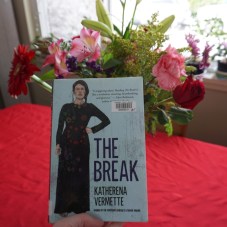
The Break


Rating: ⭐
Author: Katherena Vermette
Genres: Fiction
Read: Feb. 2018

I flew through The Break, which was the second book in my February Reading Challenge.

The Break is written by Métis author Katherena Vermette and tells the story of a Métis family and the struggles and challenges they’ve experienced, both together and apart. The novel opens with young mother Stella witnessing a crime on the break of land outside her house. She is paralyzed with fear and calls the police, but both the victim and the perpetrators have disappeared and law enforcement is not convinced of her story.

I don’t want to run the book by getting to into the plot, but it’s told from a lot of different viewpoints. There are 4 living generations in Stella’s family and they all have a voice in this story. As the police investigate the incident and the family is shook by violence, Vermette examines all the relationships and history that exist in this family. There are some narrators outside of the immediate family, such as the young Métis officer who investigates the incident, but this is really a story about family, the bonds that tie us together and the conflict that can threaten to tear us apart.

First off, the writing in The Break is fantastic. As soon as I started reading it I knew I was going to like it because it is just so beautifully written and the characters emotions are so tangibly felt. This was an insightful look inside the lives of a Métis family and it was very obvious the love this family had for one another, even through all the challenges they’ve had to overcome, the mistakes they’ve made, and the violence they’ve witnessed.

The tone of this story is very sad. Vermette made it easy to empathize with her characters and their pain felt very real. The story is heartbreaking and it was upsetting for me how frequently the women either experienced or witnessed sexual and domestic violence. But the women are what made this story so beautiful. It’s a very fractured family unit in that very few of the men in the family have stuck around or remained present in their families lives, but in the absence of reliable men, the women (sisters, cousins, aunts, grandmothers) have constructed their own family unit that is incredibly close.

The synopsis reads like this is a mystery novel, which it is in some ways, but it’s mostly a slow-burn family drama, which is one of my favourite types of stories. So I really liked this one and I am in love with Katherena Vermette’s writing. A fantastic read!

The Boat People


Rating: 
Author: Sharon Bala
Genres: Fiction, Historical Fiction
Read: Feb. 2018

Oh my goodness, I feel like this book took forever to finish! Between going on a ski trip last weekend and the Olympics stealing all of my attention, it took me a bit longer than anticipated to get through The Boat People. But I finally finished!

This was the first book of my February Reading Challenge and I am a little concerned I might not fit them all in this month because I am just completely obsessed with the Olympics! This month I challenged myself to read 3 books about Canada and this was my pick from the Canada Reads 2018 shortlist.

The Boat People is written by Sharon Bala, who fascinatingly was born in Dubai, raised in Ontario, and currently lives in Newfoundland, and it’s about a ship full of refugees from Sri Lanka who landed on Vancouver’s shores in 2010. It was a bit of a thrill to read a book about the place where I currently live, as I don’t read that much Canadian literature, and this was a fascinating bit of history about an event I knew shockingly nothing about.

Sri Lanka has been torn apart by war for decades, driving many people to desperation to escape the violence in any way they can. These 492 Sri Lankan’s board a cargo ship bound for Canada in an effort to seek out a better life. Fortunately everyone survives the journey and they are thrilled when they first see the coast of Vancouver Island, but the welcome party is cut short when they are promptly separated and detained in two prisons while the government fumbles to try and decide what to do about them.

I knew very little about the process for migrants who show up un-announced at the border and this was very eye-opening. Refugees must first seek permission to request asylum and then go through admissibility hearings for their request to be granted. In this case, the government was worried about terrorists being on board and wanted to delay the process as much as possible to assuage the public’s fears. The adjudicators had very little information to go on outside of the refugee’s testimony and because the government wanted to delay the process to dissuade copycat voyages, the refugees were forced to remain in these detainment prisons for months while their hearings were repeatedly denied and postponed.

I did struggle a bit with this book as there’s a lot of legalese in it, a lot of (slightly confusing) Sri Lankan history, and a lot of character names and stories that I struggled to keep straight, but I really liked how Bala wrote this book and she was not shy in tackling a lot of different issues.

The story is told from 3 perspectives: Mahindan, a single father who made the journey from Sri Lanka with his 6-year old son Sellian; Priya, an articling student (of Sri Lankan heritage) who’s firm takes on 5 refugee cases pro bono and has her help out on the cases; and Grace, an adjudicator (of japanese heritage) who is assigned by the xenophobic Minister of Immigration to adjudicate the detainment hearings.

This is a morally-gray book and I appreciated Bala for not making this a straight-forward morality tale. She tackles so many issues in this book; the xenophobia of the Canadian public, the refugee diaspora, the immigration process, Canada’s past failings, the importance of history and remembrance, reconciliation, culture shock, and the list goes on.

The novel first presents us with the refugees, ecstatic to arrive on Canada’s shores, and the brutality of their arrival and immediate imprisonment. In my opinion, you can’t help but empathize with them and think the government harsh. But then Bala gets into the morally gray areas of war and how good and innocent people can be forced and coerced into participating in what western countries view as terrorist organizations.

Are we right to studiously evaluate every refugee who comes into Canada for terrorist affiliation? I think yes, but do we need to steal their humanity from them in the process? No. Do we have the right to deport people when deportation will mean certain torture and death? People may be split on that opinion, but it’s a question that requires empathy and understanding that we will never have by “othering” people and fearing them.

Innocent people are forced to do bad things in wartime, but how to we evaluate those acts and decide if the intent was forced or malicious? What’s direct involvement in acts of “terrorism” and what’s proximate? These are impossible questions to answer and as much as I often disliked Grace’s line of thinking, I could appreciate the pressure that was put on her in these quasi-legal proceedings. All she has to go on is the migrant’s story and how is she to know what is truth? That said, she was an adjudicator appointed by the government in power, which begs the question if she should have the power to make those decisions at all.

However, I liked the contrast of Grace’s story and how Bala demonstrates how cyclical history can be. Grace is the grand-daughter of Japanese immigrants and takes a hard line on border safety and who should be permitted to enter Canada. She is determined to safeguard her daughters freedom to move around without fear, while at the same time struggling with her mother’s declining health. Her mother, Kumi, has Alzheimer’s and is slowly regressing into the past. Her parents had been interned during WWII and lost everything. They never spoke up about the injustice and kept their heads down to give their children a chance to become “true” Canadians. However, now she worries that the apathy of her parents has been passed down to her daughter and grandchildren and that Grace has forgotten the injustices of the past, perpetuating the cycle of oppression.

I thought it was an interesting theme on how people who were once oppressed and othered can learn to be oppressors themselves. And on how important reconciliation is, not just for righting our wrongs, but for protecting against repeating them, to keep fresh an empathy for others.

So while I did feel like it took me forever to get through this book, it was worth it. The Boat People made me think a lot and while it definitely was more ‘liberal-leaning’, it wasn’t a straight forward good vs evil narrative. It’s complex, gritty, and heartbreaking. A fabulous and meaningful debut for a Canadian author.

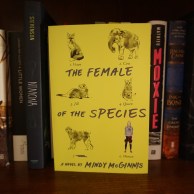
The Female of the Species


Rating: 
Author: Mindy McGinnis
Genres: Young Adult, Fiction
Read: Dec. 2017


This was so DARK.

I cannot figure out my feelings about this book. I pretty much read it in 2 sittings, so it’s a pretty quick read, but it packs a punch.

The Female of the Species is told from 3 points of view: Peekay, the preachers kid who has just broken up with her boyfriend; Jack, the popular guy trying to get a full ride to college; and Alex, whose sister Anna was raped and murdered several years prior. Alex is a loner and mostly people don’t think about her, but what they don’t know is the dark feelings Alex struggles to hide inside her.

From the synopsis you think this is going to be a revenge novel, but it’s mostly focused on relationships. I knew it was going to be dark, but I was surprised by how sweet some parts of the novel were. Peekay and Alex work together at an animal shelter and start an unlikely friendship in their senior year. Peekay is still reeling over her boyfriend breaking up with her to hook up with the most popular girl in school, Branley, and Branley is secretly hooking up with all-star Jack. Until Jack meets Alex and can’t shake her from his mind.

There’s a lot of cheating and hook-ups in this book and Branley plays the role of the villain trying to steal everyone’s man, but I liked how honestly McGinnis tried to portray her. Yes Peekay hates Branley for stealing her boyfriend, but the author still wrote a really interesting relationship between them, which gave Branley a lot more depth. She also highlights the culture of slut shaming and I liked when Alex defended Branley’s right to have lots of sex and enjoy it, without being cast in the role of slut.

Ultimately this book is about rape culture. After Anna’s death, Alex struggles with all the casual rape jokes and with anyone even touching her or her friends without consent. When creepy guys threaten her friends, she lashes out at them and hurts them in the same way they intended to hurt women, but the hurts she causes are perceived as so much worse than the potential hurts an assault would cause the victim. There’s a minor scene in gym class where she watches her classmates and teacher ignore one of the guys pretending to simulate sex with his basketball and comments that if she were to act the same way as a girl, people would lose their damn minds.

I liked Alex but she still scared the life out of me. I liked that she erased graffiti against other girls in the washroom, that she always looked out for Peekay, and that she was totally comfortable in her sexual experience (“it’s okay if we wait to have sex”, “I know” lol). I don’t really know what to comment about Alex’s violence. Obviously you can’t just go around killing people no matter how bad they hurt you, but portraying her character this way was an effective way to get your reader thinking about rape culture and all the ways it impacts and hurts people.