
Rating: ⭐⭐⭐⭐.5
Author: Kate Moore
Genres: Non-Fiction, History
Pub. Date: Jun. 21 2021 (read Jan. 2021)
To all the women who have had someone call them crazy.
I stumbled across The Woman They Could Not Silence on Netgalley and immediately put in a request because I loved Kate Moore’s last book, The Radium Girls. In a similar vein, her new book shines a light on an important part of women’s history that has been somewhat lost to time. Moore excels at writing this kind of journalistic memoir in a way that is riveting to read and immediately connects readers to the protagonists. Despite this being a non-fiction book, it reads like fiction, bringing historical figures to light in a way that makes readers really empathize with their plight. In short, Moore knows how to ignite righteous anger at the injustices that have been, and continue to be, perpetrated against women.
This story starts in Illinois in 1860 and centers around one woman, Elizabeth Packard. After 21 years of marriage and bearing 6 children with her husband Theophilus, he has Elizabeth committed to the Illinois State Insane Asylum against her will. Her crime? Questioning Theophilus’ bible study teachings in the church in which he is a pastor. Pushing back against your husband, questioning religion, and being intelligent in general were all signs of mental illness in the 1860’s, and as such, Theophilus has no difficulty in getting his wife locked up.
Elizabeth immediately fights back against the claim that she is insane, but recognizing that such pleas will only make her look more insane, she does her best to maintain her dignity at the asylum and after her first meeting with the state hospital director, Dr. Andrew McFarland, with whom she develops a good relationship, she is sure her release will not be long in coming.
Though Dr. McFarland is unable to determine the root of Elizabeth’s insanity, he is convinced it is there and will be revealed in time. Due to her intelligence, she is granted special privileges at the hospital. However, despite these privileges, Elizabeth soon becomes aware of the level of abuse that is being perpetrated by hospital aides within the walls of the hospital and starts stirring up trouble with the other inmates. This results in the revoking of Elizabeth’s privileges and life at the hospital soon becomes very hard for her.
The rest of the novel is about Elizabeth’s struggles in the asylum and her fight for freedom. Elizabeth is very intelligent and an accomplished writer, and though Dr. McFarland tries to silence her within the walls of the hospital, she is determined to record and share her story. She makes friends within the asylum and keeps a secret journal of all the abuses she witnesses. I couldn’t help but compare her to Alexander Hamilton because the woman constantly wrote like she was running out of time!
However, her goals are not only to record history, but to change it. Elizabeth is strategic in going about this. She knows that raging against the machine will get you nowhere in an insane asylum and so she goes about cultivating relationships and manipulating those around her, including McFarland. I found it really interesting to read about Elizabeth’s experiences and progression while at the asylum.
The whole system is completely unjust for so many reasons, but the two that stand are that, first, almost no proof is required to lock a woman up in an asylum. All Theophilus needed was 2 certificates of insanity from local doctors, which he was easily able to procure thanks to his influence as a man and pastor. Unmarried women are entitled to a trial before being shipped off to the asylum, but married women need only the desire of their husbands. As they are considered his property, they are not permitted any voice of their own. Many of the other women in the asylum were in the same situation as Elizabeth and had been sent there without any legal rights.
Second, the whole premise of what qualifies a person as insane or cured is entirely stacked against the patients. Like I said, women could basically be committed for showing any inkling of self thought or governance. Theophilus didn’t like that Elizabeth was questioning things or flouting his authority, so he quickly put an end to it. But what’s really enraging is that women who push back against the diagnosis of insanity only further the diagnosis. Showing any kind of indignation at anything is basically a sign of insanity. Women were only considered cured when they would finally submit to everything: the will of the abusive attendants, their doctor, and their husbands. The injustice of the system is that it literally conspires to make you insane and then only release you at the moment when your spirit is finally irreparably broken.
I say Elizabeth’s progression is interesting because she somehow manages to hold on to this one thread of truth throughout the entire ordeal, the idea that ‘I am not insane’. She is determined to be free and she is determined to be free under her own will, not through submission. The longer she is imprisoned, the more frenzied she becomes in her desperation to get out. She documents her experiences and ideas in a kind of manic fervour that you can’t help but question if maybe she is going a little bit insane. Rather than diminish, her ideas of justice and equality of women only grow more and more ambitious to the point where she envisions women as totally equal to men and able to even hold public office, something that is quite radical in 1860 and unlikely to get you released from an insane asylum.
I don’t want to give away the whole book because even though it’s historical, it’s still a story and I did take joy from the experience of having no idea whether Elizabeth was going to succeed and to what degree. She inspired a book to be written about her, so I knew she was going to have some level of success, but it was honestly so bleak, it was hard to imagine how a woman would ever recover from either the trauma or the stigma of such an asylum.
But Elizabeth is a fighter and I honestly can’t imagine a woman with more spirit. She had a lot of influence on early American politics and it is a shame that her name is virtually unknown, even among the roll call of suffragettes. But such is the way of women’s history and I love that we keep hearing about more and more women who have contributed greatly to our society but who’s legacies have been little preserved.
The author added a post script at the end of the book that I really liked. The book will make obvious the impact Elizabeth’s writings and efforts had on the women’s rights movement, but it also highlights how these same ideas are still present in today’s society. The idea of insanity is still used today to threaten, discredit, and silence women. Men have always used the excuse of ‘craziness’ to belittle women. The idea that fault lies only with women is still wildly believed by many men and women, even if only subconsciously. When men don’t like the ideas or actions put forth by women, it’s only too easy for them to dismiss them entirely with the callously thrown away phrase “she’s crazy”. I think we see it used most often by men to either dismiss the actions or requests or a partner or to speak of their ex. But even women use it to describe other women, particularly in scenarios where it relates to how other women interact with men (I’m thinking of reality television here).
But the idea is everywhere. Moore draws attention to its presence even at the top level of the American government when Trump once screamed at Pelosi for being wrong in the head. Powerful men still seek to silence women through the threat of insanity. For this reason, I thought this an extremely important read. A lot of the content didn’t surprise me, but experiencing it through Elizabeth’s eyes did help to put it into perspective. Even after all the work that Elizabeth did, Dr. McFarland is still kindly remembered by the eyes of history while Elizabeth has more or less been forgotten.
This wasn’t a perfect book. I thought the writing was a little simplified in the beginning, though it got much stronger as the story went on. I also thought the story could have been shortened, some parts are a little over indulgent and I fear the length may deter some readers from this. But overall, still an excellent read and I would definitely recommend!
 Rating: ⭐⭐⭐
 Rating: ⭐⭐⭐⭐
 Rating: ⭐⭐.5
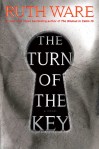 I’ve read every book Ruth Ware has written and I will be reading this one too! I don’t think Ware is the best mystery writer out there, but I find her books so compulsively readable that I’m always thrilled to pick up a new one! Especially because this one sounds SO GOOD! It’s about a woman who takes a live-in Nanny job in the Scottish highlands, which she thinks is going to be a dream job and ends up being a nightmare that lands her in prison for a murder she didn’t commit! This sounds so intriguing and I can’t wait to read it! Goodreads says this book is coming out in early Sep, but Edelweiss is listing the release date as Aug. 6, so we’ll just have to wait and see!
 Alice Feeney only has one other book,
  Last year and read and enjoyed Riley Sager’s second thriller novel,
 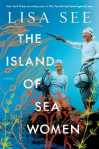 I’m cheating a bit on this book because I was fortunate enough to receive an ARC and I have already read it, but I’m including it anyways because it releases in March and fans of Lisa See will not be disappointed! The Island of Sea Women is set on Jeju Island in South Korea and takes us through 70 years of history – from the 1930’s to the 2000’s. Jeju Island’s culture is focused around women – where they are the core providers for their families and the men stay home and take care of the home and children. It tells the story of Young-sook and her friend Mi-ja, who are both part of the Haenyeo collective of divers who make a living diving for sealife in the fridgid sea.
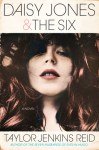 The Seven Husbands of Evelyn Hugo took Booktube by storm last year! I read it back in 2017 with my book club and also loved it – so I’m so excited to pick this one up later this year. Daisy Jones and the Six is about solo singer Daisy Jones and popular band, The Six. I’m not totally clear on the plot of the novel, but it’s set in the 70’s and is guaranteed to include all of the drama of sex, drugs, and rock & roll. I loved how diverse Evelyn Hugo and how good of a story teller Taylor Jenkins Reid is, so I can’t wait to read this one too!
 This is a lesser promoted novel that I stumbled upon on Netgalley and became immediately intrigued with. It’s by a Mexican author and has actually been published since 2015, but the English translation is being released in April. It’s about an abandoned baby that was found under a bridge and the impact he has on the small village. It’s set during the Mexican Revolution and the outbreak of the spanish influenza in 1918 and this setting is what really intrigued me about the book. I already have a copy of this from Netgalley and I’m looking forward to learning more about this period of Mexican history.
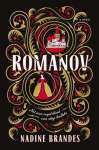 Romanov is a historical fantasy novel about Anastasia Romanov. It re-imagines history where instead of Anastasia dying, she was tasked with smuggling out a spell on her way to Siberia that might be the only thing that could save her condemned family. I don’t really know much more about the story, but I’ve always been a little obsessed with Anastasia and I pretty much only had to hear the words “Anastasia” and “fantasy” and I was in. In discovering this book, I also discovered that Brandes has another historical fantasy novel about Guy Fawkes plot to blow up the British government, Fawkes, which I must now also add to my TBR because that also sounds amazing!
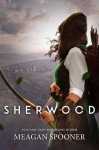 This is another book where I read a really short description of the book and was immediately like, “I have to read this.” Sherwood is basically a gender-bent retelling of Robin Hood. In this version, Robin Hood is dead and his betrothed, Maid Marion is bereft. The people of Nottingham are greatly suffering, especially with the loss of their hero. In her desire to help her people, she dons Robin’s green cloak and is mistaken to be him. The people are desperate for a saviour and Marion decides to do her best to help them.
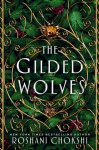 This one comes out today, so we don’t even have to wait for it anymore! I am totally shocked at myself for including The Gilded Wolves on this list because I strongly disliked Chokshi’s other book,
  As with many of the books on this list, I’m excited to read this upcoming release because I read Acevedo’s novel,
 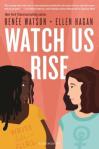 I stumbled upon this new release on Netgalley as well and while I wasn’t approved for an ARC on this one, I’m really excited to read it when it comes out in February. It’s about two high school students who are frustrated with the status quo at their school and start a Women’s Rights Club. They get a lot of positive support when they start the club, but they are eventually targeted by online trolls who threaten their club and their voices. I’m here for any and all YA books on feminism so I can’t wait to read this. What makes me more excited is that the two girls on the cover are black and white, so I’m hoping this will be a more intersectional, feminist read than some other similarly plotted books that I’ve read in the past.
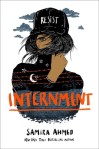 This is another book I’m a little surprised to include on the list because I read Ahmed’s debut novel,
 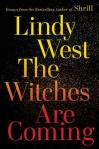 This is a bit of a longer list than I usually make, but there’s just so many good books coming out this year! Lindy West’s new book OBVIOUSLY has to be on this list because just everything about it screams something I must read. I really like Lindy’s writing (along with Jessica Valenti and Laurie Penny) and I’m a here for a book about how the “patriarchy, intolerance, and misogyny have conquered not just politics but American culture itself.” It sounds like this book is going to cover a lot of topics, from the 2016 election to the #MeToo movement, I can’t wait to read West’s observations and critiques.
 Laurie Halse Anderson’s Speak was published 20 years ago and was monumental in discussing the impacts of rape and sexual assault. She has published many other books since then, although I’ll admit, Speak is the only one of her books I’ve read. Shout is going to be a memoir collection of poems and essays about sexual assault, the progress we’ve made, and some personal anecdotes from the author’s personal life. It sounds like a really great anthology and I’m interested to see what the author has to say 20 years after the publication of her ground-breaking novel.
 The Paperback Princess