February Summary

You wouldn’t think that 3 days would make that much of a difference, but only having 28 days in February always makes the month go by so quickly!

I’m really happy about the 3 books I challenged myself to read in February as part of my goal to read to 3 books about Canada. I think it would have taken me a while to get to any of these books if I hadn’t publicly challenged myself to do so. To be honest, I even debating dropping the last one from the list and just reading 2, but I’m glad I pushed myself to read all 3 because I really liked them all! It’s only been 2 months, but actually taking the time to do some research and thoughtfully pick my challenges has been paying off with some quality literature.

Anyways, let’s jump right in with my February Summary:

Books read: 9
Pages read: 3,276
Main genres: Fiction, Fantasy
Favourite book: Saga, Volume 8

February started off with a stream of half-star reads. I don’t like giving half star ratings, but it’s a fine line between 3 stars and 4 stars and sometimes you just need to compromise. So I gave my first 3 reads of the month all 3.5 stars.

I started off with Tiger Lily, which is a re-telling of Peter Pan from Tinkerbell’s perspective, featuring Tiger Lily as the main protagonist. I thought this book was actually fantastically written, Jodi-Lynn Anderson’s writing is very beautiful and lyrical, but I struggled to get into the story, hence the 3.5 star rating. I already bought a copy of Anderson’s latest novel, Midnight at the Electric, and I’m excited to check out some more of her writing.

Next I read an advanced reader copy of Lisa Jewell’s latest book, Then She Was Gone, that I got from Netgalley. I’ve been dying to read some of Jewell’s stuff, so I was happy to give this one a try. I liked it in that it was formatted quick differently from any other mystery/thriller that I’ve read, but it was a little bit predictable in parts and I also found it extremely disturbing. However, like Tiger Lily, I’m intrigued to try some more of Jewell’s work next time I’m in the mood for another mystery!

The last of the 3.5 star reads was Eleanor Oliphant is Completely Fine by Gail Honeyman. I have to admit, I really didn’t want to read this one. It sounded a lot like The Rosie Project to me, which I didn’t like, but my book club picked it for our February read and I’ve been seeing a lot of good press about it, so what could I do? This was probably my least favourite of the 3. I found it kind of boring, but I do think it was a well written book (definitely better than The Rosie Project) and I appreciate what the author was trying to do with this novel.

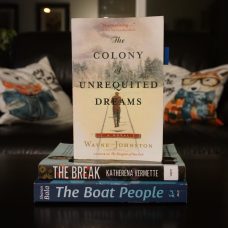
As you can see, I was kind of putting off tackling any of my Canadian reads for my Monthly Challenge, so after I finished Eleanor I decided to tackle The Boat People and The Break. Both of these books were fantastic! I feel like it took me forever to get through The Boat People, but it was a fascinating read about immigration and morality and it really made me think. In contrast, The Break is a family drama about a Métis family and all the hurts and grievances they’ve weathered together over the years. It was a inter-generational read that was just so well written and had so much depth, I thoroughly enjoyed it.

Actually, in between those 2 books I snuck in a quick reading of the latest Saga volume, which came out at the end of December. I slowly worked my way through the first 7 volumes of Saga last year, and while I really liked them all, this one affected me more than the rest. I think Brian K. Vaughan actually went a little more heavy-handed than usual on the social commentary in this one. At first I thought it was a bit much, but I guess I was wrong because this volume just stands out more than any of the others for me and it was pure enjoyment from start to finish. Vaughan tackles abortion, miscarriage, and grief in this volume and it really packed a punch, especially at the very end when parts of the cast are finally re-united.

I was avoiding starting the final book in my February Challenge all month, mostly due to length, so I fit in a quick read of The Lightning Thief. This is the first book in the Percy Jackson and the Olympians series and I’ve been wanting to read this for ages because everyone seems obsessed with everything Rick Riordan writes! This was another book that was just a lot of fun. The writing was hilarious and there was so much action packed into this middle grade book! Percy was witty and I loved his sidekicks, Annabeth and Grover. I would like to read more of these, but I suspect it may take my a while to get to them, but they’re definitely good if you’re looking for a laugh.

The final book in my Monthly Challenge was The Colony of Unrequited Dreams by Wayne Johnston. I admit, I did not want to read this one, but like I said, I’m glad I pushed myself to finish it. I had a lot to say about this one that I don’t want to get into again, so I’ll just say that it’s historical fiction about Newfoundland’s first premier, Joey Smallwood, who helped usher Newfoundland into confederation with Canada. Check out my full length review for more details. This book was meaningful to me as a Newfoundlander and I’m really proud that I finally read it. I gave it 4 stars.

And the last read I squeezed into February was The Power. I’ve been wanting to read this one since it came out at the end of last year since it’s been called the new ‘Handmaid’s Tale’ (along with Red Clocks). It’s dystopian science fiction where women develop the ability to produce electricity and use it through their hands. The book has such a great premise, but I was really disappointed with the author’s follow-through on the premise; I thought the book lacked focus and was poorly executed. It still make me think a lot though, so I gave it another 3.5 stars.
The Colony of Unrequited Dreams


Rating: 
Author: Wayne Johnston
Genres: Historical Fiction
Read: Feb. 2018

Where to start? This was a very long book that took a lot of motivation to pick up off my shelf, but that I ended up having a lot of opinions about. I was worried that it was going to be really dense, but fortunately, it turned out to be a very well written and engaging book about Newfoundland.

The Colony of Unrequited Dreams is historical fiction about Joey Smallwood, Newfoundland’s first premier who helped to usher Newfoundland into confederation with Canada. He is both a well liked and disliked premier, depending on who you talk to. Johnston definitely takes a lot of liberties with Smallwood’s character in this novel, but the story is still pretty accurately based on his life in terms of what he accomplished.

The story starts with Smallwood as a child in the early 1900’s. His family were shoe salesmen in St. John’s and he lived up on the Brow looking over the Harbour until his uncle decided to pay to send him to Bishop Feild, the prestigious boy’s boarding school of the day. At Bishop Feild, he meets Prowse, grandson of a noted historian, and Fielding, a girl who attends the nearby sister school, Bishop Spencer.

Fielding is the other main character in this story and unlike Smallwood, her character is completely fabricated. Fielding has a cane, walks with a limp, has a wry sense of humour, with sarcasm and irony being her preferred mediums. She’s a bit of an outcast who goes on to work as a reporter for The Telegram, publishing critical articles about all branches and parties of the government. Fielding marches to the beat of her own drum and I really liked her. I loved that she wasn’t afraid to speak her mind and I loved her sense of humour.

This book actually had a lot more humour in it than I was expecting and it had me laughing out loud early in the novel. Below is one of my favourite quotes from the book, which is an argument Smallwood has with his mother, and had me laughing because I also grew up in St. John’s while my parents grew up in rural outport communities. This is pretty much the exact same thing my parents would say to me growing up and the biggest way you could offend my parents would be to call them townies.

“I’m a Newfoundlander, but not St. John’s born, no, not St. John’s born,” he said.
“You’re a bayman and you always will be,” my mother said.

I’ve been living on the West Coast for the last 4 years, so this was super nostalgic for me. Wayne Johnston is not even describing my St. John’s in this novel because it’s set between 1900 and 1950, but there’s something really special about still being able to vividly picture the setting of a story, especially when it’s a place like Newfoundland, which I hold so special in my heart.

I didn’t love Joe Smallwood’s character, but I did like the writing. This was one of my monthly challenge books and I’m glad I challenged myself to read it because I probably never would have gotten around to it otherwise. Johnston does a really great job with the setting. I don’t know how non-Newfoundlanders might feel about this book, but I loved the setting and the atmosphere Johnston created. Especially towards the end when we finally get to the whole business of confederation and the end of independence. I felt like Johnston did a good job of not taking a side and presenting both sides of the story. It really makes you reflect on what Newfoundland gained, what it lost, and what may or may not have been.

I read Greg Malone’s Don’t Tell the Newfoundlanders several years ago and I felt that this book was a good contrast to that. Greg Malone is very clearly anti-confederation, as well as a bit of a conspiracy theorist. While I really liked Don’t Tell the Newfoundlanders, because it has some great history in it and I learned a lot, it is very speculative and I liked that Wayne Johnston presented a more balanced version of history and I feel he left his personal feelings out of it.

For those of you not well versed in Newfoundland’s history, we we’re an independent country up until 1933 when we had a commission of government forced on us by the British as a result of our war debt (even though A LOT of Newfoundlanders lost their lives fighting for Great Britain in WWI – I am a little bitter, yes). I’ve written an entire blog post about Don’t Tell the Newfoundlanders if you’re interested in our fascinating history (to me anyways), but basically we were supposed to get back our independence when we became self-sustaining once more, which we did after WWII. However, instead of just turning governance back over to Newfoundland, it was decided to hold a referendum to let the people choose if they wanted to join Canada instead.

Joe Smallwood wanted nothing more than to do something for which he would be remembered. He dropped out of Bishop Feild and failed at making a life for himself in New York, so he was desperate to have an influence in Newfoundland’s future. He was an avid socialist in his youth, but upon realizing that Newfoundlanders were never going to buy into socialism, he turned his talents to the Liberal government. He helped former Prime Minister Sir Richard Squires with his re-election campaign in hopes of winning the nomination to run himself, but he is jilted by Squires again and again and struggles to get into politics.

In this novel, he is a huge supporter of unions, walking across the entire provincial railroad line to start a rail-workers union, and he later travels all around Newfoundland’s most remote islands, trying to start a fisherman’s union. This really gave me an appreciation for how Smallwood became so popular and influential and why he supported Confederation. He really cared about Newfoundlanders and he spent an inordinate amount of time speaking with the poor throughout his life. He was also the host of a popular radio show that focused on sharing stories of Newfoundland and about Newfoundlanders.

The fisherman were not nationalists of any sort…They would vote for Confederation to get the mother’s allowance and would live by Confederation exactly as they had before…They had starved through a depression that had ended when the war began. Now, they were terrified that another decade like the thirties was on its way.

The crowd from St. John’s, the merchants and the wealthy, were all big supporters of independence. But Smallwood understood from his travels around Newfoundland that the majority of Newfoundlanders were poor fisherman, struggling to keep food on the table. They didn’t care about the government of the day and it rarely affected them. Confederation wouldn’t really change anything for them, except they’d be able to profit from access to Canada’s established public services.

The anti-confederates must have wondered how they lost…They had been to London and they had been to New York, but they had never been to Bonavista or La Poile, and that was why they lost.

Don’t Tell the Newfoundlanders leaves you feeling angry and riled up, but The Colony of Unrequited Dreams gave me an appreciation of what it was really like for Newfoundlanders. Forget the politics and the conspiracies, rural fishermen just wanted to catch a break and this was something I never really understood before. Yet Johnston still presents the other side of the story and makes you feel very nostalgic for what might have been. Personally, I wish we could have seen what might have been had we re-gained our independence, but I do also think it’s likely that we might have ended up joining Canada anyways and I’m proud to be both a Newfoundlander and a Canadian. I think this must be one of the reasons why Newfoundlanders always retain such a keen sense of home no matter where they go. There is something unique about Newfoundland culture that does not come from Canada because we have not always been Canadian.

The ending of this book was heartbreaking for me though. I was a little bit disappointed that Johnston chose to end this book about Fielding. I really liked her, but as a fictional character, I don’t think her story was quite as powerful and it felt very anti-climatic to suddenly jump back into Fielding’s past.

“You all but gave away Churchill Falls, which you had hoped would crown your career as Confederation had crowned Mackenzie King’s”

Johnston touches very briefly on Churchill Falls and I wish he’d explored it more. If this book had been written 10 years later, I’m sure he would have because the Lower Churchill is such a hot topic in Newfoundland right now. But I found this so heartbreaking because Churchill Falls was meant to be Smallwood’s swan song – his legacy – and instead it turned out to be one of the worst deals every made and a real sore spot for Newfoundlanders. Smallwood did not have a successful start as Premier and Johnston portrays him running out of time in office and chasing after Churchill Falls as his last chance to see Newfoundland transformed.

That said, my favourite part of this book is easily the way Johnston writes about Newfoundland. You can tell he has a great love and reverence for the island. I’m sure any Newfoundlander can relate as there’s just something that makes Newfoundlanders have this deep attachment to their homeland. She’s a rocky isle in the ocean, and she’s pounded by winds from the sea, but you just can’t help but love her ruggedness and her people. Smallwood was relentless and he really did want to do something good for Newfoundland. His whole life was dedicated to making Newfoundlander better and I do really think he cared about the poor Newfoundlanders and that they are what ultimately motivated him to chase after confederation.

I have often thought of that train hurtling down the Bonavista like the victory express. And all around it the northern night, the barrens, the bogs, the rocks and ponds and hills of Newfoundland. The Straits of Belle Isle, from the island side of which I have seen the coast of Labrador.
These things, finally, primarily, are Newfoundland.
From a mind divesting itself of images, those of the land would be the last to go.
We are a people on whose mind these images have been imprinted.
We are a people in whose bodies old sea-seeking rivers roar with blood.

The Alice Network


Rating: ⭐⭐⭐ 
Author: Kate Quinn
Genres: Historical Fiction
Read: Oct. 2017 on audiobook


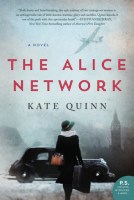
I listened to The Alice Network on audiobook, so I’ve slowly been making my way through this one for ages. It’s a historical tale set in France in both 1916 and 1947 and tells two stories simultaneously. In 1916, Evelyn Gardner was a British spy who operated in the french town of Lille, posing as a waitress and collecting information the German officers would spill over their meal. In 1947, Charlie St. Clair is searching for her cousin Rose who disappeared during the war. It turns out that Rose and Eve had a shared connection in that they both spied and worked under the same man in 2 different wars and Charlie pairs up with Eve to try and find her cousin.

I really liked Eve’s story. She was a part of the Alice Network, which was a real network of female spies in WWI, lead by Louise de Bettignies, alias Alice Dubois, or as she’s known to Eve, Lily. Louise was a real person and I found Eve’s story of spying on the German officers and how she would pass information fascinating. I don’t know how much of Lily’s character was fabricated, but hopefully not very much because she was an inspiring woman with her eternal optimism, humour, and spirit.

I didn’t love Charlie’s story. She was pretty annoying at the beginning of the novel (although I did feel for her and her predicament) and I found her story much slower moving. It only got interesting during the end and while I understand why Quinn decided to run their stories parallel, I felt that Charlie added very little to the story for most of the novel. I was disappointed at the end of each of Eve’s chapters when I knew I had to read a whole chapter about Charlie and I felt that little happened in her chapters to advance the plot. They went from town to town aimlessly and her story didn’t become engaging until the point when Eve started telling Charlie her story and they starting syncing up as Eve revealed more and more information to Charlie about her experience during WWI.

Definitely an interesting read though. I’ve read a lot of WWII books set in France so sometimes I get a bit fatigued with the “next big WWII book”, but I’ve read substantially less on WWI, which was another reason why I liked Eve’s story. That said, this was a well written book and I did enjoy it!

Beneath a Scarlet Sky


Rating:
 .5
Author: Mark T. Sullivan
Genres: Historical Fiction
Read: July 2017 on audiobook

Ugh, this book.

This is a challenge to rate because it really is a fascinating story that deserves to be told, but oh my god, the writing was brutal. I really wish this story could have been told by someone like Markus Zusak, Anthony Doerr, Kristen Hannah, or literally anyone who knows how to better write emotions and dialogue.

Beneath a Scarlet Sky is the fictional telling of Pino Lella’s true story. Lella is an 17 year old Italian from Milan who comes of age at the height of World War II. His parents send him out of Milan and he ends up guiding jews and other people looking to escape Italy through the snowy alps to neutral Switzerland. He does this until just before his 18th birthday, when his parents call him back to Milan and force him to enlist with the Germans to avoid being drafted to what would likely be sure death with the Italian Army. This is a huge source of shame for Pino and when he finds himself assigned to be the driver for German General Hans Leyers, he seizes the chance to redeem himself by turning spy for the Allies. Oh, and along the way he falls in love with this girl Ana.

This was an incredible true story, but the writing failed on so many levels for me. Disclaimer, this was my first audiobook, so it’s possible that maybe audiobooks are just not the right format for me, but I really think it’s the writing. First of all, the dialogue was awful – it didn’t feel at all natural. Secondly, it was not dynamic. I know this book is based on a true story, but it’s still supposed to be fiction. As an author you can take some liberties on a true story, to infuse emotion into the story and make it more palatable to your readers. Historical fiction writers do this all the time.

I think Sullivan should have just written a biography because this novel was way too precise. I felt like I was reading a boring chronology of Pino’s life. “Pino did this, and then he went here, and then he saw this, etc…” It was way too long and Sullivan tried to make every single event seem so intense, he spent so much time detailing each alpine crossing and everywhere Pino went as a driver. It was weird how precise he was with everything, even down to the specific distances Pino hiked and specific time he did something. I didn’t need to know how many metres Pino traversed for every part of his mountain crossings and I didn’t need to know where exactly he took General Leyers at 2, 4, and 6pm.

Sullivan conducted extensive interviews with Pino Lella and I felt like he didn’t give enough voice to the character and tried to stay too close to Lella’s story. Pino’s narrative felt like that of an 80 year old man recounting what happened to him during the war rather than that of a 17 year old actually living these experiences. This experience happened to Pino 70 years ago and I’m sure it was hard for him to articulate his emotions about it, which is where I had the biggest issue with Sullivan’s writing.

Sullivan didn’t know how to emote. Pino felt like the most basic character ever. He’s constantly talking about how he “feels”, but it had no depth for me. I think Sullivan should have taken a bit more liberty with the story to better connect with or imagine what Pino really would have felt. This book was an example of telling your audience instead of showing them. Sullivan obviously admires Pino (as do I), but it got in the way of his writing because Pino didn’t really have many flaws. I feel like Sullivan didn’t imagine what it would really have been like for Pino to enlist with the Nazis and the struggle he would have faced being shunned by his brother and best friend. Sure he was “sad” or “angry”, but his emotions were so basic and lacked depth.

This went for all the characters. Most upsetting for me was Ana. She had no personality whatsoever and her relationship with Pino was so romanticized. I mean, Pino was 18 at the time, so I could believe his fawning over her, but ugh, there were way too many descriptions of Pino being intoxicated by her “female scent”. Bletch. Seriously, what did Pino like about her besides her beauty? We never learn anything of substance about her except a quick flashback to her father’s tragic death.

But enough about the writing, on to the story: it was so heartbreaking! Pino was a busy teenager during the war and made a truly incredible contribution to the war. The synopsis gives no indication about the time Pino spent in the alps guiding refugees across the border, which I found even more fascinating than his spy work under General Leyers. It’s wild how many historical events he bore witness to and I really liked learning about Italy’s occupation. I’ve read a lot of WWII fiction about the camps and what it was like during the war in England, France, Germany, Poland, Russia, and even Hungary, but I’ve never read any WWII fiction about Italy.

The ending and epilogue were some of the most meaningful parts of the book for me. I don’t want to spoil it for anyone, but there was one death (it’s war, there’s obviously going to be deaths) at the end of the story that was actually one of the most horrifying things I could ever imagine and I was extremely disturbed reading it. Honestly, everything about the end of the war in Italy was disturbing: the civil war in Milan, the revenge killings, the desecration of Mussolini’s body in the square. Death is so unpredictable and it was one thing that Sullivan did a good job of demonstrating towards the end of the book. 

Sullivan’s depiction of the aftermath of the war in Italy was also meaningful because it really showcased the hardships the people of Milan had experienced and their anger at the Nazis and the fascists. It’s a frightening look at the depravity of humans and how even after suffering so much, we can still want to see others suffer. Can revenge actually soothe your soul after bearing witness to so much pain? Pino was so detached emotionally at the end of the novel that I thought this was the one scene where Sullivan actually showed us his pain instead of just telling us about it. Pino was numb inside, so Sullivan stopped narrating his internal emotions and we were able to discern them from his actions rather than being told how he felt.

After finishing this book, I’m not surprised that Pino kept his experiences to himself. I don’t think him a coward, but I understand now why he thought himself one. He was shamed and shunned by a lot of people when he joined the Nazis and when he becomes a spy, he’s frustrated by not being able to share it with his family or Carletto and hates for them to think of him as a traitor Nazi. But to an extent, he was. He did join the Nazi party and it was only by fate that he ended up as a driver to Hans Leyers. I’m glad he was able to rebel under the Nazi regime and secretly fight against the Nazis, but the story could easily have gone another way if he had had no opportunity to fight for the Allies and ultimately, the winners.

But in a time of war we can’t know how things will turn out. Pino was young and not equipped for the situations he was put in. It’s impossible to predict how we will act and react in extreme situations and how the bounds of right and wrong can become blurred and confused by the people and events around you. I can see how Pino would be haunted by his experiences for the rest of his life and how war can really change the trajectory of your entire life and character.

I am very glad that Mark Sullivan has created a record of Pino’s life so that history will remember him, but don’t expect a well-written book.

The Radium Girls

Rating: ⭐⭐⭐⭐⭐
Author: Kate Moore
Genres: History, Non-Fiction
Read: Nov. 2017

Why do we always forget women’s history? Why do we never even record it?

The Radium Girls inspire me. Thank you Kate Moore for writing this book and reminding us of the struggle these women went through and the impact their fight has had on all those workers to come after them. This book was so well researched and so well written. Sometimes I have trouble with non-fiction, but this read like fiction and Moore infused a lot of emotion into her telling of history.

The Radium Girls tells the story of the thousands of girls who worked as dial painters in radium factories in small american towns beginning in 1917 and continuing into the 1970’s. Radium was still a relatively new discovery at this time and a luminous paint was developed using radium for painting the dials on watch faces and aviation and military equipment throughout the Great War.

The US Radium Corporation set up a factory in Orange, New Jersey and their competitor, Radium Dial, later set up another factory in Ottawa, Illinois. Hundreds of girls in both towns were hired as dial painters at the factories. While the dangers of radium were definitely known at this time, it was more often touted as a ‘wonder’ drug with many health benefits. The girls at the factory were taught to paint the dials using the ‘lip – dip – paint’ method. In order to get the brushes super fine for precision painting, they were taught to use their lips to wet the brush to a fine point. This resulted in them ingesting the radium-laced paint with each ‘lip and dip’ and due to poor cleaning procedures at the plant, they often took radium powder home on their shoes and clothes. They became known as ‘glowing girls’.

As you can imagine, ingesting radium daily on the job is not the best practice and the girls eventually started developing health problems, including fatigue, achy backs, limps and loose teeth. Some girls experienced a very rapid decline in health, while others experienced slower symptoms. However, all of the symptoms resulted in the deterioration of the women’s bodies, often resulting in death. Unfortunately, it can take years for symptoms of radium poisoning to develop and with many women having moved on from their dial painting jobs several years prior, and with little known about radium poisoning at the time, doctors had a really hard time diagnosing their issues.

Moore is unflinching in her storytelling of the events that took place in Orange and Ottawa in the 1920’s and 1930’s. Parts of the book are very difficult to read due to the immense suffering the radium girls went through. Both radium companies tried to deny any wrongdoing and it is shameful and literally evil the lengths they went to distance themselves from the girls and any wrongdoing. The US Radium Corporation were a bunch of snakes, but Radium Dial was downright criminal. Both companies repeatedly lied to the girls and to the courts and it was actually enraging to read about the ordeal they put the radium girls through.

Once a connection was finally made between the girls symptoms and radium poisoning, many of the girls brought legal action against the companies. They went through hell from both the radium poisoning and from the lengths they went to try and secure some kind of justice and compensation for their families.

These girls inspire me because despite suffering some of the worst pain I’ve heard described, they persevered and fought relentlessly for justice – mostly for the radium girls that would come behind them as they were unlikely to live long enough to enjoy any justice they might find for themselves. They literally birthed the laws that now exist surrounding workers rights and likely saved thousands of lives through the development of safety procedures and protocols when working with radium as a result of their case.

I was totally blown away by this book. It is some heavy subject matter, but I was completely enthralled by their story and inhaled this 500 pager in just 2 days. Even though this book takes place in the 20’s and 30’s, it is still hugely relevant today. Women are still routinely ignored and silenced. What frustrated me about this book was that nobody gave a shit about the women and that they were literally losing their lives on the job. In fact, people only even started talking about radium use in the plant when the first male employee died in New Jersey, even though several women had already died at this point.

Because the radium girls in Ottawa began pursuing litigation in the 30’s, when the Great Depression was at its worst, the community shunned them. They saw Radium Dial as a quality employer in a time when jobs were hard to come by and the community tried to silence the women when they came out saying they’d been poisoned and said they made it all up because they didn’t want to lose the plant. When the girls approached their boss after Charlotte Purcell lost her arm to radium poisoning, he literally looked at them and told them he saw nothing wrong with them. Women were second class citizens and the girls were routinely silenced and ignored.

Nevertheless, they persevered. I love that these types of stories about women are finally becoming mainstream. These stories deserve and need to be told. Women’s history is so important and so often forgotten or unrecorded. The post script of this book destroyed me because it proves how easily history is forgotten and repeated. That’s why I highly recommend this book to anyone and everyone!