 Rating: ⭐⭐⭐⭐⭐
Author: Taylor Jenkins Reid
Genres: Fiction, Historical fiction
Pub. date: Mar. 5, 2019 (read Mar. 2019 on Audible
I did everything I could to get my hands on an early copy of Daisy Jones & The Six, but friends, I’m so glad I was unsuccessful because that would have deprived me of the joy of listening to this as an audiobook! I usually prefer to read fiction that I think I’m going to love as a paperback because it’s almost never quite as good as an audiobook. But this is one case where I would absolutely recommend reading the audiobook! Audible sold me on this book with the 5 minute sample because it’s read with a full cast, meaning a different voice actor is cast for every single character! It adds so much life to the story when every character is read by a different person and I really felt like listening to this book was an experience in itself. It also works particularly well as an audiobook because the story is written as an “oral history”, meaning almost the entire book is dialogue from the characters as they recount the story. So absolutely read the audiobook, you will not regret it!
For a little background; Taylor Jenkins Reid is the author of The Seven Husbands of Evelyn Hugo, which was published in 2017 and took the book world by storm in 2018. I read it with my book club and LOVED it, so I was really excited to finally get my hands on this book. Daisy Jones & The Six is set in present day, but tells the story of the rise to fame of fictional rock band, Daisy Jones & The Six in the 1970’s, leading up to the break up of the band in 1979 at the height of their popularity. No one knows the true story of why the band broke-up, but for the first time, the members of the band have agreed to tell their story. So the whole thing reads like an MTV-type documentary, where an interviewer has compiled everyone’s accounts of the band’s rise to fame and break-up to finally give readers the full story.
What makes it so interesting is that because the story actually happened 40 years in the past, the band members are, of course, fuzzy on some of the details and many of their stories contradict one another. Because we don’t really know the truth or the motivations of each of each of the characters (some might be motivated to lie for example), it’s up to the reader to decide where the truth actually lies, which the interviewer postulates, is likely somewhere in the middle.
I can see how this book wouldn’t be for everyone – I personally don’t care about 1970’s rock and roll, although I can see how this topic would be an incentive to pick up this book for other readers – but I was captivated from start to finish! I thought the way Jenkins Reid crafted the story was brilliant, as was her writing. Any author that can tell a story this well written and crafted is definitely talented. Plus the voice actors should really be commended because they did a wonderful job capturing the angst and emotion of each character. This is one book I would recommend listening to at normal speed because the actors really are quite talented and absolutely bring this story to life.
One of the best parts of this book is just how real the characters feel. Dialogue can be tricky to write and some authors are just not good at it. But I genuinely felt like every single one of these characters was a real person and it’s hard to believe that Daisy Jones & The Six are not actually a real band. It’s hard to believe someone could bring music that doesn’t even exist to life in such a real way in a book. The most upsetting part is that none of the music in the book actually exists, because I wanted so badly to be able and go and listen to the album that Daisy and Billy wrote together. I kept thinking during the book that the band reminded me of Fleetwood Mac, even though I don’t even know very much about Fleetwood Mac, but I have heard that some of the story is loosely based on that band, although I’m not sure how much truth there is to that rumour.
The overall story is not that different from any other rock story. It has many of the same themes that we regularly see in stories about musicians. The book is filled with sex, drugs, and rock and roll, but the characters and their relationships are really what bring the story to life. However, while the general themes were pretty standard, I did not find the plot predictable. So many of these kinds of stories involve drug abuse and forbidden relationships that tear our artists apart – this book had those elements, yet it still felt fresh and surprising.
Daisy Jones was a solo artist and The Six was a 6-person rock band led by singer Billy Dunne. Both achieved some level of success on their own, but together they were magic. Daisy and Billy had a tumultuous relationship. They both had very strong personalities and opinions about the music they wanted to create, but when they were able to work together, what they created was magical. Likewise, a distinct personality emerged for each of the individual band members and the producers and family members that surrounded the band. I loved the dynamic between Daisy, Billy, and Camila, as well as the dynamics between other band members such as Karen and Graham, Eddie and Billy, and Teddy and Billy. Plus each character had a really well developed sense of self and struggled as much with their own personal demons as they did with the people around them.
I loved the evolution of each character. Everyone had great personality traits and everyone had flaws. You’d start off loving a character, then find them to be quite unlikable, before finally understanding what they’re going through and liking them again. I’ve heard reviews that some people loved Daisy Jones, while others hated her. I was firmly in the middle. She definitely had a spirit that was to be commended, especially for a woman in the 70’s, but she was also undeniably privileged and entitled and often made bad decisions.
Likewise, I loved and hated Billy. Billy had an obvious conflict with Daisy, but his character was really driven by his personal conflict and fight with addiction. Daisy and Billy definitely brought out each other’s flaws, but they also helped one another to grow in ways they never would have without each other.
I’ve heard some people call this a love story, but it was never really a love story for me. It was more a story about people and relationships. Relationships were central to the story, but it wasn’t always about love. It was also about the power of music as a method of expression and the different ways that we express ourselves and learn and grow from our mistakes. Although I will say, I always look for love triangles where you love everyone in the triangle because I think it brings so much more emotion to a story when you want all 3 characters to be happy, but you know only 2 of them will be together. Daisy Jones & The Six has that kind of love story and it will tear your heart out, but it’s so much more interesting to read about.
There’s more men than women in the story – we’re limited pretty much to Daisy, Karen, and Camila as our female characters – but I loved every single one of them. Daisy had a lot of faults, but I loved how unapologetic she was. She refused to be anyone but who she was and even though she was portrayed by the media as a sex icon, she was an icon on her own terms. She dressed for herself and made decisions for herself, she was always focused on her own gaze rather than those around her. But I loved that Jenkins Reid also drew attention to her privilege. She never really had to work for anything and I loved how her character was challenged throughout the book, both as a musician and as a person.
Karen was probably my favourite female character though and I loved how Judy Greer portrayed her in the audiobook. Karen was another character who knew what she wanted and what she didn’t want and she was never going to apologize for it. Her character was in contrast to what most people would expect from a woman in this era and I loved the way the author contrasted Karen and Camila. Karen wanted to be a successful musician, she was interested in love and sex, but never at the expense of her career, she was comfortable being alone, and she never wanted kids. In contrast, Camila was happy to sit back and support Billy as a musician. She wanted nothing more than to be a mother, and though it was hard, she was content in her life and trusted her husband.
They were both completely different people, who had very different thoughts on what they wanted to achieve in life, but they were best friends and neither was threatened by the other’s ambitions and how they differed. I think a lot of mothers are threatened by women who don’t want kids. I don’t really know why, it’s a personal decision and both are right. But Camila was never threatened by Karen’s differing values and never tried to convince her to feel otherwise. They both accepted and respected the others desires.
I don’t want to spoil what happened to break up the band, but I really liked that it was never really about one specific thing. It was a culmination of all the different relationships in the band. There were different catalysts for different people and I loved how this was a study of all of the band members rather than just Billy and Daisy.
I want to get into some spoilers now, so I’ll just say I absolutely loved this book from start to finish and would highly recommend the audiobook! If you haven’t read it yet, tap out now to avoid spoilers, if you have, let’s keep going!
SPOILERS BELOW
So first of all, because I was just talking about Karen and Camila, I want to say that I loved the abortion scene in this book. It was lovely to see a woman put in a tough situation, but confident enough in herself and her dreams to make the right decision for herself and to not regret it. Karen understood that she wouldn’t have the same luxury to continue her career as Billy and Graham would have if they all were parents. Graham clearly didn’t understand and as much as I liked the two of them as a couple, they weren’t meant to be. I also loved that Jenkins Reid took the typical gender dynamic and flipped it in Karen and Graham’s relationship. So often it’s the girl chasing after the guy, but I loved that Karen was one of the few women portrayed as actually being comfortable alone. I loved how she was contrasted to Camila in terms of their personal goals, and how she was also contrasted to Daisy, who hated being alone.
Finally, I want to talk about that killer spoiler at the end where we discover that the person interviewing the band is actually Julia, Billy’s daughter, and that Camila has passed on since being interviewed. The interviewer tells us at the beginning that some of the individuals have sadly passed on, so at first you’re kind of expecting the typical tragic “musician dies from drug abuse and overdoes” story, but because everyone is being interviewed, you understand that means they’re all still alive. It’s not until later that you realize Teddy was never interviewed because he passed away in the late 70’s. Then we’re thrown for a total loop when we discover Camila passed away mid-interview and that the interviewer is actually hers and Billy’s daughter.
To be honest, I didn’t think that much of it, I was just like, okay, that’s kind of weird, but whatever, doesn’t change that much, just makes it seem weird that everyone was talking about her and her parents in the third person. But I watched Hannah’s (A Clockwork Reader) review on Youtube and she brought up a great point about how that shines a different light on absolutely everything that precluded it. Keeping in mind that everyone is telling their story to Billy’s daughter would absolutely change how they would tell their story and should make us question even further what the actual truth is.
It explains why no one every really says anything bad about Camlia, because people don’t really talk bad of the dead and it makes you wonder what Daisy and Billy’s relationship actually was like since it was probably really difficult for them to discuss the topic with Billy’s daughter. Throughout the whole book, I thought that Billy and Daisy had great chemistry, but I was somewhat surprised with their love story. Billy seemed to genuinely love Camila and Billy and Daisy both hated each other on so many different occasions, that it made you wonder if the music was really enough for them to overcome that. But knowing they’re telling their story to Julia paints everything in a different light and kind of makes me want to go back and listen to the whole thing again.
It speaks volumes about Taylor Jenkins Reid’s talent. She really did bring these characters to life in the most impressive way, it’s genuinely a bit jarring to me that none of these people are real. There were no throw-away characters, even annoying characters like Eddie were still incredibly relatable. A lot of the characters made bad decisions, but they were so well developed, it was easy to understand why they made the decisions they did.
Phew, well that was the quite the review and I think it’s actually made me appreciate the book even more than I did when I finished. I love when writing a review helps you confirm how you actually felt about a book and this review definitely helped me. I also love when a book makes you feel so much you can write a review this long. So definitely check out this book and audiobook. I know some people haven’t been loving this book as much as they hoped, but I definitely did!
 Rating: ⭐⭐⭐⭐.5
 Rating: ⭐⭐⭐
 Rating: ⭐⭐⭐⭐
 I’ve read every book Ruth Ware has written and I will be reading this one too! I don’t think Ware is the best mystery writer out there, but I find her books so compulsively readable that I’m always thrilled to pick up a new one! Especially because this one sounds SO GOOD! It’s about a woman who takes a live-in Nanny job in the Scottish highlands, which she thinks is going to be a dream job and ends up being a nightmare that lands her in prison for a murder she didn’t commit! This sounds so intriguing and I can’t wait to read it! Goodreads says this book is coming out in early Sep, but Edelweiss is listing the release date as Aug. 6, so we’ll just have to wait and see!
 Alice Feeney only has one other book,
 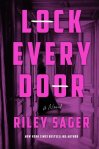 Last year and read and enjoyed Riley Sager’s second thriller novel,
  I’m cheating a bit on this book because I was fortunate enough to receive an ARC and I have already read it, but I’m including it anyways because it releases in March and fans of Lisa See will not be disappointed! The Island of Sea Women is set on Jeju Island in South Korea and takes us through 70 years of history – from the 1930’s to the 2000’s. Jeju Island’s culture is focused around women – where they are the core providers for their families and the men stay home and take care of the home and children. It tells the story of Young-sook and her friend Mi-ja, who are both part of the Haenyeo collective of divers who make a living diving for sealife in the fridgid sea.
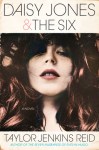 The Seven Husbands of Evelyn Hugo took Booktube by storm last year! I read it back in 2017 with my book club and also loved it – so I’m so excited to pick this one up later this year. Daisy Jones and the Six is about solo singer Daisy Jones and popular band, The Six. I’m not totally clear on the plot of the novel, but it’s set in the 70’s and is guaranteed to include all of the drama of sex, drugs, and rock & roll. I loved how diverse Evelyn Hugo and how good of a story teller Taylor Jenkins Reid is, so I can’t wait to read this one too!
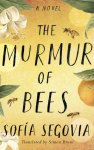 This is a lesser promoted novel that I stumbled upon on Netgalley and became immediately intrigued with. It’s by a Mexican author and has actually been published since 2015, but the English translation is being released in April. It’s about an abandoned baby that was found under a bridge and the impact he has on the small village. It’s set during the Mexican Revolution and the outbreak of the spanish influenza in 1918 and this setting is what really intrigued me about the book. I already have a copy of this from Netgalley and I’m looking forward to learning more about this period of Mexican history.
 Romanov is a historical fantasy novel about Anastasia Romanov. It re-imagines history where instead of Anastasia dying, she was tasked with smuggling out a spell on her way to Siberia that might be the only thing that could save her condemned family. I don’t really know much more about the story, but I’ve always been a little obsessed with Anastasia and I pretty much only had to hear the words “Anastasia” and “fantasy” and I was in. In discovering this book, I also discovered that Brandes has another historical fantasy novel about Guy Fawkes plot to blow up the British government, Fawkes, which I must now also add to my TBR because that also sounds amazing!
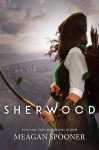 This is another book where I read a really short description of the book and was immediately like, “I have to read this.” Sherwood is basically a gender-bent retelling of Robin Hood. In this version, Robin Hood is dead and his betrothed, Maid Marion is bereft. The people of Nottingham are greatly suffering, especially with the loss of their hero. In her desire to help her people, she dons Robin’s green cloak and is mistaken to be him. The people are desperate for a saviour and Marion decides to do her best to help them.
 This one comes out today, so we don’t even have to wait for it anymore! I am totally shocked at myself for including The Gilded Wolves on this list because I strongly disliked Chokshi’s other book,
  As with many of the books on this list, I’m excited to read this upcoming release because I read Acevedo’s novel,
 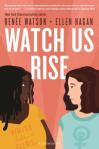 I stumbled upon this new release on Netgalley as well and while I wasn’t approved for an ARC on this one, I’m really excited to read it when it comes out in February. It’s about two high school students who are frustrated with the status quo at their school and start a Women’s Rights Club. They get a lot of positive support when they start the club, but they are eventually targeted by online trolls who threaten their club and their voices. I’m here for any and all YA books on feminism so I can’t wait to read this. What makes me more excited is that the two girls on the cover are black and white, so I’m hoping this will be a more intersectional, feminist read than some other similarly plotted books that I’ve read in the past.
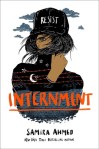 This is another book I’m a little surprised to include on the list because I read Ahmed’s debut novel,
  This is a bit of a longer list than I usually make, but there’s just so many good books coming out this year! Lindy West’s new book OBVIOUSLY has to be on this list because just everything about it screams something I must read. I really like Lindy’s writing (along with Jessica Valenti and Laurie Penny) and I’m a here for a book about how the “patriarchy, intolerance, and misogyny have conquered not just politics but American culture itself.” It sounds like this book is going to cover a lot of topics, from the 2016 election to the #MeToo movement, I can’t wait to read West’s observations and critiques.
 Laurie Halse Anderson’s Speak was published 20 years ago and was monumental in discussing the impacts of rape and sexual assault. She has published many other books since then, although I’ll admit, Speak is the only one of her books I’ve read. Shout is going to be a memoir collection of poems and essays about sexual assault, the progress we’ve made, and some personal anecdotes from the author’s personal life. It sounds like a really great anthology and I’m interested to see what the author has to say 20 years after the publication of her ground-breaking novel.
 The Paperback Princess