Our Homesick Songs

Rating: ⭐
Author: Emma Hooper
Genres: Historical Fiction, Fiction
Pub date: Aug. 2018 (read Nov. 2018)

I loved everything about this book.

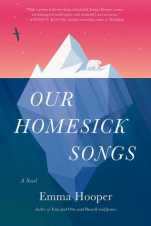
I saw it floating around on Netgalley and Goodreads over the past year and I thought it had the most gorgeous cover, which reminded me of my home in Newfoundland, but I guess I never read the synopsis because when one of the book bloggers I follow posted a review about this book, I couldn’t believe it was actually about Newfoundland. (not that there’s any shortage of books about Newfoundland, I just wasn’t expecting to find one in the mainstream book world).

Our Homesick Songs is by Albertan author, Emma Hooper, and is about the collapse of the Newfoundland fishery in 1992 and the struggle many Newfoundlanders went through in making a living after their traditional livelihood was decimated. The story focuses on the Connor family, who lives in a small town called Big Running, on an island off the coast of Newfoundland. It tells the story of Aidan Connor and Martha Murphy – how they fell in love and were later forced to travel to the Alberta camps to find work – and their two children, Finn and Cora. It’s a family drama at heart, but setting and culture play a huge role in the story.

I grew up in Newfoundland, moving to BC after I finished university. My parents and grandparents are from rural Newfoundland communities and my maternal grandfather was a fisherman. Stories about Newfoundland always hold a special place in my heart because, I think more than anywhere else in Canada, Newfoundland has a very distinct sense of culture and belonging. I was too young to understand the cod moratorium in the early 1990’s, but I’ve witnessed the impact in had on rural Newfoundland, and how the return of the food fishery in 2007 was like a right of passage and a homecoming for many people. Everyone has friends and relatives who were forced to move out west in search of employment – it’s why I have so much family located in Alberta – but there is usually a keen desire to return home.

I was a bit nervous to read this book, seeing as it’s not actually written by a Newfoundlander. I mean, I know people write books all the time about places they’re not from, but you can’t help but feel a little bit nervous about having your beloved home recounted from the point of view of someone else. But Emma Hooper did a wonderful job with this book. Her writing is lyrical and beautiful and it really does evoke a strong sense of homesickness as you read her writing. I think she did a wonderful job capturing the love people feel for Newfoundland, and communicating how heartbreaking it is for people when they are forced to leave. I’m sure I related to it a little bit more as a Newfoundlander, but I really think that anyone can love and enjoy this book.

There’s two main stories being told throughout this book. There’s a current day story set in 1992. The fish have disappeared, and as such, so have the people. Big Running gets smaller every day as families take off for the mainland in search of work. There’s an abundance of jobs in the work camps up in Northern Alberta, so this is primarily where people flock. In an attempt to stay, Martha and Aidan share a camp job on rotation, with each of them doing a month on and a month off. Their children, Finn and Cora, struggle with the loss of one of their parents each month and the disappearance of their community. Cora escapes from her broken family by studying travel guides from the library and re-creating each country in one of the abandoned homes. Finn laments the loss of their way of life and comes up with a plan to try and draw the fish back to their shores. Both children are lonely, as are their parents, who are forced to live apart indefinitely.

The second story is recounted by Finn’s accordion teacher, Mrs Callaghan. She tells Finn the story of his parents and how they met and came to fall in love back in the 1970’s. The stories contrast each other in that one tells the story of how love began, whereas the other tells the story of how it starts to fall apart. And woven through both stories is the music that calls us all together and the importance it plays in Newfoundland culture.

I actually really loved the way Hooper wove music in through the story. Music is an incredibly important part of Newfoundland culture and I thought she really showcased that and linked it in really well with her themes of homesickness and loneliness. Finn plays the accordion, Cora plays the violin, and everybody sings or plays one musical instrument or another. Aidan and Martha sang to each other over the water for years without even being aware of the other. Music plays an important role in bringing people together and reminding them where they come from and I thought Hooper showcased this multiple times throughout the book. I loved when everyone showed up to Finn’s community meeting with their instruments. They knew they might be forced out of their homes, but saw the meeting as a good opportunity for one last community kitchen party.

This book also touches on the issue of government resettlement. It’s a heavy issue in itself and has been the focus of more than one book in the past, but I thought it worked well in this story and wasn’t overdone. It’s another important historical part of Newfoundland that is ongoing to this day, and I think it’s great to inform more people about it. Rural communities are very much disappearing in Newfoundland and it is heartbreaking. It’s difficult for the government to continue maintaining services to small backwater communities and it does happen where residents are encouraged by the government to relocate. For Finn, the deadline to decide on re-settlement was a catalyst to do something. He doesn’t want to leave his home or have his family be separated any longer, so he hatches a plan to try and bring back the fish.

This is a classic kind of slow-burn family drama, but no part of this story read slowly to me. Hooper does a great job on characterization and character development and even though it’s not a plot driven book, I could not put it down. I picked this one up with the intent of reading it simultaneously with a mystery novel, but once I started this one, I literally couldn’t bear to put it down and didn’t touch my other book once until finishing this one. I can see how this kind of writing isn’t for everyone, but I personally loved it.

In conclusion, I can already tell that this is a story that will stick with me and that I’ll be recommending to my family. Everything about this book worked for me and I loved how evocative and introspective the story was. The name Our Homesick Songs is the perfect name for this book because the writing, the setting, and the characters all evoke a very keen sense of longing. 5 stars, no question.

An American Marriage

Rating: ⭐
Author: Tayari Jones
Genres: Fiction
Pub Date: Feb. 2018 (read Jul. 2018)

This is so hard to review! I loved the first 2/3 of this book – I thought the writing was fabulous and the character development was so fantastic. Jones created this heartbreaking scenario and dynamic between the characters and I thought it was executed brilliantly. But I didn’t love the last third of the book, not because of how it ended (endings frustrate me all the time, but it doesn’t make them bad), I just didn’t love the character dynamics in the last third of the book. Although it wasn’t enough to deter me from rating this highly because I did really think that the writing in this book was fantastic.

Here’s the scenario: Celestial and Roy have been married for just over a year and are very much still learning about each other when Roy is falsely accused and prosecuted for a crime he didn’t commit. He is incarcerated for 12 years and it is just heartbreaking to watch these two characters be torn apart and the injustice of having your life stolen from you just when you were settling down to really start it.

Like I said, I thought the set-up for this story was brilliant. The author spends just enough time introducing you to these two characters before breaking your heart for them. They were both in their early 30’s when Roy goes into prison and have essentially had the core of their marriage and life together stolen from them. They stay together, but Celestial eventually starts to move on with her life and moves on to another relationship, while Roy is stuck in the limbo of prison. Unable to fight for himself or his wife or to be there for his parents when his mother becomes ill.

When Roy gets a surprise early release after serving only 5 of his 12 years, Jones places her characters in an impossible situation, where no one is wrong, but everyone is hurting. The outside world has moved on without Roy, but he is not ready to let his old life, or his wife, go.

I loved this scenario because there is no right or wrong answers. Everyone feels wronged, but no one is necessarily wrong. They were placed in a mess of a situation and they all tried to move forward as best they could. I loved the emotional dilemma of this story because it really made me think and the simple storytelling evokes a lot of emotions. Roy and Celestial’s parents play a large role in the story too and I loved how Jones wove these characters into the narrative and used them as support for the familial themes throughout the novel. I really do think this was an excellent piece of storytelling and it’s why I will still be giving the book 4 stars.

But let’s talk about the problematic pieces (for me anyways). I didn’t love the last third of the story because I thought it fell too heavily on Roy and Andre. They spent forever fighting over Celestial like she wasn’t even a human being with any agency. They both felt they were entitled to her for their own reasons and neither was particularly interested in who Celestial really wanted to be with (especially Roy). Celestial’s voice in the story totally died out and she became so malleable to the two characters that I had no idea who this character even was any more. I wanted her to stand up for herself and I wanted the two men to acknowledge that the choice was ultimately hers, no matter how wronged they might feel by the decision. I mean, essentially I don’t think Celestial even knew what she wanted, which may be why the author wrote her this way, but I just got frustrated listening to the two men talk about her.

I mean, I know this is accurate to how a lot of men do think, so I can’t fault Jones too much. I just wanted Celestial to have more agency. It reminded me of TV shows and movies produced by men where the female characters only serve to advance the male protagonist’s storyline. I sometimes felt that Celestial was a secondary character to Andre and Roy and that at the end, she only really existed to serve their development.

The ending did actually redeem it a little bit though because one of the characters finally came to some realizations about the relationship and their behaviour. But Roy’s entitlement made me mad. He made some pretty questionable choices after he got out of prison that made me lose my respect for him. I really think he had no high ground to stand on at all after some of the choices he made, but he still felt entitled to Celestial and their marriage. Even with some of these realizations at the end, Celestial is still only a reactionary character.

I may have to do a bit more research on the author. I’m interested to know what she based Roy’s prison and release experience on and whether she has any personal exposure to how people in similar situations have felt and acted upon being released from prison. I don’t want to judge Roy too harshly because I know that 5 years in prison for a crime you didn’t commit must mess with you and I’m sure played a large role in how he acted upon his release.

To conclude, I’m still giving this 4 stars because I did really enjoy it and even though I didn’t like how the characters acted, they were still absolutely believable characters and accurate to how I’m sure some people would react in this situation. They didn’t have the maturity and respect I wanted them to have, but that doesn’t mean that weren’t good characters. Mostly I just wonder if the author intentionally wrote Celestial as such malleable character, or if she just didn’t even realize she’d given her character no agency and placed everything on the two male characters. If it was a male author I’d definitely call it a blind spot, but as a female author, I really don’t know if it was intentional or not.

The other reason I feel this still deserves 4 stars is because it is also a fantastic commentary on race, without being fully about race. I haven’t even mentioned that the entire cast of this book is black and that this undoubtedly plays a huge role in why Roy is wrongly convicted. Jones makes an important commentary about racial profiling and the injustices of the justice system, without making it her central theme. It’s ultimately a book about the long lasting impacts that the justice system can have on not only the individual, but their families and communities.

The Great Alone


Rating: 
Author: Kristin Hannah
Genres: Historical Fiction
Pub Date: Feb. 2018 (read Jun. 2018)

The Great Alone has been haunting my shelf since it first came out and I finally found time to read it as part of my June Challenge to read 3 historical novels. I read The Nightingale in 2015 and while I did like it a lot, I’ve read a lot of WWII historical fiction and had a bit of fatigue reading that genre. The Great Alone has the most gorgeous cover though (don’t pretend it doesn’t matter) and I was intrigued by a story about Alaska and a POW.

I’m so glad I finally read this because it was seriously a pleasure to read from start to finish, even though it broke my heart and tossed me into the pits of despair. The Great Alone has some of the most gorgeous writing and Kristin Hannah breathed so much life into her setting and her characters. Setting is key for this story and the author did a magnificent job a creating a sense of place. Sometimes too much descriptive imagery can bog a story down, but Hannah’s writing made me fall totally in love with a place I’ve never even been.

Alaska in the 1970’s is the last frontier of America. A place where no one really cares who you are or where you came from. A place where everyone is running to something or from something. A place where 5 of every 1,000 people goes missing and is never found. Where you’re only allowed to make one mistake, because the second one will kill you.

Ernt Albright returns from the Vietnam War a broken man. His plane crashed and he was captured early into his tour and spent years being tortured in a POW camp. When he finally returns to his family, he is broken and disillusioned with America. He was in love with his country when he signed up to go to Vietnam, but now all he can see is an America that no longer represents him – corrupt politicians and blind citizens. Between the Watergate scandal and the young girls going missing in Washington, Ernt Albright feels the whole world is just going to shit.

In his frustration, Ernt becomes an angry and volatile man, moving his family all over America before inheriting a cabin in Alaska from his late friend from Vietnam. In a last bid to find peace, he packs up his life and moves his wife, Cora, and their 13 year old daughter, Leni, to Kaneq Town in Alaska.

They arrive in Alaska in the Spring and are enchanted by the landscape. The days are long and Ernt finally has a purpose – repairing the decrepit old cottage and learning how to survive. Leni has never really had a place that she could call home, but something about Alaska calls to her. This is the great alone, where you can be whoever you want to be. There’s a real sense of community – trade is a currency and in a place where survival is all that matters, the neighbours band together to look after each other.

I’ve been living in BC for the last 5 years, and while I know it’s a lot a different than Alaska, I have become totally enamoured with the landscape here, the mountains and lakes. I spend most of my free time in the summer hiking and camping in the mountains. I also grew up in Newfoundland, which again, has little in common with Alaska, but is more remote and you spend a lot of your year suffering through a dark winter. I know the Alaskans wouldn’t be impressed with my measly camping skills when living off the land is their life, but I did feel like I could totally relate with their love of place, even though 8 months of the year that place is trying to kill you.

The author does a fantastic job with the imagery and making you fall in love with Alaska when the Allbright’s first arrive. The days are long and the flowers are in bloom, what’s not to love about Alaska. For the first time in her life, Leni sees a place where they might actually be able to be a happy family. The sun drives away Ernt’s nightmares and being responsible for your own subsistence gives them all a purpose. Plus, Leni makes her first real friend. There’s only 6 students in the tiny school in Kaneq, but Matthew Walker is 13 too and for the first time, they both have a real friend to spend time with. Matthew is the third generation of the Walker family to grow up in Alaska and he shares his love of the land with Leni and they become very close.

However, at the same time that Hannah’s writing has you falling in love with Alaska, there’s this feeling of darker things lurking on the horizon. The townspeople seem to be obsessed with winter. After school lets out, the entire summer is devoted to preparing for a long a dark winter and Leni and her family work from dawn til dusk every day doing their best to prepare. They must til the land, grow a garden, smoke and can salmon, and most important, bag a moose to see them through the long winter. And as the days start to get shorter, the long nights bring the return of Ernt’s nightmares. His temper gets shorter and Leni begins to realize that what can kill her outside the house may be second to what lurks inside their own home.

I think I could talk forever about this book. I thought it was a little slow moving at the beginning, but it didn’t hurt my enjoyment. I learned a lot about Alaska and survival, which I found just as enthralling as the character development and conflict that came later. There’s a lot going on in this book and Kristin Hannah created some truly wonderful characters. It’s hard to read about Ernt and Cora and their volatile love, as well as the heartbreak that befalls the Walker family early in the novel. But I loved watching the relationships grow. The relationships between Leni and her mother and Leni and Matthew are beautiful, as well as the relationships that develop between Leni and her mother with secondary characters like Large Marge and Tom Walker (I love both of these characters!)

This is a coming of age story for Leni and it is wrought with secrets and heartbreak. Leni loves both her parents, but she also knows they are bad for one another and she struggles to understand their love or to follow her mother’s policy of silence. Tom Walker has money and wants to invest it in the community, to promote tourism in their little piece of the world. But Ernt is opposed to change in any form and the two men find themselves at odds with one another and Ernt’s opinions threaten to tear the community apart. Leni’s friendship with Matthew and her fear of her father cause her to get caught in the middle. What matters more, her family or her future.

Like I said, this book tore my heart right out of my chest and stomped all other it. It is deeply sad, but it also makes you feel so much. It’s about the strength of women and the power of community. How some loves are good and important, but others are toxic and dangerous. There doesn’t have to be shame in our deepest, darkest secrets and that sometimes sharing them with someone else can be incredibly powerful. We don’t always have to carry our burdens alone.

This book also shines a light on some of the inequities of the past and how they still exist today. The law is not very accommodating of battered women. This hasn’t really changed. Leaving bad relationships can be the hardest thing and can sometimes even be more dangerous than staying in a bad relationship. Without help for women, sometimes there is no escape. This book will break your heart, but it will also give you that righteous anger about the way women are treated and tricked within the legal system. How in the 70’s women couldn’t even get their own credit card without a male signatory, so how are they supposed to make it on their own? But the Great Alone has some powerful characters and I loved watching Leni grow and find herself. She was forced into some tough decisions, but Alaska taught her to survive against things tougher than just nature.

I can see how this book might not be for everyone, but I absolutely loved it and now I’m dying to go visit Alaska. Recommend to everyone!

February Summary

You wouldn’t think that 3 days would make that much of a difference, but only having 28 days in February always makes the month go by so quickly!

I’m really happy about the 3 books I challenged myself to read in February as part of my goal to read to 3 books about Canada. I think it would have taken me a while to get to any of these books if I hadn’t publicly challenged myself to do so. To be honest, I even debating dropping the last one from the list and just reading 2, but I’m glad I pushed myself to read all 3 because I really liked them all! It’s only been 2 months, but actually taking the time to do some research and thoughtfully pick my challenges has been paying off with some quality literature.

Anyways, let’s jump right in with my February Summary:

Books read: 9
Pages read: 3,276
Main genres: Fiction, Fantasy
Favourite book: Saga, Volume 8

February started off with a stream of half-star reads. I don’t like giving half star ratings, but it’s a fine line between 3 stars and 4 stars and sometimes you just need to compromise. So I gave my first 3 reads of the month all 3.5 stars.

I started off with Tiger Lily, which is a re-telling of Peter Pan from Tinkerbell’s perspective, featuring Tiger Lily as the main protagonist. I thought this book was actually fantastically written, Jodi-Lynn Anderson’s writing is very beautiful and lyrical, but I struggled to get into the story, hence the 3.5 star rating. I already bought a copy of Anderson’s latest novel, Midnight at the Electric, and I’m excited to check out some more of her writing.

Next I read an advanced reader copy of Lisa Jewell’s latest book, Then She Was Gone, that I got from Netgalley. I’ve been dying to read some of Jewell’s stuff, so I was happy to give this one a try. I liked it in that it was formatted quick differently from any other mystery/thriller that I’ve read, but it was a little bit predictable in parts and I also found it extremely disturbing. However, like Tiger Lily, I’m intrigued to try some more of Jewell’s work next time I’m in the mood for another mystery!

The last of the 3.5 star reads was Eleanor Oliphant is Completely Fine by Gail Honeyman. I have to admit, I really didn’t want to read this one. It sounded a lot like The Rosie Project to me, which I didn’t like, but my book club picked it for our February read and I’ve been seeing a lot of good press about it, so what could I do? This was probably my least favourite of the 3. I found it kind of boring, but I do think it was a well written book (definitely better than The Rosie Project) and I appreciate what the author was trying to do with this novel.

As you can see, I was kind of putting off tackling any of my Canadian reads for my Monthly Challenge, so after I finished Eleanor I decided to tackle The Boat People and The Break. Both of these books were fantastic! I feel like it took me forever to get through The Boat People, but it was a fascinating read about immigration and morality and it really made me think. In contrast, The Break is a family drama about a Métis family and all the hurts and grievances they’ve weathered together over the years. It was a inter-generational read that was just so well written and had so much depth, I thoroughly enjoyed it.

Actually, in between those 2 books I snuck in a quick reading of the latest Saga volume, which came out at the end of December. I slowly worked my way through the first 7 volumes of Saga last year, and while I really liked them all, this one affected me more than the rest. I think Brian K. Vaughan actually went a little more heavy-handed than usual on the social commentary in this one. At first I thought it was a bit much, but I guess I was wrong because this volume just stands out more than any of the others for me and it was pure enjoyment from start to finish. Vaughan tackles abortion, miscarriage, and grief in this volume and it really packed a punch, especially at the very end when parts of the cast are finally re-united.

I was avoiding starting the final book in my February Challenge all month, mostly due to length, so I fit in a quick read of The Lightning Thief. This is the first book in the Percy Jackson and the Olympians series and I’ve been wanting to read this for ages because everyone seems obsessed with everything Rick Riordan writes! This was another book that was just a lot of fun. The writing was hilarious and there was so much action packed into this middle grade book! Percy was witty and I loved his sidekicks, Annabeth and Grover. I would like to read more of these, but I suspect it may take my a while to get to them, but they’re definitely good if you’re looking for a laugh.

The final book in my Monthly Challenge was The Colony of Unrequited Dreams by Wayne Johnston. I admit, I did not want to read this one, but like I said, I’m glad I pushed myself to finish it. I had a lot to say about this one that I don’t want to get into again, so I’ll just say that it’s historical fiction about Newfoundland’s first premier, Joey Smallwood, who helped usher Newfoundland into confederation with Canada. Check out my full length review for more details. This book was meaningful to me as a Newfoundlander and I’m really proud that I finally read it. I gave it 4 stars.

And the last read I squeezed into February was The Power. I’ve been wanting to read this one since it came out at the end of last year since it’s been called the new ‘Handmaid’s Tale’ (along with Red Clocks). It’s dystopian science fiction where women develop the ability to produce electricity and use it through their hands. The book has such a great premise, but I was really disappointed with the author’s follow-through on the premise; I thought the book lacked focus and was poorly executed. It still make me think a lot though, so I gave it another 3.5 stars.

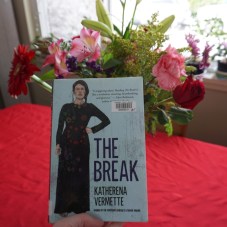
The Break


Rating: ⭐
Author: Katherena Vermette
Genres: Fiction
Read: Feb. 2018

I flew through The Break, which was the second book in my February Reading Challenge.

The Break is written by Métis author Katherena Vermette and tells the story of a Métis family and the struggles and challenges they’ve experienced, both together and apart. The novel opens with young mother Stella witnessing a crime on the break of land outside her house. She is paralyzed with fear and calls the police, but both the victim and the perpetrators have disappeared and law enforcement is not convinced of her story.

I don’t want to run the book by getting to into the plot, but it’s told from a lot of different viewpoints. There are 4 living generations in Stella’s family and they all have a voice in this story. As the police investigate the incident and the family is shook by violence, Vermette examines all the relationships and history that exist in this family. There are some narrators outside of the immediate family, such as the young Métis officer who investigates the incident, but this is really a story about family, the bonds that tie us together and the conflict that can threaten to tear us apart.

First off, the writing in The Break is fantastic. As soon as I started reading it I knew I was going to like it because it is just so beautifully written and the characters emotions are so tangibly felt. This was an insightful look inside the lives of a Métis family and it was very obvious the love this family had for one another, even through all the challenges they’ve had to overcome, the mistakes they’ve made, and the violence they’ve witnessed.

The tone of this story is very sad. Vermette made it easy to empathize with her characters and their pain felt very real. The story is heartbreaking and it was upsetting for me how frequently the women either experienced or witnessed sexual and domestic violence. But the women are what made this story so beautiful. It’s a very fractured family unit in that very few of the men in the family have stuck around or remained present in their families lives, but in the absence of reliable men, the women (sisters, cousins, aunts, grandmothers) have constructed their own family unit that is incredibly close.

The synopsis reads like this is a mystery novel, which it is in some ways, but it’s mostly a slow-burn family drama, which is one of my favourite types of stories. So I really liked this one and I am in love with Katherena Vermette’s writing. A fantastic read!