Not That Bad

Rating: 
Author: Edited by Roxane Gay
Genres: Essays, Non-fiction
Pub date: May 2018 (read as audiobook Jul. 2018)

I listened to Not That Bad as an audiobook on audible and thank goodness I’ve finally found a new book that translates well to audiobook! I really should just stick to non-fiction when it comes to audiobooks because they translate so much better when read aloud than fiction (from my experience anyways). I read Bad Feminist, a series of essays by Roxane Gay, as well as her memoir, Hunger, and loved them both. This collection is edited by Roxane Gay; she’s not featured in any of the essays, but it was wonderful!

Not That Bad represents a diverse collection of stories about rape culture and how women condition themselves to hide their experiences or tell themselves their experiences aren’t valid because they “weren’t that bad” in comparison to other stories they’ve heard. How women brush off street harrassment because it’s not as bad as getting raped, how we’re taught to always be nice at the expense of our own comfort and safety, how a certain level of harrassment should be expected because of what we wore or how we acted, how we should be flattered instead of offended if we’re still getting catcalls when we’re older.

I’ll admit, because I listened to this as an audiobook over several weeks, I’m already struggling to recall a lot of the essays, but there are two that stick out for me.

The first was an essay about a girl in college who was pressured into attending a party (on a boat/island) with a guy who she obviously didn’t like and was afraid of – and how she spent the whole night hiding from him because she knew he expected sex and she didn’t want it. She watched him from a far as he angrily stormed around the island looking for her, asking “where’s that f***ing b***h”, and how she waited until she felt it was late enough to safely go back to their room, only to be woken from sleep to him raping her. “They will wake you up to rape you.”

It’s enraging that women can never win and can never really be safe. That many men feel they can expect sex for taking a woman out or buying her something, or in this case, taking her to a boat party. That they feel entitled to call women horrible, derogatory things if they aren’t interested in having sex and that they feel in any way entitled to a women’s body without her consent. In this case, the author later sees her rapist and he makes jokes about her rape and legitimately doesn’t think that he raped her. I’m not sure why this story stood out to me more than any of the others. This to me is very obviously “that bad”, just as all of the other stories are, but women still condition themselves to keep quiet about these horrible, invasive things that happen to them and are even forced to interact with their rapists after the fact. Some of these stories are about rape, some are about harrassment, some are about rape culture, but they are all “that bad”.

The second story that stands out to me is that of another woman who was raped and when she tells other people about it, she is routinely told, “you’re lucky he didn’t kill you”. I can’t even imagine having this response to a rape victim, but I can imagine it in a million other scenarios. He catcalled you? You’re lucky he didn’t touch you. He touched you? You’re lucky he didn’t rape you. It goes so well with this idea that as women we are responsible for the things that happen to us and not the people who actually perpetrate them. If you go drinking wearing a short skirt, you’re lucky if no one touches you. If you walk home alone a night, you’re lucky if no one bothers you. If you stay with a person who hits you, you’re lucky he doesn’t kill you.

This logic is so obviously flawed and yet it’s so pervasive in our society. This is a hard collection to read, but so important. I especially loved that many of these essays were narrated by the writers. I love when audiobooks are narrated by the writers because no one can convey tone better than the author. I only talked about two of the essays, but they are all meaningful and important in their own ways. A great collection!

Bright We Burn

Rating: 
Author: Kiersten White
Genres: Historical Fiction, Fantasy
Pub Date: Jul. 10, 2018 (read Jul. 2018)

An excellent conclusion to a fantastic series! I gotta say, the cover art for this finale is super odd and seemingly unrelated, I have no idea why they picked a pomegranate, but whatever because Kiersten White is awesome!

I really liked the first two books in this series. They are bloody and brutal and so so much fun to read. This is basically re-imagined history with Vlad the Impaler as a teenager girl and centers around her relationship with her younger brother, Radu, and their friend, Mehmed the Conqueror. Essentially, Lada and Radu were taken hostage by the Ottoman Empire as children and developed a relationship with Mehmed. They all eventually go their own ways, with Mehmed and Lada chasing after power, while Radu gets stuck in the middle, conflicted by his growing feelings for Mehmed and his love and reverence for his sister.

In this epic conclusion, Mehmed has taken the city of Constantinople and Lada has taken the Wallachian throne. In an effort to protect her people, she goes on a bloody rampage through Bulgaria, attracting the attention of the Ottomans. Though Mehmed loves her, he cannot let her insolence stand and asks Radu to aid him in meeting Lada in war.

I admit, I remembered the general gist of the last two books, but I forgot who a lot of these characters were outside of the core 3. I have always loved Lada’s character, but this book was all about Radu for me. It kind of reminded me of Lord of the Rings a little bit where you think Frodo is the protagonist of the story, but really Tolkien had always intended Sam to be the hero of the story. I feel like I was always so focused on how insane Lada is that I totally missed out on what a hero Radu is in this trilogy! Lada and Mehmed are so focused on power and will do and hurt anyone to get it, while Radu’s strength comes from his unending kindness and heavy conscience.

I don’t have a whole lot to say about the conclusion. It’s just as political as the first two, but also just as bloody. It is incredibly heartbreaking, but it also has a very satisfying conclusion. I would definitely recommend and could see myself binge reading this entire series again in the future.

An American Marriage

Rating: ⭐
Author: Tayari Jones
Genres: Fiction
Pub Date: Feb. 2018 (read Jul. 2018)

This is so hard to review! I loved the first 2/3 of this book – I thought the writing was fabulous and the character development was so fantastic. Jones created this heartbreaking scenario and dynamic between the characters and I thought it was executed brilliantly. But I didn’t love the last third of the book, not because of how it ended (endings frustrate me all the time, but it doesn’t make them bad), I just didn’t love the character dynamics in the last third of the book. Although it wasn’t enough to deter me from rating this highly because I did really think that the writing in this book was fantastic.

Here’s the scenario: Celestial and Roy have been married for just over a year and are very much still learning about each other when Roy is falsely accused and prosecuted for a crime he didn’t commit. He is incarcerated for 12 years and it is just heartbreaking to watch these two characters be torn apart and the injustice of having your life stolen from you just when you were settling down to really start it.

Like I said, I thought the set-up for this story was brilliant. The author spends just enough time introducing you to these two characters before breaking your heart for them. They were both in their early 30’s when Roy goes into prison and have essentially had the core of their marriage and life together stolen from them. They stay together, but Celestial eventually starts to move on with her life and moves on to another relationship, while Roy is stuck in the limbo of prison. Unable to fight for himself or his wife or to be there for his parents when his mother becomes ill.

When Roy gets a surprise early release after serving only 5 of his 12 years, Jones places her characters in an impossible situation, where no one is wrong, but everyone is hurting. The outside world has moved on without Roy, but he is not ready to let his old life, or his wife, go.

I loved this scenario because there is no right or wrong answers. Everyone feels wronged, but no one is necessarily wrong. They were placed in a mess of a situation and they all tried to move forward as best they could. I loved the emotional dilemma of this story because it really made me think and the simple storytelling evokes a lot of emotions. Roy and Celestial’s parents play a large role in the story too and I loved how Jones wove these characters into the narrative and used them as support for the familial themes throughout the novel. I really do think this was an excellent piece of storytelling and it’s why I will still be giving the book 4 stars.

But let’s talk about the problematic pieces (for me anyways). I didn’t love the last third of the story because I thought it fell too heavily on Roy and Andre. They spent forever fighting over Celestial like she wasn’t even a human being with any agency. They both felt they were entitled to her for their own reasons and neither was particularly interested in who Celestial really wanted to be with (especially Roy). Celestial’s voice in the story totally died out and she became so malleable to the two characters that I had no idea who this character even was any more. I wanted her to stand up for herself and I wanted the two men to acknowledge that the choice was ultimately hers, no matter how wronged they might feel by the decision. I mean, essentially I don’t think Celestial even knew what she wanted, which may be why the author wrote her this way, but I just got frustrated listening to the two men talk about her.

I mean, I know this is accurate to how a lot of men do think, so I can’t fault Jones too much. I just wanted Celestial to have more agency. It reminded me of TV shows and movies produced by men where the female characters only serve to advance the male protagonist’s storyline. I sometimes felt that Celestial was a secondary character to Andre and Roy and that at the end, she only really existed to serve their development.

The ending did actually redeem it a little bit though because one of the characters finally came to some realizations about the relationship and their behaviour. But Roy’s entitlement made me mad. He made some pretty questionable choices after he got out of prison that made me lose my respect for him. I really think he had no high ground to stand on at all after some of the choices he made, but he still felt entitled to Celestial and their marriage. Even with some of these realizations at the end, Celestial is still only a reactionary character.

I may have to do a bit more research on the author. I’m interested to know what she based Roy’s prison and release experience on and whether she has any personal exposure to how people in similar situations have felt and acted upon being released from prison. I don’t want to judge Roy too harshly because I know that 5 years in prison for a crime you didn’t commit must mess with you and I’m sure played a large role in how he acted upon his release.

To conclude, I’m still giving this 4 stars because I did really enjoy it and even though I didn’t like how the characters acted, they were still absolutely believable characters and accurate to how I’m sure some people would react in this situation. They didn’t have the maturity and respect I wanted them to have, but that doesn’t mean that weren’t good characters. Mostly I just wonder if the author intentionally wrote Celestial as such malleable character, or if she just didn’t even realize she’d given her character no agency and placed everything on the two male characters. If it was a male author I’d definitely call it a blind spot, but as a female author, I really don’t know if it was intentional or not.

The other reason I feel this still deserves 4 stars is because it is also a fantastic commentary on race, without being fully about race. I haven’t even mentioned that the entire cast of this book is black and that this undoubtedly plays a huge role in why Roy is wrongly convicted. Jones makes an important commentary about racial profiling and the injustices of the justice system, without making it her central theme. It’s ultimately a book about the long lasting impacts that the justice system can have on not only the individual, but their families and communities.

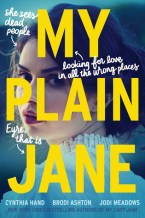
My Plain Jane

Rating: 
Authors: Cynthia Hand, Jodi Meadows, Brodi Ashton
Genres: Young Adult, Fantasy, Historical Fiction
Pub date: June 26, 2018 (read July 2018)

I was really expecting to like this a lot more than I did. I don’t know if I just had too high expectations after My Lady Jane, but My Plain Jane just didn’t seem to have quite the same flair as it’s predecessor.

If you haven’t heard of this book, it’s the second book in The Lady Janies series, although they are all standalone books, so you don’t have to read them in order. They are authored by 3 YA authors and are basically historical and fantastical retellings of Janes throughout history. The first book was about Lady Jane Grey, who was known as the 9 days queen since she ruled England for only 9 days before losing her head. My Plain Jane is essentially a retelling of Jane Eyre, but with Charlotte Bronte re-imagined as one of the characters in the story (or rather, re-imagining the cast of Jane Eyre as real people that Bronte interacted with and inspired her classic novel).

Most importantly, these books are full of hi-jinx and hilarity where the authors frequently directly address the reader. Lady Jane Grey was really funny and a ton of fun to read (The Gentleman’s Guide to Vice and Virtue is another book of very similar style), but while I chucked at parts of My Plain Jane, it just wasn’t quite as engaging for me. The first half of the novel pretty much just seemed to be a re-telling of Jane Eyre, with a few ghosts thrown in, but it wasn’t until the second half of the novel that I felt the authors finally started switching things up a bit and the plot got more interesting. There’s a lot of build up to not a whole lot of action.

Don’t get me wrong, I still enjoyed this and I will definitely be returning for the third and final book, but this definitely couldn’t compare to My Lady Jane in my opinion. There were a lot of fun pop culture references thrown in here though that I did enjoy. The only problem is you kind of need to have read Jane Eyre to catch on to some of the jokes. I think there were a bunch of jokes in reference to other classic works as well, but I didn’t pick up on a lot of them, I did appreciate them whenever I did catch on though.

So not a big winner, but a solid 3 stars. I still got a few laughs out of this and it was nice to pick up something so lighthearted.

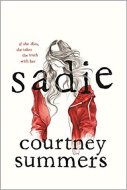
Sadie

Rating: 
Author: Courtney Summers
Genres: Young Adult, Fiction
Pub date: Sep. 4th, 2018 (read July 2018)

I have a copy of one of Courtney Summers other books, All the Rage, that’s been sitting on my shelf waiting for me for awhile, but I’ve been hearing a lot of hype about this book and St. Martin’s Press was so kind as to send me an advance electronic copy in exchange for an honest review, so I decided to read this one first.

As usual, I barely read the synopsis for this one and picked it up mostly based on the hype, so I went into this blind. Sadie is the story of 19 year old Sadie Hunter and her younger sister Mattie. The book starts with Sadie’s disappearance after Mattie is found murdered. The girls mother was a drug abuser and did little parenting of her two daughters. They grew up with their surrogate grandmother, May Beth, but Sadie ultimately took on the responsibility of raising Mattie. She loved her sister with every fibre of her being, even though Mattie sometimes drove her crazy, so her death tears Sadie apart.

Sadie believes she knows who murdered Mattie and runs away from their home in Cold Creek to find him. The story is told from two different perspectives and played a big role in why I liked this book. Half of the story is told from Sadie’s perspective, but the other half is the transcript of an 8-part podcast called the girls, narrated by journalist and radio personality, West McCray. I thought the podcast transcript was brilliant and totally set the scene for this book. I literally never listen to podcasts, but my partner does and this read just like Serial, which I’ve heard him listening to on occasion, and reminded me of the old town crime mystery documentaries that I used to watch on TLC growing up.

So we get two very different perspectives from this novel. Sadie’s perspective is deeply personal and emotional. She is very much a girl who’s entire world has been torn apart and she starts to damn the consequences in her desperation to find her sister’s killer. Then there’s the other perspective from West McCray, who is more clinical about Sadie’s disappearance and is always two steps behind Sadie as he tries to track her down (side note: I know West is a man, but for some reason I pictured him as a woman throughout almost my entire reading. Anyone else get that vibe?). I thought that both narratives were incredibly strong and together made this a strong novel. Most of the double narrative books I read are split timeline historical fiction novels and I almost always find the modern day timeline boring compared to the historical one, but with this book, I found both narratives extremely compelling. Sadie’s story had depth and McCray’s was intriguing. I just felt so transported during every “podcast episode” that I couldn’t help but love it. Plus it was different from anything else I’ve read.

That said, parts of this book are tough to read. “Girls disappear all the time”. It’s a sad statement, but a true one. There is child abuse in this novel and Summers tackles some disturbing topics. I appreciated though that while Summers didn’t hold back the punches, she’s not graphic. “I’ve decided the gruesome details of what was uncovered.. will not be a part of this show,.. it’s violence and brutality do not exist for your entertainment.” Many books and shows are needlessly gratuitous when it comes to describing violence, so I’m glad she left it out. What she’s not afraid to tackle though are Sadie’s brutal thoughts. She shocked me several times, but she was determined that no one else suffer what she and her sister suffered, even if she had to destroy herself in the process.

The ending killed me. I won’t give any spoilers. It’s brutal, but it’s also exactly how it should be. I flew through this book in a single long weekend camping trip and I would definitely recommend it. I’m feeling a bit more of an itch now to finally pick up my copy of All the Rage.

Sadie’s publish date is Sept. 4th, 2018 if you want to pick up a copy!