Circe

Rating: ⭐⭐⭐.5
Author: Madeline Miller
Genres: Fantasy, Greek Mythology
Pub Date: Apr. 2018 (read Aug. 2018)

I just finished Naomi Novik’s Uprooted a few weeks before reading this and my experience reading Circe was a lot like my experience reading Uprooted. Not that the plot was similar, because it’s not at all, but in that I liked both books in theory, but they were just so damn slow to get through.

I’m not gonna debate that this wasn’t a good book. Miller packs all kinds of interesting and flawed characters into this 400 page book and I really liked Circe’s character development and how she changed and grew throughout the course of the novel. I almost felt immortal myself when reading this book in that a lot happened, but it simultaneously felt like very little happened. While I can’t comprehend that this story stretched over a millennia, I did feel like substantial time had passed between Circe’s years in Oceanos and her many many years as the witch of Aiaia. This book really helped me understand the concept of immortality and how the Gods become so stubborn, unyielding, and often cruel. In their immortality and divinity, they really have become like petulant little children – expecting the world to bow at their feet and then throwing a tantrum whenever things don’t go their way.

I loved that Circe was different. She had the voice of a mortal and she felt guilt, grief, and empathy in a way the rest of the Gods had long parted with. She had her moments of anger and rage, but she was also forgiving and reasonable. I loved when she got angry because the Gods had been so cruel to her and I loved seeing her fight back against her circumstances instead of just lying down and taking it like she had always done in the past. She was a powerful goddess and yet she was constantly underestimated because of her empathy. All the other Gods thought they could just roll right over her. For a long time she just took it, but I liked watching her start to make decisions for herself and embrace her own power and vulnerability.

Okay, so writing about what I liked for this review is actually helping in my general enjoyment of the book. It was a struggle for me to read this. I compare to Uprooted because I read them both in the same month and I never got sucked into either book. I think it took me about 2 weeks to read through Circe in it’s entirety and I mostly had to force myself to pick it up because I struggled to stay engaged in it for any substantial period of time. I think books can be slow moving and still totally engaging, but Circe just wasn’t for me. I’ve never been a great lover of greek mythology because I have always thought the Gods are just all giant ridiculous babies, which Circe pretty much confirms, but it’s just not my favourite genre.

I mostly loved the ending of this book. I totally forgot that the synopsis talks about Circe getting caught up between her love for the Gods and the mortals and that this was ultimately where the story was going. There was such a change in Circe between the beginning and end of the novel and I appreciated and respected the decisions she made.

So mostly my problem was just with the pacing of the book. Reflecting now I’m actually feeling a lot better about this book, but I can’t pretend it wasn’t a struggle for me to read. I’m not quite sure how this could necessarily be different, I think I may have just struggled with how nebulous the plot was. I never had any idea where it was going or what the point of the story was. I mean there could be a lesson there in that the monotony of immortality is what makes the gods the way they are, but I just wanted more. The only place I felt the plot could be going was with Circe eventually getting off the island, but she mostly seemed content with her lot and made what she could of her misfortunes, so I struggled to determine what was really driving the story. I think I will rate this as a 3.5 stars because I appreciated the themes and development, but it wasn’t really an enjoyable reading experience for me, and that matters to me too.
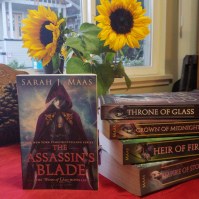
The Assassin’s Blade

Rating: ⭐⭐⭐⭐
Author: Sarah J Maas
Genres: Fantasy, Young Adult
Pub date: Mar. 2014 (first read Sept. 2016)
Series: Throne of Glass #0.5

I first picked up the Throne of Glass series about two years ago and flew through the first 4 books during the summer, before picking up Empire of Storms when it was released in Sept. 2016. I used to read a lot of fantasy when I was really young, like elementary school, and then moved on to reading a lot of young adult books in high school. I didn’t read a whole lot throughout University, because I was so busy with school, but I got more into historical fiction and general fiction when I graduated and started reading a lot again.

Throne of Glass was one of the first big fantasy series I picked up after graduating, but since reading this series, I have a read A LOT more fantasy series over the past two years. With the final book coming out in October, I decided I wanted to re-read this series again. Partly because I just really want to re-visit these characters, and partly because I’m curious if I will still like these books as much as I did on the first read through now that I’ve read so much other fantasy.

Interestingly enough, I didn’t get around to reading The Assassin’s Blade until after Empire of Storms, which is definitely not the ideal way to read the series as there are a ton of characters introduced in TAB that appear throughout the series. EoS definitely made a lot more sense once I finally read TAB.

So this time I decided to start with TAB since it is the prequel to the rest of the series. I was surprised I had rated this 4 stars originally because I was kind of remembering it as more of a 3-star read, but after re-reading it, I’m sticking with my 4 stars. The first 2 stories are probably 3 star reads, but the last 3 stories more than make up for it. (TAB is a compilation of 5 novellas set before ToG).

The Assassin and the Pirate Lord is a great introduction to the characters and the world of Erilea, but I do find Celaena pretty annoying in this novella. She has the biggest ego for someone who repeatedly makes mistakes and Sam picks up ALL of the slack for her in this story. I know most people don’t really like the Assassin and the Healer, but I think it’s actually a solid short story about two women bonding and looking out for each other. It doesn’t really add a lot to the book overall, but Yrene goes on to become pretty important to the story in Tower of Dawn, so it’s cool to see this little origin story for her here.

I think the Assassin and the Desert may actually be my favourite novella of the lot. I love Ansel’s character so much and I really loved watching Celaena make a female friend and how the silent assassins challenged her thoughts on how an assassin’s guild could operate. Arobynn has always led his assassins through fear, competition, and intimidation, so it was nice to see a group of people who (while they’re still killers) looked out for each other and created a real sense of community. I really enjoyed the arc of this story and I think that as a stand-alone novella, this is the strongest of the book.

That said, the Assassin and the Underworld and the Assassin and the Empire are the two stories that really dragged me into this world, set the stage for the rest of the series, and broke my freaking heart. I’ll say up front, I’m not a Sam groupie. I know a lot of people love Sam in this book, but I find him a little controlling. Arobynn is obviously all kinds of abusive and manipulative (like seriously, textbook abuser), and I know I’m supposed to love Sam because he threatens to kill Arobynn for hurting Celaena and made him promise not to hurt her again, but honestly Celaena can look out for herself and I didn’t like that Sam was emasculated by her money and wouldn’t let her help him on missions. He always wanted to be there for her, why couldn’t he let her be there for him too.

But I did really like the last two novellas because I thought they had some killer character development for Celaena and they provide SO MUCH context for later books. Not just for all the secondary characters, but for why she is able to be so ruthless and how much trauma she has been through. Knowing what I know from all the other books, there is just so much depth to her character. Celaena’s ego drives me nuts sometimes because in some of the later books it’s like she can do no wrong, but I would say in this book her cockiness is her character flaw and it’s what gets her into so much trouble, and ultimately destroys her.

The ending is brutal. If you read the books in the publication order, you know what’s coming at the end of this book, but it doesn’t make it any less heartbreaking. I’m not sure if I would recommend reading this book first if you were reading the series for the first time, but having already read the series once, I think reading TAB first is the only way to read this series. I can’t wait to jump into Throne of Glass and just immerse myself in this series over the next 2 months!

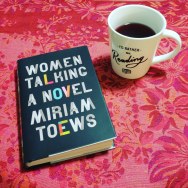
Women Talking

Rating: 
Author: Miriam Toews
Genres: Fiction, Historical fiction
Pub Date: Aug. 2018 (read Aug. 2018)

How do I review this book? It’s just so damn important and something everyone should read.

I saw Women Talking on display at Chapters and as soon as I opened it up and read the forward, I knew I had to read it (plus I’ve been walking to read some Miriam Toews). Women Talking is a fictional account of the real life crimes committed against mennonite Bolivian women. Between 2005 and 2009, in a remote Bolivian community, women were repeatedly waking up having been attacked in the middle of the night. The attacks were attributed to demons punishing the women for their sins, but it was later discovered 8 men were sneaking in the the rooms of women all over the village, knocking them out with an animal aesthetic, and then raping them. Horrifying.

Women Talking focuses on some of the victims of these attacks, women from 3 generations of the Loewen and Friesen families. The rapists have been jailed in a nearby town and the rest of the men in the community have taken livestock to the town to try and sell to post their bail money. While the men are away, 8 women of the Loewen and Friesen families call a meeting (on behalf of all the women) to discuss what to do. When the men return home, the women will be called upon to forgive them, so as they see it, they have 3 choices:

1. Do Nothing
2. Stay and Fight
3. Leave

The entire novel consists of these women talking through these 3 choices and deciding on a course of action, and boy are their conversations illuminating. They discuss many philosophical questions about what each of these choices means and how their village got to this point. Some of the women are hurt, some of them are angry, and some of them are afraid. But while this is an upsetting story, it is also filled with love and even humour. The novel is only a short 200 pages, but I loved getting to know each of these women, watching them talk and relate with each other, share experiences, and share laughter. It is a brilliantly written novel and such a thought provoking piece of fiction. This book matters. Women matter.

There was so much of this book that I loved that it’s hard to pinpoint specific pieces. But one part I found particularly striking was when one of the women (can’t remember who… Ona maybe?) voices that maybe they should consider a 4th choice: asking the men to leave. It’s such an obvious solution. Absolutely the men should be the ones to leave. They are the ones that have violated and torn their community apart, they should no longer be permitted to participate in community life. But the option never really catches any traction with the women and they even openly laugh at it because it really is an outlandish idea to think that the men would consider leaving or even that the rest of the men and community would support the women in forcing these men to leave. It’s a sad truth, but these women understood (and I’m sure most other women do to), that even though it was the option that made the most sense, it would never really be an option.

I don’t want to give too much away about the book, so I’ll just say, please please please go to the library or the bookstore and pick yourself up a copy of this book!

P.S. I Still Love You

Rating: ⭐⭐⭐
Author: Jenny Han
Genres: Young Adult
Pub date: May 2015 (read Aug. 2018)

Okay, I’m definitely not as enamoured with this as I was for To All The Boys I’ve Loved Before. I really don’t think the first book needed a sequel, much less a trilogy, but I’ll admit I do still find these characters charming.

I don’t have too much to say about PS. I Still Love You. What made the first book so great is that it was only really partly about boys and mostly about sisters. This book is mostly about boys and it just wasn’t as engaging for me. There are a million and one books out there already about love triangles and the minefield that is managing your emotions as a teenager. To All the Boys I’ve Loved Before offered something new to the genre, and I don’t think this did.

That said, I do still think Lara Jean is a relatable character to a lot of young girls. Again, there are lots of books about teenage rebellion, partying, and poor decision making. But I like that Lara Jean is relatable to those girls that play it safe in high school and are intimidated by some of the experiences of their peers (in this case sexual experiences). Lara Jean knows Peter has had sex before and she also knows she’s not ready, which leads to a lot of insecurity about what Peter thinks and feels about their relationship.

However, I did really like that Lara Jean realizes that some of her hang ups actually have to do less with Peter and more with Genevieve. She constantly compares herself to her ex-best friend and how she might measure up alongside her. I liked that Lara Jean and Peter were both comfortable talking to one another about sex and I also liked the way Han wrote about Peter’s feelings on sex. It would have been so easy to write a character that was hung up on the fact that he and Lara Jean weren’t having sex, but Peter understood that Lara Jean wasn’t ready and just didn’t bring it up. Their relationship was about more than just sex for Peter.

I can’t decide if I’m going to read the last one or not. The first book ends on a cliffhanger that was annoying resolved within about 2 chapters of this book, but this one doesn’t end on a cliffhanger. The final book seems unnecessary to me, but I kind of want to see the series through. Plus they don’t take very long to read and I’m not sure I’m ready to part with Kitty Song Covey yet. What a smart and funny character – definitely my favourite!

Uprooted

Rating: ⭐⭐⭐.5
Author: Naomi Novik
Genres: Fantasy
Pub date: May 2015 (read Aug. 2018)

This was a hard book to read for me and also a hard book to review. I’ve been putting it off and I must admit I’m already starting to forget the story a little bit.

Novik’s writing is gorgeous in this book and she really knows how to create a sense of atmosphere. I really did feel the danger of the Wood lurking over me throughout the entire time I was reading this book. I thought the story was really original and well written, I just really struggled to get into it. I felt like the plot would finally get moving and then a chapter would change and the plot would get really slow again.

Uprooted has the feel of a traditional fairytale. It starts off with our main character Agnieszka, who grew up in the valley, in the shadow of the ever ominous Wood. Their valley is protected from the Wood by the Dragon (not a literal dragon, but a wizard named the Dragon), who in exchange for his protection, takes one girl to come live in his tower for 10 years, after which the girls is released, but never returns to her village. Everyone expects the dragon to take Kasia, but instead he sets his sights on clumsy Agnieszka. Once she moves to the tower, she discovers she is a witch in her own right and joins forces with the Dragon in trying to fight back to corruption of the Wood.

First off, I loved that the villain of this story is a wood. How brilliant. Not an evil wizard or neighbouring kingdom, but an evil woods, whose trees and creatures literally corrupt those who wander in, forcing them to do evil things. How futile it seems to be fighting against something as deep and dark as the woods, yet the Dragon and Agnieszka are unrelenting in the fight to drive the Wood back. But the Wood’s corruption has spread into the King’s castle as well and they must fight the corruption on two fronts.

I also thought that the character development was good. Agnieszka grows a lot over the course of the novel. At first she is afraid of the Dragon, but as she learns magic and grows to understand her power, she becomes more and more confident. She is driven by her love for the Valley and because she has grown up of the valley, she understands the Wood in a way that the Dragon, who holes himself up in his tower away from the Wood, cannot. She fights for what she believes is right and she isn’t afraid to disagree with the Dragon, or even the Prince.

Overall, the story was clever and it was really well writing, so I did like the book, it just wasn’t a quick read for me. I would still really like to read Spinning Silver, which is Novik’s new book, a retelling of Rumpelstiltskin. Spinning Silver was actually the reason I was inspired to pick up Uprooted, I’ll just need to make sure I’m in the right mindset before I pick it up.