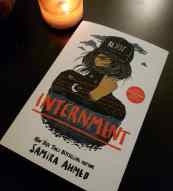
Internment

Rating: ⭐
Author: Samira Ahmed
Genres: Young Adult, Dystopian
Pub date: Mar. 19, 2019 (Read Feb. 2019)

Thanks to Hachette Book Group Canada for providing me with a free advance copy of this book in exchange for an honest review. 

I was really excited about this book, I thought the premise sounded super interesting and appropriate for the current political climate. I read Samira Ahmed’s debut novel, Love, Hate, & Other Filters, last year and didn’t really like it, but I was super optimistic about this book and even included it on my most anticipated books of 2019 list. I’m still really glad a book like this exists, but sadly I was very disappointed with it. I may just not be the intended audience for this anymore as someone in my late twenties, but it really didn’t work for me.

Like I said, the premise of the book is great. It’s about Muslim teenager, Layla Amin. Since the inauguration of the new president, America has seen a lot of changes. Muslims were asked to identify themselves in the latest census and with the creation of the new Muslim registry, Layla has been forced out of school and her parents have been forced out of their jobs. Then one day, the police show up at her home and escort her entire family to America’s first internment camp in the middle of the California desert.

The camp is called Mobius. At Mobius, Muslims are divided into blocks by ethnicity and forced to live in small trailers. Her parents do their best to adapt to this new life and keep their heads down, but Layla misses her old life and boyfriend on the outside and starts to rebel against the camp’s Director and his racist policies. But what will be the cost for her rebellion and as a teenager, does she really have the power to change anything?

I’m really glad a book like this exists and I hope it gets into the hands of the right people. But what I struggled to understand was who the intended audience is? Is it meant for the already liberal-minded? Is it hoping to expand the opinions of those who are unsure where they sit in the current political climate? Is it targeted at the MAGA faction that is scared and hateful towards those who are different from themselves? Or is it just meant to give voice to the rage and pain of American Muslims? As an already liberal minded person, this didn’t really challenge my thinking or offer me any new insights, but I think it could be a great book for younger teens who are confused by politics or whose views may differ from those of their parents and they don’t know where to turn for information. So I’m really glad this book exists and I hope it can help inform teenagers or just support Muslim American teenagers in feeling heard.

The reason I didn’t like it is because it’s so heavy handed. Nothing about this book is subtle and I felt like the author was just trying to beat me over the head with her politics. It’s the prime example of why “show, don’t tell” is so much more effective and enjoyable. I don’t think Ahmed trusts her readers at all. She spells out every single point and action of her characters and doesn’t trust her readers to come to their own conclusions. She is constantly telling us how Layla is feeling rather that letting her circumstances and actions speak for themselves. Layla also didn’t feel like a teenager to me. She felt a bit like a 17 year old espousing an adult’s viewpoints. I like to think teenagers are this woke, but she knew a lot of random historical facts about Japanese internment camps and other politically motivated rebellions around the world. Overall it added to the book, but felt a little forced coming from a teenager who mostly just seems overly into her boyfriend.

I went back to look at my review of Ahmed’s first book and I have similar complaints with this book. I felt like her characters were so 1-dimensional and that the emotional connection to them was just really lacking. Her characters feel more like caricatures and it made it hard to relate to any of them. I was frustrated by how obsessed Layla was with David when she had so many more pressing concerns. All of her relationships felt extremely surface level and I never felt that any of her relationships had any great depth. She talks about how she’s worried about the impact her actions might have on her parents, but I never really felt any tension because I didn’t feel any connection between the characters to begin with.

I thought the Director was the greatest caricature of the novel. He was too classically evil for me to ever take him seriously. I thought the Director represented a great opportunity to influence your readers and hopefully alter their mindsets. But the Director is too much of a villain that he doesn’t incite that feeling of righteous anger or conflict. If your goal is to alter someone’s mindset or opinions, you need a more nuanced villain. Someone who you can almost relate to, but highlights the flaws of conservative America. No one will relate to the Director, so it’s easy to dismiss him as just a hateful asshole. He doesn’t make you question your thoughts or views and that was the main way that this novel failed for me.

I think liberals will read this book and be reminded of why they are frustrated with the current administration, while conservatives will read the book and think it’s ridiculous and Muslims just trying to paint white people as the bad guys. Just to clarify, I do not think that’s what this book is doing at all. I think this is actually a story to give voice to the feelings that Ahmed has about the direction America is going. And if this story gives voice to that rage and pain for Ahmed and for readers like her, then I think this book has achieved something great. I am not American and I am not Muslim, so who am I to say that this book doesn’t have value? I do believe it has value, I just wanted it to be more nuanced because I want white Americans to pick up this book and read a viewpoint that they hadn’t really thought about. I want them to see Muslims as people and that their viewpoints might be changed by reading about this horrifying near-future scenario. I guess I just don’t have very much faith in people’s ability to change and I thought this book was just too surface level to change the viewpoints of people that don’t already agree with this book.

However, it is unfair of me to put that responsibility on the author. She is not responsible to change people’s minds. It’s why I question who her audience is? As an Own Voices book, I can really see this working for some people and I really hope that it does. If you are an American Muslim feeling outcast in your school, or your community, or your country, then I hope this is the book that you needed to pick up to feel seen and understood. This book wasn’t what I was hoping it would be, but I am probably not the intended audience. I fully support the themes Ahmed tackles in this book, her writing style and methods just aren’t for me. I hate to be critical of books like this because I do think they are extremely important and authors need to be supported to write them. But I also don’t want to give good reviews to a book just because I’m glad it exists – I still want it to be a thoughtful and well-written book. I thought this book had so much potential and honestly, I just wanted more from it. But hopefully it will make its way into the hands of the right readers!

One last criticism I have of this book is that I’m uncomfortable with the number of famous quotes and ideas that Ahmed includes without referencing the source material. I think she is paying homage to some great people, but it rubs me the wrong way when those individuals are not referenced. The tagline on the back is “rebellions are built on hope”, which is obvious to me that it’s from the Star Wars Rogue One movie. The characters repeatedly joke about their love of star wars, but this quote is used without every directly attributing it to Star Wars. Two others that I picked up on were that she has one of her characters reference how “if you don’t stand for something, you’ll fall for anything”, which has been attributed to Hamilton and Malcolm X among others, and Layla repeatedly says “the people united will never be defeated”. Please reference these individuals because otherwise it seems like you are trying to pass these ideas off as your own.

Heidi

Rating: 
Author: Johanna Spyri
Genres: Children’s, Middle Grade, Classic
Pub date: 1880 (read Jan. 2019)

Oh Heidi, a girl after my own heart. I bought a new copy of Anne of Green Gables last year after my childhood copy was accidentally donated and decided to pick up copies of both Heidi and the Secret Garden, which had cute matching covers. I never read Heidi as a child, but I was into the mountain setting and was basically hoping for Anne of Green Gables set in Switzerland.

Heidi definitely does not have the same charm as Anne, who is one of my all-time favourite female characters, but I could appreciate her love of the simple life and the fresh mountain air. Heidi is a little orphan girl who, up to the age of 5, lived with her Aunt in the small Swiss town of Dorfli. At the age of 5, her aunt decides she has spent enough resources on Heidi and drags her up the mountainside to instead live with her Grandfather. Her grandfather is seen as a bit of a hermit by the townspeople and is fairly misunderstood, so they all pity Heidi when they see her on the way up the mountain.

However, Heidi immediately settles into life at her Grandfather’s cabin and is totally enamored with the beautiful mountain views, the wildflowers, and her neighbour Peter, the local goat-herder. Likewise, her Grandfather’s life is taken over by Heidi and he starts to find a new joy in life. I thought the whole mountain setting – two misfits finding love with one another – story was brilliant and was totally into this book at the beginning. I can see why it’s a classic, but like I said, Heidi just doesn’t have quite the same charm as my other beloved children’s books and it’s pretty slow moving. I struggled through the story at times and unfortunately, the ending of the book hasn’t really aged all that well.

It is a sweet story with christian undertones and themes. In the middle of the story, Heidi is extremely distraught when she is removed from her grandfathers and forced to live in Frankfurt. She finds the town so dark and dreary and she doesn’t understand the way of life, so she is misunderstood by those around her and yearns more than anything to return to Grandfathers. She learns about God and is taught to put her trust in his plan and is ultimately rewarded by her prayers and faith. While some elements were problematic, I was impressed that this book features both a girl in a wheelchair and a blind person.

I can’t write this review without discussing the ending, so if you’re unfamiliar with this classic and plan to read it, please stop reading here. SPOILERS AHEAD.

.

.

.

So I didn’t really like the ending of this book. I definitely don’t fault the author for it because this was written in the 1800’s, but in my opinion the ending doesn’t really hold up today. I had two issues with the ending, the first of which is that Peter sucks! Peter is a pretty big introvert, whereas Heidi loves people and making new friends, and he is constantly threatened by Heidi’s other relationships and acts out pretty aggressively in his jealousy (both with the Doctor and Clara). My problem was that Peter’s behaviour was totally wrong, but he never really suffered any consequence from it. He destroys Clara’s chair for heaven’s sake and though he feels bad after, no one ever holds him accountable to his actions. They were just teaching him it’s okay to be an asshole.

My second issue was with Clara suddenly gaining the ability to walk by sheer force of will and the power of fresh mountain air (supposedly). I don’t fault the author because I’m sure people with disabilities had it rough in this era and their disabilities were not as well understood. So gifting her character with the ability to walk again seems like the perfect ending to a childhood story. It just doesn’t really stand up today and I’d hate for little girls in wheelchairs to read this book and be preached the message that if they just pray and want it enough, they might be able to walk again too. Or to feel like they can only achieve happiness by the curing of their disability and that the ultimate dream is to escape your disability. I liked Clara because despite her disability and sickness, she had a great attitude and didn’t actually seem that hampered by her disability. Being in a chair is nothing to feel bad about and is not an impediment on happiness. So I just don’t think this ending holds up in light of the body positivity movement and is a little insulting to the less able-bodied.

3 stars for the sweet story and setting, but beware some of the ideas are a little preachy and out-dated.

The Belles

Rating: 
Author: Dhonielle Clayton
Genres: Fantasy
Pub date: Feb. 2018 (read Jan. 2018 as audiobook)
Narrator: Rosie Jones
Series: The Belles #1

Where to start with The Belles? First of all, I listened to it as an audiobook and I really liked the narrator! She had a great tone for this book and she was really enjoyable to listen to. As for the content? I heard this book had teeth, but about halfway through I was wondering when it was going to start to bite. I wouldn’t call it a slow start because the story is still pretty engaging, but it’s a bit repetitive at the beginning and it wasn’t until the second half of the book that the story grew fangs. But boy does it ever get intense! Because of the start, I thought it was a 3 star read overall, but the author definitely steps up her game in the second half of the book and I’m really looking forward to reading the sequel.

The Belles is set in a beauty-centric fantasy world based on New Orleans, called Orleans (or-lee-on). People have become grey in Orleans and only a select few talented Belles can restore colour and make people beautiful again. The Belles power come from their personal arcana (unsure of spelling because I read as audiobook) and they can change anything about a person, from hair, eye, or skin colour, to height and weight, to bone structure, and even the well-being of internal organs. In this world, people are obsessed with beauty and must pay for beauty appointments. However, the changes don’t last forever and the grey will always start to creep back in, so the rich are always changing their looks based on the latest fashion.

Camellia Beauregard is one of 5 Belles coming of age this year. She has spent her whole life training to be a Belle and she will have one chance to present her powers to the Royal Family, who will pick one of the Belles to be their favourite. The Favourite will work for the royal family and their courtiers, while the rest of the Belles will be appointed to other beauty salons around the city. All of the Belles want to be named the favourite, especially Camellia and her sister Belle, Amber.

Once the Belles start working though, they discover that working as a Belle is not quite what they expected and start hearing about strange things happening in the salons. The Royal Family is also in a state of upheaval because the time is coming for the Queen to declare her heir. By rights it should be her older daughter, Charlotte, but she has been in a bewitched sleep for years and has never awoken. If Charlotte does not awaken, the heir will have to be her younger sister Sophia, and the more the Belles learn about Sophia, the more they fear the kind of queen she might be.

The Belles had a really interesting plotline in that it’s really not clear for a while where the story is going. There is a large mystery element to the story and because we don’t learn the full depth of the plot until later, there’s a lot of world building taking place in the first half of the book. Like I said, I didn’t dislike the first half of the book, I think that Clayton did some really good world-building and really delved in to some of the intricacies of the world she’s created. But the plot feels a bit nebulous after the favourite is announced and I thought there was a disproportionate amount of time spent on various beauty appointments and treatments. It was interesting, but I just wanted the author to get to the point.

But I can’t really fault her because the time spent on world building definitely paid off in the second half of the book. The second half is nasty! Things get really dark and pace of the plot picks up immensely. I liked the ending a lot because Clayton answers some of the more pressing questions and mysteries, but still leaves enough threads open to propel us into the next book.

Clayton addresses a lot of really interesting social themes in her book, which is what made it stand out for me. It’s obviously about beauty and how highly it is valued by society and how we assign value based on beauty. In many ways, beauty is a social construct and is very objective. In our own world, ideas of beauty differ greatly from country to country, but looking at North America, there are certain attributes we tend to value greater than others, thinness being the most obvious one that comes to mind. However, like Orleans, we are constantly changing our minds on other attributes. The one that comes to mind immediately for me is eyebrows. In the 2000’s thin eyebrows were all the rage, while now big eyebrows are definitely in.

I found it interesting that Clayton’s world features a monarchy, but women still tended to be de-valued. She draws attention to the different beauty standards that exist for men and women, but how men still want to look good too. However there is a sexual assault scene in the book and I found it really surprising that in a matriarchal society such as this, people still went out of their way to excuse men’s actions.

Finally, the villains in this book are top notch. There’s a lot of drama and several villains, with varying levels of, shall we say evil? Our number one villain is totally nuts and will get right up inside your head. She reminded me of Umbridge a little bit because it’s the perfect example of how smug and evil a bit of power can make some people. I really don’t know where Clayton plans to take this story in the next book, but colour me intrigued! I already have an ARC for the next book, which is being published in March, so I’m planning to start it very soon!

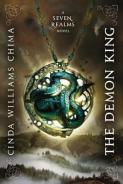
The Demon King

Rating: 
Author: Cinda Wililams Chima
Genres: Fantasy
Pub date: Oct. 2009 (read Jan. 2019)

I’ve had the entire Seven Realms box set sitting on my shelf for some time and I finally got a chance to pick up the first book. I’ve been hearing really good things about the sequel series, Shattered Realms, which has the final book coming out this March. For this reason, it was a bit intimidating to start this one because if I liked it, I was pretty much looking at an 8 book commitment.

But I’m glad I finally picked this one up off the shelf, because I did end up quite enjoying it. It has a pretty slow start, so it did take me a bit of time to get into it, but around the 100 page mark it started getting really interesting!

I really like the characters in this book. It’s set in a fantasy world that is split into seven different realms, many of which are at war with each other. Our characters live in the Queendom of the Fells and are not currently at war, but fear war from the other realms. Queen Mariana is the current ruler and the throne is always passed down through the female line. The Queen is advised by wizards, who are closely watched over by the clans, who fear the wizards having too much power.

Our main characters are Raisa and Han. Raisa is the Princess Heir of the Fells and is approaching her 16th name day, when she will start courting and accepting marriage proposals. Her mother, the Queen, is caught up in planning a huge party and entertaining the guests, but Raisa is more interested in flirting with cute boys like the young wizard, Micah Boyar, and catching up with her friend Amon, who has just returned from soldier training after 3 years away.

Han is a reformed street gang lord who used to run with the Raggers, thieving to survive. But in an effort to protect his sister and mother, he gives it all up for a more honest life – until he runs into Micah Boyar using magic in the wilderness and steals the amulet that gives him power. Han has little interest in the amulet, aside from taking away Micah’s misused power, but he starts to wonder if the amulet may have cursed him when he repeatedly starts running into trouble.

It’s a bit difficult to explain the plot because there is a lot going on, but it’s never really confusing. The world building is slow, so you do have time to get acquainted with it. The only thing I found a little confusing was some of the history. Historical events like the Naeming and the Breaking are referenced throughout the book, but I’m still not really sure what they are and I hope it will become more clear in the next book.

Once this book gets going though, it’s a lot of fun and that plot goes in some really unexpected directions. Han is cool, but Raisa was totally my favourite character. I thought she was so feisty and I loved how she was just kissing boys all over the place without really developing any lasting attachments. She wants to have fun, but she also genuinely cares about the wellbeing of her queendom. I really liked Amon and their friendship and was super intrigued by Micah and what his motives were. My favourite part of the book was when Raisa and Han interacted together in the middle of the story. I thought that whole section and plot line was so fast paced and interesting! I was a little disappointed when Raisa returned to the castle because I thought it brought the energy of the book back down and I wanted to maintain the fast and fun pace.

So overall, a few criticisms with pacing, but I thought it was a great start to the series and I have a feeling the next books will be a lot faster paced. It takes time in high fantasy books like this to introduce all the characters, the magic system, and the world building, so I’m expecting the story to pick up a lot faster in book 2. Hoping to knock out this whole series over the next month or two and we’ll see if I feel like continuing on the the Shattered Realms series at the end or not.

The Island of Sea Women

Rating: 
Author: Lisa See
Genres: Historical Fiction
Pub date: Mar. 5, 2019 (read Jan. 2019)

I read The Tea Girl of Hummingbird Lane back in 2017 and really liked it. I’ve been meaning to read some more of Lisa See’s work ever since, but the content is quite heavy, so I keep putting it off. So when I received an early copy of The Island of Sea Women from Simon and Schuster Canada, I was excited to finally read another one of Lisa’s books!

I clearly need to prioritize reading some of her earlier works because I liked this just as much as I like the Tea Girl of Hummingbird Lane, maybe more!! The Island of Sea Women is about a matrifocal community of female divers on Jeju Island. Jeju Island is a large volcanic island located to the south of South Korea. It was under the control of the Japanese until the end of WWII, when it was taken over by the Americans.

What’s interesting about the island and many of its communities, is that they are mostly focused on women. Many of the traditional gender structures still exist in that men own property, the ownership is passed down through the male line, and giving birth to boys is valued because only boys can attend school and perform ancestor worship. However, the women are viewed as the providers and decision makers and the men stay home and raise the children. This is because it is the women on the island who become Haenyeo. Haenyeo are a collective of divers who are widely respected. They row offshore every day to dive in the frigid ocean for sea-life to feed their family and to sell to wealthy Japanese colonizers. The most prized catch is the abalone, but they also dive for sea urchins, octopus, squid, and other species.

See focuses her story on Young-sook. Young-sook is the daughter of a Haenyeo chief, so she learns to dive from an early age and develops a very close friendship with another girl in the community, Mi-ja. The two girls are inseparable and both join the Haenyeo collective when they come of age and travel together as young women to do leave-home diving work. However, as they grow older, their friendship is challenged and circumstances arise to drive a wedge between the two women. This book tells Young-sook’s life story, her friendship with Mi-ja, and the sad history of Jeju Island.

I was really interested in the Haenyeo culture and how they work together as a collective. I thought it was fascinating the ways that traditional gender roles were sometimes switched in this culture, but remained similar in other ways. I find diving to be fascinating (and terrifying) and I really liked learning about the Haenyeo traditions, how they would organize and dive together, and how resilient these women are. But what I really loved about this book was the way it also takes us through South Korea’s history.

I read Min Jin Lee’s book, Pachinko, last year and really liked it. It’s about a Korean family that immigrates to Japan and the challenges they faced there as immigrants. It was a good introduction the the history between Korea and Japan. This book also focuses on that conflict, but from a different angle and perspective; between the two books I learned a lot about Korea and Japan. The history covered in this book is upsetting to be sure, but it is a very good look at how Western countries can tear other countries apart in their own political disputes. Korea was split at the end of WWII, to be governed by the Soviet Union in the North and America in the South. Russia obviously promoted communism and America, democracy.

As everyone knows, American’s were extremely threatened by the rise of communism. I’m still not super familiar with Korea’s history, but from this book, it seems that there was support for communism on Jeju Island, which created conflict between the island and the rest of the Korean mainland. Rebel groups popped up among the mountain tribes on Jeju Island and fighting ensued between rebel groups and the authorities. Korea had a culture of guilt by association, whereby if a member of your family committed a crime, you were considered tainted by association. This resulted in consequential killings in which families and entire communities might be punished for the actions of an individual. The Jeju uprising officially began on April 3, 1948, and resulted in the destruction of many villages and left many people homeless.

I’ll admit, I know very little about Korea’s history, but I loved learning about it from Young-sook’s point of view. The people of Jeju had always had a tumultuous relationship with the Japanese and she observed that little changed within their communities with the end of WWII and that their power mostly just changed hands between the Japanese and the Americans. Young-sook observes that they have always been oppressed, but that Korean’s always looked after one another. However, because of differing ideologies between a democratic and communist state, she was upset to see Korean’s start to turn on one another.

From this setting, we also see how the Haenyeo were forced to change and adapt over the years and the impact the conflict had on their diving activities. The Haenyeo are still very popular, but more as a tourist attraction. The birth of daughters was also celebrated on Jeju as it ensured the financial stability of the family. However, very few girls are training to become Haenyeo these days and the collective has greatly aged, with few young women to take their places. I loved how See balances the challenges and changes to the collective along with the changing and increasingly challenging political climate on the island. It also linked in with Young-sook’s changing relationship with Mi-ja. While the novel takes us through 70 years of Korean history, at it’s core, it is a story about friendship and forgiveness.

As much as I loved this book, I do have one criticism, which is what brought my rating down from 5 stars to 4 stars. The story is told in 5 parts and progresses pretty naturally through time. However, each part starts with a flash forward to 2008. While I see some value in the 2008 timeline, I think it would have worked better as a short epilogue focused on remembering the April 3 incident and finding peace. I did not like the inclusion of Clara in the story. While Young-sook struggles with her feelings and forgiveness throughout the second half of the novel, I felt this last storyline came too late in the story and timeline. Personally, I thought the ending felt forced and manipulative. I felt like the author was trying to manipulate me into this cathartic moment at the end, but the catharsis was too late in coming and not believable to me.

Despite the ending, I still loved this book. Though the story focuses on Young-sook, I loved the exploration of Mi-ja’s story as well. The history and decisions of some of the characters were upsetting, culminating at the April 3 incident. However, I felt that they demonstrated how things can change in an instant and how in life and death situations, what might have been a well-meaning action or decision can be interpreted in the aftermath. It’s a somber realization, but it was the defining moment of Young-sook and Mi-ja’s relationship. I would definitely recommend this book.

The Island of Sea Women will be available for purchase in stores on Mar. 5th, 2019. Thanks to Scribner and Simon and Schuster Canada for providing me with a free copy in exchange for an honest review.