Say You Still Love Me

Rating: .5
Author: K.A. Tucker
Genres: Fiction, Romance, New Adult
Pub. date: Aug. 6th, 2019 (read May 2019)

Thanks to Atria Books and Netgalley for providing me with a free advance copy of this book in exchange for an honest review.

The Simple Wild was one of my favourite books of 2018, so I couldn’t wait to get my hands on K.A. Tucker’s new book. I’ll admit, this one didn’t appeal to me quite as much as The Simple Wild, but as someone who worked as a camp counselor as a teenager and also works in a male dominated field, I thought me and Piper could probably relate.

Overall, I liked this book and it kept me engaged throughout, but it definitely couldn’t hold a candle to The Simple Wild. I was looking forward to a slow burn romance, which I got to a certain extent, but mostly this book just left me scratching my head about who the intended audience is.

Say You Still Love Me is about 29 year old Piper Calloway, a senior VP at her Dad’s billion dollar development firm, Calloway Group. Piper is slated to take over the company when her father retires, but as a young woman, she struggles to be taken seriously in this male-dominated environment. Piper is thrown further off guard by the arrival of her first love, Kyle, who takes a job as a security guard in her building. Piper and Kyle fell in love 13 years ago at Camp Wawa when they were counselors at 16. The relationship ended suddenly and PIper always wondered what happened to Kyle and his sudden reappearance forces her to confront questions that have been buried in the past.

The story is told in alternating timelines between 2006 and 2019. The 2006 timeline is a whirlwind camp romance, while the 2019 timeline is more of the slow burn romance I was looking for. 16 year old Piper is totally head over heels for Kyle and acts how you might expect a dopey teenager in love to act. Whereas 29 year old PIper is a high-powered executive who’s trying to figure out her love life while also running a billion dollar company.

Which is why I questioned who the intended audience is. As a 28 year old, I was thrilled to read a new adult book about a successful young woman in her late twenties. I was less interested in reading about a gushy teenager having her first romantic and sexual experiences.

I really think this book is intended for young professionals rather than young adults (teenagers), and no offense, but as a 28 year old, I don’t want to read about Piper’s first fumbling experiences with sex. I’m not a prude, but I don’t really think this book is appropriate for 16 year olds, which begs the question, who is it appropriate for? I don’t have a problem with sex scenes in young adult books because we all know teenagers are having sex, but I’m more a fan of the less-explicit, cutesy love scenes. These are definitely explicit adult sex scenes and as an adult I don’t want to read about two 16 year olds experimenting with blow jobs.

So a lot of the romance made me uncomfortable because I felt too old to be reading it, even though I think I was the intended audience for the book. I also struggled to buy into Kyle and Piper’s romance 13 years later. I do think that your first love holds a bit of a special place in your heart, but these two dated for 6 weeks and then never saw each other for 13 years. I did believe that they would still be attracted to each other and maybe pursue something, but I didn’t buy into the whole no-one-else-measures-up-to-you, I’ve-been-missing-you-for-13-years bit. Mostly because it’s kind of sad. I had to agree with Kyle that he and Piper came from such different backgrounds, it was never going to work between them. Everyone changes and grows an inordinate amount between the ages of 16 and 29 and I thought it was a bit disingenuous to pretend like they were still the same people.

So as a romance, this didn’t really work for me. But part of what made the Simple Wild so great was that it wasn’t just a romance. It was a book about family relationships and choices. If you removed the romance from The Simple Wild, it still had a lot to offer. That’s what I was hoping for from this book and like I said, I was excited to read about an ambitious 29 year old woman trying to make it in real estate development and construction.

Piper was pretty baller as a VP, but unfortunately I didn’t love this story line either. I was thrilled to see a young woman in a position of power, but I was disappointed by how she got there. Was she deserving of a senior partner role? Potentially – I think she had the skills to get there some day, but I’m sorry, as a 29 year old, she was definitely only there because of her father. I was angry about how a lot of the men treated her, but I couldn’t help but agree that it was nepotism that put her there and that’s not the kind of role model I’m looking for. I felt like I was supposed to believe that she got to her position by her own merits, but she so obviously didn’t. It’s so hard for women to get senior management positions and it was irksome to see someone who only made it there because of her father. It was uninspiring.

I also struggled to like Piper. She was a spoiled rich girl. I like that Tucker’s heroines are flawed – Calla definitely got on my nerves sometimes, but at the end of the day, she really grew as a person and I loved watching that process. Piper answered all of her problems with money. She really doesn’t understand how people like Kyle live and her privilege and wealthy father provided her the opportunity to basically live in ignorance. I saw the ending coming a mile away and I was disappointed in Piper for never checking in on her friends after camp or following up on the “incident” that we wait the whole book to find out about.

Kyle talks about how grounded Piper is being nice to her assistant and talking to the old security guard every day and letting her friends live in her penthouse, but I thought those were all just signs of being a normal, nice human being, nothing extraordinary. Piper was a total Daddy’s girl and I always find those kinds of father-daughter relationships creepy. Like she’s your daughter Kieran, she’s not your possession. You have no right to make decisions for her or keep things from her. But I think a lot of girls will still probably like this because America romanticizes the father-daughter relationship and creepy, overprotective, possessive behaviours. It was just not for me.

Unfortunately the writing of this review is diminishing my opinion of this book and I’m struggling to find what I did like about it. I didn’t like Piper’s dad, who demonstrates textbook signs of emotional abuse, I didn’t like how entitled Piper was, and I didn’t like how easily she forgave some pretty sketchy things that Kyle and her Dad did. Even her friends were a bit of a mystery to me. I understand why she stayed friends with Ashley, but I never really understood Christa or how they ended up being friends. They seemed to have nothing in common.

Overall, I just couldn’t suspend my disbelief for this book. I know romances are sometimes over the top, but I prefer ones that are more grounded in reality. I didn’t think this book had a whole lot going for it outside the romance and since that didn’t cut it for me, it didn’t have a lot to offer. The writing is still good though – I didn’t struggle to read this – even though I didn’t enjoy the subject matter. Tucker is good at writing witty dialogue and I thought that held true in this book, it just wasn’t as good coming from two lovestruck teenagers.
The Storied Life of AJ Fikry

Rating:
Author: Gabrielle Zevin
Genres: Fiction
Pub date: Apr. 2014 (read Apr. 2019)

I really put off writing my review for this book, so it’s probably going to be a bit short since the book is no longer fresh in my mind.

Overall The Storied Life of AJ Fikry was a little disappointing for me. Not because it wasn’t good or I didn’t like, but because so many of my goodreads friends have rated the book so high that I went into it with really high expectations, and the story just didn’t quite live up to those expectations. I definitely liked the book, hence the 3 star rating, but it’s not going to make my favourites list.

Gabrielle Zevin has an interesting writing style – I do have an unread copy of one of her other books, Young Jane Young, on my shelf, so I would like to pick that one up soon. This one reminded me a little bit of A Man Called Ove. I wasn’t sure what to think of a lot of the characters initially, but ended up growing to appreciate them all, minor characters included.

It is an interesting book. It’s definitely more of a character driven book than a plot driven book, which I generally prefer, and it was sometimes hard to know where the story was going. I like books that can take the mundane from everyday life and make it fascinating. I really liked AJ Fikry’s character. He’s suffering from the loss of his wife and then loses his fortune, so things are really not looking great for him, but I loved his no nonsense approach to life and the logic through which he ended up welcoming Maya into his life. So I liked that I never really knew where the story was going and that it never really followed any predictable narratives. For example, when Maya showed up, I was like, “Oh, this is going to be a Fredrik Backman type book where Maya opens AJ up to love again”, which she did, but it was never really the focus of the book and the plot went to some places I wasn’t expecting.

As a book lover, it’s hard not to like a story about other book lovers and I liked the way that AJs bookstore became a sort of community centre for the people living on the island. The bookstore wasn’t really doing well after the death of AJ’s wife because people’s pity for AJ kept them out of the store, but after he adopts Maya, I guess the community felt that AJ might need their support and his bookstore became more of a community space as his customers starting joining book clubs.

To conclude, it was a nice story about community and how sometimes misfortune and the mundane can actually end up changing your life.

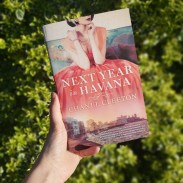
Next Year in Havana

Rating: ⭐
Author: Chanel Cleeton
Genres: Historical Fiction, Romance
Pub. date: Feb. 2018 (read Apr. 2019)

Well that was the most disappointing book I’ve read in a while. I was really expecting to like this. I’ve been really into romances lately and I love historical fiction. I haven’t read any books about Cuba, so I thought this was a great opportunity to learn something new. This is my book club’s selection for April, but it immediately got off to a bad start because my co-chair finished the book before I even started it and gave it 1 star! We usually have the same taste in books, but I was still determined to like Next Year in Havana because it has such great reviews and I was so optimistic about it.

But alas, it was not meant to be. I really tried, I kept telling myself I was liking it, but eventually I had to admit to myself that I really just didn’t like it. It took me over two weeks to read and if it hadn’t been for my looming book club deadline, it probably would have taken a lot longer. It was just really boring and I never wanted to pick it up. The topic should have been super engaging, but the author’s writing and dialogue left a lot to be desired and I didn’t believe in any of her characters.

Next Year in Havana follows the classic historical fiction narrative where one storyline is set in the past and one set in the present. Overall, I’m a bit tired of this narrative. I think it’s overdone and the modern day timeline is almost always less engaging than the historical one. However, this was one book where I thought the decision to tell two timelines actually made sense. The modern day timeline is set in 2017, right after Castro’s death, when US-Cuban relations are finally starting to thaw and change. The historical storyline is set in 1958/9 around when Castro was coming to power. Eliza grew up as part of the wealthy Perez family and the change in government results in the exile of her family to America. In 2017, her granddaughter, Marisol, decides to travel to Cuba to spread her grandmother’s ashes under the guise of writing a tourism article (she is a journalist).

I thought the split timeline worked well because both settings are historically important and mark the changes in Cuba’s politics. It was interesting to see the two factions of Cubans: those who stayed and those who left, and how those decisions played a role in how they viewed Cuba into the future. So the setting definitely had lots of potential and demonstrated the differences between the wealthy and the poor and the locals and the exiles.

But I had a lot of problems with the book. The first was with the romance(s). The story starts with Eliza meeting and falling in love with a revolutionary, Pablo, and Marisol being infatuated with her tour guide, Luis. It’s a lot to carry two romances in a book like this and I thought the author did justice to neither. They were both classic insta-love romances and I have very little interest in those types of love stories. I didn’t understand what was attracting any of the characters to each other and there was very little development of them falling in love. Definitely not a slow burn romance type book. I had a little more sympathy for Eliza because of the era she was living in, but Marisol needs to get a grip.

My second problem with the book was the way in which the author conveyed historical information. This whole book was just a huge history info dump and it was extremely un-engaging to read about. Having one of your characters be a journalist is such an uninspired way to communicate history. It’s easy to have a tour guide that explains everything, but it’s boring. At times I felt like I was reading a history book. I’d much rather be shown the history through Eliza’s eyes or through stories she shared with Marisol. I don’t want to listen to a history professor drone on and on about the author’s obviously biased opinions on Cuba.

‘Show don’t tell’ was probably one of the main problems with this book. Cleeton tells us her characters are in love, she tells us about Cuba’s history, she tells us about the conflict Marisol feels between the exiles and those who stayed, but she doesn’t show us any of it. Sometimes it was hard to tell the difference between her two protagonists because they constantly just cycled through the same thoughts. “he’s a revolutionary, we can’t be together”, “I’m American, we can’t be together”, “it sucks to lose your home and fear for you life”, “it sucks not to have freedom of speech”, “Castro is bad, Castro is bad, Castro is bad.” Honestly, it got so repetitive.

My understanding is that Cleeton’s family basically lived Eliza’s exile, so she’s definitely coming at this story from the perspective of the exiles. I liked that she included a revolutionary, because I really wanted to see and understand both sides of Cuba’s history. Castro represented a lot of bad things to the Americans, but he represented a lot of good things to a lot of Cubans. I feel like the author tried to cover both sides of the story, but her storytelling was still extremely biased and it was not what I was looking for from this story.

This is where my biggest problem with the novel was. I feel like the author took Cuba’s history and its pain and used it to write a drama for the purpose of entertainment. Frankly, I was insulted by Marisol’s character. When she refers to the injustices that have been perpetrated against Cubans, she repeatedly includes herself in that narrative. She refers to Cubans using the collective ‘we’, as if she really understands how Cuban’s have suffered since 1959. I agree that the Cuban-Americans absolutely know their own kind of pain, but she does not understand Luis or what he has been through. She doesn’t get to come back 60 years later and insert herself into Cuba’s story. I know immigrants face their own kind of pain and hardship with the loss of their culture and the diaspora of living in another country. But portraying Marisol as someone who understood what Cubans went through totally erases them from their own story.

It was just so irritating how oblivious Marisol was to much of Cuba’s history and suffering (as evidenced in every single conversation where Luis is explaining some part of Cuba’s history to her). Yet she was so indignant and self-righteous about it. It was the typical “American-comes-to-save-the-oppressed” type of story. Luis was a revolutionary in his own right. He was incredibly intelligent and politically-savvy, so I struggled to believe that he would give an entitled journalist like Marisol the time of day. I hated the ending. I thought it belittled everything Luis had worked for. Cuba’s history is Cuba’s history. You can’t write it into some perfect little historical romance. I felt like this did no justice to Cuba or to Cubans. Am I super knowledgeable about Cuba? Hell no, but I get the feeling its history is a lot more nuanced than this book is able to portray. Sometimes you can’t have nice little endings. Privileged people feel like they can fix everything. But they can’t and sometimes it’s not their responsibility to. Cuba will ultimately be transformed by its own people.

So yeah, I did not enjoy this book. I still learned something from it, but I would much prefer to read about Cuba from a different perspective. I felt like this was very much the Westernized view of Cuba, and I would have preferred to read about it from the point of view of someone who has lived Cuban history first-hand. Mostly I was just insulted that the author took Cuba’s history and used it to write a dramatic, historical romance. It was belittling.

A Very Large Expanse of Sea

Rating: .5
Author: Tahereh Mafi
Genres: Young Adult
Pub. date: Oct. 2018 (read Apr. 2019)

I have no idea how to review this book. I started working on my review days ago only to start all over again because I really wasn’t satisfied with it. Everyone else loved this book. It has a rating of 4.3 on goodreads with hundreds of rave reviews, yet I undeniably did not enjoy it. I disliked the romance and I thought Shirin’s voice was a bit juvenile. But it also addresses a lot of really great issues and deals with topics that undoubtedly are relatable to a lot of people. I don’t want to bash it because #ownvoices stories like this are really important. They’re important for representation, so that people who are minorities can feel seen and heard. And they’re important for educating all those people who can’t relate so that hopefully in the future, they can better understand and empathize with people unlike themselves. I wonder which of these two categories the majorities of readers fall into.

I’m a 28 year old, white, Canadian, woman, so I’m obviously not the intended audience for this book and I’m not going to relate to it in the same way as say, a 16 year old muslim girl. But I’ve read a lot of other similarly themed books where I related to the MC a lot more than I did in this book (With the Fire on High, TATBILB, The Nowhere Girls, I am not your Perfect Mexican Daughter, Aristotle and Dante, The Hate U Give, etc, etc, etc). Overall, I think I have similar thoughts as from my experience reading Internment earlier this year. I thought this book did a lot of great things, but I just really didn’t like the writing style and I found the romance downright cringey.

A Very Large Expanse of Sea is about a young muslim girl, Shirin, whose parents have moved her all over the country, making it difficult to make friends as she is constantly switching schools. It doesn’t help that this story is set right after 9/11 and Shirin wears a hijab, which intimidates a lot of her classmates and further isolates her from her peers. In this post 9/11 world, her classmates are actively hostile against her, causing Shirin to disconnect from everyone else and live in her own little world.

Let’s start with what I liked. I thought Shirin was actually a pretty cool character in that she was very confident in her choice to wear hijab. It was not forced on her by her parents or culture, it was a decision she actively made for herself and she wasn’t embarrassed by it. People were very cruel to her, but she had a remarkably strong character in the face of such adversity, so I didn’t blame her from becoming closed off against the world. But she is also very critical of others. She often judges people and makes a lot of assumptions about them. She assumed that everyone judged her and it was just easier not to give anyone a chance. Again, I don’t blame her because after so many microaggressions, I’m sure it would be difficult to assume the best in people. I liked how Mafi explored this conflict and had Shirin reflect on how she ultimately might be closing people out of her life by refusing to ever give them a chance.

I also really like the inclusion of so many microaggressions in the book and found them to be the most impactful part of the story. Although I struggle to classify much of what happened to Shirin as “micro” aggressions, because in my opinion most people were full on aggressive against her. The inclusion of microaggressions is so important though because it’s really the cumulative impact of microaggressions that drive people to the brink. In isolation, it’s easy to brush off one insult or let it roll of your shoulder, but the cumulative impact of being put down day after day is exhausting and what continues to oppress minorities.

But this brings me to an issue that is making me wonder if maybe I have a blind spot in my world view because I had a similar experience with Internment. Both books had some really evil villains in them. I love the inclusion of microaggressions because I assume they are highly relatable to other muslims, but often go unnoticed by everyone else (ie. white people). The inclusion of them serves that dual purpose of both representation and education. White people don’t often recognize the ways in which they are privileged and books like this are a great way to highlight them.

But some of the characters were so cruel I struggled to believe them. The camp director in Internment read like a caricature to me, which I found less impactful because anyone who is so obviously evil and easy to hate has less impact in a story because no one is every going to relate to them. White people will say, “oh, well I’m not as bad as that person” and pat themselves on the back and move on, whereas they should be taking a good long look in the mirror and thinking about the ways in which they may be perpetrators of microaggressions or harmful thinking in other areas of their lives. Ocean’s coach in this book was just a horrible, selfish human being and his mom was so manipulative and two-faced. There were people literally throwing food at Shirin, I was like, OMG, are people actually this bad?

And this is why I wonder if I do have a blind spot. Are people really this bad? Tahereh Mafi has stated that this is her most semi-autobiographical novel, so who am I to question those experiences? Even though this book is set in 2002, right after 9/11, when people were particularly hostile against muslims, it’s not really any different from where America is today. I would actually argue that it’s worse. People are openly hateful towards muslim people – there was a literal muslim ban for heaven’s sake! So I don’t know that it’s fair to question any of the behaviours in this book. I think I may have a tendency towards the more subtle forms of oppression because they make me think a lot more than the obviously evil forms of oppression. Although this review is undoubtedly making me think.

Like I said earlier though, I did like that Mafi spent some time exploring both sides of the story. And by that I mean that she wasn’t afraid to have Shirin take a good hard look at herself. It is inspiring that after being the recipient of so much hate, she was able to recognize that her experiences were making her jaded. She preferred to assume the worst about people and even though she was a pretty confident individual, the constant put-downs had chipped away a lot at her self esteem. She struggled to understand what Ocean would possibly see in her and kept waiting for him to cut and run.

Even though I didn’t personally like Shirin that much, I think the fact that she is the romantic heroine of the story is super important. We never see muslim girls at the center of romances, so I think that it is great to see more representation in our main characters. I just really didn’t like her relationship with Ocean. The dialogue was not good and it really made me cringe. Shirin constantly says one liners like “wow” and “okay” and I’m like, “wow, okay, I am so not blown away by this banter”. A lot of people talk about how they really love Mafi’s writing, but it didn’t inspire me to want to pick up any of her other books. I mean, I do appreciate a good awkward teenage exchange, because teenagers are pretty awkward and cringe-worthy in real life, so it’s definitely accurate. But so painful to read. This is where I probably need to start parting ways with YA, because I just can’t relate to these awkward, fumbling, exchanges anymore.

I haven’t even mentioned the fact that this book includes break-dancing. It’s probably the most random part of the story, that Shirin and her brother and his friends form this break-dancing troupe, but it was a cool way to remind readers that Shirin is still a normal teenage girl, interested in music and popular culture. It was also a useful tool in the story to get other people in Shirin’s school to see her as human. Shirin was afraid to let people in or take risks because she assumed they wouldn’t accept her. But by cutting them out they struggled to see her as an individual. She was just a representation of islam, of something they were afraid of. Once they saw her break dancing, it was a lot easier for people to accept her. It’s a sad commentary on our society, that its’s so easy to erase people, but pretty accurate.

Overall, this review did help me to appreciate this book a little bit more. You definitely won’t catch me picking it up again, but now that I’m removed from the awkward dialogue and cringe-worthy teenage angst, it’s a little easier to appreciate some of the good things about the story. I would not recommend the audiobook though. I really didn’t like the narrator and that could also have had an influence on my dislike of the story. 2.5 stars overall

The Next Great Paulie Fink

Rating:
Author: Ali Benjamin
Genres: Middle Grade
Pub. date: Apr. 16, 2019 (read, Apr. 2019)

Happy pub day to The Next Great Paulie Fink! Thanks to Hachette Book Group Canada who provided me with a free advance copy in exchange for an honest review.

I loved Ali Benjamin’s debut novel, The Thing About Jellyfish, and she hasn’t published anything new in several years, so I was thrilled when I saw she was publishing a second novel! Both of Benjamin’s books are middle grade and I’ll admit, when I read the plot synopsis for Paulie Fink, it didn’t appeal to me quite as much as her first book because it sounded more juvenille. But don’t let that deter you from reading this one because I ended up really liking it!

The Next Great Paulie Fink is about 7th grader, Caitlyn Breen, who is a new student at Mitchell School. Caitlyn’s mom got a new job and moved them both to rural Vermont from New York, a decision that was not very popular with Caitlyn. Her new school seems totally backwards from her old school and doesn’t seem to follow any of the social “rules” she learned in New York. The kids in her new class all seem eccentric to Caitlyn and they are caught up in the disappearance of one of their former classmates, Paulie Fink.

Paulie was the class clown and beloved by his classmates. But he doesn’t return for 7th grade and no one knows what happened to him. He leaves a void behind that the kids want to fill with a new Paulie, so they decide to have a reality show competition to find the Next Great Paulie Fink. Caitlyn’s struggles to get on board with the competition since she never knew Paulie, but her classmates convince her to judge the competition and suddenly she’s thrust into a totally new world that scares her, but challenges her.

Granted, it’s been a few years since I read The Thing about Jellyfish, but this book had quite a different tone from that book. It’s a lot funnier and it has a large cast of characters to carry the story. It’s overwhelming at first trying to keep track of Caitlyn’s classmates, but eventually they all start to develop personalities of their own, and while Caitlyn is always our central character, I really loved some of her classmates as well.

Like I said, I initially wondered if I would glean much from this book as an adult reader, or if it really was tailored for kids. But I ended up really liking it and even though the themes were younger, I still thought the author did a great job at making this a well rounded story that could be enjoyed at any age. I particularly liked how she approached bullying in this book. Moving to a new school and finding it absent of the social structure that was in her last school, Caitlyn starts reflecting on some of the interactions she had with her former classmates and how some of her actions may have been hurtful. Because her class is so small (a dozen students), and because they are so rural, her classmates are all very supportive of one another and Caitlyn initially struggles with that. She protected herself in her old school by growing a hard shell and disconnecting her emotions from those around her, and in her new school, she struggles to let herself be vulnerable and that hard shell actually creates a barrier with her new classmates.

I also really liked the author’s exploration of legends and kleos (glory). Paulie was a legend at Mitchell and in their search for the next Paulie, the students learn about kleos and what makes someone memorable or a legend. The catch is, kleos can make us forget things too. When we glorify someone, it’s easy to forget the things that made them human or the things that annoyed you about them. We later discover that Paulie was really just as human as the rest of the students, but because of the reputation he developed at Mitchell, the students started over-hyping who he was and to an extent, lost sight of the real Paulie and failed to notice the unique things that they have to offer in their quest to be more like Paulie.

I liked a lot of the secondary characters, but (no surprise I’m sure) Fiona was definitely my favourite. Fiona wears a power suit to school every single day because she wants to one day be a powerful woman. She’s not great at school and struggles to pay attention in class. But she is buoyed by her belief that “well-behaved women seldom make history”. All of the students at Mitchell had so much spunk and I loved watching a group of kids be so great at supporting one another. Was it realistic? I’m not really sure. But I think that was kind of the point. Mitchell school was doing something right – it didn’t seem like a place should exist like this, but somehow it did. When you find something special like that, it’s worth protecting, even if it challenges your worldview.

Mostly though, this book was just a lot of fun. There’s lots to make you laugh and lots to make you think. I think Caitlyn’s classmates are right in that sweet spot where they’re still children, but are about to become teenagers. Caitlyn was pushed to mature a little earlier growing up in New York, which is why she has hardened herself against the world. But these students are still idealistic and not yet jaded about the world. Overall, I loved the balance of humour and life lessons about growing up.