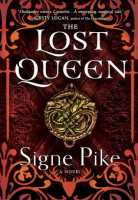
The Lost Queen

Rating: 
Author: Signe Pike
Genres: Historical Fiction
Pub Date: Sept. 2018 (read Sept. 2018)

Thanks to Touchstone for providing me with a free electronic copy of this book in exchange for an honest review.

My blog has been pretty silent over the past week. I’ve been on vacation, so you’ll have to forgive me for my continued absence next week. As a result I haven’t been doing that much reading, but I did finish The Lost Queen, which I received back in August from Touchstone and have finally found time to read.

The Lost Queen is the first book in a trilogy set in 6th century Scotland. It’s recommended for fans of Outlander (which I love) and Philippa Gregory books (which I’ve been meaning to try). It features Langoreth, one of Scotland’s former queens, who has mostly been lost to history. Langoreth was the twin sister of the man who inspired the well known character, Merlin, and had a huge impact on Scotland herself. Signe Pike delves into the histories of both Langoreth and her brother, Lailoken, starting with their childhood and formative coming of age years.

I have mixed feelings about the book. The authors note at the end was fascinating – I love historical novels that explore the history of lesser known figures, especially women because women’s history is rarely recorded and often lost. But I struggled to stay engaged in the book. I’ve had this problem with several books this year (Naomi Novik’s, Uprooted, and Madeline Miller’s, Circe, come to mind), reflecting on the book, I generally enjoyed it and learned a lot, but it wasn’t that enjoyable a reading experience.

I did find this book a bit better than previous books in that I got pretty into it in the last 30 percent and I am interested to see what happens to these characters. We’re told in the book summary that both Langoreth and Lailoken led remarkable lives, but we don’t discover in this book what made their lives so remarkable. This might be why the book read a little slower and may have lended itself better to a single volume instead of a trilogy. It was pretty slow moving and served mainly to introduce us to the characters and the setting. I think it has the potential to get much better in subsequent books.

However, the setting was pretty great. I can say for sure that I’ve never read a book set in 6th century Scotland. I’m not sure I’ve even ever read a book set in the 6th century. I haven’t read a lot of old, old history, so I found this fascinating in that the history is so ancient that England and Scotland don’t remotely resemble the countries they are today. This was a time when Christianity was starting to spread. Scotland had always practiced the “old ways”, but in an effort to gain support from powerful Rome, Christianity comes to the country, creating tension between this new religion and the old ways. It’s incredibly frustrating to read about the injustices committed in this book in the name of Christianity, but still relatable to today.

I also appreciated the familial relationships. So often in this time period, women were seen as little more than property. But I liked how both her father and brother respected and treated Langoreth. Everyone was forced to acknowledge that despite their wishes that things could be different, Langoreth would need to wed to form political alliances for their kingdom. Both the King and Lailoken see value and strengths in Langoreth outside of being a wife, but they also acknowledge that in their time and age, marrying is one of her greatest strengths as well.

Like I said, I struggled with the book in the first half, but ultimately I am interested to see what happens to Langoreth in the next 2 books and to discover what makes her such a remarkable woman. I think this book could have been shorter and I’m hoping for more action in the next book, but I really liked learning about the spread of Christianity and the tension it created in it’s condemnation of the old ways.

August Summary

Okay, August was the best! Well, for books anyways. The wildfires in BC are totally out of control and the air quality was atrocious, so I didn’t do quite as much outdoor stuff, which is one of the reasons it was a great month for books! But also, my August monthly challenge just totally re-vitalized me and got me out of my reading slump!

I was getting a bit hung up with my monthly challenges and the pressure to read specific books, so in August I just set myself the challenge to read pretty much whatever I wanted by trying to read as many of my existing books as possible. I have a lot of un-read books, so it left me with lots of selection to choose from and I finally read some books that I’ve been meaning to get to for a while. Here’s my summary:

Books read: 11
Pages read: 4,208
Main genres: Young Adult
Favourite book: Nevermoor and Women Talking!

I started off the month with Leah on the Offbeat, Becky Albertalli’s newest book. I’ve heard really great things about this one and I’ve been meaning to get to it for a while, but unfortunately I didn’t love it. I’m really hit or miss with Albertalli’s books and I’m finding myself counter to popular opinion on her books. I liked but didn’t love Simon vs. the Homosapiens Agenda (but I LOVED the movie) and I really liked The Upside of Unrequited, which I would say is her least popular book. But I didn’t like this one either. Leah kind of rubbed with the wrong way and while I still loved all the diversity in this book, I found parts of it problematic.

After that, I decided to participate in the 25infive readathon, which challenges people to read for 25 hours over the span of 5 days. I didn’t quite finish the challenge (I read 23 hours over 4 days), but I read 4.5 books, so I was super pleased with myself. I started with Nevermoor by Jessica Townsend and Radio Silence by Alice Oseman. I totally flew through both books and I am not slightly obsessed with Nevermoor. Nevermoor is totally Middle Grade fantasy at it’s best and I confirm that the comparison’s to Harry Potter are valid and that everyone should read this book because it is just so much fun! I also loved Radio Silence, which is about the struggles of senior year and the pressure to go to University, and I will definitely be reading more of Alice Oseman.

I followed up those with Ten by Gretchen McNeil and To All The Boys I’ve Loved Before by Jenny Han. I pretty much hated Ten and found it problematic and kind of offensive, but I thought To All The Boys I’ve Loved Before was really cute. I was only inspired to pick this one up because the new Netflix movie looked really cute (can now confirm – it is cute). Lara Jean seemed like the type of YA book that I gave up long ago, but I loved that this was more a story about sisters than it was about boys and I thought it was really cute. I also read the sequel this month though, P.S. I Still Love You, and unfortunately I thought it was no where near as strong as the first book and basically unnecessary.

While I did read P.S. I Still Love You in August, it wasn’t part of my 25infive reading challenge. The last book I tried to squeeze into the challenge was Uprooted (I got halfway through during the challenge). Uprooted was a challenge for me. It’s a well written, traditional fairytale type story, but I found it so slow moving that it was really hard for me to get into it.

I interspersed my reading of Uprooted with The Last Time I Lied, which was definitely the opposite in terms of pace. This was my first Riley Sager book and it wasn’t quite as scary as I was anticipating, but I really enjoyed it. It was a solid mystery thriller book about a girl name Emma whose 3 friends disappeared at summer camp when she was 13. She’s returned to the camp as an adult and 3 more girls disappear, forcing her into a race against time to figure out what really happened 15 years ago. I was convinced that I had the mystery figured out and I was thrilled to find out I got it totally wrong and didn’t see the twist coming at the end at all.

I had one book that I had to read in August, which was for my book club, was Circe by Madeline Miller, the new fantasy book that came out this year and has super good reviews. I had a bit of a love-hate relationship with this one, similar to Uprooted. I thought the story was really good, but it was a slow read for me and the reading experience overall wasn’t great, even though I did like the story.

I read Women Talking by Miriam Toews towards the end of this month and it was definitely one of the best books I read this year! It’s a fictional account of the true story of a community of Bolivian, Mennonite women who were attacked and raped in their sleep over the course of 4 years. After the crime is discovered, the women meet to discuss what to do about it and the whole book is basically a group of them talking about whether they should leave the community or stay and fight. The writing in this book is wonderful and the content is so thoughtful. I would recommend this book to absolutely anyone and everyone.

Finally, I finished the month with a re-read of The Assassin’s Blade by Sarah J Maas, which is the prequel to the Throne of Glass series. I am a bit obsessed with this series and with the final book coming out in October, I’ve decided to re-read the whole series! The Assassin’s Blade was just as good as I remembered and I can’t wait to jump into the rest of the books in September!

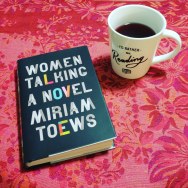
Women Talking

Rating: 
Author: Miriam Toews
Genres: Fiction, Historical fiction
Pub Date: Aug. 2018 (read Aug. 2018)

How do I review this book? It’s just so damn important and something everyone should read.

I saw Women Talking on display at Chapters and as soon as I opened it up and read the forward, I knew I had to read it (plus I’ve been walking to read some Miriam Toews). Women Talking is a fictional account of the real life crimes committed against mennonite Bolivian women. Between 2005 and 2009, in a remote Bolivian community, women were repeatedly waking up having been attacked in the middle of the night. The attacks were attributed to demons punishing the women for their sins, but it was later discovered 8 men were sneaking in the the rooms of women all over the village, knocking them out with an animal aesthetic, and then raping them. Horrifying.

Women Talking focuses on some of the victims of these attacks, women from 3 generations of the Loewen and Friesen families. The rapists have been jailed in a nearby town and the rest of the men in the community have taken livestock to the town to try and sell to post their bail money. While the men are away, 8 women of the Loewen and Friesen families call a meeting (on behalf of all the women) to discuss what to do. When the men return home, the women will be called upon to forgive them, so as they see it, they have 3 choices:

1. Do Nothing
2. Stay and Fight
3. Leave

The entire novel consists of these women talking through these 3 choices and deciding on a course of action, and boy are their conversations illuminating. They discuss many philosophical questions about what each of these choices means and how their village got to this point. Some of the women are hurt, some of them are angry, and some of them are afraid. But while this is an upsetting story, it is also filled with love and even humour. The novel is only a short 200 pages, but I loved getting to know each of these women, watching them talk and relate with each other, share experiences, and share laughter. It is a brilliantly written novel and such a thought provoking piece of fiction. This book matters. Women matter.

There was so much of this book that I loved that it’s hard to pinpoint specific pieces. But one part I found particularly striking was when one of the women (can’t remember who… Ona maybe?) voices that maybe they should consider a 4th choice: asking the men to leave. It’s such an obvious solution. Absolutely the men should be the ones to leave. They are the ones that have violated and torn their community apart, they should no longer be permitted to participate in community life. But the option never really catches any traction with the women and they even openly laugh at it because it really is an outlandish idea to think that the men would consider leaving or even that the rest of the men and community would support the women in forcing these men to leave. It’s a sad truth, but these women understood (and I’m sure most other women do to), that even though it was the option that made the most sense, it would never really be an option.

I don’t want to give too much away about the book, so I’ll just say, please please please go to the library or the bookstore and pick yourself up a copy of this book!

The Last Time I Lied

Rating: ⭐⭐⭐⭐
Author: Riley Sager
Genres: Mystery, Thriller
Pub date: July 2018 (read Aug. 2018)

I didn’t read Riley Sager’s first book, Final Girls, because it sounds too disturbing for me, but The Last Time I Lied takes place at a creepy summer camp where campers start to go missing, and I love everything to do with the outdoors (even creepy mystery thrillers), so I was like, “sign me up!”

This book wasn’t as scary as I was anticipating, it has a creepy ambiance through most of the story, but I didn’t think the tension really started to build until the last 30%. But I was still totally into the mystery of the story and I was dying to know what our narrator, Emma, wasn’t telling us.

Emma was just 13 the first (and only) time she attends Camp Nightingale, a summer camp for wealthy young girls just outside of New York. Emma shows up to camp late and ends up being put in a cabin with 3 older girls – Natalie, Allison, and the enigmatic Vivian. Emma is enamoured with Vivian and quickly becomes caught up in the older girl’s drama. Vivian acts like a big sister to Emma, but as Emma discovers some of Vivian’s secrets, their friendship starts to splinter. Then, one night, Vivian, Natalie, and Allison disappear into the night, never to be seen again, forever imprinted upon Emma’s memory.

Flash forward 15 years, wealthy camp owner, Frannie, has decided to re-open the camp and invites Emma to be the camp’s art instructor. Emma decides to return to Camp Nightingale to try and find our what happened to Vivian so that she can finally move on with her life. But she quickly realizes upon arrival that everything is not as it seems at Camp Nightingale.

I was convinced I knew who had made the girls disappear, so I was thrilled when I was totally off the mark. The last 30% of this book is a wild ride and I loved the whole “person vs. nature” element on top of the character conflicts. The ending was a little too coincidental, but the last little twist Sager throws in at the very end f the novel totally blew my mind! The book also has an interesting psychological element where Emma keeps seeing things and you’re not sure what is and is not real.

Overall a solid mystery/thriller book. I’ll still probably take a pass on Final Girls, but I’m interested to see what Riley Sager writes in the future.

The Map of Salt and Stars

Rating: ⭐⭐.5
Author: Jennifer Zeynab Joukhadar
Genres: Historical Fiction
Pub date: May 2018 (read July 2018)

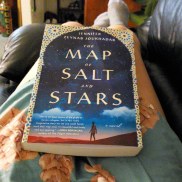
The Map of Salt and Stars is another one of those books that I wanted to love, but I just didn’t. Books like this are super important, so it’s hard to give them a bad review because I’m really glad that someone has written a split modern day/historical story about Syria. But unfortunately this novel just didn’t work for me at all.

The Map of Salt and Stars tells two stories simultaneously. The first is about Nour, an eleven year old Syrian-American who grew up in America, but whose family has just returned to Syria only to be bombed out of their house and forced to flee the country. The second story is set 800 years in the past and features a young girl Rawiya, who seeks her fortune as a map maker with the famous (and real-life person) Al-Idrisi.

Everything about this synopsis seems like a story that I would absolutely love, but the writing and characters both fell flat to me. I thought the relationships between Nour and her mother and sisters were underdeveloped and the story of Rawiya and Al-Idrisi was not engaging. I was a little more interested when I realized that Al-Idrisi was a real person, but even though Rawiya’s part of the story includes fantastical elements, it was really boring to read and I was disappointed every time the chapters switched because I didn’t want to go back to reading about her.

Likewise, Nour’s story had the potential to be super interesting, but I thought there were a lot of really weak and clumsy metaphors interspersed throughout the story and I wanted more developed relationships between all of the characters. Both stories are progressing on a road trip of sorts that align with one another, but I was never really sure what the point of pairing these two stories together was. I thought the whole secret map metaphor between Nour and her mother was laboured and ineffective. I feel like either of these stories could have been a standalone, but together neither was developed enough to really work.

I do applaud the author for what she tried to accomplish in this book and I think she has some great ideas, she just needs to keep writing and developing them into something stronger than what this book had to offer.