The Wild Heavens

Rating: ⭐⭐⭐⭐⭐
Author: Sarah Louise Butler
Genres: Fiction
Pub. Date: Mar. 2020 (read Jan. 2021)

I rarely buy books without first looking up the ratings and reviews on goodreads or checking out the hype about it. I like to stay on the pulse and read new and upcoming books, but I’ve been trying to stop reading books solely because of the hype and focus more on finding stories that intrigue me and that I think I will really like.

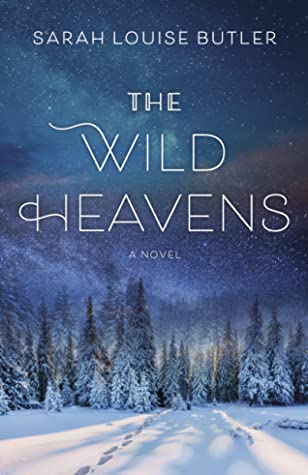
I love exploring local indie bookshops because the owners always have a deep love of reading and spend a lot of time crafting their inventory. I also love them because they’re a great place to find Canadian lit and books by local authors. The Wild Heavens was a purchase from a pop-up bookshop that showed up in my neighbourhood over the holidays and I was immediately drawn to the cover, which is gorgeous, and then the synopsis, which is set in BC.

I loved this book. It is a classic slow burn character driven novel, which is one of my favourite kinds of books, and I adored everything about it. It’s an extremely atmospheric book set in BC’s interior mountains and covers most of Sandy Langley’s life spent living there. Her grandfather settled in a cabin in the woods in the 1920’s and after the death of her mother, Sandy is brought up by her grandfather and becomes close friends with the only other kid in a neighbourhood, a young boy named Luke.

They grow up together exploring the wilderness and eventually become privy to one of Sandy’s grandfather’s greatest secrets – the encounter he had with a large 2 legged creature when he was wondering the mountains in the 1920’s and has spent the rest of his life trying to understand. The creature is known to Sandy as Charlie, but to the rest of us, names like Bigfoot or Sasquatch might sound more familiar.

Did I expect to fall in love with a book about Bigfoot? Definitely not, despite my intrigue at the story, the concept did sound just a little bit weird to me. But like any good book, the story is not always about what we think it will be about and even though Charlie formulates the narrative of the story, ultimately it’s not really about him. Rather it’s a story about growing up and growing old. It’s about the ways that life will challenge us and how our early experiences shape us into the people we become. It’s about finding love and losing it, the people who influence us, and the moments that make up a life – both happy and sad.

It’s a totally different story, but it some ways it reminded me a little of The Great Alone, which I also love. Setting is a critical part of the story and the isolated cabin in the mountains contributes to a deeply atmospheric feel that permeates the whole novel. More than anything, setting formulates these characters and I got completely lost in the romanticism of it. I love the mountains and the forests and the lakes and the snow. Despite not having a Charlie of my own to inspire me, I understood how a sense of place influenced and motivated these characters.

It is a heartbreaking story, but the characters moved me. The plot is subtle and if you’re looking for a fast paced novel, this is not it. But if you’re looking for a reflection of a life lived and a place loved, pick up The Wild Heavens and get lost in the story and setting within.
Emma

Rating: ⭐⭐⭐⭐
Author: Jane Austen
Genres: Fiction, Classics
Pub. Date: 1815 (read Jan. 2021 on audible)
Narrator: Emma Thompson & full cast

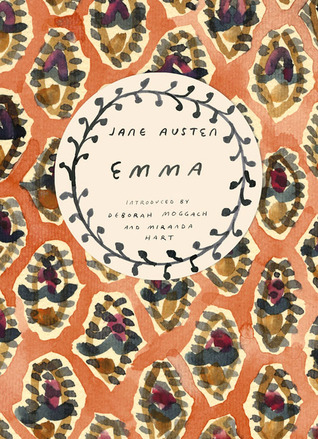
Emma was my final book in the Austen Audible collection! It was a re-read, but I knew I would like it better than the last time I read it. You can see my original review here, but I have written a new one to reflect my new opinions.

Emma is really quite the character. At the start of novel I found her hilarious, but I must admit I did find that my opinion of her character regressed the more time I spent with her. She is both a person that sees the best in people, but still wants to maintain the social order. She loves Mrs. Westen and is genuinely thrilled for her happiness. Likewise, she sees only good in Harriet, someone who is in reality much below her in social status. However her determinedness to see the best in Harriet is more indicative of her desire to commend herself than to actually elevate Harriet. What she really seeks is Harriet’s admiration as a friend and mentor. This makes her blind to the reality of Harriet’s situation and causes Harriet a great deal of harm over the course of the novel.

But while she sees nothing but good in characters like Harriet (who admire her), she sees only faults in characters like Jane Fairfax, who in reality she is jealous of. For all her class and wealth, Emma is clever, but she is also undisciplined and unable to appreciate in others what she herself lacks.

This book is very smart, yet I did find the narrative a little repetitive after a while. I said in my first review that I thought the book long and I am still inclined to agree. Where I think this book differs from her other books, is that there is no true villain. There are flawed characters, like Mrs. Elton (and Mr. Elton) and Frank Churchill, but they are only that – flawed. We are suspicious of Frank and from other novels, I’d come to expect a grand deception, so it was refreshing to see only poor judgement rather than outright malintent.

What this book really has going for it though is Mr. Knightly. I think the reason I gravitated to P&P and NA is because they both have well developed male leads. Mr. Knightly is present through the entirety of the novel and offers very sound judgement and advice throughout. Austen takes a bit of a different tact in this book by having characters that discuss Emma outside of her personal narrative. Emma is vain and Mr. Knightly is one of the few people that calls her out on it. I liked that he had a meaningful relationship with Emma, though he was somewhat more of a father figure for most of her life rather than a lover.

I also loved the inclusion of Jane Fairfax in the novel. She’s an excellent character through which to judge Emma because while we’re supposed to dislike her because Emma does, it quickly becomes evident that Emma is unfair and their relationship serves more to highlight Emma’s flaws. Where the novel is disappointing though is in Emma’s treatment of Harriet.

Harriet definitely gets the worst end of the stick. Fortunately Harriet’s prospects are not ultimately damaged by Emma and once they are finally separated, I’d argue that Harriet’s prospects are actually much improved as she is finally free to accept Mr. Martin’s proposal which would easily have made her happy from the start. But Emma’s meddling causes nothing but harm to Harriet and it was disappointing to see Emma avoid the situation by basically ditching Harriet, rather than to admit she’s been a bad friend. While she does admit this to herself, she never admits it to either Harriet or Mr. Knightly. It’s an interesting choice because it doesn’t show a huge amount of growth of Emma’s character.

Overall though, I liked this a lot better on the second read through and think this is one of Austen’s tightest plots.

Some of my personal highlights were (in no particular order):
– Emma immediately f*ing up Harriet’s marriage prospects
– Emma refusing to advise Harriet, but still manipulating her, only to be called out on it immediately by Mr. Knightly
– Emma’s dislike of Jane and how evident her jealousy
– Emma’s general obliviousness
– Mr. Knightly’s goodness, especially when he asks Harriet to dance
– Mrs. Elton’s meddling to the annoyance of everyone
– Emma still wanting the best for everyone, even if ill-informed

Mansfield Park

Rating: ⭐⭐⭐.5
Author: Jane Austen
Genres: Fiction, Classics
Pub. Date: 1814 (read Jan. 2021 on audible)
Narrator: Billie Piper & full cast

Mansfield Park – my final Jane Austen. I left Emma for last in the Audible collection, but as it will be a re-read, I’ve now finished them all!

I was curious what I would think about Mansfield Park. I’ve heard it’s not a favourite and I was determined to like it just as much as the others, but alas, I didn’t. I still think it’s a great book and overall I would give it 3.5 stars, but something about it just wasn’t quite as endearing.

The reason a lot of people dislike MP (I’ve heard) is because of how timid and meek Fanny Price is. I admit, she doesn’t have quite the same draw as characters like Elizabeth Bennet and Emma, who are very self-assured, but it’s clear she’s intentionally written that way. One thing I appreciate about Austen is that despite having similar themes in all her books, each of her heroines is quite unique and Fanny was really a victim of circumstance.

Of all Austen’s books, this one reminded me the most of Wuthering Heights, which is one of my favourite classics. While Fanny eventually finds her place at Mansfield Park, as a child, she is mistreated by every member of the family save Edmond. It wasn’t surprising that she grew to be so quiet and timid, yet I must praise her developing such morality. While everyone else at Mansfield lets their egos and vanity run away with them, Fanny is the sole voice of reason and propriety. Doesn’t sound like quite as much fun, but she becomes a very good reader of people.

I confess I struggled a little bit on this one to read the characters as well as Fanny. I had no idea where the plot was going as Austen is both reliable in her story telling, yet unpredictable. Knowing how it ends now I think I shall have to go back a read it again some day to see if I can’t pick up some more telltales of each of the character’s motivations. Fanny was much more perceptive than me as I found myself forgiving all of Henry’s previous transgressions and becoming quite a fan. Probably it was because I desperately didn’t want the novel to end with 2 cousins getting married, but while I could see through Mary Crawford, Henry had me quite duped.

However I think the main reason I didn’t love MP quite as much is because I didn’t find it as comic as Austen’s other books. To be fair, I had just read Northanger Abbey, which I think is the most comic of the lot, but I found the characters more vexing than funny. Still a sign of a good author, but I found it hard to find anything humorous about characters like Mrs. Norris. Likewise, while characters like Lydia are annoying, I still found her funny, whereas I found Maria extremely shallow and felt bad for thinking that she got her just reward (unfair I know when characters like Henry are just forgiven by society thanks to their wealth and sex). But mostly I was just sad about how Fanny was treated by her relatives.

The one thing I really liked about this book though was Fanny’s resolve not to marry Henry. She was pressured so much by her family and I honestly thought Henry seemed so sincere. I both wanted her to accept him, but also wanted her not to because it would only reinforce the terrible notion that a ‘no’ doesn’t really mean no, only that the individual needs to be better convinced. Women should be respected enough to know their own mind. Fortunately this wasn’t beyond Austen either and this quality in Fanny ended up raising her in everyone’s opinions when it was discovered what a scoundrel Henry really was.

Some of the my personal highlights were (in no particular order):
– Sir Thomas having his character redeemed and being good to Fanny
– The realization that while Fanny had a tough time at MP, she did ultimately gain from it and was raised in social class
– Henry deciding to woo Fanny for sport only to fall in love with her
– Fanny’s decidedness in not marrying Henry despite the pressure from every single person at Mansfield
– The love triangles and lack of discretion
– Fanny’s impression of her family when she returns home
– Grown adults acting out a play like children

Every Book I Read in 2020

It’s that time of the year again where I catalogue all the books I read in the previous year. I like to track my yearly reading list here, and then every year I make a post of all the books I read the previous year. I’m a little bit behind this year, but better late then never right?

Despite all the spare time I had, 2020 was not a good reading year for me. In fact, it was my worst reading year since 2015. But we all survived 2020 in different ways. With everything else going on I found my reading motivation low and instead turned to hiking and baking to keep my spirits up. That said, I did still read 63 books in 2020, which is still a huge success. I wrote less reviews than usual and lost my motivation to write special interest posts (I didn’t even do a top books of 2020 blog!), but I’ve still be plugging along and have been a lot more engaged to date in 2021.

So here’s the compilation list of all the books I read in 2021!

  1. Lord of the Rings Location Guidebook – Ian Brodie
  2. Bloodlust & Bonnets – Emily McGovern
  3. Flamecaster (Shattered Realms #1) – Cinda Williams Chima
  4. Shadowcaster (Shattered Realms #2) – Cinda Williams Chima
  5. Stormcaster (Shattered Realms #3) – Cinda Williams Chima
  6. Dual Citizens – Alix Ohlin
  7. The Giver of Stars – Jojo Moyes
  8. Deathcaster (Shattered Realms #4) – Cinda Williams Chima
  9. The Simple Wild (Wild #1) – K.A. Tucker
  10. Wild at Heart (Wild #2) – K.A. Tucker
  11. The Silent Patient – Alex Michaelides
  12. Disappearing Earth – Julia Philips
  13. When the World Didn’t End – Caroline Kaufman
  14. Greenwood – Michael Christie
  15. Where the Crawdads Sing – Delia Owens
  16. The Glass Hotel – Emily St. John Mandel
  17. The Tattooist of Auschwitz – Heather Morris
  18. American Dirt – Jeanine Cummins
  19. The Dutch House – Ann Patchett
  20. Son of a Critch – Mark Critch
  21. Such a Fun Age – Kiley Reid
  22. Maybe in Another Life – Taylor Jenkins Reid
  23. Rick Mercer Final Report – Rick Mercer
  24. Anxious People – Fredrik Backman
  25. Cape Scott and the North Coast Trail – Maria Bremner
  26. The Beekeeper of Aleppo – Christy Lefteri
  27. Once You Go This Far (Roxane Weary #4) – Kristen Lepionka
  28. A Very Punchable Face – Colin Jost
  29. The Diviners (Diviners #1) – Libba Bray
  30. Catch and Kill – Ronan Farrow
  31. She Said – Meghan Twohey, Jodi Kantor
  32. Fence: Rivals – C.S. Pacat
  33. Migrations – Charlotte McConaghy
  34. Wade in the Water – Tracy K. Smith
  35. The Last Story of Mina Lee – Nancy Jooyoun Kim
  36. Kim JiYoung, Born 1982 – Cho Nam-Joo
  37. One by One – Ruth Ware
  38. Beyond the Trees – Adam Shoalts
  39. Solutions and other Problems – Allie Brosh
  40. The Pull of the Stars – Emma Donaghue
  41. Check Please!, Book 2: Sticks & Scones – Ngozi Ukazu
  42. The Vanishing Half – Brit Bennett
  43. Nevermoor (Nevermoor #1) – Jessica Townsend
  44. Wundersmith (Nevermoor #2) – Jessica Townsend
  45. Hollowpox (Nevermoor #3) – Jessica Townsend
  46. Transcendent Kingdom – Yaa Gyasi
  47. Conditional Citizens – Laila Lalami
  48. Punching the Air – Ibi Zoboi, Yusef Salaam
  49. Mexican Gothic – Silvia Moreno-Garcia
  50. Hood Feminism – Mikki Kendall
  51. The Invisible Life of Addie LaRue – V.E. Schwab
  52. The Lifting Dress – Lauren Berry
  53. Betty – Tiffany McDaniel
  54. Tell the Wolves I’m Home – Carol Rifka Brunt
  55. Where the Forest Meets the Stars – Glendy Vanderah
  56. Happily Ever After – Debbie Tung
  57. Rock Recipes Cookies – Barry Parsons
  58. Forever Wild (Wild #2.5) – K.A. Tucker
  59. Pride and Prejudice – Jane Austen
  60. Watch Over Me – Nina Lacour
  61. Persuasion – Jane Austen
  62. Sense and Sensibility – Jane Austen
  63. Northanger Abbey – Jane Austen

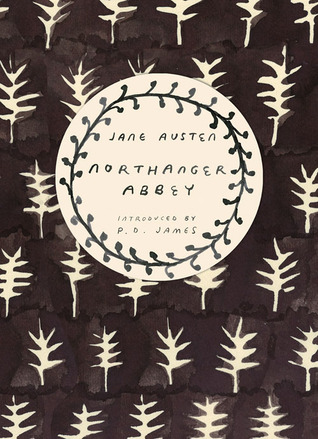
Northanger Abbey

Rating: ⭐⭐⭐⭐.5
Author: Jane Austen
Genres: Fiction, Classics
Pub. Date: 1817 (read Dec. 2020 on Audible)
Narrator: Emma Thompson & Cast

Did I read this entire book in a day? Maybe, but honestly with the pandemic there’s not much else to be doing these days and I had the most wonderful time doing a jigsaw while listening.

I thoroughly loved this! 4.5 stars! I know NA does not have the same depth as her other works, but it was just so much fun to read! Catherine Morland is the spunkiest heroine and I loved watching her grow up and learn how to read people and navigate the world. She’s so hopelessly naïve, but it was endearing. Even though most of Austen’s heroines are young, I felt NA much more a coming-of-age story than any of her other books, and I do love a good coming of age story.

I don’t have as much to say about this one because, as I said, the themes don’t really have the same depth as P&P or S&S, but as far as humour and satire go I think this might be one of Austen’s best books. The way she satirizes gothic novels and literature in general in this book is just hilarious! There’s quite a difference between the first and second halves of the book, but I got a kick out of Catherine’s naïveté in the first half and her dramatization of Northanger Abbey in the second half.

I did find the ending a tiny bit jarring (may be a theme) with Catherine being sent away so unceremoniously, but overall I thought NA was comedic brilliance. It showcases Austen’s witty dialogue and her ability to convey characterization through discussion. Isabella and John are quickly shown to be totally insipid, while Henry showcases his intelligence and wit. That said, I loved the introduction of a female villain in this book!

My personal highlights were (in no particular order):
– Catherine thinking the General either murdered his wife or was hiding her in a dungeon
– Catherine having no idea about flirting or subtlety, with every comment going over her head
– Isabella’s incessant chatter and John’s egotistical ramblings
– Catherine finally dumping the Thorpe’s to go walking with the Tilney’s
– Austen’s defense of novels
– Catherine’s disappointment at Northanger Abbey being totally normal
– how Catherine’s imagination runs away with her after hearing Henry’s story
– how Catherine grows and finally learns how to judge the character of those around her