Looking for Alibrandi


Rating: ⭐
Author: Melina Marchetta
Genres: Young Adult, Fiction
Read: Jan. 2018

This is a tough one to review because I’m not quite sure how I felt about this book. Looking for Alibrandi was Melina Marchetta’s first book and it’s been on my TBR for a very long time. On the Jellicoe Road is the first Marchetta book I read and it still remains my favourite of her books (and one of my favourite books of all time). I keep hoping that one of her other books will be better than Jellicoe Road, but they never are.

This was a fun book. I really liked Josie. She was spunky and I laughed out loud at her more than once. I haven’t read a YA book like this one in a while and sinking into Marchetta’s writing is like sinking into a hot bath. It feels so nice and comforting. I didn’t love Looking for Alibrandi and I did take issue with the main romantic relationship in the novel, but I also appreciate what Melina did with this book.

Josephine Alibrandi is in her final year of high school and she’s determined to do well on her HSC exams so that she can become a barrister (it’s set in Australia). Josie has never quite taken herself seriously and sees herself as an outcast because of her heritage. Her grandparents moved to Australia from Italy in the 1940’s and she’s been raised heavily Italian. Her mom became pregnant with her at 17, alienating herself from her family, and raised Josie on her own, without any support from Josie’s father.

Josie struggles to belong because of her heritage and because she goes to a catholic high school, she is largely shamed because of her single mother. She’s had a crush on do-gooder John Barton for years, but she finds herself enamoured with the rough-around-the-edges Jacob Coote after she meets him at a regional school event. To top things off, when her father unexpectedly shows up in Sydney, she knows she’s in for a whirlwind senior year.

There were a lot of things I liked about this book, the biggest of which was the insight Marchetta provides into race relationships in Australia. Many of the Australians are actively racist against the families that immigrated from Italy and Greece in the 1940’s and 1950’s and there’s an interesting dynamic between Josie and some of her classmates. I enjoyed when Josie learned about her Italian heritage and how she learned to accept it and appreciate it.

I also liked the relationship she built with her father and the dynamic between her and the rest of her family. Her relationship with her mother and grandmother felt very real. At first you wonder if any of them actually like each other and they all seem a bit bipolar in how they treat one another, but when I think of my family and how we can one minute all be screaming at each other and the next minute happily sitting down for dinner, it rings true of that special bond that you can have with your family that I’ve never experienced in any other friendship.

The reason I liked Josie’s relationship with her Dad though is that it was so anti-dramatic. Children finding their birth parents always has a super dramatic and emotional narrative, but I loved that Josie was so secure in herself and her family relationships that meeting her father was just an event that happened to her. She never felt like she was lacking anything and when she finally did meet her father, it was just this interesting opportunity to get to know him. I never felt emotionally manipulated by the author in any of the relationships.

Now, to the part I didn’t like: Jacob Coote. Am I supposed to like this character? He reminded me a little of Rhett Bulter in Gone With the Wind in that he never conformed to what Josie wanted him to be and was the only one her called her out on her bullshit. I feel like we’re supposed to like him for refusing to change himself, but I never liked Rhett and I didn’t like Jacob either. He was just straight up not reasonable and in my opinion, not really respectful either. He gave Josie shit about stuff that I didn’t think was any of his business, like her relationship with John Barton and her opinions of when to have sex. And when he complained about meeting her mom and then kicked up a stink when she didn’t want him to meet her grandmother? Get over yourself Jacob and respect Josie!

Anyways, I was still pretty pleased with how this book went and it’s given me a huge hankering to re-read Jellicoe Road. The Piper’s Son is now the only Marchetta book I haven’t read, so I’ll need to get around to that one too!

My recommendation would be to skip this book and go straight to Jellicoe Road!
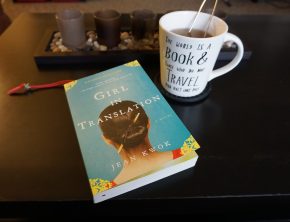
Girl in Translation


Rating: ⭐.5
Author: Jean Kwok
Genres: Fiction, Young Adult
Read: Jan. 2018

YES! Finally, a good read in 2018! I was off to a rough start before this gem!

Girl in Translation has been on my TBR forever and I finally decided to give it a read as part of my January Reading Challenge to read 3 books about immigration. This is a beautiful, beautiful book and I’m so glad I finally took the time to read it.

Girl in Translation tells the semi-autobiographical story of Kimberly Chang and her mother as they try to survive in New York City as new immigrants from Hong Kong. I’m not entirely sure when this book is set, but from a few of the pop culture references it seems to take place in the 1980’s. Kim and her Ma are sponsored into America by her Aunt Paula, who puts them up in an apartment in Brooklyn and gives Ma a job at her husband’s clothing factory. Kim and Ma are dismayed at the state of the apartment, which has broken windows, no heat, and a lot of roaches and rats.

Back in Hong Kong, Kimberly was always top of her class, and knowing hardly any english, she struggles at school. Ma is working as a finisher at the clothing factory along with many other Chinese-Americans. The factory is actually a sweat shop that illegally pays its workers by the garment (as opposed to an hourly wage) and Kim must help Ma every day after school until late in the night to get the clothes ready for each shipment. When Kimberly is teased at school and harassed by her teacher, she wants to skip school, but quickly realizes that she is her and Ma’s only chance at ever getting out of poverty. She’s throws herself wholeheartedly into learning English and works hard to get back to the top of the class again.

This is such a heartbreaking and inspiring story and I really like Kwok’s writing. It reminded me of A Tree Grows in Brooklyn, which is a huge compliment because it is one of my all time favourite books. It’s not a plot driven book, it’s simply the story of a young girl growing up in very tough circumstances and working incredibly hard to better herself and her family. I loved that Kimberly was tenacious and ambitious, but that she was also very real and had flaws. She takes the weight of the world upon her shoulders and she refuses to ever ask for help. She struggles to make friends, but she is so lucky to have Annette and I wish she’d confided in her and shared herself with Annette. Kim always declined help and was reluctant to let anyone into her life. I feel like may be a symptom of her Chinese culture as Ma was always reluctant to build any relationship that couldn’t be reciprocated and reverently believed in the idea that a debt must always be repaid. Sadly they both seemed to confuse kindness as a debt sometimes.

The ending is pretty abrupt, which caught me off guard. I actually think this story could have used another 50 pages to do the ending justice, but I still really liked it. It’s a heartbreaking ending, but I really appreciated it because it was real. When I saw where things were going at the end, I immediately knew how Kim was going to react because Kwok has breathed such life into this character that she took on a life of her own and acting any other way would have been contrary to her character. Kwok is very perceptive and I loved all of her characters because they were so real and so flawed. I was worried she might take the easy way out to create a happier ending, but I’m glad she stayed true to her characters and gave us this very bittersweet ending.

The Star-Touched Queen


Rating: ⭐⭐
Author: Roshani Chokshi
Genres: Fantasy, Young Adult
Read: Jan. 2018

Well, apparently 2018 is off to a disappointing start book-wise. I know the blog-o-sphere has mixed feelings on this book, people seems to either love it or hate it, so I decided to give it a try in the hopes I would love it, but I did not.

Even though I just finished this book yesterday, I’m hard pressed to even really describe what happened in it. The writing was so flowery, to the point that the story felt really disjointed and I had a really hard time following it. Random events kept happening and characters would show up out of nowhere and I just really had no clue who half the people were.

The Star-Touched Queen is a young adult fantasy novel that takes place in this Indian-type fantasy world, which sounded super appealing. Maya is a princess who has unfortunately been cursed with a horrible horoscope that said her future would be paired with death and as such, everyone hates and avoids her. Her kingdom is at war and so her father decides to try and marry her off in an attempt to lure his enemies into a trap. Maya chooses to marry Amar and is whisked away into a world she didn’t know existed and struggles to move on from the life she’s left behind.

Amar is really mysterious and we don’t really know who he is or why he claims to have such a devoted love for Maya, who he only just met. This book has a lot of mythology in it, but a lot of it was over my head. I don’t have a problem with mythology, but the author gave me no context. She never explains how anything works in the world she’s created, as if I’m just supposed to know all about this supposed underworld and transition world and all these random mythological beings. I found it all very confusing and the writing felt really disjointed.

I struggled with the writing a lot. I love beautiful writing, but in my opinion Chokshi’s writing took away from the story instead of complimenting it. I felt a degree removed from the story and the characters throughout the entirety of the novel because I couldn’t get beyond the fancy writing to what was actually happening and what the characters were actually feeling. The writing was pretty, but it lacked any meaning for me.

I’m really sad I didn’t like this though because the cover art is beautiful and the cover art for the sequel, Crown of Wishes, is even more gorgeous and I really want it on my bookshelf, but alas, I don’t think I’ll be picking up the next book. I’m planning to work on my January reading challenge next (read 3 books about immigration) and I’ve picked out several critically acclaimed novels, so I’m hoping for some better books in the near future!

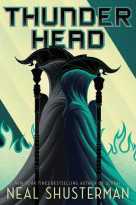
Thunderhead


Rating: ⭐⭐⭐
Author: Neal Shusterman
Genres: Science Fiction
Read: Jan. 2018 (Pub. date: Jan. 9, 2018)


Thank you to NetGalley and Simon & Schuster Canada for providing me with a free electronic copy of this book in exchange for an honest review.

I read Scythe at the end of 2017 and had somewhat mixed feelings on it. I found the first half kind of boring, but the book tackled a lot of complex concepts and themes and it really made me think, so I was interested to keep going with the series, even if I wasn’t totally in love with the writing.

Thunderhead is the sequel to Scythe and they are both set in a world in which humans have perfected technology and achieved immortality. Government has been replaced with an all-knowing “cloud” called the Thunderhead who maintains world order and essentially controls everything. The only thing outside the control of the Thunderhead is the Scythedom. Scythes are people who have been tasked with “gleaning” or killing people in order to somewhat maintain population growth. Scythes are supposed to be humble and just, but over the years the Scythedom has split in to two factions: the new-order scythes who envision a different way of doing things, and the old-guard, who want to maintain the original ideals of the Scythedom.

Scythe introduced us to all the different Scythes and their opinions on the best ways to glean. I liked Scythe because it introduced a lot of ethical issues concepts and it really got me thinking. It was mostly an introduction to the world Shusterman has created and sets us up for a much larger story. Thunderhead delves more into the story of the struggles and conflicts between the two Scythe factions and the fight to keep the Scythedom honest and ethical.

I’m thrilled to get an advanced reader copy of this book, but unfortunately I was disappointed with Thunderhead. The story definitely progresses in this book, but like the first book, I didn’t love the writing and I found it another slow moving story. My copy was 500 pages and I feel like I got a lot of info I didn’t care about. Like in the first book, each chapter is separated by a short note, but instead of excerpts from the Scythes journals, it’s brief thoughts from the Thunderhead. I thought Shusterman introduced some more interesting concepts in these excerpts, but they weren’t really developed any further in the actual plot and I found them less meaningful.

The Thunderhead is supposed to be a perfect artificial intelligence, but it’s terrifying how emotionally sentient it is. It becomes evident that the Thunderhead is just as prone to love and anger as humans, which is terrifying in an all-governing robot. Shusterman explores some ideas about what it might be like to live in a society governed by an all-knowing computer, but I found the main plot of the story, which was the continued clashes between the new order and old guard, to be a bit repetitive. Side note: the synopsis on goodreads is not very accurate. Citra does not risk going deadish to talk to the Thunderhead in this book.

The story still follows Rowan and Citra, but expands to include the viewpoints from other Scythes as well. It was constantly changing viewpoints, which I somewhat liked, but also found distracting. Again, the last 100 pages of the story were very eventful and went in a totally different direction than I was expected, but it wasn’t enough to redeem the first half of the book for me. Overall I found it slow moving and it didn’t make me think as much, which is what I enjoyed most about the first book.

Still a 3-star book though and it ends of a pretty big cliffhanger, so I’ll probably keep going with the series because I do really want to know what’s going to happen.

Scythe


Rating: ⭐⭐⭐.5
Author: Neal Shusterman
Genres: Science Fiction, Young Adult
Read: Dec. 2017


Scythe is another one of those 3-star books that is just so hard to rate. It raises a lot of really interesting questions and the second half of the book is pretty great, but the first half is such a snooze-fest!

I didn’t plan to read this series because it sounded pretty dark, but then I got a galley of the second book in the series, Thunderhead, so I decided to give it a go. Scythe is a utopian novel set in a version of the world where we’ve have basically perfected technology and solved all the problems of the world. Humans have reached the pinnacle of medical discovery and figured out how to make themselves immortal, as well as the pinnacle of technological advancements and have created a perfect artificial intelligence called the Thunderhead that now governs the planet. There’s no more sickness, no more poverty, and no more crime.

The only thing that remains outside of the jurisdiction of the Thunderhead is the Scythedom. Once humans obtained immortality, they had to find some way to manage population control, so they selected and trained an elite group of scythes to “glean” (kill) humans in order to maintain the earth’s population relative to the amount of available resources to continue living a comfortable existence. No one but a Scythe can permanently kill a human (if they die any other way they are just revived, Scythes carry out a permanent death). The Scythes are supposed to be live a humble existence separate from the rest of humanity and demonstrate compassion and justice in their gleanings. But over the hundreds of years of the Scythedom, some of them have started developing alternative opinions on the role of Scythes.

This story is about 2 teenagers, Rowan and Citra, who have been selected to apprentice to become Scythes. What I really liked about this book was how much it made me think. It raises some really great themes about living. In a world where we have made ourselves immortal and eliminated all forms of oppression, what really makes life worth living? We can’t really feel pain anymore and all of our accomplishments are meaningless because there’s nothing else left to be discovered or improved. In a world without suffering, can we really understand emotions like happiness and joy? Are these things humans can even experience anymore?

Then there’s the question of who deserves life and death? The Scythes all have their own strategies for “gleaning” and we are slowly introduced to several of them over the course of the novel. Should Scythes try and emulate the kinds of deaths that occurred in the age of mortality and target the same demographics? Should they look for people to “glean” who seem ready to move on or seem to have become stagnant in this life? Or just say ‘to hell with it’ and glean whoever they want? It’s up to Rowan and Citra to determine what kind of Scythes they want to be.

What I didn’t like about this book is that it took so freaking long to get going! I was really intrigued with the concepts, but Rowan and Citra are asked to basically give up their entire lives and to KILL people and it felt like it wasn’t even that big a deal. Where was the emotion? the drama? the angst?! They are 16 years old afterall and they just felt way too mature. I guess that is kind of the point though. They are selected for their maturity and empathy and in this new age where your emotions are constantly monitored and tweaked by “nanites” in your bloodstream, it’s almost impossible to emote in the same way that humans do now.

I get the whole exploration of how to be a Scythe, but I also felt like the whole thing was stupid and should have just been left to the Thunderhead to glean an appropriate percentage of old people every year. Why emulate deaths of the past when you don’t have to anymore? Why have to live in a world where children and young people die? In this world though, you have the option of “turning the corner” and returning your body to any age you want over the age of about 25, so there’s not really old people anymore and even though people are old in mind, they’re still able to have kids whenever they want. So theoretically, you’d still always be gleaning someone’s mother or grandmother, even if you didn’t glean children.

But I’m getting too far into the details. The second half of the book was happening! It has way more action and I found it hard to put down once I got past the halfway point. The plot reminded me a little bit of Hunger Games though. I feel like I’m going to be thinking about this book for awhile, so it’s definitely got that going for it, it was just a more detached kind of writing style. I tend to gravitate towards books that really emote and make me FEEL all the things. This book definitely made me think, but I always felt a degree removed from the characters and it made it a little harder to empathize with them.

Anyways, this is a much longer review than I thought I would write, but it did help me figure out some of my feelings on this book. So let’s call it a 3.5 stars. On to Thunderhead!