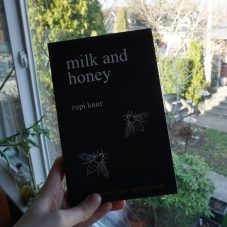
Milk and Honey


Rating: ⭐⭐⭐
Author: Rupi Kaur
Genres: Poetry
Pub Date: Nov. 2014 (Read Mar. 2018)

I read Rupi Kaur’s second book, The Sun and Her Flowers, last year and really liked it, so I decided to pick up her first book as well. These are both poetry anthologies with feminist themes that tell short stories of heartbreak and healing, explore love and sexuality, and promote self-love. The books are also illustrated with sketches, which makes for a nice reading experience.

This is a very fast read, I read the entire book in under an hour in one sitting. Milk and Honey is Kaur’s debut novel – I definitely liked it, but I think I liked her second book a little bit more than this one and it had stronger themes.

Milk and Honey is broken into 4 parts, the Hurting, the Loving, the Breaking, and the Healing. Kaur addresses a lot of themes in this short book, looking at love and sexuality and the the heartbreak that can accompany it. I thought it had a strong start with the chapter on the Hurting, which is a devastating look at abuse, and I really liked the last chapter, the Healing, which is cathartic and empowering.

I didn’t love the middle section, especially the Loving, which I personally found a little over the top. Kaur is very descriptive of her feelings on love and relationships in both her books and love for her seems to be an all-consuming feeling which I personally find a little intense. For me love is about the little moments. Those small, every day gestures in which your partner demonstrates their love for you and the closeness you build with that one person. Kaur is very intense in her love (and her break-ups) and I just couldn’t relate because I have always felt very grounded in who I am, whereas Kaur felt a little defined by her relationships. That said, I’ve been in the same relationship for the last 7 years, so I definitely can’t relate to that feeling of “new” love anymore, which is totally fine.

However, Kaur is also very much about self-empowerment and self-love, which I enjoyed. I thought these themes, and the feminist undertones, were stronger in The Sun and Her Flowers, which is probably why I enjoyed that anthology more. Milk and Honey is still a good, quick read though and there were several beautiful passages, here’s one of my favs:

i want to apologize to all the women
i have called pretty
before i’ve called them intelligent or brave
i am sorry i made it sound as though
something as simple as what you’re born with
is the most you have to be proud of when your
spirit has crushed mountains
from now on i will say things like
you are resilient or you are extraordinary
not because i don’t think you’re pretty
but because you are so much more than that

The Tea Girl of Hummingbird Lane

Rating: 
Author: Lisa See
Genres: Historical Fiction
Read: July 2017


Where do I start with The Tea Girl of Hummingbird Lane? There was so much going on in this book – the plot was so layered and there were so many interesting themes underlying the story, but somehow it all worked and was immensely compelling. (disclaimer: there may be a few spoilers in here, but I think most of what I talk about is covered in the synopsis, which is pretty detailed)

Goodreads has been selling this book to me hard all year with their advertising, but for some reason I wasn’t sure if I would enjoy it. I read Dragon Springs Road earlier this year, which I liked but didn’t love. It’s probably unfair to compare the two books, just because they happen in China, but I found the pacing slow in Dragon Springs Road and I expected The Tea Girl to have a similar pacing, but I found this one so much more compelling. I don’t know a whole lot about Chinese culture, so I appreciated both novels and learned a lot, but there was a lot more going on in See’s novel.

Starting with the narrator, I absolutely loved Li-yan. She had such ambition, despite the constant belittlement from her family and the refrain that she was unimportant because she was a girl. Li-yan was born into the Ahka culture, which like many cultures, values boys far beyond girls. The Akha are a very tight knit people and view the village more as a collective than group of individuals. They believe everything has a spirit and they have many customs to protect against bad spirits and encourage good spirits. They believe it is everyone’s job to bring more children into the community and everyone always hopes for the birth of healthy sons.

I appreciated See’s writing because in the beginning the Ahka seemed so backwards to me and some of their practices were extremely horrifying. But throughout the course of the novel See was able to make me really appreciate their way of life and they did progress to abandon some of their more troubling customs (namely the killing of “human rejects”).

But I loved Li-yan because despite being told she was worth nothing, she had such ambition to pursue a better life through education and a desire to be someone. She convinces the village and her father to allow her to pursue her education and becomes the first educated person in the village. She faces so many struggles, but she always persevered and made choices (some of which were very tough) on what she felt was best for herself. Some readers might condemn her for giving up her child, but I didn’t fault her. She really would have had no life if she had decided to keep Yan-yeh. In many cases she was forced into some of her decisions, but I especially loved her decision to leave San-pa. I fully expected her to stick things out no matter how toxic things became, but when she finally recognized what was going on, she made a decision for herself to leave, even though she risked being sold or killed if she was caught.

She made so many wrong choices and at times really disappointed me, but I could sympathize with her decisions and forgive her for them. I was sad when she got distracted from her studies and ignored the advice of her family about San-pa, but she was so young and blinded by love, which I think we’ve all been at the young age of 16. She punished herself for so long after her failed marriage though and I was glad to see her find the strength to love again. 

I thought her relationship with her mother was beautiful. In the beginning I didn’t like A-ma because she was so harsh with Li-Yan, but she really grew on me and it was wonderful to watch their relationship grow and to see the softness in A-ma after the birth of Yan-yeh. I really enjoyed all the mother/daughter relationships in this book and the relationships between all of the women.

I didn’t enjoy the format of Hayley’s story as much (I think I would have preferred 1st person POV), but I learned a lot from her experience as well. I’ve thought about the challenges immigrants face in moving to America/Canada, but I haven’t put much thought into what it must be like to have parents that don’t look like you and to have so many stereotypes forced upon you. You always expect that your parents would be people that you could relate to and take advice from, but when your lived experience is so different from theirs, it must be so difficult not to have that shared experience and reassurance from your parents.

It was also interesting to learn a little bit about the one-child policy. I can’t imagine what that must have been like for Chinese mothers and it’s upsetting to see girls so little valued in a culture. It was interesting to read about Li-yan’s experience giving up her daughter and I’d love to learn more from other perspectives of women who’ve had to make decisions to give up their daughters.

And of course there was the tea. I didn’t think I could find tea so fascinating! I had no idea there was so much history behind tea and I’d never heard of Pu’er tea, so it was interesting to learn about how tea production changed Yunnan province, world tea markets, and became such a phenomenon. What I really liked about this book is that it started in the 90’s. I couldn’t believe there were villages in China that were so remote and unconnected to the world within my lifetime. It was fascinating to see how they evolved and changed as the modern world came to them in search of tea. It gave me a whole new appreciation for tea!

There is so much going on in this novel, but it all worked and was immensely compelling. It was a beautiful novel about the struggles women face, the relationship between mothers and daughters, and the ways in which we change and adapt to the world around us. Would definitely recommend!
The Radium Girls

Rating: ⭐⭐⭐⭐⭐
Author: Kate Moore
Genres: History, Non-Fiction
Read: Nov. 2017

Why do we always forget women’s history? Why do we never even record it?

The Radium Girls inspire me. Thank you Kate Moore for writing this book and reminding us of the struggle these women went through and the impact their fight has had on all those workers to come after them. This book was so well researched and so well written. Sometimes I have trouble with non-fiction, but this read like fiction and Moore infused a lot of emotion into her telling of history.

The Radium Girls tells the story of the thousands of girls who worked as dial painters in radium factories in small american towns beginning in 1917 and continuing into the 1970’s. Radium was still a relatively new discovery at this time and a luminous paint was developed using radium for painting the dials on watch faces and aviation and military equipment throughout the Great War.

The US Radium Corporation set up a factory in Orange, New Jersey and their competitor, Radium Dial, later set up another factory in Ottawa, Illinois. Hundreds of girls in both towns were hired as dial painters at the factories. While the dangers of radium were definitely known at this time, it was more often touted as a ‘wonder’ drug with many health benefits. The girls at the factory were taught to paint the dials using the ‘lip – dip – paint’ method. In order to get the brushes super fine for precision painting, they were taught to use their lips to wet the brush to a fine point. This resulted in them ingesting the radium-laced paint with each ‘lip and dip’ and due to poor cleaning procedures at the plant, they often took radium powder home on their shoes and clothes. They became known as ‘glowing girls’.

As you can imagine, ingesting radium daily on the job is not the best practice and the girls eventually started developing health problems, including fatigue, achy backs, limps and loose teeth. Some girls experienced a very rapid decline in health, while others experienced slower symptoms. However, all of the symptoms resulted in the deterioration of the women’s bodies, often resulting in death. Unfortunately, it can take years for symptoms of radium poisoning to develop and with many women having moved on from their dial painting jobs several years prior, and with little known about radium poisoning at the time, doctors had a really hard time diagnosing their issues.

Moore is unflinching in her storytelling of the events that took place in Orange and Ottawa in the 1920’s and 1930’s. Parts of the book are very difficult to read due to the immense suffering the radium girls went through. Both radium companies tried to deny any wrongdoing and it is shameful and literally evil the lengths they went to distance themselves from the girls and any wrongdoing. The US Radium Corporation were a bunch of snakes, but Radium Dial was downright criminal. Both companies repeatedly lied to the girls and to the courts and it was actually enraging to read about the ordeal they put the radium girls through.

Once a connection was finally made between the girls symptoms and radium poisoning, many of the girls brought legal action against the companies. They went through hell from both the radium poisoning and from the lengths they went to try and secure some kind of justice and compensation for their families.

These girls inspire me because despite suffering some of the worst pain I’ve heard described, they persevered and fought relentlessly for justice – mostly for the radium girls that would come behind them as they were unlikely to live long enough to enjoy any justice they might find for themselves. They literally birthed the laws that now exist surrounding workers rights and likely saved thousands of lives through the development of safety procedures and protocols when working with radium as a result of their case.

I was totally blown away by this book. It is some heavy subject matter, but I was completely enthralled by their story and inhaled this 500 pager in just 2 days. Even though this book takes place in the 20’s and 30’s, it is still hugely relevant today. Women are still routinely ignored and silenced. What frustrated me about this book was that nobody gave a shit about the women and that they were literally losing their lives on the job. In fact, people only even started talking about radium use in the plant when the first male employee died in New Jersey, even though several women had already died at this point.

Because the radium girls in Ottawa began pursuing litigation in the 30’s, when the Great Depression was at its worst, the community shunned them. They saw Radium Dial as a quality employer in a time when jobs were hard to come by and the community tried to silence the women when they came out saying they’d been poisoned and said they made it all up because they didn’t want to lose the plant. When the girls approached their boss after Charlotte Purcell lost her arm to radium poisoning, he literally looked at them and told them he saw nothing wrong with them. Women were second class citizens and the girls were routinely silenced and ignored.

Nevertheless, they persevered. I love that these types of stories about women are finally becoming mainstream. These stories deserve and need to be told. Women’s history is so important and so often forgotten or unrecorded. The post script of this book destroyed me because it proves how easily history is forgotten and repeated. That’s why I highly recommend this book to anyone and everyone!

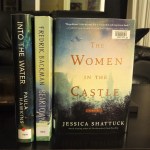
The Women in the Castle


Rating: 
⭐⭐
Author: Jessica Shattuck
Genres: Historical Fiction
Read: May 2017


This was so disappointing. Historical fiction is my favourite genre and I was really expecting to like The Women in the Castle, but it was a letdown. Maybe I should have read the synopsis more closely, but I thought I was getting a historical novel about the July 20 assassination attempt on Hitler from the point of view of the wives/widows of the resistance. This is not what this book was about.

Marianne is hosting a party at the Burg Lingenfels castle on the evening of Kristallnacht. In their outrage about this event, the male aristocrats in attendance decide to form a resistance against Hitler and name Marianne the “commander of wives and children”. She thinks this is somewhat patronizing at first, but later when the plot fails, comes to see it as a term of honour and importance. I still think it’s patronizing.

After the party the story jumps forward 7 years to the end of the war as Marianne attempts to track down any widows of the resistance (the plot having failed and their husbands all having been executed). She saves young Benita, the bride of her childhood friend Connie, from a Russian whorehouse in Berlin and Ania and her 2 sons from a displaced persons camp. They all move into Burg Lingenfels and try to rebuild their lives and escape the ghosts of their pasts.

This is pretty much the extent of what we learn about the July 20 plot – the rest of the novel jumps back and forth between the present and the past (but never focusing on the assassination plot). The format did not work for me at all and neither did the writing style. Evidently a lot of people loved Shattuck’s writing, but I found it very lacklustre and slow. The constant back and forth in time and the changing points of view made the story feel very disjointed. Ania’s past takes up a large chunk in the middle of the novel which felt very awkward in the pacing and the entire last quarter of the novel takes place in the 90’s.

That said, Ania was the only redeeming character in this book for me. I was interested in learning about the July 20 plot, but when I realized I wasn’t getting that I was hoping for a book about Germany’s struggle to return to normalcy after the end of the war and come to terms with the horrific details that came out about Hitler’s death camps. How did Germans move forward after discovering the extent of Hitler’s evil (which was unknown to many until the liberation)? What about former Nazi’s – how did they move forward? We’re they ashamed of their complicity in the halocaust?

I do appreciate that Shattuck offered a few different viewpoints on this dilemma. I did really like Ania and enjoyed her section of the story and how she grappled with the decisions she made during (and after) the war. However, I thought Marianne was insufferable and too uncompromising in her morals and beliefs. I didn’t understand why she was so revered and I didn’t like how her story concluded. Benita was irrelevant to me and I did not enjoy her story at all. I wish we’d had more time to get to know Connie, since he was so important to two of the main characters, yet without knowing more about him, I couldn’t understand what either Marianne or Benita saw in him.

So unfortunately this one isn’t getting a high rating from me because I found neither the writing nor the plot compelling. It had promise, but it didn’t live up to the expectation for me. It seems well loved by a lot of other people though, so maybe still worth the read?