Rating: ⭐⭐⭐⭐
Author: Jane Austen
Genres: Fiction, Classics
Pub. Date: 1815 (read Jan. 2021 on audible)
Narrator: Emma Thompson & full cast
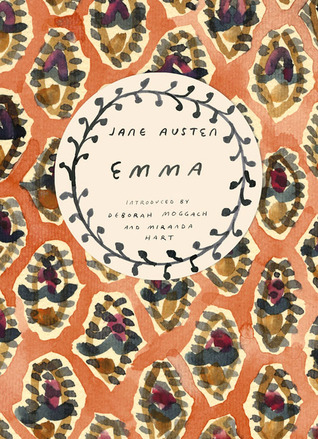
Emma was my final book in the Austen Audible collection! It was a re-read, but I knew I would like it better than the last time I read it. You can see my original review here, but I have written a new one to reflect my new opinions.
Emma is really quite the character. At the start of novel I found her hilarious, but I must admit I did find that my opinion of her character regressed the more time I spent with her. She is both a person that sees the best in people, but still wants to maintain the social order. She loves Mrs. Westen and is genuinely thrilled for her happiness. Likewise, she sees only good in Harriet, someone who is in reality much below her in social status. However her determinedness to see the best in Harriet is more indicative of her desire to commend herself than to actually elevate Harriet. What she really seeks is Harriet’s admiration as a friend and mentor. This makes her blind to the reality of Harriet’s situation and causes Harriet a great deal of harm over the course of the novel.
But while she sees nothing but good in characters like Harriet (who admire her), she sees only faults in characters like Jane Fairfax, who in reality she is jealous of. For all her class and wealth, Emma is clever, but she is also undisciplined and unable to appreciate in others what she herself lacks.
This book is very smart, yet I did find the narrative a little repetitive after a while. I said in my first review that I thought the book long and I am still inclined to agree. Where I think this book differs from her other books, is that there is no true villain. There are flawed characters, like Mrs. Elton (and Mr. Elton) and Frank Churchill, but they are only that – flawed. We are suspicious of Frank and from other novels, I’d come to expect a grand deception, so it was refreshing to see only poor judgement rather than outright malintent.
What this book really has going for it though is Mr. Knightly. I think the reason I gravitated to P&P and NA is because they both have well developed male leads. Mr. Knightly is present through the entirety of the novel and offers very sound judgement and advice throughout. Austen takes a bit of a different tact in this book by having characters that discuss Emma outside of her personal narrative. Emma is vain and Mr. Knightly is one of the few people that calls her out on it. I liked that he had a meaningful relationship with Emma, though he was somewhat more of a father figure for most of her life rather than a lover.
I also loved the inclusion of Jane Fairfax in the novel. She’s an excellent character through which to judge Emma because while we’re supposed to dislike her because Emma does, it quickly becomes evident that Emma is unfair and their relationship serves more to highlight Emma’s flaws. Where the novel is disappointing though is in Emma’s treatment of Harriet.
Harriet definitely gets the worst end of the stick. Fortunately Harriet’s prospects are not ultimately damaged by Emma and once they are finally separated, I’d argue that Harriet’s prospects are actually much improved as she is finally free to accept Mr. Martin’s proposal which would easily have made her happy from the start. But Emma’s meddling causes nothing but harm to Harriet and it was disappointing to see Emma avoid the situation by basically ditching Harriet, rather than to admit she’s been a bad friend. While she does admit this to herself, she never admits it to either Harriet or Mr. Knightly. It’s an interesting choice because it doesn’t show a huge amount of growth of Emma’s character.
Overall though, I liked this a lot better on the second read through and think this is one of Austen’s tightest plots.
Some of my personal highlights were (in no particular order):
– Emma immediately f*ing up Harriet’s marriage prospects
– Emma refusing to advise Harriet, but still manipulating her, only to be called out on it immediately by Mr. Knightly
– Emma’s dislike of Jane and how evident her jealousy
– Emma’s general obliviousness
– Mr. Knightly’s goodness, especially when he asks Harriet to dance
– Mrs. Elton’s meddling to the annoyance of everyone
– Emma still wanting the best for everyone, even if ill-informed

 The Paperback Princess