Rating: ⭐⭐⭐⭐ Author: Deanna Raybourn Genres: Mystery, Historical Fiction Pub. Date: Mar. 2019 (read Mar. 2021) Series: Veronica Speedwell #4
The first book in this series is excellent, but I found books 2 and 3 were not quite as strong as the first book. We get great characterization of our heroes, Veronica and Stoker, but the mysteries were quite slow paced and I felt like I had to trod through the first half of the books before things really picked up.
A Dangerous Collaboration falls into some of the same traps as the last two, but I did find this one so much more compelling! I think it was a really good call to get the characters out of London for a change. Veronica and Stoker are meant to roam and I was getting as frustrated as they were by being London-bound for so long. I loved the inclusion of Stoker’s brother in this book as I think the series does rely heavily on Veronica and Stoker and could use a few more recurring minor characters.
I liked the mystery element in this book – book 2 is probably my least favourite because Veronica and Stoker act more as consulting detectives. They were less connected to the mystery than they were in book 3, but Raybourn really upped the ante on their relationship in this book, which is what made it so compelling for me.
It’s a rough start, with Veronica and Stoker fighting, I really missed their constant banter. But they finally start to reflect more on their feelings and what they mean to one another, plus Stoker starts playing some mind games – I loved everything about it! It was frustrating, but oh so intriguing! The first book was the perfect blend of historical fiction, mystery, and romance, but I felt the romance element has been somewhat missing from books 2 and 3, so it was everything to finally get some drama in this book!
The ending leads right into the next book, so I hope to jump into that one soon!
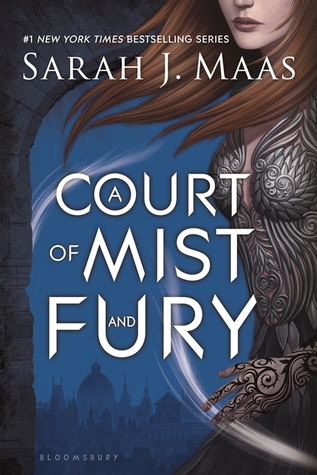
Rating: ⭐⭐⭐⭐⭐ Author: Sarah J. Maas Genres: Fantasy Pub. Date: May. 2016 (read Dec. 2016) Series: A Court of Thorns and Roses #2
I recently re-read ACOMAF and ACOWAR (but not ACOTAR because I hate it). I had a review for ACOMAF on my goodreads that I’ve apparently never posted here, and discovered I’d never actually written a review for ACOWAR. So check out my old review for ACOMAF here and I’ll post my ACOWAR review shortly.
This review has some spoilers for ACOTAR and ACOMAF.
———————————-
I love this book so much!!
I read this series for the first time about 5 months ago because I love Maas’ Throne of Glass series. Unfortunately, I really didn’t like ACOTAR, but I stuck with it because I heard ACOMAF was much better and I’m so glad I did!
I love Feyre’s journey in this book. She was such a contradiction in the first book, being both strong, but also whiny and pathetic. I thought she was so real in this book. What happened Under the Mountain completely destroyed her and I appreciated Maas for recognizing that it’s okay for strong characters to fall apart. It took time for Feyre to accept the things that happened to her and her slow healing felt so natural and cathartic.
This book was quite a bit longer than the first of the series, but I thought the flow of the story was fantastic. I love where the story went and all the new characters we were introduced to throughout. I loved everyone in Rhysand’s inner circle and I felt they were all well-realized characters, yet I’m excited because I know there’s so much more to learn about them.
And of course, this book was sexy. The slow build flirtation and romance throughout completely moved the story along. I absolutely love the love story in this book. Feyre and Rhys’ relationship was so moving and healthy, I totally fell in love with Rhys too. A lot of romances feel very one sided (i.g., the man as protector or decision maker), but the romance in ACOMAF was built on equality and the freedom to make your own choices. What I loved about Rhys was that all his imperfections were what made him perfect. I loved that Maas took a character that had been pretty awful and made me fall in love with him.
As much as I didn’t like ACOTAR, I can appreciate it a little bit more now that I’ve seen where Maas was planning to take the story. This was my second read-through and I am going to start A Court of Wings and Ruin immediately because it just came out today!!
Rating: ⭐⭐⭐⭐.5 Author: Jane Austen Genres: Fiction, Classics Pub. Date: 1817 (read Dec. 2020 on Audible) Narrator: Emma Thompson & Cast
Did I read this entire book in a day? Maybe, but honestly with the pandemic there’s not much else to be doing these days and I had the most wonderful time doing a jigsaw while listening.
I thoroughly loved this! 4.5 stars! I know NA does not have the same depth as her other works, but it was just so much fun to read! Catherine Morland is the spunkiest heroine and I loved watching her grow up and learn how to read people and navigate the world. She’s so hopelessly naïve, but it was endearing. Even though most of Austen’s heroines are young, I felt NA much more a coming-of-age story than any of her other books, and I do love a good coming of age story.
I don’t have as much to say about this one because, as I said, the themes don’t really have the same depth as P&P or S&S, but as far as humour and satire go I think this might be one of Austen’s best books. The way she satirizes gothic novels and literature in general in this book is just hilarious! There’s quite a difference between the first and second halves of the book, but I got a kick out of Catherine’s naïveté in the first half and her dramatization of Northanger Abbey in the second half.
I did find the ending a tiny bit jarring (may be a theme) with Catherine being sent away so unceremoniously, but overall I thought NA was comedic brilliance. It showcases Austen’s witty dialogue and her ability to convey characterization through discussion. Isabella and John are quickly shown to be totally insipid, while Henry showcases his intelligence and wit. That said, I loved the introduction of a female villain in this book!
My personal highlights were (in no particular order): – Catherine thinking the General either murdered his wife or was hiding her in a dungeon – Catherine having no idea about flirting or subtlety, with every comment going over her head – Isabella’s incessant chatter and John’s egotistical ramblings – Catherine finally dumping the Thorpe’s to go walking with the Tilney’s – Austen’s defense of novels – Catherine’s disappointment at Northanger Abbey being totally normal – how Catherine’s imagination runs away with her after hearing Henry’s story – how Catherine grows and finally learns how to judge the character of those around her
Despite having already made one attempt at this book, I decided to make it my third read in the audiobook series. I never finished it on my first read-through and despite having read 60% of it, I remembered nothing of the content, so I knew a re-read would be more like a first read now that I’ve discovered my appreciation of Austen.
I read the full cast audiobook in just 2 days and loved it so much more! I’d still place P&P at the top of my list, but I’m between S&S and Persuasion for the second. I think I’d give the edge to S&S as overall I enjoyed it more than Persuasion, I just didn’t like the ending quite as much. Had the ending gone a different way I think this might have been a 5-star read for me, but alas, I have a few criticisms.
First let’s talk about what I liked though. This book was about sisters! I know her other books have sisters too, but the relationship between Elinor and Marianne was really central to the theme of this book (though I do love Elizabeth and Jane’s relationship in P&P as well). Elinor and Marianne embody the title of the book and despite their close relationship, could not be more different from one another when it comes to their approach to love. Elinor is sensible while Marianne is wildly romantic.
While the book starts with Elinor’s flirtation with Edward Ferras, we are quickly swept up into Marianne’s whirlwind romance with Mr. Willoughby. Elinor makes no assumptions about her relationship with Edward, but Marianne abandons almost every sense of Victorian propriety in her desire for Mr. Willoughby. And through it all Colonel Brandon stands patiently by wishing both sisters all the best. I definitely related more to Elinor and found Marianne to be too impulsive, but I did come to love her romantic heart and appreciate that though over the top – her feelings were thoroughly encouraged by Willoughby and that she shouldn’t held too much to blame.
The one thing I did remember from this book from both readings was the conversation between Mr. Dashwood and Fanny in the first chapter of the book. I bring it up because I think it is such a fine example of Austen’s brilliance. It’s not often that you see so much dialogue in a book, but Austen really is the master of it. One conversation between John and Fanny about the fortunes of the Dashwood sisters told me everything I needed to know about both their characters. They really are the most odious people and if I was Elinor I would have found it so hard not to call them out on their selfishness and greed.
As a villain, I think Mr. Willoughby may be one of my favourites thus far. He is so deliciously evil, yet we get to see something from him that is absent from both villains in P&P and Persuasion: remorse. He’s still a total scoundrel, but his final conversation with Elinor humanizes him and I enjoyed getting to see a more 3-dimensional villain. That said, I also loved Elinor’s observation of his fickleness. He’s able to regret that he married for money rather than love now that he has the comfort of money. But had it been the other way around, he likely would have had the same regret that he married for love now that he had no money.
What I liked about S&S as well was the return to a well developed love interest. Colonel Brandon was such an example of caring and goodness. He’s a constant throughout the novel, yet he never asks anything of the Dashwood sisters. He supports them both, assists them in any way he can, and only wishes them both every happiness. We get an interesting back story about him that again, demonstrates the strength of his character.
What disappointed me was how the romance was resolved. I liked both Elinor and Marianne, but as the main focus of the novel, I related much more with Elinor and wanted so much to see her happy. I thought everyone was misreading Colonel Brandon’s intentions and that he was actually going to end up with Elinor. I cared much less for Edward. The whole saga with Lucy only served to make me care more for Elinor and resent both Lucy and Edward. I know we’re told he no longer cares for Lucy, but has too much honour to get out of it, but the treatment of the whole thing made me think him unworthy of Elinor.
He lead her on in the beginning and though he had real feelings for her, I felt he should never marry Lucy just because he made a promise to her. I understand that the thought was very different in Austen’s time and that couples came to really know one another after the marriage and that once a proposal was made, it should be kept, but Austen was ahead of her time and I thought Elinor and Colonel Brandon would have made a better couple. I would have been totally fine with Marianne not finding love at all in this book. She showed a lot of growth at the end and came out of her heartbreak with renewed love for her sister and appreciation for her family.
Which brings me to my final point. While I could see Elinor with Colonel Brandon, I just couldn’t see him with Marianne. They had little interaction throughout the novel and less chemistry. He was enamoured with her musical talent, but I thought he shared an emotional connection with Elinor and I found it hard to believe Marianne would fall for him. Likewise with Elinor becoming attached to Edward at the end, I felt we never really got to know Edward and I struggled to understand Elinor’s love for him.
So overall I really enjoyed the characters and storyline, but the ending left something to be desired. Austen is still a romanticist and I just wasn’t feeling the final pair-ups.
Highlights of the book for me were (in no particular order): – the opening dialogue between John and Fanny Dashwood – the relationship between Elinor and Marianne – everything about Colonel Brandon, particularly his backstory – Marianne’s unbridled desperation to see Willoughby – the added depth to Willoughby’s character – John Dashwood hoping everyone else but him would provide for his sisters – John Dashwood not understanding why Colonel Brandon would selflessly help someone not from his family – Lucy Steele being ridiculous – Elinor constantly telling Marianne to restrain herself – Marianne corresponding with a man out of wedlock *gasp*
Persuasion was my second pick from the Audible suite of full cast Jane Austen audiobooks. I understand it’s one of her less popular books, but I’ve heard some good things about Anne Elliot and decided to jump into it.
It was definitely a different beast than P&P, though I’m coming to recognize a bit of pattern in many of Austen’s books. At 27 years of age, Anne is one of Austen’s much older heroines and definitely the member of her family with the most sense. She fell in love earlier in life to Captain Wentworth, but was advised by her family to decline him due to his lack of fortune and title.
In contrast to P&P, Anne’s family comes from high breeding and so they had a bit more pride than I’d come to expect from the Bennet family. While the Bennet’s were concerned with marrying up, the Elliot’s were concerned with maintaining their social status. The recurring theme of Austen’s novels being that regardless of money and class, women are really at the mercy of their marriage as their social status will drop or advance to that of their husband when they marry.
I liked Anne – she was sensible, considerate, and much more tolerant than I would have been in her circumstance. Next to her character, many of the other characters seemed childish and frivolous. Even though marriage is the ultimate achievement for these women, I couldn’t help but roll my eyes at the Musgrove sisters as they flirted with the various men in the book. Next to them, Anne felt so mature, it was hard to understand how all the men weren’t taken with her.
I found the structure of this book interesting though. It works up to a climax just a little past the halfway mark, when Louisa has her accident and the plot seems to ramp down from there even though there’s a lot of book left. I was also surprised by how much Anne seemed to judge others by their birth and title as well. Although I suppose it makes sense as she ultimately turned Wentworth down the first time because of his lack of title or fortune.
I liked that Anne was older and more mature, but as far as romance goes, I wasn’t as sold on this book. I liked Anne and I had nothing against Wentworth, but I also felt that I really didn’t know very much about him. Austen takes the time in P&P (and in S&S and Emma) to introduce us to her male characters are well. We get their backstories and through their actions become endeared to them. In Persuasion, I felt like I got limited backstory of Captain Wentworth. I didn’t really know why Anne fell in love with him to begin with and they had limited interactions that gave me a sense of his true character.
Their relationship grows towards the end of the novel and you start to see an inkling of their desire for one another, but I felt the romance of it was wrapped up too suddenly. While Wentworth’s letter was certainly romantic, I wanted more action to back up the goodness of his character. Overall I still liked it, but it was certainly different from her other novels.
Some of the highlights for me were (in no particular order): – Wentworth’s letter to Anne at the end – Mary’s selfishness and general ridiculousness – Charles Musgrove’s good nature – Mary calling out the sexism of motherhood – The Crofts love for one another – Anne’s conversation with Mrs. Smith where all is revealed – The manner in which Louisa becomes injured (wtf) – Sir Walter and Elizabeth being idiots about being unable to reduce their lifestyle despite having no money – Anne’s sensibility and ability to be happy for others despite her own heartbreak



 The Paperback Princess