Even the Darkest Stars

Rating: ⭐
Author: Heather Fawcett
Genres: Fantasy
Pub date: Sep. 2017 (read Jan. 2019)
Series: Even the Darkest Stars #1

I’ve decided to write whole new review about this book because I was only a little baby reviewer when I wrote my first review and I have so many more feelings about this book after the second read-through. You can still read my original review here.

I remember liking, but not loving this book the first time I read it, but I was so impressed with the setting that I decided to round up my rating to 4 stars. I definitely loved this the second time around though and I am now 100% on board with my original 4 star rating. I found the beginning a bit slow on my first read through, but I totally flew through it this time. Kamzin is just so spunky! I definitely didn’t give her enough credit in my first review and I thought she was super funny at the beginning on the book and I loved how much her character grew throughout the course of the novel.

Before I get ahead of myself, let’s do a little synopsis of the story. Even the Darkest Stars is set in a fantasy world based very heavily on Nepalese culture and early exploits of the Himalayas and Mount Everest. I have always been really interested in climbing expeditions (as a reader, not a real person – I have to say this because my sister’s partner is like, obsessed with climbing and if he reads this, which I know he never will, but if he did, he would make me go climbing with him and climbing in real life is SCARY. That’s why I prefer to read about it.). I’m going to credit my early interest to Gordon Korman’s Everest series, which I read as a kid, and was totally obsessed with (yay for Canadian authors!). Actually, I was obsessed with most of Korman’s books and would highly recommend to middle graders!

I would sincerely like to meet this author because we both live in Vancouver (she may be one of those rare native born Vancouverites?) and despite not wanting to climb, I’m super obsessed with mountains and hiking and feel like we would both have a lot in common. So Heather if you’re ever looking for some adventure and book loving friends, I’m here.

But back to her book. The story starts in the small village of Azmiri, with our main character Kamzin. Because her father is the village elder, her older sister Lusha is slated to succeed him and Kamzin is expected to become the village shaman. The only problem is that Kamzin has zero interest or natural talent for shamanism. Her friend Tem is a great Shaman, but his talents go unacknowledged because his father is a yak herder and that’s all Tem is ever expected to be as well. But Kamzin wants to be an explorer. She is envious of River Shara, the Emperor’s Royal Explorer and is shocked when he arrives at their village one day.

There is only one thing that would draw the elusive River Shara to Azmiri, the even more elusive Mount Raksha – the tallest and most dangerous mountain in the empire. Kamzin has always aspired to climb Mount Raksha and even participated in an expedition with her mother to Mount Raksha when she was 11. Unfortunately the journey took the lives of the entire expedition, with the exception of Kamzin and Lusha. So when Kamzin learns that River is there to climb the great mountain, she sees it as her big chance to impress the Royal Explorer.

Kamzin, River, and Tem all set off on a journey to climb Mount Raksha, with Kamzin leading the way. Witches have been banished from the empire for many years, their magic stolen from them by a spell placed by the Emperor. But the spell is breaking and they must reclaim a lost talisman from the top of Mount Raksha to re-cast the spell.

I loved everything about this book, but the setting was by far my favourite. Fawcett creates this wonderful atmosphere throughout the story – it’s that lonely, reverent feeling you get when you’re out in the wilderness. An appreciation for the beauty around you and a respect for the destructive power of nature. There are internal and interpersonal conflicts in this book, as well as the threat of the witches, fire demons, and fiangul that call this unforgiving landscape home. But I really liked that this book also had the person vs. nature conflict as well. What Kamzin is really up against is the elements and her own personal competitiveness. She’s repeatedly told to turn around if the consequences become too dire, but she is driven by a need to explore the unknown and to prove her skills to the world. In many ways, she is her worst enemy.

I loved the little triangle action between Kamzin, River, and Tem. Tem has been Kamzin’s best (and really only) friend for her entire life and they share a special bond. But Kamzin also shares something special with River, the first person who truly seems to understand her drive and can keep up with her on the expedition. He’s the first person to really challenge her. But Tem is distrustful of River and Kamzin has to admit that he does seem to be holding back some important information from them. Something is off with River’s shaman, and Tem rises to the occasion, acting as the group’s shaman and setting protections for them.

This book also had some humour in it. Kamzin is so stubborn, but her stubbornness made me laugh at lot. I also loved that she had what is referred to as a “familiar”, which is an animal that is basically attracted to you from birth and stays with you. Her familiar was a mangy little fox named Ragtooth and besides being really sweet, I thought he made for some great comic relief.

I can see how this book might not be for everyone. Pretty much the entire book is devoted to the journey to the top of Raksha and I know not everyone love journey books. Like I said, I didn’t really love it the first time, I think because I kept waiting for them to get there so I could learn the “so-what” of the story. But knowing the second time that the whole book was going to be devoted to the journey, I enjoyed it a lot more. I think there’s just the right amount of tension between the characters and I liked how much Kamzin grew over the course of the novel.

There are still some unanswered questions and I’m looking forward to see how Fawcett further develops her characters in the next book. Does anyone know if this is a duology or a trilogy? Would love to know going into the second book!
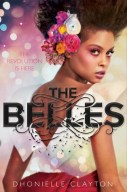
The Belles

Rating: 
Author: Dhonielle Clayton
Genres: Fantasy
Pub date: Feb. 2018 (read Jan. 2018 as audiobook)
Narrator: Rosie Jones
Series: The Belles #1

Where to start with The Belles? First of all, I listened to it as an audiobook and I really liked the narrator! She had a great tone for this book and she was really enjoyable to listen to. As for the content? I heard this book had teeth, but about halfway through I was wondering when it was going to start to bite. I wouldn’t call it a slow start because the story is still pretty engaging, but it’s a bit repetitive at the beginning and it wasn’t until the second half of the book that the story grew fangs. But boy does it ever get intense! Because of the start, I thought it was a 3 star read overall, but the author definitely steps up her game in the second half of the book and I’m really looking forward to reading the sequel.

The Belles is set in a beauty-centric fantasy world based on New Orleans, called Orleans (or-lee-on). People have become grey in Orleans and only a select few talented Belles can restore colour and make people beautiful again. The Belles power come from their personal arcana (unsure of spelling because I read as audiobook) and they can change anything about a person, from hair, eye, or skin colour, to height and weight, to bone structure, and even the well-being of internal organs. In this world, people are obsessed with beauty and must pay for beauty appointments. However, the changes don’t last forever and the grey will always start to creep back in, so the rich are always changing their looks based on the latest fashion.

Camellia Beauregard is one of 5 Belles coming of age this year. She has spent her whole life training to be a Belle and she will have one chance to present her powers to the Royal Family, who will pick one of the Belles to be their favourite. The Favourite will work for the royal family and their courtiers, while the rest of the Belles will be appointed to other beauty salons around the city. All of the Belles want to be named the favourite, especially Camellia and her sister Belle, Amber.

Once the Belles start working though, they discover that working as a Belle is not quite what they expected and start hearing about strange things happening in the salons. The Royal Family is also in a state of upheaval because the time is coming for the Queen to declare her heir. By rights it should be her older daughter, Charlotte, but she has been in a bewitched sleep for years and has never awoken. If Charlotte does not awaken, the heir will have to be her younger sister Sophia, and the more the Belles learn about Sophia, the more they fear the kind of queen she might be.

The Belles had a really interesting plotline in that it’s really not clear for a while where the story is going. There is a large mystery element to the story and because we don’t learn the full depth of the plot until later, there’s a lot of world building taking place in the first half of the book. Like I said, I didn’t dislike the first half of the book, I think that Clayton did some really good world-building and really delved in to some of the intricacies of the world she’s created. But the plot feels a bit nebulous after the favourite is announced and I thought there was a disproportionate amount of time spent on various beauty appointments and treatments. It was interesting, but I just wanted the author to get to the point.

But I can’t really fault her because the time spent on world building definitely paid off in the second half of the book. The second half is nasty! Things get really dark and pace of the plot picks up immensely. I liked the ending a lot because Clayton answers some of the more pressing questions and mysteries, but still leaves enough threads open to propel us into the next book.

Clayton addresses a lot of really interesting social themes in her book, which is what made it stand out for me. It’s obviously about beauty and how highly it is valued by society and how we assign value based on beauty. In many ways, beauty is a social construct and is very objective. In our own world, ideas of beauty differ greatly from country to country, but looking at North America, there are certain attributes we tend to value greater than others, thinness being the most obvious one that comes to mind. However, like Orleans, we are constantly changing our minds on other attributes. The one that comes to mind immediately for me is eyebrows. In the 2000’s thin eyebrows were all the rage, while now big eyebrows are definitely in.

I found it interesting that Clayton’s world features a monarchy, but women still tended to be de-valued. She draws attention to the different beauty standards that exist for men and women, but how men still want to look good too. However there is a sexual assault scene in the book and I found it really surprising that in a matriarchal society such as this, people still went out of their way to excuse men’s actions.

Finally, the villains in this book are top notch. There’s a lot of drama and several villains, with varying levels of, shall we say evil? Our number one villain is totally nuts and will get right up inside your head. She reminded me of Umbridge a little bit because it’s the perfect example of how smug and evil a bit of power can make some people. I really don’t know where Clayton plans to take this story in the next book, but colour me intrigued! I already have an ARC for the next book, which is being published in March, so I’m planning to start it very soon!

Reading Habits Tag

I wanted to try something new on my blog, so I scoured the internet for a fun reading tag and decided on one about reading habits! Here’s some of my preferences, let me know about some of your reading habits in the comments:

1) Do you have a favourite place to read at home?
At home I’m very particular about reading on love seats. I like sitting lengthwise on love seats so that I can tuck my toes into the arm of the couch on the other side and rest the book on my legs. I hate reading on full length couches because I can’t prop up my book. Yes, I’m a little dramatic about it, but I currently only own love seats, so it works out.

2) Do you use bookmarks or just use whatever’s available?
I try and use bookmarks, but sometimes you have to be crafty if you don’t have one nearby!

3) Do you stop reading at any point in the book or do you have to finish the chapter?
I prefer to stop reading at the end of a chapter, but I spend a lot of time reading on public transit, so it rarely works out that way!

4) Do you eat or drink while reading?
Definitely yes. I love having a cup of tea while reading and a snack food like popcorn or goldfish crackers! I also read during a lot of my lunch breaks, so I’ll eat my soup while I read, which takes some coordination not to spill anything!

5) Do you listen to music or TV while reading?
No. I prefer quiet, but my partner likes to listen to music a lot, so I have adapted to listen to his music on low volume in the background. But I think the only reason I can tolerate it is because I don’t know the words to his music. If it was my own music it would be too distracting.

6) Do you prefer to read one book at a time or several?
I used to be a purist about reading only one book at a time. But over the last 6 months I’ve started reading multiple books at a time. I always have 1 audiobook on the go and somewhere between 1 and 3 paperbacks. Depends on the genres, but if it’s an essay book or non-fiction, I like to pair it with something more fast paced.

7) Do you only read at home or everywhere?
I read literally everywhere! My favourite place to read is in my hammock in the park next to my house during the summer and I also really like reading in the bath. But I also read a lot on public transit, walking home from work, during my lunch break, on hiking and camping trips, planes, trains, you name it! Never trust someone who has not brought a book with them!

8) Do you read out loud or silently?
Are there many people that read out loud? The only time I read out loud is when I’m camping because my friend always requests a bedtime story!

9) Do you read ahead or skip pages?
I never skip ahead. I am a bit of a skim reader sometimes in that I don’t necessarily read every word or sentence, but it’s honestly just a speed reading technique and I don’t think I’m missing anything. I hate to skip ahead – on particularly tense chapters, I’ll actually cover the last few lines of the chapter with my hand so that my eyes don’t jump ahead and ruin a chapter cliff-hanger or reveal!

10) Do you break in the spine, or try to keep in like new?
I really try not to break the spine and I put a lot of effort into keeping my books in really good condition. I will always lend out my books to friends because I want to encourage my friends to read and especially to read books that I’ve read and liked so we can talk about them. But it hurts a little because I know they are never going to come back in quite as good condition as they were in before, but books are for reading right?! So I try and get over it!

11) Do you write in your books?
I don’t write in my books, but I usually have some sticky tabs available and I will tab quotes that I really like.

12) Do you prefer reading physical books or ebooks?
A lot of people feel strongly one way or the other, but I actually really like both. If I’m being honest, I prefer reading on my kindle because it’s so lightweight and it has a backlight, so it’s easy to read in bed, in the bath, at night, etc. But I also really like collecting books. So I tend to read multi book series, books with nice covers, and books that I think I’m going to really like in hard copy so that I can add it to my shelf. The rest of the books I will either read on my kindle or borrow from the library.

Well, that’s it for the book tag, let me know about your reading habits and preferences in the comments! Do you agree with me? Do you have particularly strong feelings on any of these habits? I’d love to know!

Truly Devious

Rating: 
Author: Maureen Johnson
Genres: Mystery, Young Adult
Pub date: Jan. 2018 (read Dec. 2018)

Well this was a huge disappointment. I’ve heard pretty good things about Truly Devious on Booktube and I was really looking forward to reading it. I was expecting a bit of an Agatha Christie type mystery with the secluded setting and isolated cast of characters, but this book pretty much failed to deliver on almost every front in my opinion and was extremely disappointing.

Truly Devious is set at an elite boarding school in the mountains outside Vermont. The school was constructed and sponsored by Albert Ellingham, a wealthy businessman in the 1930’s. Students are not charged to attend the school, but they do have to go through a rigorous application process to be accepted for two years – their junior and senior years of high school. Unfortunately, the school has a bit of a dark history. Albert’s wife and daughter were kidnapped from the school in 1936 and a student was killed. While someone was prosecuted for the crime, many believe the real criminals were never caught and the crime never solved.

Stevie Bell is a crime aficionado and hopes to one day work in law enforcement. She has extensively studied the Ellingham murders and is accepted to Ellingham based on her interests. However, once there, strange events start to occur that Stevie believes may be connected to the original crime and she takes it upon herself to investigate.

My biggest problem with this book was that I thought it was very poorly plotted. It’s a book about murder, it should be engaging, but somehow the beginning is incredibly slow and it took about half the book for things to finally start to get interesting. The story is told in two timelines, jumping back and forth between 1936 and present day. The 1936 storyline is probably only about 20-30% of the book and takes you through some of the events of the original crime. Unfortunately though, I found this timeline REALLY boring. For some reason Johnson takes the whole book to reveal the extent of the original crime. I really don’t think this was effective because she forces you to read all these knit-picky accounts of what happened without really telling us what happened. I don’t care what the maid and the cook were up to because I don’t even know what really happened. Plus, in the current day story, everyone knows what happened and references it, but it’s just confusing because we don’t have all that much information about it.

Secondly, the current day plot is also really boring. The first 200 pages is pretty much just Stevie adjusting to life at Ellingham and nothing really gets going until about halfway through. We are introduced to the other characters and students at the school, but it’s really not very compelling until more mysterious stuff starts to happen. Plus, Stevie just felt really juvenille to me. I’ve been starting to think that I may finally be growing out of YA, but then a really great YA book will come along and remind me why anyone can love YA. But this reminded me a little bit of Ten by Gretchen McNeil (another YA mystery novel I read earlier this year) where I kind of just felt like I was reading about caricatures of teenagers.

Mostly I think this just wasn’t clever. I feel like Johnson tried to create a larger sweeping storyline and mystery (since this is going to be a multi-book series), but it didn’t work. The plotting just really failed for me. There’s two crimes going on simultaneously, as well as a ton of characters that act really suspiciously to make you wonder what they’re hiding. But at the end of the book, NEITHER of the crimes are solved. Look, I’m all for multi-book, ongoing plotlines, but you have to give us something in this book. There are tons of mystery series with ongoing character issues, but they at least address some of the crimes in each novel. I feel like Johnson tried to weave in some different mystery elements and things to wonder about, like Janelle’s missing pass and how there was something off about Hayes and David. But overall I thought the mystery was just lacking. There was no hook. We’re supposed to wonder about the 1930’s crime, but it really needed some kind of interesting hook to get you to care, and it didn’t have that. It really just read like a classic hostage/ransom situation and there was nothing that made me wonder how the culprit got away with it.

Likewise, Johnson came up with some small things on the modern day crime that clued Stevie in that there was something else going on and led her to an accusation, but again, I just didn’t think it was that clever and I wasn’t impressed with it. There are still just so many open-ended questions at the end of this book that I really wonder what even happened for 400 pages. The author didn’t really resolve any of the plot questions, everything was left open ended, even down to the riddle from Ellingham’s desk. It’s just very unsatisfying for a reader and makes me question why I wasted time reading 400 pages of nothing. The climax was weak and literally nothing is resolved. It felt like the book just ended when there should have been another 50 pages to clue up some plot points. I think it might come down to the fact that this is just not a strong enough mystery to suspend over multiple books. It’s not layered at all and I honestly just don’t care. Why bother? Do I want to know what happened? Yes, of course, but will I be reading a second book to find out? Not likely.

So overall I think it’s safe to say I didn’t like this one. In addition to the plot being weak, I thought the characterization was also weak. I don’t think Stevie really grew at all in this book and I didn’t really learn anything meaningful about any of the characters. David pissed me off the entire book. He was rude and I had whiplash from his constantly changing moods. Plus I thought the cliffhanger was dumb. What right does David ever have to be mad about anything Stevie has done when he’s sitting in a NEST OF LIES. Janelle and Nate were pretty much the only likeable characters.

Props to you if you liked this one, but I’ll be taking a pass on subsequent books. I’m between 1 and 2 stars with this one. I definitely didn’t like it, but I don’t like rating books 1 star unless they have some really problematic elements because hey, the author still wrote a whole book, which is a lot more than I can say.

Swing Time

Rating: ⭐⭐⭐.5
Author: Zadie Smith
Genres: Fiction
Pub date: Nov. 2016 (read Nov. 2018)

Okay, so despite it taking me literally months to read this book (super rare for me), I actually did really like it. This was my first Zadie Smith book and I can see why people tend to have a love/hate relationship with her. I don’t think this is one of her more well liked books, so I kind of wish I started with a different one, but oh well.

I actually really liked this story and style of writing, it’s just not a book you feel inclined to pick up again once you put it down. It wasn’t that I struggled to read it, there were several times I sat down and read 50 pages or more in one sitting, but whenever I would put it down, I would inevitably decide to start something else and this one always took the back-burner. It’s an interesting story, but at 450 pages, I just think it’s a bit too long for what was actually said.

But let’s get into it. Swing Time is the story of two black girls growing up in London. They both love to dance and have always been somewhat separated from their peers. They have a tumultuous childhood together. Tracee is bold and daring, thinking herself better than those around her, while the narrator struggles to really know who she is. They have a falling out after high school, but despite never really seeing each other again, their lives have a marked impact on each other.

Tracee goes on to become a dancer, while our narrator is hired to work as a personal assistant to a famous singer and dancer named Aimee. The narrator was a huge fan of Aimee’s as a child, but struggles with some of her decisions when becoming her PA. Aimee is very involved in international development and builds and supports a school in Africa, but she is blind to the privileges of her race and appropriates culture on more than one occasion. For Aimee, the world is all about her own indulgence and the narrator struggles with being a black woman in this environment,

There was so much going on in this book, and I can’t pretend like a lot of it wasn’t over my head. I was never really sure where Zadie Smith was going with the story and themes, but she includes some really thoughtful social criticisms in the book. I really enjoyed these thoughts and reading about them from the narrators experience, but they often just seemed disjointed. The whole format of the story is a bit odd. The timeline jumps around a lot, which wasn’t overly confusing, but I think it’s part of what made it a hard book to pick up again. There was never really much tension in the story. You wonder what happened with Tracee, but the story never seems to be working towards anything, so it was hard to have the motivation to pick it up again.

But the most interesting part of this book for me was the fact that the narrator doesn’t have a name! I’m not sure at what point I realized she didn’t have a name, but I kept thinking maybe I just missed it and it was driving me crazy not being able to remember what it was. But no, I’m not crazy, she does not have a name. Zadie Smith why doesn’t she have a name?!?! I feel like there’s some deep reason why she remains nameless throughout, but I do not know it and I want to know why! I wonder if it’s because her life was never really about her. The first half of her life was about Tracee and the second part of her life was about Aimee. Even when she moves on from both of these women, she is still caught up about Tracee. She seemed to have very little sense of self or character and her life totally revolved around those around her. We learn about her friends, family, and co-workers. but we never really learn that much about her and what makes her tick. She is very much an observer of the world around her and to an extent, an observer of her own life.

It’s an interesting relationship between the narrator and Tracee because I think that both are actually jealous of the other. In the end, neither girl is very successful, but I think the narrator has always been a little jealous of Tracee’s confidence and abilities, while I think Tracee is jealous of the narrator’s stable family life and parental relationships. Tracee is good at manipulating the world around her to get what she wants, and even though she is able to manipulate the narrator to an extent, it never really gets her what she wants. She is still a brown girl who has been abandoned by her father and faces substantial systemic oppression to success.

Like I said, this book includes a lot of social commentary on race and privilege, which was what I really like about it. I’ve worked overseas in international development and seen how disorganized development work can be. Everyone has their own agenda and for some reason people don’t think they need to converse with government agencies when working in poor countries. Everyone has an idea of what’s needed to “save Africa” or “eliminate poverty” and they’re all working to their own ends. Without coordinated efforts, systems break down and can actually be left in worse conditions than in which they started. So I understood a lot of the narrator’s frustrations with Aimee’s work and her development agency. Aimee very much embraced the white saviour narrative and it was f-ing annoying. Although, to be honest, almost everything about Aimee was annoying. She was so blind to her privilege. Tracee was annoying too, but at least she didn’t pretend to be anything but what she was.

Overall I would give this 3.5 stars. I quite liked it, but it was just too long and it lacked enough tension to keep me reading.