Yellowface

Rating: ⭐⭐⭐.5
Author: R.F. Kuang
Genres: Fiction
Pub. Date: May 2023

Yellowface was one of my most anticipated books of the year, so I was thrilled to receive an advance copy from Harper Collins in exchange for an honest review.

My anticipation of this book might come as a bit of a surprise seeing as I DNF’d Babel, but the synopsis of Yellowface was completely irresistible to me after I read and loved Disorientation by Elaine Hsieh Chou last year. The two books have a lot in common, but are both entirely different beasts. Of the two, I’d definitely recommend Disorientation first, but Yellowface is still an interesting read.

Yellowface is about two friends, Athena Liu and June Hayward. Athena is the bright, young author who receives critical acclaim for her debut novel and watches all her subsequent books become bestsellers and get optioned for TV. Though they went to the same university, June’s debut novel is a flop and she can’t help but be jealous of Athena’s success. They’re barely even friends really and June has never understood why Athena hangs out with her (me either to be honest) – to June, Athena has always been the kind of girl you love to hate.

Then June plays witness to Athena’s tragic death and in a moment of impulsive opportunity, steals Athena’s most recent manuscript, which hasn’t been seen by anyone. The manuscript is incredible, but still needs a lot of work and June figures that without her loving care, the novel would never become a true masterpiece, making the work as much hers as it was Athena’s. Suddenly June is catapulted into the career she always wanted and envied Athena for. But will she be found out for what she’s done? Someone seems to be hot on her tail and June becomes haunted by the ever watchful presence of Athena’s ghost. Can she reconcile her actions or will ghosts forever lurk around her.

The premise of this book is really smart. Underneath the obvious plot, this is a story about the pitfalls of the publishing industry. With only 5 major publishing houses, it’s a tight knit industry to break into and it examines the inherent racist and classist structures that exist in any long standing industry. Although even more interesting, it examines whether bestselling books are written or made.

What makes it intriguing is Kuang’s approach to the narrative. She doesn’t write this story from Athena’s point of view, but rather from June’s. As a young Asian American author, it would be so easy for her to write from Athena’s perspective about her experience in the publishing industry, but instead she decides to flip the narrative on its head by writing about it from the perspective of a white woman.

In some ways, writing speaks for itself – Athena became a bestseller on her own merits – and her work is equally undeniable in June’s hands. But what is interesting, is the way June is treated by her publishing team as a white woman. What I do think is missing from this book is the contrast to how Athena achieves her success. It’s alluded to that she had to fight against systemic injustice in getting her novels published, but it’s not explored in any depth. Rather we see how easy it is for June and how her publishing firm is willing to stand behind her no matter what allegations are made against her. It’s interesting to watch how they brand her, intentionally creating ambiguity in her identity to thwart future criticism about “own voices”. So I would have liked to see a little more contrast between the two experiences. It’s no real shock to me that the industry is white-washed, instead show me how this impacts young minority authors like Athena.

As the novel advances, June’s deceitfulness grows, as does her boldness. The plot becomes more and more chaotic, which was everything I wanted. Disorientation was a satirical novel that descended entirely into chaos. Yellowface is also satirical, though not quite as outlandish as Disorientation. If anything though, I wanted Yellowface to really go there. I’m sure some readers don’t like it when books veer into unbelievability, but for a book like this I feel the contrast only serves to highlight systemic injustice. Although as I alluded to above, I think the contrast is somewhat missing from this book. June is a brazen character, but without the contrast of what Athena experienced as a writer, it’s harder for the reader to understand exactly how privileged June’s experience is when we don’t know the realities of the publishing industry ourselves.

So despite this being a pretty scathing assessment of the publishing industry, my main comment is that I think Kuang could have actually done more. I said in my review of Babel that despite Kuang’s impressive understanding of language, her key themes are actually pretty basic. For such a long book, I found Babel to be very repetitive. Likewise in Yellowface, the premise is brilliant, but I thought her ideas were repetitive and a bit tired. This is basically one long look at white privilege and the ignorance of white people. I think it’s an entertaining book and an important message, but I feel like Elaine Hsieh Chou tackled SO much more in Disorientation and the discussion was a lot more nuanced, whereas Yellowface takes one central idea and exhausts it in the extreme.

Chou looks not only at systemic racism in academia, but explores in depth about identity and how her main character perceives the other white and asian people around her. Any discussion around identity is effectively silenced in Yellowface because the only Asian character chokes on a pancake. I wanted to see Kuang stretch her ideas a little more. Like I said, it’s still a great exploration of systemic racism, it just didn’t challenge my thinking in quite the same way.

But please don’t take this as too harsh of a criticism because it’s not for our limited Asian-American authors to carry this entire weight on their shoulders. As is evident, they face enough barriers and challenges in getting published at all. It actually says a lot about Kuang’s skill (and Chou’s) that their books inspire such analysis because that means their narratives are being published and promoted more. Despite me wanting more from the book, it still left me with this lengthy review and a lot to chew on. I would still recommend the book and I devoured it over the course of two days. Kuang is a great author and kudos to Harper Collins for their willingness to publish a book that looks so closely at the publishing industry.

What’s Mine and Yours

Rating: ⭐⭐⭐⭐
Author: Naima Coster
Genres: Fiction, Historical Fiction
Pub. Date: Mar. 2021 (read May 2021 on Audible)

This was an impulse buy because I liked the audiobook narrator. I always have such a hard time finding audiobooks because I own so many hard copies of the books on my TBR and I don’t want to pay for them twice. I’ve seen a bit of buzz about What’s Mine and Yours, but I wish I was seeing more because this book was excellent! Honestly, I don’t know why this is only rated 3.67 on goodreads, I feel like it must be misunderstood because so many of the characters are unlikeable, but definitely a 4.5 star read for me.

Unfortunately the synopsis of the book is a bit misleading. The book is pitched as being about the lives of two students from North Carolina whose school is being forced to integrate. This is a small part of the story, but really this is a multi-generational saga about the families of those two students – the impact of their childhoods and their parents’ influence on who they become and how their lives continue to intersect throughout the years. It reminded me a little bit of Ask Again, Maybe because of the ripple effect that single circumstances can have on a person and on a family. In this case there’s not necessarily one catalyst so much as a series of events, but it still makes for a really interesting character study.

This novel touches on so many themes: grief, growing up, race, class, abuse, family, love. Gee grows up with his headstrong mother Jade, who wants the best for her son, but struggles to be there for him in the way he needs after a tragic incident. Noelle grows up under the shadow of her mother, a white woman who has been dealt her own difficult hand in life, but fails to recognize how her white privilege blinds her and creates a wedge between her and her half-Latina daughters.

With so much going on in the book, I did find it a little hard to follow by audiobook in the beginning. The author doesn’t use a linear timeline to tell the story, for a good reason understanding the surprising ending, but it did make it hard to follow at times. I think the strongest themes of the book are those of race and class, but Costa accomplishes a lot in under 350 pages. I didn’t love the ending, but I loved how this book is a character examination of these two families. The narrative isn’t proportionally split between all the characters, but by looking at each of the family members, we get to recognize the larger scope of the story. 

Lacey May was the most interesting character for me. I struggled with her character because she really doesn’t have any redeeming qualities. She’s blind to how her children perceive her and she’s not ashamed of her blatant racism. Despite her strong character, she fails to be able to stand on her own two feet, always relying on the men around her, and even as an old woman, she still uses the same old antics to manipulate her daughters. But she makes for an interesting character study because you know there are tons more women out there just like her. 

Unfortunately the plot is already getting hazy in my memory, but definitely recommend this if you’re looking for a nuanced and engaging story!

Lovely War

Rating: ⭐⭐⭐⭐
Author: Julie Berry
Genres: Historical Fiction
Pub. Date: Mar. 2019 (read Apr. 2021 on Audible)

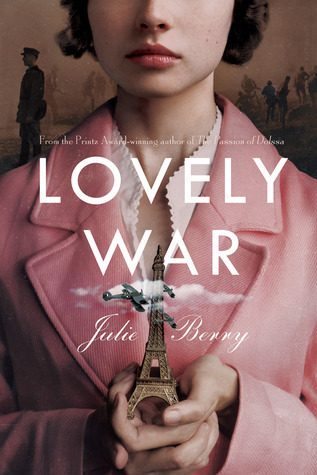
Lovely War is another book that I found on Booktube. Hailey from Hailey in Bookland recommended it and I was really intrigued after I read the synopsis. I know Greek re-tellings are all the rage right now, but personally they’ve never really been my thing, but the idea of the Greek Gods narrating a human love story set in WW1 is somehow way more compelling to me. I was expecting something similar to the Book Thief, so I was pretty amped.

I did enjoy this book, but I would probably rate it more like 3.5 stars than 4 stars because it just wasn’t quite what I wanted it to be. The premise of the story is that when Hephaestus catches his wife Aphrodite having an affair with Ares, she convinces him to let her explain herself through the telling of a great human love affair (more or less – to be honest I thought the reasoning for her telling the whole story was somewhat weak). So she launches into a story about 2 couples during World War 1.

I think the key reason I wasn’t 100% sold on this book is because, even though I was invested in these 2 loves stories, at the end of the day, they just weren’t quite moving enough for me to be like “yeah, I understand why the God of Love was so moved by them”. I mean what would be epic enough for Aphrodite to take notice? I honestly have no idea, but I’ve definitely felt more moved by other stories.

I do wonder if I might have enjoyed this better as a paperback. I read it as an audiobook and I didn’t think the dialogue quite passed the audio test. I find audiobooks to be particularly good at exposing sub-par writing and dialogue. I didn’t think the writing was sub-par, but I can’t deny the dialogue definitely came across as a bit cheesy, which I think overall took away from the story. It’s hard to think of a couple as having a great love story when you’re rolling your eyes at some of their conversations.

So that was my biggest flaw with the book, but I do want to talk about what I liked, because there was still lots to like in this book! Namely, Aubrey Edwards. Hazel and James, in my opinion, are just another run of the mill love story, I know things go awry for them in the way things always do in war stories, but there was nothing in their relationship that I thought really made them special. Likewise, I did think parts of Aubrey and Collette’s love story were somewhat disappointing as I didn’t really feel their personal chemistry, but I was super enthralled with Aubrey’s story because it is really what sets this book apart from other WW1 books.

Because Aubrey is a Black American from the 15th New York infantry. Maybe I’m not reading the right books, but I can’t think of any popular WW books that focus on Black people. I thought this was such a great addition to the story because BIPOC are so often left out of this era of history. There’s a ton of literature focusing on slavery and the civil rights movement, but we tend to think of the world wars as a part of white history. But in the same way that Black Americans have been present for every part of America’s history (since European contact), they are often left out of the narrative. Did many Black divisions serve in the World Wars? No, but it’s as much a part of Black history as it is the history of white Americans, so I really liked seeing Aubrey’s experience represented. Plus, his experience offered something totally new. Rather than just another war romance, his was a perspective that forced me to consider something new.

Aubrey comes to Europe wanting to fight, the same as any shiny-eyed soldier. But even with the nightmare that trench warfare is, Black soldiers still weren’t considered good enough for it. Let the glory go to the White troops, Black troops were good for manual labour. Building roads and digging the trenches, all the while making sure to keep themselves separate from the White soldiers. The biggest threat Aubrey’s Regiment faces is that they’ll get on the wrong side of a trumped up White soldier who wants to make sure Black Americans remember their place in the world.  The irony being that you could go all the way to France to fight Hitler and be killed by your own compatriot. 

So Aubrey’s story was both eye-opening, but not overly surprising. It’s inspiring the optimism his Regiment carried around with them, that serving in the war would serve to elevate the position of African Americans. I also really liked how music tied in so closely with the theme and that we got exposure to the birth of the jazz age. To be honest I was more interested in the links between war and music, rather than the central theme about war and love. 

In conclusion, it’s hard to rate the book because while I was less enamoured with some parts, there were other parts I loved. Most disappointing was that overall, I just didn’t think that having the Greek Gods narrate the story actually added that much to  it. It makes the framing of your key themes a lot easier, but you could still explore the same themes without the Gods. But it’s by no means a bad book and I still really enjoyed it – I would have just liked to flip the narrative and have Aubrey as the focal character rather than Hazel. Would still recommend!

Betty

Rating: ⭐⭐⭐⭐
Author: Tiffany McDaniel
Genres: Historical Fiction
Pub. Date: Aug 2020 (read Dec. 2020 on Audible)

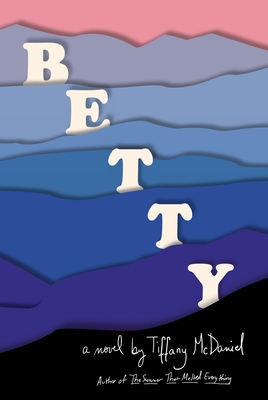
I’ve been dying to read Betty ever since I laid eyes on the beautiful cover art and read that it was a fictional recount of her mother’s experience growing up in a large family with a white mother and Cherokee father. It’s a long book and I decided to listen to the audiobook.

I was expecting a sad story and I read there were some hard to read scenes in the book, but I wasn’t expecting just how difficult a read this would be – by which I mean difficult content, not the writing. Betty is a coming of age story about the family’s third youngest child, Betty, the author’s mother, but it really focuses on the family as a whole and I loved that the author cast such a wide scope in her story telling.

The book starts with how Betty’s parents met and then tells the story of their 8 children. It seems like a big cast at first with so many siblings, but we spend a lot of time with this family and we grow to know each of the characters deeply.

This was a hard book to read because Betty’s family experiences hardship after hardship. They lose 2 of their children at early ages (I can’t remember now when exactly either passed away, but they’re not featured in the story beyond mention), and the rest of the children suffer varying levels of trauma. Even their parents have faced a great deal of trauma and the book really showcases the cycle of violence and suffering. 

I read a few interviews with the author after finishing the book and while this is her second book, apparently she’s been trying to publish it for years and struggled to find a publishing house that would work with the manuscript she had. She was told that the story contained too much suffering, that it wasn’t believable that one person or family would suffer so much, and worse of all, that people wouldn’t relate to Betty as a young girl. That will give you an idea of the kind of story that you’re in for, but I’m glad the author opted not to change her story because while it was upsetting to read, I had no trouble believing it. 

Indigenous Peoples have been wronged by both Americans and Canadians and our governments for centuries. Betty’s dad, Landon, was Cherokee and tries his best to honour his heritage and impart his ancestral wisdom on to his children. But he has also been mistreated and wronged as a Cherokee man and we catch glimpses of this throughout the story. While most of the children take after their mother (read: white) in appearance, Betty takes most after her father, and as a result, she is the most bullied of the children outside of the home. But in her home, she is also her father’s favourite and puts the most stock and importance into his traditional wisdom.

The hardest scene for me to read in the book was when Betty’s mother describes to her the abuse she experienced at the hands of her parents. It’s a traumatizing story on it’s own, but the way her mother chooses to share it is it’s own kind of horror and deeply emblematic of the way abuse cycles down through generations. This book has everything from violence, rape, incest, animal abuse, death, self harm, and suicide. But it also has some really beautiful scenes as well.

Landon Carpenter was for sure the highlight of the story for me. It’s hard to say whether Betty’s parents were really good parents or not – they certainly had their faults and a very laid back approach to parenting, but Landon’s love for his children was so evident throughout the course of the novel that I was able to forgive some of his other misgivings. He tried to be a good dad – to provide for his children and pass on traditional knowledge. I found a lot of faults with Betty’s mom and siblings, but I think Landon really did try his best. When I read the trigger warnings about this book, I was bracing myself for a horrible father figure, so it was really nice to find a caring and empathic one instead.

This isn’t a book I think I could ever pick up again, but I’m really glad I read it and I think it is a story that will stick with me for a long time. I’m so glad the author was able to finally share it.

Such a Fun Age

Rating: ⭐⭐⭐
Author: Kiley Reid
Genres: Fiction
Pub. date: Dec. 2019 (read May 2020 on Audible)

Such a Fun Age was totally not what I was expecting, but it was so good! A great look at race, the white saviour narrative, and that no matter how “woke” you are, you still can’t speak for someone else.

Such a Fun Age is about Emira Tucker, a black 25 year old who recently completed her university degree, but has been struggling to find a job in her field. To make ends meet, she takes a part time job as a babysitter for the wealthy Chamberlain family. She develops a great relationship with the child she babysits, Briar, but then one night when she’s at the grocery store, another customer and security guard accuse her of having kidnapped Briar and wont let her leave the store.

Though it was embarrassing, Emira would prefer to move on from the incident without making waves. Here we’re introduced to two other characters, Alix Chamberlain, Emira’s wealthy boss who has made her career as a lifestyle blogger who promotes “letting women speak”, and Kelly Copeland, a guy who witnesses what happens to Emira in the grocery store and speaks up for her – they eventually start dating.

I thought the dynamics of this book were fascinating. Alix is a well meaning white woman who does her best to be an ally to all women and applauds herself on her openness and acceptance, but has a lot of blind spots when it comes to class, race, and privilege. She has a tendency to play the victim and is more than happy to write whatever narrative best suits her purposes. She’s controlling and entitled and fails to see how her money and upbringing have blinded her to others experiences.

Similarly, Kelly also believes himself to be a great ally to black people. She sticks up for Emira when she’s accused in the grocery store and is kind and charming to her. He’s more familiar with the stereotypes and injustices that Black people have to fight against every day, but also has a blind spot in how he might appropriate black culture and fetishize black people. He acts like he knows what Emira is going through and how she should respond, but gets so caught up in “justice” that he loses sight of what’s actually in Emira’s best interest.

As the book goes on we learn more and more about Emira, and more and more about the history of these two white people who have taken over a large part of her life. Alix and Kelly are both extremely critical of the other – seeing only each other’s flaws, without being able to recognize that they are both painted from the same brush. Their perspectives are different, but they both have the same confused notions about race. What I loved is that as the story is revealed to you, you go back and forth questioning both Alix and Kelly – who is right and who is wrong. But there’s no easy answer. In some ways they are both allies, while in other ways they are both trying to be saviours to someone who doesn’t need saving – at least not in the way they think.

I love books that are not clear cut. So many narratives are dichotomic, you can’t help but side with one of the characters, but I was both intrigued and disgusted by both of these characters. There were times when I understood where Alix was coming from and thought she was unfairly judged by Kelly, but she was also so manipulative and used any situation to try and make herself look good. Then there were times when I thought Kelly was a stand up guy, but got frustrated with how little he really tried to understand Emira. They were both so caught up in trying to be allies, that they completely missed the point that black people don’t need white people to speak for them.

I’m sure there’s a lot of context in this book that I missed as a white person, but I really enjoyed coming along for the ride. It’s an interesting kind of story because I couldn’t tell whether it was the plot or the characters that carried the book. The character development was as much about the ways in which the characters grew as it was about the ways that they didn’t. In many ways, Emira doesn’t grow that much throughout the story, but she becomes okay with that. The acknowledgement that life is hard and sometimes just surviving is enough.

Then there’s Alix and Kelly. You would think that they would both come out of the experience having learned something, but neither really did. They both maintained their messed up views about race without stopping to think for one minute that maybe there was something they were missing. Both saw themselves as heroes and failed to recognized the same flaw in themselves that they condemned in each other.

Anyways, I feel like I’m getting a bit repetitive. There’s a lot more social commentary to unpack from this book and I liked how organic the writing was. I felt like I was living Emira’s life with her. There’s a lot of avenues that went unexplored throughout the novel, but that’s okay because its too exhausting for one person to address every single injustice in their life. A subtle, but powerful story and an impressive debut.