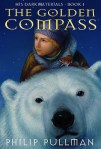
 Rating: ⭐⭐⭐⭐
Author: Philip Pullman
Genres: Fantasy, Middle Grade
Pub. date: 1995 (read on Audible Sep. 2019)
The Golden Compass was a re-read for me. I started the series back when I was in University, but I never finished it because University is just a huge giant time suck that doesn’t allow you to read for pleasure. I read the first two books, but never got around to the final book.
I had heard lots of great things about the series and my husband raved about it, so I expected to love it, but ended up being very underwhelmed by it. I think I would have been unlikely to return to it had I not stumbled upon the full cast audiobooks and known there was a tv series coming out later this year. But I’m so glad I made a second attempt at the series because I have been absolutely loving it on Audible!
The Golden Compass is set in a world similar to ours, but with some substantial differences. In this world, everyone has a daemon, which is a sort of animal companion that is bonded to you. Children’s daemon’s can change and take any animal form, while adults daemon’s eventually settle into one form. The story starts with our protagonist Lyra, a young girl whose age I can’t recall (let’s say ~10 or 11), hiding in the retiring room at Oxford and overhearing a very interesting discussion surrounding the concept of Dust.
Lyra is an orphan who grew up at Oxford, surrounded by scholars and street urchins. She’s a bold girl who’s not afraid to boss the other children around and has a terrible habit of lying. She doesn’t know what Dust is, but the scholars are fascinated by this Dust and are enthralled to learn that Lyra’s Uncle, Lord Asriel, has been able to photograph it in the North. Lyra’s curiousity is piqued and she becomes desperate to explore the North and see the Dust and magnificent aurora for herself.
At the same time, mysterious things are happening at Oxford and children start disappearing. To explain the disappearances, the other children blame the mysterious Gobblers, who are said to kidnap and eat children. Suddenly Lyra finds herself engulfed in the plot and travelling to the North to save her friend from the Gobblers and find out more about Dust and why everyone is so concerned about it.
The first thing I’ll say about this book is that I’m a bit shocked it’s a children’s book. I know children read all kinds of horrific stuff without being affected by it, but this book has some seriously crazy shit in it. But more impressively, it has a seriously convoluted plot, which is what impresses me more about it as a children’s book.
I will always maintain that the best children’s books are the books that appeal to both children and adults. The Golden Compass is definitely one of those books that is sold to children, but really targets adults. There are so many levels to the storytelling that it can really be enjoyed at any age. Children enjoy it for its strong protagonist and fantastical elements, like flying witches and armoured bears, while adults will enjoy it for its mature themes about religion and the church.
Yes, you read that right, the underlying themes of this book centre most prominently on the church and its power. Pullman explores other themes like the loss of innocence, morality, and the existence of souls, but at its core this is a book about the role religion plays in our society and how religious doctrine has snuck its way into our governments and legal systems.
The religious overtones are subtle for most of The Golden Compass, but it becomes more clear towards the end of the book where Pullman plans to take this series. There’s a great air of mystery throughout most of this book – what is dust, who are the Gobblers, what is the Magisterium doing – but once we start getting answers to some of these questions, it becomes clear how far the power of the church reaches. They have a great fear of sin, which causes them to commit unspeakable atrocities.
The church, or Magisterium, is strongly reminiscent of the catholic church, however, I think Pullman’s themes apply to really any branch of the christian church. I’m about halfway through the second book now (or I was at the time of writing this – I’ve since finished the series) and I do find Pullman a bit heavy handed at times, but sometimes exaggeration is required to make a point and do I think he makes several relevant arguments. The “church” in general is a very powerful institution, and no matter what religion you look at (christianity, islam, hinduism, etc), it has very much infused itself into modern governance. The question is, does the church belong in our governance systems?
Personally, I think no. The core message of most religious texts is simple – love others. If that was as much as we tried to infuse into our government, I’d say sure, but unfortunately the church is much more caught up in control, and that’s where it gets dangerous. The christian church in America (and yes Canada), is very caught up in controlling everything from women’s reproductive rights, to marriage rights, to access to healthcare, to scientific freedom, and what can be taught in schools. Then if you look further into institutions like the catholic church, they’re also interested in controlling families by keeping women out of positions of influence.
But why is the church so interested in this control? If your mandate is to love others, why does any of that other stuff matter. For me, everything that the right-wing christians are selling in America right now is about protecting the long held power and privilege of straight, white men.
One of the best ways that I think they do this is through misdirection. One example is the anti-choice movement. They would have us believe that they’re all about fetus rights and the sanctity of life, but it’s really about power and control. If the anti-choice supporters actually believed in the sanctity of life and protecting women and children, they would support access to birth control, healthcare, welfare, and sex education. There is no wealth and power without poverty and those in power want to maintain all the privileges they’ve become accustomed to.
But a lot of it leads back to this notion of “sin”. The church condemns women who want abortions as immoral, gay marriage as abhorrent, and science as the loss of faith. But this fear of sin is what drives the need to control it. Religion generally acknowledges that everyone sins, but all these additional rules and restrictions just make it that much easier to “sin”. The theme of sin is only introduced at the end of The Golden Compass, but I’m interested to see where Pullman takes it in the rest of the series because the word “sin” means different things to different people and part of the problem is that we all have our own definition of what constitutes “sin”.
In Lyra’s world, the magisterium wants to eliminate sin from the world, and in their quest to do that, they cause incredible harm. Not unlike the way the church still alienates everyone who is different or who does not fit within their narrow view of what is “right”.
Anyways, I didn’t expect to get into such an in-depth discussion on religion, but these are issues that I do spend a lot of time thinking about. I do want to keep the ideas of the church (or organized religion) separate from spirituality though because I do think they are two completely different things. You can condemn the church as an institution, without condemning the idea of spirituality and the existence of a greater being.
So I did like this book a lot more on the second read through and I’m interested to see where Pullman takes these themes in the next two books. The full cast for this audiobook was fantastic. Lyra drove me nuts sometimes because she can be really obtuse and made a lot of stupid decisions, but she’s a child and she has a lot of spunk, so I can forgive her for that. Mrs. Coulter was deliciously evil, Lord Asriel enraging, and Iorek endearing.
But mostly what I liked was how wild the plot was. I truly never knew what was coming in this book. There were so many twists and turns and it had a huge amount of depth. I love stories that have a lot of balls in the air and maintain several different plotlines at the same time, while weaving an air of mystery under the whole story. Pullman did this very well and when we arrive at the conclusion of the novel, it really just feels like the beginning.

 Rating: ⭐⭐⭐.5
 The Paperback Princess