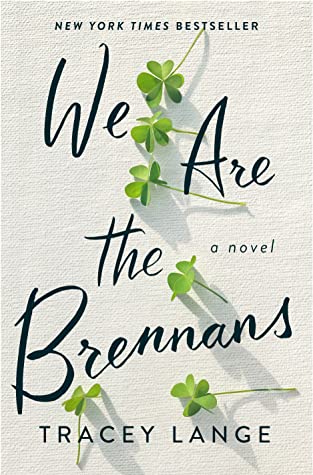
We Are the Brennans

Rating: ⭐⭐
Author: Tracey Lange
Genres: Fiction
Pub. Date: Aug. 2021 (read Sep. 2021)

I was so stoked for this one, but it turned out to be such a disappointment. It’s an easy read, with the flow between chapters being pretty smooth, but I wasn’t really a fan of the writing style. It was pretty simplistic, which is fine, but I feel like this has been marketed as literary fiction and I just didn’t see it.

We Are the Brennans tells the story of the Brennan family and their life in an Irish suburb of New York. I’m sure you guessed it from the cover, but the Brennans are Irish and as such, had a pretty conservative Irish-Catholic upbringing. Everything seemed to be going great until Sunday Brennan up and left 5 years ago and the family started falling on tough times. But now Sunday is back and the entire Brennan Family are forced to face the secrets of their past.

I live for family dramas, but this one just didn’t work for me. Aside from disliking the writing style, I thought the entire plot was predictable and pedestrian. I disliked almost all of the characters, which isn’t usually enough for me to dislike a novel, but I felt like everything in this book was overly dramatized because in reality, the author didn’t have that great a storyline. I feel like she had somewhere she wanted to take this story, but it was so poorly executed. It had a lot of the pitfalls of a debut novel in that Lange had a lot of ideas and no idea how to tie them all together in a meaningful way.

But mostly I think I just disagreed with her central themes. She had a lot of ideas about family and shame and I struggled to agree with any of them. I’ll get into the details in the spoiler section of the review, but by the end of the book I couldn’t help but acknowledge that me and Lange are just not on the same page. I feel like this Irish immigrant space is something that she knows really well, and maybe other Irish immigrants in NY might be able to relate more, but I also grew up on an island full of Irish immigrants and I felt that she really romanticized the Brennans in an unhealthy way. The book is all about family, but I thought every member in this family was toxic. She kind of tries to acknowledge this towards the end of the book (via Vivienne), but then she’s just like “sod it, they may be toxic, but they all love each other, so it’s fine”.

Anyways, it’s hard to really get into it without spoilers, but a lot of this book hinges on the reveal of a big secret about halfway through the book and this is where it all went downhill for me. I thought the secret was so problematic and that the author had so many blind spots about it that I just couldn’t move past it. So for me this book was a big miss. It’s still a somewhat entertaining read, but I wouldn’t recommend it – there are so many better family dramas out there – skip this one.
.
.
.
.
.
Okay, now for the spoilers. There were two parts that killed this book for me – the “secret” reveal and the ending. Let’s start with the secret.

So the big secret is basically that Sunday got drunk one night when her family was in Ireland and the bartender tricked her into coming up to his room with him. He comes on to her, she leaves, and then he pushes her down the stairs and leaves while she bleeds from a miscarriage.

This scene is so traumatic for her that she leaves New York for 5 years because she can’t bear to tell her family. She is obviously traumatized, embarrassed, and ashamed by the incident. We had an interesting discussion about this secret at book club because we thought it was silly that she didn’t feel she could tell anyone about this. She didn’t do anything wrong and her family should really only feel sympathy for her. In the long list of things that could have gone wrong for her as a woman, we felt like maybe this wasn’t the worst case scenario, the trap of “it wasn’t really that bad”.

This is the one part of the book Lange gets right. Any situation that harms a woman physically or mentally is “that bad”. Society has a tendency to create an unfair hierarchy of trauma, which only results in silencing a lot of women. I read a whole anthology about this concept (Not That Bad by Roxane Gay) and I did really like that Lange never belittled the trauma that Sunday felt from this incident.

What I didn’t like was how it all played out. Because the real reason Sunday feels she can’t tell any of her family members is because she thinks they’ll literally go out and kill Billy, which turned out to be a pretty damn justified fear. So she doesn’t tell anyone out of the fear of how they will react. Sure, it plays into her catholic upbringing, but it drove me crazy that she underwent 5 years of self-imposed exile over how someone else might react to her pain. So she not only takes ownership of what happened to her, but she takes on the added responsibility of what her brothers might or might not do in their anger.

Now I know women do this all the time – take on the responsibility of other people’s actions, but I’m f*cking sick of it. Lange could have taken this whole ordeal and written something really meaningful and healing about it, but instead she takes a woman’s pain and uses it for drama. There are several instances of victim blaming where both Sunday and Kale (maybe Denny too?) think that she had too much to drink, indirectly blaming her for Billy’s actions. There’s some exploration of how the ordeal was traumatic for Sunday, but I don’t feel like Lange ever explores that in any depth. Sunday’s assault is simply used as a lazy way in which to create this time and space between her characters and to spurn on the actions of the rest of the book’s male characters. I detest when assault is used solely for drama and the motivations of other characters and try as I might, I just couldn’t look past it throughout the entire second half of the novel. Denny, Mickey, and Kale are all toxic characters and the fact that they “love” Sunday doesn’t excuse them all going out and being violent assholes about it. In fact, it’s so toxic, her fear of it drives her away from them for 5 years.

Which brings me to my second point – the ending. So Kale leaves Vivienne even though he knows the Brennans are all toxic and liars (but their “his” liars, AWWW), and everyone seems to finally be moving forward, acknowledging that as a family they can band together and support one another because that’s what families do. But then we find out Mickey actually murdered Billy (which was also super predictable), and they’re just like, “oh…. but it’s okay, we’ll get through it together like we always do”.

I’m sorry, but what kind of messed up theme is that. What a way to end your book, with a family condoning and shielding a murderer – yeah, that’s exactly the kind of message I want to take with me from this book! If this was a thriller, sure, but it’s not and it doesn’t fit. I feel like Lange just places the Brennans on this pedestal and because of her proximity to the subject matter, she can’t see what kind of bias she brings into this story. Love doesn’t excuse your actions. You show love by showing up for your family members and creating safe spaces for them. If the theme was about surviving these kind of toxic behaviours it would be great, but this book only condones them.

Anyways, there’s other things I didn’t like (namely the treatment of Vivienne), but I feel I’ve ranted enough. Obviously I didn’t like it and I like it even less now that I’ve taken the time to vocalize why I didn’t like it. I’m honestly blown away by how many high reviews this got on goodreads. I feel like I missed something, maybe I did, but I’m still done with this book. Good riddance.

Brooklyn

Rating: ⭐⭐⭐⭐
Author: Colm Toibin
Genres: Historical Fiction
Pub. Date: Apr. 2009 (read Apr. 2021)

I have so many thoughts on this book. I’m not a big movie goer, but I saw Brooklyn in theatres when it came out at the recommendation of a friend and fell in love with the movie. I didn’t even realize it was a book until several years later – but it didn’t have the best reviews on Goodreads, so I decided to give it a pass. About a month ago I stumbled across a copy in a second hand bookstore and decided to revisit the story and give the book a try.

The movie stays very close to the book, so it’s hard to separate one from the other. As reviews suggest, the writing is good, but not great. The author has a very ‘matter of fact’ way of telling the story that can seem a little bland next to some other books. That said, I enjoyed the book a lot more than I thought I would – Toibin is still a good writer, it’s just not the kind of moving writing that you give 5 stars too. Even so, I found the story just as compelling as the movie and flew through it in just 2 days.

In some ways I preferred the book and enjoyed getting Eilis’ internal monologue, but in other ways I thought the movie was stronger. Eilis has an indifference to Tony in the book that doesn’t quite sell this as a love story as strongly as the movie does. The most notable difference for me was the last part of the book when Eilis returns to Ireland. The first three quarters of the movie follow the book almost verbatim, but the story diverges slightly in the last quarter. The ending of the book is almost jarring in its suddenness, but that may be because I was expecting it to continue based on the movie. 

But before I get into the spoiler part of the review, I just want to talk about why I love this story. It may not be 5 star writing, but in my opinion, it’s definitely a 5 star story. Brooklyn is set following WWII, we’re not told the exact year, but based on the setting, others have dated it to the early 1950’s. Eilis grew up in a small town outside Dublin and has spent her whole life in Ireland. She studies book keeping, but as a young adult, she struggles to find meaningful work. Her sister, Rose, makes contact with an Irish priest in New York who offers to sponsor Eilis to America. He arranges her papers and finds her work in a department store and accommodations in a boarding house.

Eilis is overwhelmed with the pace at which the decision is made for her to go to New York and feels she has no other choice. She’s not looking forward to leaving Rose and her mother, but she acknowledges there’s very little for her in Ireland. So she boards a boat to America and settles in an Irish community in Brooklyn. It’s very difficult for her at first and she becomes homesick, but eventually she settles in and starts to build a life for herself. She attends Brooklyn College for book keeping and meets an Italian named Tony who starts to make her feel at home.

I love this story because it is such an accurate portrayal of how it feels to leave home and make your life elsewhere. Even though the story is set in the 1950’s, its a story so many can relate to. I grew up in a small city that has also been heavily influenced by Irish culture and while I wasn’t personally forced to leave to find work, many of my family members and to an extent, my husband, were forced to seek opportunity elsewhere. While my motivation for leaving was different from Eilis, I could relate with so much of what she went through. Toibin captures so well the heartbreak of leaving your home behind and the challenge of feeling you can longer share a part of yourself with anyone. Eilis goes through many struggles, but she doesn’t want to burden her mother and sister with her pain, so she keeps it to herself. She feels she has no one that she can share her true self with until she meets Tony.

I don’t want to go too much further and potentially spoil the story for someone, so I’ll just say that I think this a story anyone can enjoy and would highly recommend to anyone who has left one home behind for another. It’s definitely a white immigration story – the struggles Eilis faces are almost laughable to what today’s immigrants experience, so definitely read those immigration stories too.

But now let’s get into more of the SPOILER part of the review.
.
.
.
Like I said above, the book doesn’t sell this as a love story quite as strongly as the movie does. That’s fine because I think the love story is secondary to Eilis’ personal experience, but it is a little disappointing to read. Eilis is lukewarm to Tony throughout most of the book, but slowly grows to love him. I definitely love Tony, but he is somewhat problematic and I wasn’t totally sold on how Toibin portrays Eilis’ feelings towards Tony. Eilis really did need Tony – she needed someone to share herself with. She keeps to herself a lot and struggles to fit in with the women she boards with, so when she connects with Tony, he is very much a lifeline to her. She’s reluctant in love, but I think it’s more a part of her character than her feelings about Tony. It just takes her a while to really warm up to him. Overall I was impressed with how Toibin communicates Eilis’ story, but there were definitely a few instances where Eilis’ internal thoughts didn’t jive with me. It was only a handful of times, but I did find myself thinking, “this is a man writing how HE thinks a young woman would think, rather than how I think Eilis would actually think” (if that makes sense).

Tony pressures Eilis into marrying him because he’s afraid she won’t come back from Ireland otherwise. It’s definitely a legitimate fear, but sad for both of them that they don’t trust their love enough to really test it. More disappointing of course is Eilis’ relationship with Jim when she returns to Ireland. This relationship is absolutely essential to the story, but Eilis’ indifference to Tony in the book as compared to the movie was a little upsetting to me. I didn’t remember her actually kissing Jim in the movie (or at least not more than once), whereas in the book she pretty much has a full on relationship with him and reflects that she regrets marrying Tony. 

Don’t get me wrong, I love how this dilemma is presented to Eilis. Suddenly everything she ever wanted is available to her in Ireland. She reflects on why life couldn’t have been like this for her 2 years ago before she was forced to go to America, but she also has to acknowledge that America helped her to grow in so many ways and is largely responsible for the success she’s now able to have in Ireland. But in my opinion the movie better presents the dilemma in having to choose between these two lives. Because in the book Eilis openly regrets her marriage to Tony, it’s a little disappointing to then see her return to that life anyways. With both the book and the movie ultimately having the same ending, I definitely prefer the movie. One of my favourite scenes from the movie is when Eilis boards the boat back to America and mentors the new Irish girl about her lived experience. It’s so moving and more cathartic than how Toibin opts to end the book. Maybe the book is more accurate in the heartbreak of her decision, but the movie definitely provides the catharsis.

I did still like Eilis’ reflections on her life in Brooklyn in the book though. She describes how it seems like a hazy dream to her now that’s returned to Ireland. I thought it was so accurate how when surrounded by people you used to know, the experiences you lived without them almost seem to disappear. Her mother and friends thought she was glamorous upon her return, but they had little interest in what actually happened to her in Brooklyn. This is accurate to my own experiences.

I’ve been away from home for a lot longer than Eilis, but aside from my parents, I generally find my friends don’t have a whole lot of interest in my life in BC. It’s not that they don’t care, I think it’s just that it’s no longer a shared experience between us, so it’s easier for them to talk about their own lives because those lives exist in a setting we can at least both relate to. It’s also a struggle because despite how much you grow, you often remain in stasis for those friends (as they do for you as well). Because of the distance it’s hard for you to grow together now and so you become stuck as former versions of yourself.

As much as I love the movie ending over the book ending. I did love the last thought that Eilis has on her way back to America. How the fact that “she has gone back to Brooklyn” is something that Jim will be upset about for awhile, but how over time it will become something that means less and less to him, while it will become everything to her. The movie ends with the line “and you realize, that this is where your life is”, which is also accurate. Despite the heartbreak of repeatedly saying goodbye to your friends and family every time you see them, the truth is that you have built a life somewhere else, and that’s okay.

The Invisible Life of Addie LaRue

Rating: ⭐⭐⭐⭐
Author: V.E. Schwab
Genres: Fantasy
Pub. Date: Oct 2020 (read Nov. 2020)

Addie LaRue was my book club’s pick for December. Despite having already read a lot of V.E. Schwab’s work and having liked most of it, I wasn’t super enthused to pick this one up for some reason. It’s probably related to my ongoing fatigue with fantasy, but mostly I just wasn’t that into the premise of a 300 year long love affair with the devil.

I heard a lot of good things about this book though and I ended up eating my words as I was completely sucked into the narrative almost immediately. Addie is born in the late 1600’s and yearns for the opportunity to travel and really experience life. She’s disenfranchised by the expectations of her sex and wants to marry for love rather than duty. So on the eve of her wedding, she strikes a deal with the devil to allow her to escape her obligations and be granted the time to live her life. The catch, she becomes invisible. She can still interact with people, but the second she is out of their sight, they immediately forget her – nor can she tell them her name – giving her a long life, but one where she is unable to develop relationships or leave a mark on the world.

If this sounds like a nightmare to you, it is to Addie as well. The first few years of her life are dedicated to just surviving in 1700’s Paris. It was horrifying to read about, but Addie is still determined to make the most of her life and does her best with the gift of time she has been given.

Like I said. I was sucked into the story pretty quickly. Addie was ahead of her time and her determination and stubbornness are endearing. The devil continually tries to break her, but it only spurs Addie on and she becomes more determined in her quest to leave her mark on the world. She discovers that while she cannot be remembered herself, she can inspire ideas and dedicates the rest of her life to seeking out artists and musicians for whom she can be a muse. Until 2014 when she walks into a bookstore in New York and suddenly everything changes.

While this is a compelling story, it’s also a long one. The story jumps back and forth between the past and modern day. Initially I was more intrigued in Addie’s early days trying to make sense of her curse, while after Henry enters the story, I wanted to spend more time in the modern day. The story is both entertaining and made me think a lot, but I also thought it could have been about 100 pages shorter. The length and scope of storytelling definitely made me feel like I was reading an epic, but I think the author could have shortened a few parts of the book. After a while the past did start to feel a bit repetitive and I wanted to spend more time in the present since at least something new was happening there. 

I also felt there were a few plot holes with how Addie’s curse actually worked, but I can let it go because it doesn’t take away from what the author is trying to evoke. It’s both enthralling and horrifying to think of what it would be like to have all the time in the world but to be forgettable. I really enjoyed the relationship that developed between Addie and Luc over the years and despite the length, I did really enjoy reading this one. Can’t decide where it sits in my repertoire of Schwab books though… certainly better than her monsters duology, but on par with Vicious and Darker Shade of Magic. 

The Diviners

Rating: ⭐⭐⭐
Author: Libba Bray
Genres: Mystery, Thriller, Historical Fiction, YA, Paranormal
Pub. date: Sep. 2012 (read Aug. 2020)
Series: Diviners #1

The Diviners has been on my TBR for AGES, so I’m thrilled that I finally got to it. It took a little bit longer than I would have liked, but it was a good read! I heard that the book has a slow start, which was definitely the case, but if you’re willing to stick with it you’ll find an impressive cast of characters and a unique plot.

This is definitely something I haven’t seen done before in YA. It’s paranormal, which I’m not really a fan of, but setting is key. The Diviners is set in 1920’s New York and Libba Bray does a wonderful job capturing the atmosphere of the time period. Our story centers around 17 year old Evie O’Neill. She has a quirky habit that she can read people’s history from objects, which until now she’s only used as a harmless party trick. But when she accidentally spills the local town gossip, her mother ships her off to New York to live with her Uncle.

Evie is quickly drawn into the glamour of New York and gets into all kind of shenanigans with her best friend Mabel and mischievous Sam. But her Uncle is the curator of the museum for the supernatural and when the police approach him about a ritualistic murder, Evie is drawn into the murder investigation.

This book covers so many genres. It’s YA, but mystery is a key element of the story, as well as the fantastical elements, historical content, and even a bit of horror. The story is downright creepy, though its characters keep it light. The plot is slow developing in the first half, but I quickly went along for the ride in the second half.

What makes this a winner though is the characters. It’s a large cast of characters and every single one of them has a richly imagined backstory. I feel like I’m still getting to know most of them, but this is one of those series where you can tell the first book is really only the tip of the iceberg for the plot. Bray introduces the idea of diviners and that something dark is coming on the horizon. We don’t really know what it is, but can feel it looming throughout the course of the book.

Lastly, I have to commend Bray on the representation in this book. It would have been so easy to write a book about 1920’s New York and have absolutely no representation, but here we have a black numbers runner, a queer musician, and all kinds of immigrants and misfits. The plot maybe could have done with a bit of trimming, but overall a fun read – can’t wait for the next one!

A Very Punchable Face

Rating: ⭐⭐.5
Author: Colin Jost
Genres: Humour, Memoir
Pub. date: Jul. 2020 (read Jul. 2020 on Audible)

This was a fun read that pretty much delivered what I was expecting, with a few surprises. Not totally sure why I picked this one up, I think I just saw it Audible and thought it would be a funny listen. I don’t really know that much about Colin Jost or have any particularly strong feelings about him, but I always get a kick out of watching him and Pete Davidson on Update so I figured why not give it a go.

Like most memoirs of this type, the book is a collection of stories, mostly funny, about Jost’s intro to comedy and his time at SNL. The essays are good and I laughed out loud at more than one of them, although I was left wondering how one person, who never really does anything dangerous, can injure themselves so many times. He had some interesting insights into what it’s like working at SNL – the long hours, the seemingly endless amount of rejection, and how you always have to be prepared to just roll with the punches (pun intended).

I think jost is a little too fond of Staten Island and maybe needs to be more critical of its flaws and that he should probably get over the google incident, but what stuck with me were his more meaningful essays about his mom and the NYC fire department. As a community of firefighters, many were first responders for 9/11, including Jost’s Mom, and I really appreciated his thoughtful essay on what that was like for him and his family. I’m a sucker for men who openly love their moms (hello Trevor Noah), so I really liked this essay.

Beyond that I don’t have a whole lot to say. Jost alludes at the end that he may soon be moving on from SNL and I would agree with his assessment that after 15 years, it’s probably time. I’m interested to see what else he’ll do next. There’s just one thing in this book he’s wrong about; Aidy Bryant. She is the best cast member.