Love, Theoretically

Rating: ⭐⭐⭐⭐
Author: Ali Hazelwood
Genres: Romance, Fiction
Pub. Date: June 2023

If you’ve been following me on this Ali Hazelwood journey, I loved The Love Hypothesis and hated Love on the Brain. I felt they were essentially the same book. As a result, I was nervous going into this book – it definitely has some flaws, but I ended up actually quite liking it.

Love Theoretically focuses on two physicists from competing areas of physics. Elsie is a theoretical physicist, while Jack is an experimental physicist. The two rivals butt heads, but prolonged time together brings out an appreciation and admiration for each other’s work. You know the drill – rivals to lovers – nothing too revolutionary for Ali Hazelwood or the romance genre.

While Hazelwood relies on a lot of the same tropes as her previous books, I do think that Love Theoretically was a fresh take on her STEMinist themes and I thought both the plot and the characters offered up a lot more nuance than they did in Love on the Brain. My biggest complaints for Love of the Brain was that Bee and Levi were extremely boring people and that the plot was lacking. In contrast, Elsie and Jack had a lot more character development and growth – I didn’t feel like they were carbon copies of Hazelwood’s other characters. Elsie and Jack both stood solidly on their own, they were flawed but likeable, and I understood what each saw in the other and why they fell in love. While Jack is still incessantly described as “big”, I didn’t feel like he was an Adam Driver stand-in like I did in the other two books.

Likewise, the plot was better thought out in this book. I liked the ongoing theme of Elsie learning to do things for herself and the plotline with the physics rivalry and her academic advisor. It was a bit slow at first with the extended interview, and I think it got a little lost at 70% with so many sex scenes (where’s the plot?), but overall, a much better plot progression and it kept me engaged throughout the novel. I do really like her academic and STEM settings; I felt that in Love on the Brain, she had a lot of ideas, but didn’t know how to execute them, whereas in this book she had clear themes and progressed them in greater depth.

I’m a little bit torn on Hazelwood’s style of writing. Her writing style is very colloquial and I think she invests a lot of time in making it hip and quirky. I don’t really like it, but I can’t deny it makes for easy reading. I absolutely devoured the book, reading the entire thing in 2 sittings in less than 24 hours. So it’s hard to critique the writing because it’s obviously compelling, I just don’t find it very realistic. I feel like Olive had no personality and Hazelwood remedied this by making Bee and Elsie super quirky. I can accept this style of writing, but I had trouble buying into the way the characters talk to each other because I thought the dialogue was just really unrealistic, particularly between Elsie and Cece. It’s definitely a stream-of-consciousness style of writing and sometimes it was hard to differentiate between internal monologue and dialogue. I feel like the author inserts her opinions into the writing a lot as kind of sidebar comments, but they just read weird to me. 

Overall though, it was a cute story. Elsie and Jack didn’t feel like the same characters as Olive/Bee and Adam/Levi, but I can’t deny Hazelwood is not the most creative writer. This did feel like a bit of a mix of both of her previous books. I’ve already mentioned that I’m exhausted with the “big” men trope, but I’m also a bit tired of all of the male leads being in positions of power over the female leads. The men are all older and I know that it’s traditionally men who will hold the positions of power, but it’s just giving me a bit of the ick-factor after 3 books, plus I felt it this book was lacking in any kind of diversity.

But my real gripe is with the miscommunication trope. This is clearly Hazelwood’s favourite and it is just so grating! It was definitely worse in Love on the Brain, but it’s still pretty bad in this one too. I’d love to see the female lead not being an idiot in at least one book. I just don’t like Hazelwood’s choice to have her male leads drive most of the social change in her books. I think she does it for romance reasons, but let’s be real, it’s always the marginalized group that will ultimately make change happen. I didn’t like that Adam ultimately got Tom fired in Love Hypothesis and that Jack got the two sexist professors removed from the panel and was the biggest advocate for physicists collaborating. I did love George as a character though!

Anyways, viewed in isolation, I think Love Theoretically may actually be the strongest of the 3 books. I liked Love Hypothesis a lot, but the fake dating aspect was pretty juvenile and unbelievable. Everyone should skip Love on the Brain altogether, but this one was a pretty good balance of character and plot development. The characters are likable, the romance is cute, but collectively, none of Hazelwood’s books are really that different from one another. But I can’t lie, I’ll probably still buy the next one (well her next adult romance anyways, I’m not interested in her YA book and her novellas were terrible). At least someone is writing about women in STEM!

Happy Place

Rating: ⭐⭐⭐⭐
Author: Emily Henry
Genres: Romance, Fiction
Pub. Date: April 2023

At this point, I feel like Emily Henry needs no introduction. She’s become one of the most popular contemporary romance writers and I continue to be a fan of her storytelling style. First and foremost, I find her romances to be incredibly believable, and I love that even though romance is central to the plot, there’s always a lot of other issues going on in her stories. She has captured some pretty heavy themes in her books and despite the name, I think Happy Place is her saddest book to date.

Harriet and Wyn have been separated for 6 months, but they haven’t worked up the courage to tell their friends yet. When they find out that their friend Sabrina is selling her family cottage in Maine, the 6 friends meet up at the cottage for one last hurrah at Harriet’s ‘happy place’. The problem is, Harriet and Wyn don’t want to bring down the party with their break-up, so they pretend to still be together until the end of the trip.

I’m sure you can guess how this goes. It’s both as predictable as you expect, while also being surprisingly unpredictable and heartbreaking. Parts of this book really worked for me, while other parts didn’t. I don’t mind a good fake dating scenario, but I’m not a fan of the miscommunication trope, which this book definitely had. 

Harriet and Wyn’s love story worked for me. I loved the flashbacks and getting to know how they fell in love. It was really soft and believable and the two characters had undeniable chemistry. I also liked the inclusion of so many secondary characters. The storyline about finding a group of people you connect with and then having to grow up and go in different life directions is very relatable and I think it brought more depth to the story. 

Emily Henry is good at creating really complex dynamics between her characters in a very sad kind of way. Sometimes no matter how much we love another person, there are just pieces of our lives that will never be compatible. It’s important to give and take, but not at the expense of the core of who we are. Henry weaves these intricacies into her characters in a way that you legitimately wonder if they will be able to reconcile and make it work in the end. Harriet and Wyn never had a problem of loving each other, but they struggle with being the person that the other needs. They are both people pleasers to the extent that they sabotage their own happiness. 

It’s a compelling story and I sped through it, but having some time to reflect, there were definitely some aspects about it that I didn’t like. Mostly it was to do with the rest of the friend group. I thought the concept for the book was great, but in practice, I didn’t think any of the secondary characters were very well developed. I never really got a sense of who any of the friends were, except for Sabrina at the end. Nobody was very fleshed out and because of this, it was hard to empathize with any of them. 

Honestly, I thought Sabrina was terrible. Without giving anything away, I thought she made some really questionable choices and while I understood that in theory, her decisions were made from a place of love, it didn’t excuse her for playing God with her friends’ emotions and generally being so manipulative. Had her character been a little better developed, I might have understood her better, but all 4 of the friends felt like shells of people to me. 

Second, as much as I love Harriet and Wyn, I thought the ending was a bit frustrating. Just talk to each other and say what you really mean instead of constantly making assumptions about the others motivations and feelings. At the end of the day, these two still had a lot to learn about each other and it was just kind of sad that despite being together so long and loving each other so much, they had no real understanding of each other’s psyche or emotional state. 

Finally, this book was just too sad. There’s a time and a place for really sad and emotional books, but a contemporary romance with a hot pink cover with happy cartoon beach goers is not it. You should absolutely have highs and lows in your narrative, but I really think you need a certain level of balance so that the entire book doesn’t read as sad and nostalgic. Harriet and Wyn had a lot of happy moments in the earlier days of their relationship, but the present day narrative was just so sad that it overwhelmed the rest of the book. If you’re going to bring your reader low, you have to have a recovery plan. This book was depressing from start to finish and as much as I loved the characters, it left me feeling sad and overwhelmed rather than hopeful. 

I still really liked it. If you’re an EH fan, definitely pick this one up, but it’s not the kind of romance I would be in a rush to re-read. Book Lovers remains my favourite to date, but I will 100% be reading Emily’s next book, Funny Story.

Adelaide

Rating: ⭐⭐⭐⭐
Author: Genevieve Wheeler
Genres: Fiction
Pub. Date: April 2023

I don’t know what to make of this book. I was intrigued when it popped up on Book of the Month because a lot of the reviews talk about how messed up the narrative is. It’s been compared to Sally Rooney, who I’ve been wanting to read, so I decided to try it out. I’d love to know if this is actually comparable to Sally Rooney from someone who’s read both though, because as much as I liked it, I need to emotionally prepare myself to read Sally Rooney if that is the case.

Adelaide is the unremarkable story of a white American girl who moves to London for her Masters degree and falls in love with both the city and a boy named Rory Hughes. Despite their initial attraction, Rory is emotionally unavailable and as Adelaide falls more and more in love with him, she gives up more of herself to this man who seems unable to love her back. After a shocking event sends both of them careening, their mental health suffers and both must learn how to cope and live in the world, with or without each other. 

I was expecting this story to be more shocking than it turns out to be. I was expecting either psychological trauma along the lines of Gone Girl or physical abuse. What you get instead is a very real story about a woman who gives too much of herself to a man incapable of appreciating it or walking a mile in her shoes. I hated Rory, but I loved the way he is portrayed. This is the kind of ongoing micro-abuse that is so hard to pinpoint and articulate in the moment. You can overlook an insensitive comment or an ignored text in isolation, but over time they add up to make a woman feel extremely neglected. The hurts are minor enough that any adverse reaction to them seems like an over-reaction or “crazy” behavior, but frequent enough that they will drive a person nuts over time.

Adelaide gives so much of herself to this man. He is generally only honest with her about his feelings and while that hurts, I think most people would say they prefer honesty to false proclamations of love. Rory is hurting, but he fails to acknowledge Adelaide’s own struggles and she completely empties her tank on a man who gives her no emotional support in return. He needs for Adelaide to always be a bright spot for him to lean on, without ever recognizing that Adelaide also has her own emotional needs. Read as a 300 page narrative, it’s easy to see where Rory goes wrong, but I do believe that as a lived experience, a lot of women excuse or overlook these kinds of behaviours.

So ultimately I think I did really like this. I got frustrated with Adelaide for putting up with Rory’s crap, but I never blamed her for it. I think it’s easy to get lost in your love for another person and she’s never been properly loved by a man in the past. She was also lacking in family support, but I loved the inclusion of so many meaningful female friendships in her life. I think the author really captured the unselfish nature of a really good friendship between women and captured the reality of those lost years in your 20’s when you’re finished school and trying to live as much of life as you can before inevitably having to “settle down”.

The only thing I didn’t really like is that I think the overall atmosphere of the book is a bit pretentious. I had no problem empathizing with Adelaide on an emotional level, but I also recognize that it is a very privileged experience to be able to run away to an expensive city like London to pursue higher education. Plus then she just walks out of a Master’s degree in literature and right into a prestigious publishing job? It was a little unbelievable and not relatable to many struggling millennials. Her and Rory are running around London going to the theatre and talking about high brow literary classics while the rest of their generation are struggling to find jobs that enable them to pay off loans and still be able to afford a place to live.

So it could be easy to dismiss Adelaide, but at the end of the day, she struggled with her mental health just like any other person (as did Rory). The difference is that Adelaide, as a woman, has been conditioned to ignore her pain, whereas Rory is content to wallow in it and lord his loss over Adelaide. 

So there you go, I guess I do know what to make about this book! One of the reasons I love writing reviews so much is because it gives me the opportunity to reflect on a book and it helps me to collect and process my thoughts. This is definitely not a must read book and it is incredibly sad, but if you feel like exercising your feelings and escaping deep into the psyche of another person, then check it out. Genevieve Wheeler definitely commits to this character and it makes for an impressive debut.

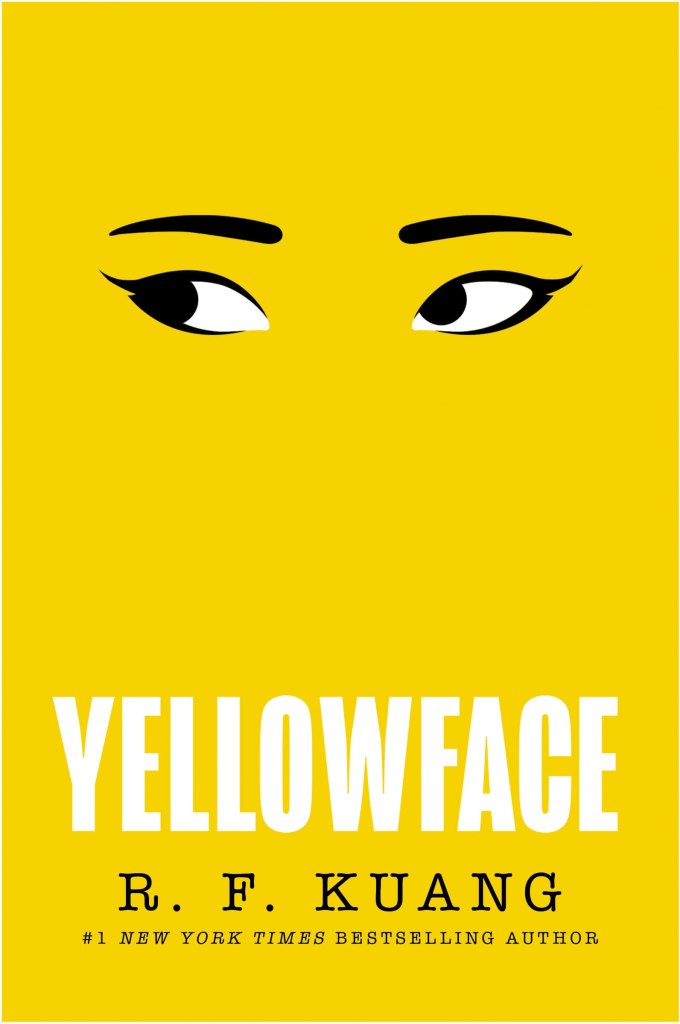
Yellowface

Rating: ⭐⭐⭐.5
Author: R.F. Kuang
Genres: Fiction
Pub. Date: May 2023

Yellowface was one of my most anticipated books of the year, so I was thrilled to receive an advance copy from Harper Collins in exchange for an honest review.

My anticipation of this book might come as a bit of a surprise seeing as I DNF’d Babel, but the synopsis of Yellowface was completely irresistible to me after I read and loved Disorientation by Elaine Hsieh Chou last year. The two books have a lot in common, but are both entirely different beasts. Of the two, I’d definitely recommend Disorientation first, but Yellowface is still an interesting read.

Yellowface is about two friends, Athena Liu and June Hayward. Athena is the bright, young author who receives critical acclaim for her debut novel and watches all her subsequent books become bestsellers and get optioned for TV. Though they went to the same university, June’s debut novel is a flop and she can’t help but be jealous of Athena’s success. They’re barely even friends really and June has never understood why Athena hangs out with her (me either to be honest) – to June, Athena has always been the kind of girl you love to hate.

Then June plays witness to Athena’s tragic death and in a moment of impulsive opportunity, steals Athena’s most recent manuscript, which hasn’t been seen by anyone. The manuscript is incredible, but still needs a lot of work and June figures that without her loving care, the novel would never become a true masterpiece, making the work as much hers as it was Athena’s. Suddenly June is catapulted into the career she always wanted and envied Athena for. But will she be found out for what she’s done? Someone seems to be hot on her tail and June becomes haunted by the ever watchful presence of Athena’s ghost. Can she reconcile her actions or will ghosts forever lurk around her.

The premise of this book is really smart. Underneath the obvious plot, this is a story about the pitfalls of the publishing industry. With only 5 major publishing houses, it’s a tight knit industry to break into and it examines the inherent racist and classist structures that exist in any long standing industry. Although even more interesting, it examines whether bestselling books are written or made.

What makes it intriguing is Kuang’s approach to the narrative. She doesn’t write this story from Athena’s point of view, but rather from June’s. As a young Asian American author, it would be so easy for her to write from Athena’s perspective about her experience in the publishing industry, but instead she decides to flip the narrative on its head by writing about it from the perspective of a white woman.

In some ways, writing speaks for itself – Athena became a bestseller on her own merits – and her work is equally undeniable in June’s hands. But what is interesting, is the way June is treated by her publishing team as a white woman. What I do think is missing from this book is the contrast to how Athena achieves her success. It’s alluded to that she had to fight against systemic injustice in getting her novels published, but it’s not explored in any depth. Rather we see how easy it is for June and how her publishing firm is willing to stand behind her no matter what allegations are made against her. It’s interesting to watch how they brand her, intentionally creating ambiguity in her identity to thwart future criticism about “own voices”. So I would have liked to see a little more contrast between the two experiences. It’s no real shock to me that the industry is white-washed, instead show me how this impacts young minority authors like Athena.

As the novel advances, June’s deceitfulness grows, as does her boldness. The plot becomes more and more chaotic, which was everything I wanted. Disorientation was a satirical novel that descended entirely into chaos. Yellowface is also satirical, though not quite as outlandish as Disorientation. If anything though, I wanted Yellowface to really go there. I’m sure some readers don’t like it when books veer into unbelievability, but for a book like this I feel the contrast only serves to highlight systemic injustice. Although as I alluded to above, I think the contrast is somewhat missing from this book. June is a brazen character, but without the contrast of what Athena experienced as a writer, it’s harder for the reader to understand exactly how privileged June’s experience is when we don’t know the realities of the publishing industry ourselves.

So despite this being a pretty scathing assessment of the publishing industry, my main comment is that I think Kuang could have actually done more. I said in my review of Babel that despite Kuang’s impressive understanding of language, her key themes are actually pretty basic. For such a long book, I found Babel to be very repetitive. Likewise in Yellowface, the premise is brilliant, but I thought her ideas were repetitive and a bit tired. This is basically one long look at white privilege and the ignorance of white people. I think it’s an entertaining book and an important message, but I feel like Elaine Hsieh Chou tackled SO much more in Disorientation and the discussion was a lot more nuanced, whereas Yellowface takes one central idea and exhausts it in the extreme.

Chou looks not only at systemic racism in academia, but explores in depth about identity and how her main character perceives the other white and asian people around her. Any discussion around identity is effectively silenced in Yellowface because the only Asian character chokes on a pancake. I wanted to see Kuang stretch her ideas a little more. Like I said, it’s still a great exploration of systemic racism, it just didn’t challenge my thinking in quite the same way.

But please don’t take this as too harsh of a criticism because it’s not for our limited Asian-American authors to carry this entire weight on their shoulders. As is evident, they face enough barriers and challenges in getting published at all. It actually says a lot about Kuang’s skill (and Chou’s) that their books inspire such analysis because that means their narratives are being published and promoted more. Despite me wanting more from the book, it still left me with this lengthy review and a lot to chew on. I would still recommend the book and I devoured it over the course of two days. Kuang is a great author and kudos to Harper Collins for their willingness to publish a book that looks so closely at the publishing industry.

Remarkably Bright Creatures

Rating: ⭐⭐⭐
Author: Shelby Van Pelt
Genres: Fiction
Pub. Date: May 2022

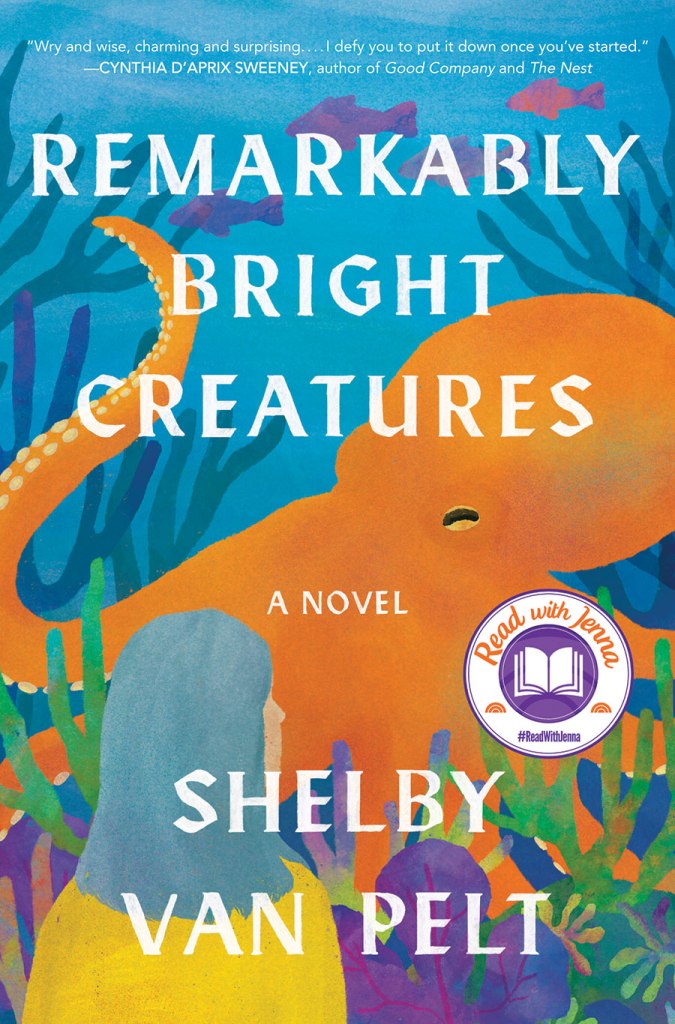
This was an impulse audiobook purchase because of the cute cover and good narrator! It has a really high rating on Goodreads and quite a few reviews considering I haven’t heard that much about it. It’s a nice feel good story featuring widow Tova Sullivan, plucky young Cam who can’t seem to keep a job, and Marcellus – an giant Pacific octopus imprisoned at the Sowell Bay aquarium in Puget Sound.

Tova is working as a cleaner at the aquarium while grieving the passing of her husband when Cam rolls into town searching for his father and also winds up working at the aquarium. They form an unlikely bond when Marcellus tries to escape his enclosure one night and in turn, Marcellus learns something about them that he must find a way to communicate.

I can see why a lot of people like this. It’s quirky and fun and Marcellus is a hard character not to love. Personally I found it entertaining and enjoyed the reading experience, though ultimately it is a bit of a forgettable book. I appreciate any book with a senior aged protagonist because they’re not very common and are often forgotten or ignored in our society.

Overall I don’t have a lot to say about the book. Tova and Marcellus are lovable characters and while Cam is a bit whiny and annoying at times, he has a certain charm. It was a good read, but there was one thing that really bothered me that I want to talk about. The problem is that it’s a major spoiler, so if you’re planning to read it (and I do recommend it, it’s a fun book), then please stop reading here.

.

Spoilers Below

.

.

.

The main plot point is that Tova is Cam’s grandmother. It’s the point of the entire story and on its own I have no issue with it, it’s a great premise for the story and ties together all of the key pieces. What I didn’t like was how suddenly having a grandson solved all of Tova’s problems and loneliness. Tova is a sad character – she is a wife and mother, but she loses her son when he’s only a teenager and she is later widowed. Of course she would be lonely and lament the loss of her family.

I loved that she was actually wildly practical about how she would take care of herself moving forward and that she made the decision to check herself into a retirement home. She has lots of friends in Sowell Bay that helped to ward off the loss of her husband, but a lot of them were moving away themselves, either to homes or to move in with their children. So moving into a retirement home seemed like a great choice for Tova as it would likely provide a great sense of community for her. She recognizes that she doesn’t have children to take care of her and while that makes her sad, it is the case for many seniors and that’s okay. My Nan has 8 children and deciding to move into a home was a hard choice for her, but a great decision that helped her social life thrive.

There’s a lot of emphasis placed on how sad everyone is for her to leave her home and all her friends try to convince her not to. Then conveniently, the one thing she’s longing for – family – turns up just in the nick of time and she cancels all her plans. I’m glad she found that family, but it just kind of rubbed me the wrong way. Lots of people don’t have children or lose children and find themselves alone in the final years of their lives. This is a reality and there’s nothing wrong with that. To me, I thought this narrative would have been so much stronger to focus on the agency Tova has over her own life and her decision to continue to move forward.

Ultimately the author wants that fairytale ending and it’s what the entire story revolves around, so I get it, that’s the feel good story most people want. Personally I just didn’t want it. And that’s fine too. Not every book has to think critically about social commentary. It’s still a great story, the ending just didn’t speak to me the way it spoke to a lot of people. Oh well, better luck next time!