Things You Save in a Fire

Rating: ⭐⭐⭐
Author: Katherine Center
Genres: Fiction, Romance
Pub. date: Aug. 2019 (read Sep. 2019)

Things You Save in a Fire is a book I was wildly excited for, but somehow got missed in my reviews. It’s now been about a month and a half since I read it, but I still really want to review it, so I’m going to do my best, but must admit that some of the details are a little fuzzy.

Things You Save in a Fire is about firefighter Cassie Hanwell. Cassie graduated top of her class and has spent the last few years building up a good reputation for herself at a progressive firehouse in Texas. She’s well respected by the rest of the male firefighters and has the pleasure of working for another female fire chief. But then at the peak of her career, her estranged mother asks her to move to Boston for a year to help her recover her health after a recent surgery. Cassie is reluctant to return, but due to other circumstances, it ends up not being a bad time for her to try something new.

The thing is, her firehouse in Texas was pretty progressive and well funded, but her new firehouse in Boston is not. The firehouse has fallen into disrepair is not well equipped in terms of what Cassie would consider important safety equipment. But the biggest difference is that Cassie is the first female to ever be hired at the firehouse and the male firefighters are not pleased about it. They’re used to things running a certain way and having the freedoms to act and speak as they choose, and despite Cassie’s protests that they can do and say all the same things around her, they choose to believe that they can’t.

As a female, Cassie has obviously had to work twice as hard to gain the respect of her peers, but she’s never worked in an old-school-boys-club firehouse like this one and she is really challenged. Cassie is used to training hard and knows how to fit in, when to speak up, and when to stay quiet, but she really struggles to be taken seriously and the other firefighters continue to be threatened by her female presence in their traditionally male place of work.

On paper, this story has everything I usually look for in a book. Although it is a romance, which is not something I’m usually drawn to, it is a book about powerful women subverting the status quo. There were parts of this book that I really liked – it draws attention to the challenges women face in male fields – how they have to work so much harder to be taken seriously and that everything that is expected of them is contradictory. You have to be as good as your male counterparts, but you can’t be better than them lest they feel emasculated by you. You can’t be girly, but you’ll never be one of the boys. And you can’t expect to be treated differently, even though everyone adamantly treats you differently. On top of the challenges at work, Cassie struggles with an incident that happened to her in her past. An incident that has made her keep her distance from dating for many years and is triggering when she finally develops a crush on one of the other firefighters.

Like I said, there’s a lot to like. Cassie is powerful, but also immensely vulnerable. She has built up a wall around her in order to keep herself safe, but you want nothing more than for her to finally tear that wall down so that she can really experience and interact with the world. So overall I quite liked the story. The romance was a little embarrassing at times, but overall I bought into it. While I generally liked the book though, there were definitely some parts where I couldn’t help rolling my eyes and wished the author had maybe taken a slightly different approach.

This is namely when Cassie repeatedly shows up the guys in her firehouse. I understand that Cassie has to work really hard to be taken seriously, but I was frustrated by how much she relied on physical strength to show up her colleagues or try and gain their respect. It just felt like she was good at everything and I didn’t buy that she would continuously beat everyone in every challenge. It had nothing to do with her being a woman, just that no one is that good at everything. I think its still okay to let female characters be vulnerable and not the best at things. It’s unrealistic to think that to be a successful female firefighter, you have to epically better than your male peers at everything. That is never going to happen and it’s discouraging to portray this as the only way to be successful in this field.

Cassie was just good at everything, even non physical feats, like applying for funding. Now don’t get me wrong because I thought this was actually a brilliant example of where a woman would bring valuable skills to a firehouse and a great example of how you don’t need to best everyone physically to be an asset. Though Cassie was vulnerable emotionally, I just would have liked to see a little more vulnerability at work.

Overall, I did like the book, but I didn’t love it and this was what made it a run of the mill 3 star read for me instead of a 4. A good read, but not a great one.

Special thanks to Netgalley and St. Martin’s Press, who provided me with a free e-copy of the book in exchange for an honest review.
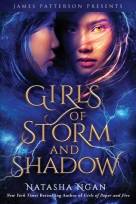
Girls of Storm and Shadow

Rating: ⭐⭐
Author: Natasha Ngan
Genres: Fantasy
Pub. date: Nov. 5, 2019 (read Nov. 2019)

I read and liked Girls of Paper and Fire last year. It was a dark fantasy that featured a queer female protagonist – something you don’t see too much in fantasy. So I was really excited to receive an advance copy of Girls of Storm and Shadow from Hachette.

Unfortunately, I just couldn’t get on board with this sequel. It felt a bit like a parody of the first book and I felt that Ngan’s writing left a lot to be desired. I’m not sure if maybe she was rushed in writing the second book or whether I got caught up in the hook of the first book and didn’t notice, but I found her writing very lacklustre in this book. I thought it didn’t have a lot of style and the dialogue could have been stronger. The writing was just kind of boring, as was the plot.

In Girls of Storm and Shadow, Lei and Wren have escaped from the King’s Court and are trying to win themselves more allies so that they can finally take down the king once and for all. It’s more of a political book, with our gang of misfits traveling from Court to Court, trying to win favour from other demon clans. Ngan does do some interesting things with her characterization of Lei and Wren towards the end of the book, but I felt it took too long to get there. Lei and Wren are just a happy little couple for most of the book and I’m sorry but, even if it’s a groundbreaking queer relationship, you need tension to keep romantic relationships interesting.

Both the character growth and the plot progression of this book are slow. It reminded me a bit of the second book in the Belles series, because in both these series, I really liked the first book, but found the sequel entirely lacking. Even though we had a roughly outlined plot – get more allies – I felt like the story was just too one dimensional in all aspects. I wanted more depth from the plot, more tension between characters, and more overall nastiness. This was just too vanilla and generic of pretty much any other YA fantasy novel. It no longer has anything to set it apart from the rest of the pack.

My hope is that it’s simply a victim of second book syndrome. I’m sure it can be hard to follow up a successful first book. First books generally read kind of like standalones and it’s not until the 2nd and 3rd books that we actually get into the meat of the story or the saga. I’m hopeful that Ngan has a clear vision of where she wants to take this series, but it didn’t come across in this book and honestly, the whole thing felt like filler. I think it’s easy to fall into that trap when you’re writing a traveling book because everything that happens on the way to the destination can just feel like unnecessary, added drama. I know lots of people read fantasy for the action, but I still want my thinking to be challenged and I expect multi-book series to have much greater depth in the plot. There just wasn’t a whole lot else happening here.

The one part I did like is the slow conflict that starts to wedge its way between Lei and Wren. I think it was too long in coming, but I liked the new darkness in Wren that Ngan introduces. It brought more intrigue to the story and I am interested to see where she may take that in the next book.

Anyways, I hate writing downer reviews like this, especially about a book I was really excited about, but unfortunately it just couldn’t live up to the first book. The story and characters have lots of potential, but I think Ngan needs to put a bit more thought into both her characters and her plot and spend a bit more time honing her writing skills.

Recursion

Rating:
Author: Blake Crouch
Genres: Science fiction, Thriller
Pub. date: Jun. 2019 (read Oct. 2019)

Okay, I need to get my thoughts down about this book before I start to forget them! Recursion was my book club’s pick for October and I was pretty excited to read it because we also read Dark Matter together a few years ago and all really liked it. I really hadn’t wanted to read Dark Matter, but I ended up loving it, so I was cautiously optimistic about Recursion.

I am going to have to give the edge to Dark Matter, but Recursion takes you along the same wild ride as Dark Matter does. Crouch writes this really interesting blend of sci-fi and thriller, which I think works really well. His plotlines are totally f-ed up, but embody everything that makes for a great I-cant-put-this-book-down read. They have lots of mind-bending science and crazy plot twists, but also maintain a nice balance of emotional depth and characterization. It’s easy to get caught up in the science, but Crouch always grounds his characters through their relationships and it makes for a much more compelling read.

I think it’s best to go into Dark Matter and Recursion blind, but if you want a small synopsis, Recursion basically looks at memory functions – how we remember (or don’t remember) things and how those memories impact our personal well being and understanding of time. What would happen if we could record and map our memories? Would it help people who suffer from diseases like Alzheimer’s, or does it have the potential to completely warp our sense of time and space.

I did really like this book – it has a strong start, it’s very engaging, and it’s definitely hard to put down. But I ultimately decided to give it 3 stars instead of 4 because I struggled with the last third of the plot, which I found numbingly repetitive, and I thought the ending had some major plot holes.

But that’s all I’ll say about that for now. For the rest of this review, I’m going to have to get into some spoilers. I have a lot of thoughts about the ending and I’m hoping that other readers (or my book club) might be able to clear up some of my questions, but if you haven’t read the book and are planning to, definitely tap out of this review now. Major spoilers ahead. You’ve been warned!

.

.

.

So here’s where I struggled with this book. I thought it had great pacing during the first half, but the more messed up everything got with the chair, the less interested I got. The world ending time loop at the end was a nightmare and it just went on forever. It gave me anxiety while also being super long and boring. You could tell Helena was taking the total wrong approach to ending the time loop and with every reset I was counting how much older she was getting and just kept finding it less and less believable that she would be able to live the same life over so many times without losing her mind. By my count she was like 282 years old when she finally died!! As someone who has not even yet reached the age of 33 (the length of the time loop), I found it hard to fathom reliving your life for that long. I thought it was realistic that she finally just passed away from sheer mental exhaustion, but it was a little annoying to have Barry then come in less than a year later and solve everything. Helena was the hero of this story for me and it was really annoying to watch stupid Barry take all her glory.

Fellow readers, I need your help in understanding the ending, because to my mind it has some serious flaws. Here’s all my issues:

1. How did Barry just go back to a dead memory? Going to a dead memory killed the original test subject (forget his name), so why was Barry able to do it? I feel like this should have been explained.

2. On that note, when the first guy died from going to a dead memory he had this wonderful experience where he went to heaven (or whatever you want to call it), which was enough to make him kill himself later, how come no one else had this experience in their many deaths?

3. Barry basically solved the time loop by going back to the original timeline and stopping Helena from dying, which is what started Slade’s obsession with the chair, but I don’t see how this was any different than Helena going back to the age of 16? She was always returning to that time because it was still part of her original timeline, but the fake memories would always still catch up with everyone later. Wouldn’t the fake memories still catch up with everyone in Barry’s original timeline?

4. Or does the memories not catching up have to do with the fact that Barry is springing off of a dead timeline? I don’t really get why that would matter though, I guess the fake memories from the other timelines haven’t been created when you launch off a dead timeline, but it still begs the question, how did Barry return to a dead timeline?

5. What happened to Helena’s memories from her original timeline – the one where she worked for the R&D company? Slade apparently kills her for the first time in 2018, but I don’t remember her ever gaining those memories?

I think that mostly sums it up. But like I said, it was kind of disappointing to see Barry solve the problem, especially when Slade tells us that Helena originally figured it out and then he reset her memories (which also doesn’t make sense, she would have got those memories back n’est pas?) Or did she not get the memories back because Slade went back to a dead timeline? That would make sense actually, maybe that is the answer to why she never remembers Slade killing her either? I guess I will go with the answer that previous memories don’t catch up with you in a dead timeline, which would explain a lot of my confusion and questions 3-5, but still raises the question of how you travel to a dead timeline?

Anyways, this helped me sort through my thoughts, but still doesn’t change my rating. Crazy action doesn’t always make your story compelling and I just didn’t find the last third of this book compelling. But I’d love to hear everyone else’s thoughts on the ending and all the plot twists! Am I right about the dead memories thing? Do you have the answer to any of my other questions? Would love to know what everyone else thought!

The Witches are Coming

Rating: ⭐
Author: Lindy West
Genres: Non-fiction, feminist, essays
Pub date: Nov. 5th, 2019 (read Aug. 2019)

This is another review I should have published ages ago! The Witches are Coming was also really high on my list of most anticipated books of 2019 and I wasn’t expecting to get an arc, but then it changed publishers and I ended up swiping a copy on Netgalley.

I used to read these essay type books about feminist issues all the time, but it’s been ages since I’ve picked one up. They were starting to get a bit repetitive, but I really enjoy Lindy West’s second book. I was a little on the fence at first, but she killed it with some of her later essays and I really liked it.

I’m struggling to remember many of the essays now, but the one that stands out in my mind is ‘What Is an Abortion, Anyways?’ Abortion is so controversial and so relevant in the United States right now and I thought this was a really good thought piece about it. She also discusses the #metoo movement and how things having been changing in her essay ‘Anger is a Weapon’. Women can literally never win. We’re mobilized by anger at the status quo, only to then have that anger used against us. It’s so hard to pursue justice when you’re not allowed to be loud, angry, or passionate about it.

So please forgive me for not reviewing this sooner. I am fuzzy now on a lot of the essays, but I was definitely interested in what Lindy had to say. She’s perceptive, relevant, and relatable. I did read her first book Shrill, although I haven’t seen the TV show, but I think I may have liked this book even more than Shrill. Keep on writing and being awesome Lindy!

The Witches are Coming is available in stores Nov. 5th, 2019.

A Woman is No Man

Rating:
Author: Etaf Rum
Genres: Fiction
Pub. date: Mar. 2019 (read Aug. 2019 on Audible)

I have failed this book by waiting so long to write my review for it. I have been in a major book slump for months now. I’ve still been reading a decent number of books, but I haven’t really been excited about it or super motivated to read. I’ve been relying mostly on audiobooks to propel me through the drought, one of which was A Woman is No Man.

This was pretty high on my most anticipated list for 2019. I’m not really sure how it got on my radar, but I love all the diversity we’ve been getting lately and I was really excited to read it.

I originally gave this 4 stars, but with the time that has passed since then, it sticks out in my mind as more of a 3 star read. I really liked Isra’s story and found it really interesting and upsetting to read about the experience she had moving to America and trying to fit in with her new family. A Woman is No Man highlights the stories of Palestinians who have immigrated to America and the challenges they face in trying to maintain their culture while adapting to the vastly different American culture.

Isra grew up in Palestine, but was sent to America to marry Adam and live with his family. As expected, Isra struggles with the change at first, but mostly because she is extremely isolated. Though she lives in America, Adam’s family act as if they are still living in Palestine and do everything they can to hold on to their culture. Adam is seen as the provider for the family and his mother is very much the matriarch of the family. She is hard on Isra and the family doesn’t permit her to leave to house (because what would people think of a woman out on her own without her husband!).

Isra does start to adapt and works hard to please her husband. They are thrilled when she becomes pregnant, but place a huge amount of pressure on her to birth a boy and are immediately disappointed when she births a girl instead (Deya). I really liked Isra’s story and it’s her voice that really carried me through the book. She is extremely oppressed, with a violent husband and a threatening and overbearing mother-in-law. She becomes depressed and develops a very unhealthy relationship to her daughters. She loves Deya, but the pressure to produce a son is overwhelming and it infiltrates its way into her relationship with Deya and poisons it.

Isra’s story is the story of millions of women. She is told she is less than for being a woman and she is totally at the mercy of her husband’s family. It’s enraging to read her story, but also extremely truthful.

The other part of the book focuses on Deya, her daughter. We know from the beginning that Deya’s parents died when she was young and that she is being raised by her grandmother (Isra’s mother in law). I didn’t like Deya’s story as much, but it does provide insight into another part of the immigrant experience. Though Isra was unhappy, because she was marginalized she just accepted what she was told and never fought back against it. It was just accepted that this is the way things are. But Deya grew up in America and attended public school, so while her grandparents have tried to raise her as a good Palestinian girl, she has learned to question things. Her grandmother wants nothing more than to marry her off, but Deya wants to go to college and tries to rebel against her family.

I couldn’t relate as much with Deya though. I tried to understand why she struggled to disobey her grandparents and just went along with their attempts to marry her off, but I wanted her to take a bigger stand against them. I understood that Isra had no support outside of Adam’s family, she had no where to turn, but Deya would likely have had other support networks. But their family still mostly lived and worked entirely within the Palestinian community, so I guess it would be hard to break out of those cultural traditions. This is a minor criticism though because I am not the target audience for this book and have to acknowledge that my experience is different. Deya’s narrative probably means the world to someone who grew up in similar circumstances.

I also didn’t really like the end of the book. It reminded me a little bit of Erotic Stories for Punjabi Widows – not the tone of course – but that at the end the entire story just seemed to descend into this crazy soap opera. It seemed a little bit over the top and I wanted to hit Sarah for being so cryptic and not helpful. Like Deya is a teenager, help and support her in trying to figure things out instead of being like, “no, you have to do it yourself”. That’s stupid. There’s power in asking for help and it’s belittling to decide that another person is better off without your help. Let them make that decision on their own.

So overall I’m between a 3 and a 4, but I’ll leave it at 4 stars. Definitely some great themes and a very promising debut novel.