Betty

Rating: ⭐⭐⭐⭐
Author: Tiffany McDaniel
Genres: Historical Fiction
Pub. Date: Aug 2020 (read Dec. 2020 on Audible)

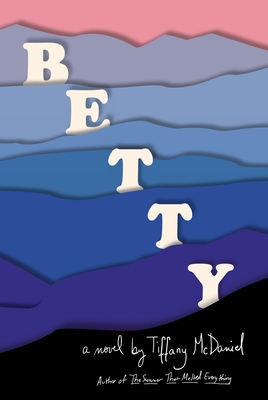
I’ve been dying to read Betty ever since I laid eyes on the beautiful cover art and read that it was a fictional recount of her mother’s experience growing up in a large family with a white mother and Cherokee father. It’s a long book and I decided to listen to the audiobook.

I was expecting a sad story and I read there were some hard to read scenes in the book, but I wasn’t expecting just how difficult a read this would be – by which I mean difficult content, not the writing. Betty is a coming of age story about the family’s third youngest child, Betty, the author’s mother, but it really focuses on the family as a whole and I loved that the author cast such a wide scope in her story telling.

The book starts with how Betty’s parents met and then tells the story of their 8 children. It seems like a big cast at first with so many siblings, but we spend a lot of time with this family and we grow to know each of the characters deeply.

This was a hard book to read because Betty’s family experiences hardship after hardship. They lose 2 of their children at early ages (I can’t remember now when exactly either passed away, but they’re not featured in the story beyond mention), and the rest of the children suffer varying levels of trauma. Even their parents have faced a great deal of trauma and the book really showcases the cycle of violence and suffering. 

I read a few interviews with the author after finishing the book and while this is her second book, apparently she’s been trying to publish it for years and struggled to find a publishing house that would work with the manuscript she had. She was told that the story contained too much suffering, that it wasn’t believable that one person or family would suffer so much, and worse of all, that people wouldn’t relate to Betty as a young girl. That will give you an idea of the kind of story that you’re in for, but I’m glad the author opted not to change her story because while it was upsetting to read, I had no trouble believing it. 

Indigenous Peoples have been wronged by both Americans and Canadians and our governments for centuries. Betty’s dad, Landon, was Cherokee and tries his best to honour his heritage and impart his ancestral wisdom on to his children. But he has also been mistreated and wronged as a Cherokee man and we catch glimpses of this throughout the story. While most of the children take after their mother (read: white) in appearance, Betty takes most after her father, and as a result, she is the most bullied of the children outside of the home. But in her home, she is also her father’s favourite and puts the most stock and importance into his traditional wisdom.

The hardest scene for me to read in the book was when Betty’s mother describes to her the abuse she experienced at the hands of her parents. It’s a traumatizing story on it’s own, but the way her mother chooses to share it is it’s own kind of horror and deeply emblematic of the way abuse cycles down through generations. This book has everything from violence, rape, incest, animal abuse, death, self harm, and suicide. But it also has some really beautiful scenes as well.

Landon Carpenter was for sure the highlight of the story for me. It’s hard to say whether Betty’s parents were really good parents or not – they certainly had their faults and a very laid back approach to parenting, but Landon’s love for his children was so evident throughout the course of the novel that I was able to forgive some of his other misgivings. He tried to be a good dad – to provide for his children and pass on traditional knowledge. I found a lot of faults with Betty’s mom and siblings, but I think Landon really did try his best. When I read the trigger warnings about this book, I was bracing myself for a horrible father figure, so it was really nice to find a caring and empathic one instead.

This isn’t a book I think I could ever pick up again, but I’m really glad I read it and I think it is a story that will stick with me for a long time. I’m so glad the author was able to finally share it.

Where the Forest Meets the Stars

Rating: ⭐⭐⭐
Author: Glendy Vanderah
Genres: Fiction
Pub. Date: Mar. 2019 (read Dec. 2020 on Audible)

This was an impulse buy on Audible because I liked the narrator and the cover art is really pretty. The book started so strong and I was immediately pulled into the story! The premise of the novel is that while doing her field research on buntings in a small town in rural America, Jo stumbles upon a young girl, Ursa, who claims to be an alien. Jo, of course, doesn’t believe her and tries to reunite the girl with her family. But the girl has resolved that she will stay with Jo and together they befriend their neighbour, Gabe, who runs a homestead next door and sells eggs to the locals. 

Jo and Gabe are both struggling with their own issues and the presence of Ursa is a distracting, but healing influence in their lives. However as time passes and no one comes looking for Ursa, they start to wonder how she ended up with them and what her real story might be. 

Like I said, the story starts really strong. It’s impossible not to love Ursa – she’s a vibrant character who’s full of life. She claims she’s decided to stay on earth until she “witnesses 5 miracles” and it’s hard not to be impressed with her zest for life. The author also adds more depth to Jo and Gabe, one of whom is a cancer survivor and the other who is battling depression. I really liked that the author added this complexity to the story and I was convinced I had stumbled upon something that was going to be truly magical.

Unfortunately, the further the story progresses, the more it starts to fall apart. The elements that I was impressed with early in the book start to become problematic, leaving me scratching my head about why the author chose to include them at all. The last third of the book went in a totally different direction than what I was anticipating and I found it to be both jarring how quickly the plot seemed to diverge, and disappointing how the author seemed to abandon the ideas presented at the start of the book.

I’d like to dive a bit more deeply into these issues, so the rest of my review will have spoilers and I suggest you quit here if you’re planning to read this book.
.
.
.
.
.
I loved that Jo was a breast cancer survivor and I was impressed with the creation of a character who had already come to terms with her double mastectomy and the loss of her ability to bear children. She was able to look back on those decisions with no regrets, which I thought was such a great message. Similarly, Gabe was suffering from depression and I was really into the inclusion and intersection of these emotional struggles.

Beyond that, I found the author’s portrayal of depression problematic. Jo had almost no regard for his depression; she clearly didn’t understand it and continually pushed Gabe outside of his boundaries as if that was all he needed to be healed. He told her he had extreme social anxiety and had never kissed anyone before and her first instinct is to make a move on him without even asking his consent first. I thought it was so insulting and that it would have driven Gabe away from her or made him extremely uncomfortable.

But that wasn’t all, she kept badgering Gabe about his family and inserting herself where I felt she didn’t belong. Forcing Gabe to have conversations and interactions he didn’t want to have and then the author passing her off as so amazing for helping Gabe to confront his demons and grow. Personally, I thought she was a bit of an asshole and I would have been so mad at her for constantly meddling if I had been Gabe. Plus, I don’t care how much a person complains about a member of their family, you never get to insult them. They are always allowed to vent, but the way Jo bitched and complained about Gabe’s sister was so rude. 

As for the ending, I don’t fault the author for the direction she took the story, I just was really hoping for something more poignant. I wanted magic from this story. I wanted Ursa to actually be an alien. I thought her presence would be healing for Jo and Gabe and that we would witness something magical for the final miracle as a result of her presence. I was looking for more magical realism from this story and what I got instead was a hard dose of realism.

The story quickly changes track with a shootout on Jo’s property and from there a magical introspective story turns into some kind of crime drama. It was just such a change from the first half of the story that I felt like I had whiplash. The writing lost its magic and became repetitive and whiny.

The other problem I had was with Ursa’s behaviour. Suddenly our quirky little alien turns into an out of control, scheming, dangerous child. Did I believe a child could behave like this? Sure, but it was so worrying! Ursa knew exactly how to manipulate those around her to get whatever she wanted, which I found extremely frightening, not endearing like I suspect was the author’s intention. Did I want Jo and Ursa to be together? Of course, but to me, Ursa’s behaviour indicated that she would be impossible to discipline and I’d be extremely concerned about how manipulative she will be as she grows. I know she went through something extremely traumatic, but I think this girl needs a lot of therapy. It was cute when she was an alien, but as an orphaned girl, she’s a compulsive liar who will threaten those around her and throw tantrums until she gets what she wants. It was concerning. Plus I still don’t think Jo would have ever been granted the right to be her foster mom, nor did I think she deserved it.

So overall, this book had so much potential, but really flopped in the execution. I can’t fault the author for the direction she took the story, it’s her book, but it just wasn’t what I was hoping for and I can’t look past all the problematic elements. 

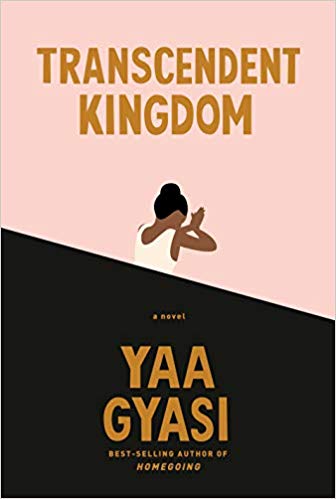
Transcendent Kingdom

Rating: ⭐⭐⭐⭐
Author: Yaa Gyasi
Genres: Fiction
Pub. Date: Sep 2020 (read Nov. 2020)

To Date, Gyasi’s first book, Homegoing, is the highest ranked book my book club has read – and we’ve been reading a book a month since 2012. So I was super excited to pick up Yaa Gyasi’s new book for our November meeting.

Transcendent Kingdom is completely different from Homegoing, but in the best possible way. Homegoing is a wonderful piece of multi-generational, historical fiction, while Transcendent Kingdom is a deeply introspective look at grief, addiction, mental health, religion, and the challenges of being an immigrant. I could see how some fans of Homegoing might be disappointed with Transcendent Kingdom, but I loved that the author tried something new in this book and I think she really showcased her versatility as an author. So even though this book is getting most of its press because of Homegoing, try not to let Homegoing influence your expectations.

Gifty is a PhD candidate who has studied medicine at both Harvard and Stanford. She’s been studying addiction and whether there’s a neurological way to break the cycle through lab experiments with mice. Her studies are driven by her own tragic past as her brother, Nana, was addicted to opioids. Her family immigrated to America from Ghana before she was born and she’s always had to walk the line between two worlds and cultures.

Meanwhile, her mother shows up at her apartment after undergoing her own emotional breakdown and spends weeks in Gifty’s bed battling depression. Her mother had a similar struggle with depression 20 years prior, after Nana’s death. Like the last time, Gifty is determined to help lift her mother out of her pit of depression, but has absolutely no idea how to help her. As she tries to encourage her mother to reignite her faith, she is reminded of her childhood and the deep-seated role religion and spirituality played in her own life.

I don’t think this was a perfect book. I think the structure could have used a little more work and I would have liked to see some of the themes developed further. Gyasi tackles a lot of issues in this short book and I’m not sure she was able to do them all justice in just 260 pages. That said, life and grief and mental illness are all messy. Healing is not linear and it does not fit into a nice like hallmark-movie narrative. I felt the story ended too soon – I wanted to see more of a resolution to some of the themes – but I also appreciated that grief and depression are things that we carry with us for many years and that though we all seek catharsis and closure, we don’t always get it.

That said, while I did feel her exploration of her Mom’s depression could have been a little better developed, I thought she did a great job exploring some of her other themes, particularly around grief, addiction, and religion. I really liked how the narrative was developed. There’s no clear delineation between the past and the present, with her current day experiences triggering past memories throughout the novel. I could see how this structure might be frustrating for some, but I loved gaining those little insights into Gifty’s past and how those past experiences influenced who she is today and her relationship with her mom. 

But the highlight of the book for me was Gyasi’s look at the role religion played in Gifty’s life, and how despite her best efforts, she was never able to completely shed that upbringing. I had a big religious upbringing myself and while I haven’t been trying to shed that background the same way Gifty was, I really related to her in the ways that it hurt and helped her. Unfortunately religion also brings with it a lot of shame and guilt. I wish it wasn’t the case, but it does create an internalized sense of shame and feelings of anger and frustration when religious institutions are not the good and holy influence that they should be. There are a lot of christians who carry around a lot of misplaced righteousness and it has not made the world a better place. 

But more than anything, I felt Gifty was really just looking for something to belong to. She has more often than not been the only black person in her church, in her classes, in her program, and she has struggled to make friends and connect with people. Her brother was the one person she felt close to and when she lost him and her mother started to fall apart, she had no one that she could turn to. Her faith in God was destroyed by the loss of her brother, and to an extent by the hypocrisy of the Christians in her church and town. But while she tries to leave her faith behind or explain it away, she’s never able to fully dismiss her spiritual experiences. Despite her church not caring for her family the way they should have, her pastor was there for her and her mom when they needed him and she finds herself seeking comfort in the familiarity of church services and her favourite bible verses. It’s hard to describe the feelings Gyasi’s narrative evoked, but I just really connected with Gifty and despite all that is different between me and Gifty, I found her very relatable.

Finally, the writing was lovely. It’s a very introspective plot – it’s not character driven in the way I normally like in literary fiction, but I liked how the author explored her ideas and how I came to understand Gifty and her family a little better throughout the course of the novel. Like I said, the narrative is a bit all over the place, but honestly that’s exactly what my thought process is like too, so it just worked for me.

Definitely recommend this one, just set aside your expectations because this is not like Homegoing. 

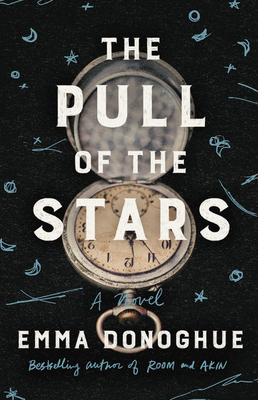
The Pull of the Stars

Rating: ⭐⭐⭐⭐
Author: Emma Donaghue
Genres: Historical Fiction
Pub. Date: July 2020 (read Oct. 2020 on Audible)

With everything that’s going on right now, I was super intrigued by the plot of The Pull of the Stars. It’s set in 1918 Ireland during the last global pandemic. The entire book revolves around 30 year old nurse Julia, who works in the maternity ward of the Dublin hospital. However during the pandemic, she is assigned to the pandemic part of the maternity ward, which is where all the women with flu symptoms have been sent.

The Pull of the Stars wasn’t quite what I was expecting, but it was definitely compelling. Emma Donaghue made the somewhat interesting choice to set almost the entire novel within the hospital over a span of only 2-3 days. Throughout that time, we see the strain that Julia is under as a nurse and the limited resources of the hospital due to the pandemic. Donaghue focuses both on the challenges the flu has on the mothers and their labours (in many cases it caused the women to go into pre-mature labour, which obviously complicated the births), as well as the challenges women in general faced during the time period.

At 30, Julia is unmarried and considered a bit of a maid. Besides nursing, she mostly takes care of her brother, who came back from the war severely traumatized. The hospital is extremely understaffed, so they bring in a young volunteer named Bridie to help in the ward. Bridie was raised in the convent by nuns and her situation shines a light on the catholic church and the unfair advantage they took of girls and women without families or who found themselves in bad situations. Bridie was abused by the nuns and then forced to continue working for them to pay off her indenture for the care she received as a girl (even though the nuns are paid by the state). Donaghue explores this theme of abuse of power by the church throughout the novel and I found it really eye-opening and enraging.

Finally, the novel also has a small focus on female doctor, Kathleen Lynn, a former rebel who’s supposedly on the run from police. I liked how Donaghue explored what it meant to be a female doctor at the time, how she was perceived by men, and how her approach to medicine and labour differed from that of the male doctors. She definitely saw more of the humanity of the new mothers when they experienced complications in labour and generally was less judgmental of those who had fallen pregnant outside of wedlock.

So overall I thought it was a really interesting book. The themes were subtle and a lot of time did focus on the new mothers and their complicated births, so I liked how the author explores the other links between church and state, especially since it’s so relevant with the story being set in 1918 Ireland. The only thing I didn’t like is that there’s a hasty romance thrown into the story near the end that felt very much out of place. I get what Donaghue was trying to do and I appreciate her for trying to explore some other themes, but it just didn’t work for me. It was too short lived and I don’t think it really added much to the story overall. 

Otherwise, this was a good book that wasn’t too long or overwritten. I listened to it on audiobook and thought the narrator did a good job.

One by One

Rating: ⭐⭐⭐⭐
Author: Ruth Ware
Genres: Mystery, Thriller
Pub. Date: Sep. 2020 (read Sep. 2020 on Audible)

If you know me at all, you know I’m a huge Ruth Ware fan. The best phrase I can think of to describe her books, and I say it all the time, is ‘compulsively readable’. It seems like this book has just been getting mediocre reviews, but for the most part, I actually really liked it. 

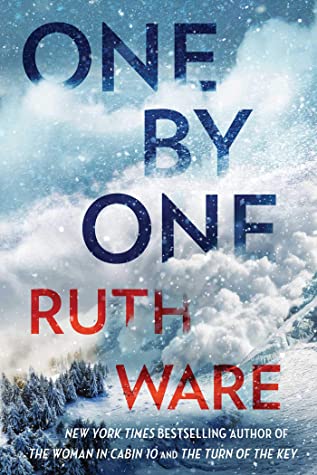
I think one of the reasons I really liked this was setting. One by One is set on a french ski resort up in the alps. There’s a number of chalets located at the top of one of the gondolas and on this particular week, the chalet has been rented out by the employees of the company Snoop. Snoop is a popular social media app that can be used to listen to music and snoop on what other people, from friends to celebrities, are listening to at the same time. However, like any tech start-up company, there’s a lot of drama going on behind the scenes. 

The chalet is full of the Snoop staff and two employees when an avalanche hits, snowing them in and cutting everyone off from escape. Tensions mount and when several people start to show up dead, the whole chalet descends into chaos. Who can you trust when you’re snowed in with a killer?
The narration alternates back at forth between two of the individuals snowed in at the chalet and it has the old school closed door mystery vibe. Something about being snowed in and knowing the killer is among you is just enthralling. Plus I did get into all of the Snoop company politics and drama and I thought it added to the story. 

I flew through the book in just 2 days, but I have the same criticism I have with most of Ware’s book – the book climax is just too early. For some reason she always reveals the killer at like the 75% mark of the book and devotes the last part of the book to the “thrill” I suppose. But it never really works for me. Of course you need some kind of thrill to accompany your big reveal, but Ware always drags it on too long. Plus I was a little bit disappointed with who the killer turned out to be, but I didn’t guess it until close to the end, so I guess I can’t complain too much.

Overall I still really enjoyed this book. I’d give the setting an A. It’s not my favourite Ruth Ware (I think that may be Turn of the Key), but I definitely enjoyed the reading experience.