Ties That Tether

Rating: ⭐⭐⭐
Author: Lauren E. Rico
Genres: Fiction
Pub. Date: Dec. 2023

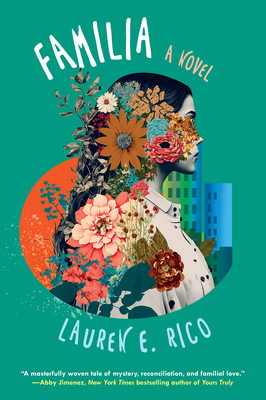
I have mixed feelings about this book. Overall, I liked it – I thought both the story and the writing were compelling and I’m impressed with it as a debut. It’s my book club pick for April and I’m really excited to talk about it because I think there are a lot of interesting themes to discuss. My main complaint is that I didn’t like the religious elements of the story and I didn’t like the ending.

I can’t discuss the parts I didn’t like without getting into spoilers, so let’s talk about what I did like first. Familia is the story of Gabby DiMarco and Isabella Ruiz, two women with very different backgrounds, connected by blood. Gabby is a well-to-do woman in New York City whose parents have recently passed away and is trying to get her big break as a journalist. Isabella is a Puerto Rican woman who lost her mother in childbirth and her father’s subsequent depression and alcohol abuse resulted in the kidnapping of her infant sister, Marianna, 7 months later. This tragic event traumatizes Isabella for the rest of her life and even 25 years later, she is determined to find her sister. When Isabella and Gabby get a 50% DNA match on a gene website, Gabby is sure there’s a mistake, but flies to Puerto Rico in hopes of breaking an interesting story.

It’s obvious where the plot is going, but I enjoyed the journey. It’s a compelling narrative and I was really interested in all the themes the author wanted to explore. Isabella feels a deep sense of resentment for her sister because her birth resulted in the death of her mother and the breakdown of her family, but she also feels guilt over having wished her sister never existed at the exact moment she disappears. When they are reunited, her guilt morphs into jealousy at the easy life her sister had growing up in America in contrast to her traumatic childhood and youth. Gabby refuses to believe that she and Isabella could possibly be sisters, because to accept that fact would be to accept that her entire life and family was a lie. Plus it raises the age-old question of what really makes a family – is it the blood you share or the relationships and trust you’ve built. 

I thought these were all fascinating questions, particularly for Isabella, who I found a more compelling character, and I thought the author did a good job at exploring the internal conflict of these two women. Their relationship was believable to me. They have an emotional connection, but not in an overly cheesy way, and the experience brings them closer together, while still being realistically challenging for them. 

Overall, I liked the format. The author opts to break the story up between the present and the past. Isabella and Gabby do their own detective work to try and figure out what actually happened to Marianna, while at the same time we have flashbacks to a wider cast of characters that were responsible for Marianna’s disappearance. It turns the book into more of a literary mystery novel and it serves to keep the reader interested in the storyline. I think this could have also worked as pure literary fiction and delved a lot deeper into the emotional impact this would have on Isabella and Gabby, as well as to question the ethics and morality of Gabby’s upbringing. I think I probably would have preferred the latter, but recognize that it would be a much more challenging novel to write and think this was still impressive for a debut.

What I didn’t like was that the author bypasses any exploration of the ethics of Marianna’s kidnapping (by Gabby’s parents). To be fair, she does explore the idea that there are almost always grey areas in the law in these types of situations. Kidnapping is obviously wrong, but if the baby grows up to live a much more comfortable and privileged life, does that justify the means? How does Gabby rationalize the fact that her parents are both loving and caring people, while also being kidnappers? As a fact checker, I thought she would want to really delve into that narrative. To me, this was the most interesting theme of the novel and I wanted to consider the dichotomy of these two conflicting facts about her parents. But the story is written to conveniently bypass these challenging ideas, which I did think was a bit of a cop-out. To be fair, I may be holding the book to an unreasonably high standard. It was well-written and I was hopeful that the author would commit to some very tough themes.

So let’s talk about what I didn’t like (spoilers ahead!). First off, I didn’t like the religious aspect of the story. There were some really interesting ethical questions here, and I think the author used spiritual intervention to avoid tackling questions of morality. This was a 7-month old baby. It’s one thing to knowingly kidnap a baby with the intention to traffic it – that is a deeply sick crime. I felt it was another thing to opportunistically kidnap a baby and then decide to kill it. I feel that most people would have deep ethical problems when presented with this scenario, even Santiago (what kind of sick person is willing to kill their widowed brother’s daughter?). Because it wasn’t a premeditated kidnapping, I couldn’t rationalize any other acceptable course of action other than to return the baby to her parent. 

I felt like the author used the whole ‘weeping Madonna’ spectacle and Lucy and Mack’s infertility to try and convince the reader that giving away someone else’s baby was an acceptable course of action. I was glad that Mack realized that the whole idea was ludicrous, but I felt the whole “you must take the baby or Santiago will kill it anyways” was a cop-out. Likewise, getting Alberto’s permission to take the baby was the ultimate way to absolve Lucy and Mack of any wrong-doing. It’s a clean way to structure your novel and it removes the conflict for Gabby that her parents were both good and immoral people. From her perspective, all they did was adopt her unknowingly from an orphanage, which conveniently absolves her from having to rationalize that people we love can make both good and bad choices. It’s a feel-good way to tie up your novel, and that’s fine, I guess I just wanted to get into gritty questions of morality. 

At the very least, if you’re going to absolve Lucy and Mack of any wrong-doing, I thought Rico would at least confront the impacts of Alberto’s decision on both him and Isabella. I struggled to believe that he would willingly hand over his baby to an American couple he knew nothing about. In fact, none of the characters knew anything about Lucy or Mack aside from the fact that Lucy was desperate for a baby. They could have been terrible people. Did Gabby have a better life in America? Most likely… she definitely had more money and opportunity. But we also will never know how things might have been different if Marianna had been returned to her family.

Maybe if Marianna had been returned to her family, it would have been the wake-up call Alberto needed to get clean and take care of his family. He proves at the end that he’s capable of it (which I also found highly unbelievable, why would he randomly get clean after 25 years?), so maybe he would have redeemed himself if he hadn’t given up his youngest daughter. But what really rubbed me the wrong way was that the sisters never found out the truth! Isabella would be devastated to learn that her father willingly gave away her sister and then lied to her about it for 25 years. I felt like this theme really should have been addressed and it did a bit of a disservice to both women to keep it a secret. 

The thing is, I don’t think Lauren Rico wanted to explore those themes. I think Rico was more interested (based on the author’s note) in exploring themes of familial bonds and heritage. I think she wanted to tell a story of sisterhood and family reunion, without doing the work to explore the deep emotional impact of this event on each family member. Which made me question why she structured her book as more of a mystery novel. To be honest, the “how” of Marianna’s kidnapping wasn’t as interesting to me as the emotional impact it had on the two women as adults. I think I would honestly have been fine not knowing how Marianna ended up in the US and just exploring the Ruiz family roots and healing of trauma. I was surprised there was no exploration of the fact that Gabby has just gone from being White to being Latina, and what it would feel like to suddenly be thrust into a completely new culture that you feel you have no right to claim. There’s so much to unpack with these concepts and I was just left feeling a little disappointed. There were great ideas, but I feel like we only scratched the surface.

Some reviews by Puerto Ricans also discuss the idea that Rico only portrays the dark side of Puerto Rico. That Puerto Rico is filled with drugs and criminals, rather than showcasing some of the more vibrant parts of the island (I think this is done primarily through Isabella’s art). I think this ties in with my general comments about why the author chooses to focus on the crime rather than the aftermath. It promotes a white saviour narrative, so I can see how that would be insulting to locals and I wanted the author to do more emotional labour in breaking this down for her readers. 

This is a more minor complaint, but I have to mention one other scene that bothered me. The scene where Mateo randomly decides to leave Isabella after she gets in the fight with Gabby. This conflict didn’t fit the story and came out of nowhere. Isabella is going through so much emotional turmoil during this time and then all of a sudden her supposedly perfect husband is like “I can’t take this, you need to figure out who you are or I’m outta here!” She is literally trying to figure it out at this exact moment Mateo! Why don’t you buckle down and be there for her for a hot minute while she works through an extreme amount of trauma! She’s just found her sister – she’s been searching for her for 25 years and she’s now realizing that the search was a way of avoiding trauma and now that she’s found Marianna, she has to acknowledge that it doesn’t heal all her old wounds. 

Anyways, take my criticisms with a grain of salt. I have so many because this book made me think a lot. It’s maybe unfair to hold a debut author to such a high standard. I would definitely read her next book because I think she has a lot of promise and it was an engaging read. Props to any novel that can inspire me to dig deep and write this long of a review. I’m excited to see what else we unearth about this book in our book club discussion and whether it changes any of my opinions! 

Zero Days

Rating: ⭐⭐⭐
Author: Ruth Ware
Genres: Mystery, Thriller
Pub. Date: Jun. 2023

Should I give up on Ruth Ware? She writes reliably good 3-star reads, but I can’t remember the last time she wrote something that I truly loved. I feel like maybe it’s time to part ways, but I kind of doubt I will. I’ve said this a million times, but her books are very readable. The only one I really struggled with was “The It Girl“, which I found super boring. You definitely could not say Zero Days was boring. The entire book is a high speed car wreck and it had me in a choke hold for 3 days (despite not loving it).

Zero Days is about a couple, Jack and Gabe, who do penetration testing for companies, which means that Jack attempts to physically break into the building to steal data, while Gabe attempts to hack the company. It’s all done in the name of helping companies to improve their security. Everything is good until Jack arrives home one night to find that Gabe has been killed and the police have their sights set on her as the culprit.

This evolves into an action packed police chase as Jack tries to evade the police long enough to get real answers about Gabe’s death. It’s hard to put down because Jack is constantly on the move, which I thought made it a bit more of a thriller than a mystery. The reason I didn’t like it is because the chase does get repetitive and I don’t think this book actually had a strong enough plot or mystery element to sustain it.

Jack is constantly on the run, which moves the story forward, but it doesn’t actually take her that long to develop a solid hypothesis on what happened to her husband. The problem is, she doesn’t have a shred of proof, so the book is more about her trying to get proof rather than actually solve the mystery. It created a lot of action, but it wasn’t overly compelling. Jack becomes injured early on and it’s hard to suspend disbelief that she’d be able to keep going with no bed, money, or healthcare for so long. There’s only so many ways to describe her pain and it got a bit derivative.

Add that to the fact that Jack is grieving. She has just lost her husband to a very violent death and while Ware does continuously remind us of that, it lacked any depth. I believed that Jack could keep going because she was pretty much running on pure adrenaline and avoidance from her grief, but I felt like it was a missed opportunity to look critically at grief and love. We’re constantly reminded of how much Jack loves Gabe and how shocked she is that he isn’t in her life anymore, but I feel like grief is a lot more nuanced than that I would have loved for Ware to show us.

I didn’t feel much connection to Gabe because we don’t really ever learn anything meaningful about him. Why did he go to prison? How did that impact him? How did Gabe and Jack fall in love? Has his past ever gotten in the way of that love? How did he help Jack heal from her previous abusive relationship and the loss of her parents? I feel like there was so much opportunity for meaningful flashbacks here instead of mindlessly running around avoiding the police (especially since the mystery element was so light). Show me more of their love story – make me fall in love with Jack and Gabe too because then every time the story returns to the present the reader would get this painful reminder that this man is no longer living.

I feel like all the bones were there for a really thoughtful story, but Ware only ever uses any of these elements for shock value. I felt like she was just asking, “how tragic can I make this character?” and I absolutely despise when authors use trauma for drama. Trauma and grief are relatable concepts for a lot of people and I wish authors would commit to the real lasting impact those things have on a character rather than just using it as stock filler to try and manipulate your audience into feeling bad for them.

The only thing I really liked about this book was Hel. I thought she was a great character and I liked that she’s never presented as a suspect. She’s the one reliable person in Jack’s life and I felt like this relationship was included to highlight the real importance of sisterhood rather than to try and confuse or trick the reader. I felt that Hel was a safe space and that she highlights the impact that having a reliable safe space can have on a personal’s mental health. You can’t trust anyone else, but you can trust your sister. I felt more love between these two than I did between Gabe and Jack.

Anyways, it’s a 3-star read from me. There’s no real depth here, but if you want a high paced thriller for a bit of escapism, look no further. The audiobook was pretty well done, but the repetitiveness of the writing definitely shines through in that format.

People Person

Rating: ⭐⭐⭐
Author: Candice Carty-Williams
Genres: Fiction, Mystery
Pub. Date: Sep. 2022

People Person has been on my TBR pretty much since it was announced. I loved Queenie, so I was really excited to read this one, but it’s been getting mixed reviews and I was afraid to pick it up. Eventually the audiobook became available at my library, so I finally read it.

A lot of reviewers are saying not to compare this to Queenie and I definitely agree with that assessment. It’s an entirely different book and if you loved Queenie, it’s best not to equate the two. People Person is about 5 half siblings that are linked by a shared (absent) father, Cyril Pennington, but it primarily focuses on one of the siblings, Dimple.

The siblings are first introduced when Dimple is a teenager and Cyril randomly picks them all up for ice cream. Dimple is caught completely off guard by the existence of these people and resolves to never contact them again. That is until she finds herself in need of help in a very awkward situation. She reaches out for help and suddenly they all find themselves entwined in each other’s lives in both good and bad ways. 

The beginning of this book caught me completely off guard. It’s literary fiction, but it almost reads like a mystery/thriller at the start and it was so unexpected, but in a good way. I thought the premise was entirely batshit crazy, but I couldn’t deny I was intrigued. But after the initial action, the plot settles down and it becomes much more of an examination of characters and relationships. It had a really great premise and I loved that these characters are all flawed, but I wish it had been executed a little differently. 

What I liked is that none of these characters are entirely likeable. I sympathized with Dimple, but overall found her to be incredibly annoying despite being the main character. I say this with the utmost respect though because she is unlikable in an entirely believable way. Nikeesha, Danny, and Prince (sorry if I got any spelling wrong, I did audiobook) grow up poor, while Dimple and Lizzy are afforded more opportunities. Dimple is annoying because despite that fact that she is indeed a victim, it’s hard to view her as such because of her commitment to playing the victim in every possible scenario. She’s a pitiful character and I wanted to shake her and tell her to pull herself together and start making smart and proactive choices about her life.

I really liked the examination of each of the characters as they get to know one another. A lot of them were victims of circumstance and bad decisions, but I felt they were all searching for something and that these new siblings might have the ability to fill that void. They were all complex and each had a unique background and story. They really had no business developing relationships with one another, so it was interesting to see how they were pulled together by this one common thread between them.

That said, there were things I didn’t like about the book. My primary complaint is that I didn’t believe anyone would be willing to take such risks for someone they barely new, half sibling or not. Most of the characters had a weird loyalty to one another that I just didn’t believe would exist. Yes, such a shocking event might serve to develop a strong sense of loyalty, but there’s no reason for it to be there initially. None of them knew Dimple and I struggled to believe their willingness to expose themselves for her. A joint fear of the police didn’t seem like a good enough reason to me.

Honestly, I felt like this book barely even need Kiran. After the initial surprise at the beginning, the book was primarily a character driven novel, which I loved, but I didn’t think it needed such a high stakes plot to grow those relationships. Instead of focusing solely on Dimple, I would have loved to get perspective from each of the 5 siblings; to learn their stories and grow with each of them individually and as a family. But that would be a pretty different stylistic choice, so I’ve been trying to appreciate what the author does with Dimple’s character instead. I did think Dimple experiences some growth, but not necessarily as much as I expected and I wanted to see more from the other siblings too.

So overall not a bad book, but not a favourite either. Though it’s a lot different than Queenie, given the choice between the two, I would definitely recommend Queenie over this one, but I’ll be back for more from Candice Carty-Williams!

The Bandit Queen

Rating: ⭐⭐⭐
Author: Parini Shroff
Genres: Fiction, Mystery
Pub. Date: Jan. 2023

I don’t know what to make of this book.

I started listening to this as an audiobook a full month ago and it took me a long time to get into the story. It’s really slow at first and I found it to be pretty confusing. I felt like the author didn’t give quite enough context or background for the story and I was left scratching my head about what was happening and who all the characters were. 

Once things get going, I liked it a lot more. The Bandit Queens is named after real life Indian activist, Phoolan Devi. Phoolan was imprisoned for murdering the men who raped her and eventually went on to be a politician and activist once getting out of prison. Phoolan herself doesn’t feature in the story, but she’s a source of inspiration for the poor Indian village women in a microloan group, who dream of lives without their abusive husbands.

Our main protagonist, Geeta, was abandoned by her husband 5 years earlier and since no one knows what happened to him, many of the women assume Geeta killed him. Some of the women want to be rid of their own husbands and approach Geeta as a sort of hired killer to help murder them. It sounds dramatic, but the author infuses a lot of humour into the story, which changes the tone and makes it read more like Finlay Donovan than How to Get Away with Murder.

Once the plot picks up, I was pretty into it. I love how easy it is for the women to kill because everyone constantly underestimates them and no one expects a few poor little village women to actually be murderers. Either because they think women are incapable of killing, or just too stupid to pull it off. The author tackles a lot of heavy social issues, primarily around how women are still viewed as the property of their husbands in India and that domestic abuse is widespread and marital rape not recognized. There’s also a lot about caste politics in here, but it was a little bit over my head and I’ve read some reviews that it wasn’t that well done.

So I was actually pretty impressed with the second half of the novel until the big climactic scene at the end. I thought the juxtaposition of the author’s humour against social injustice was an effective way to make this book more readable. I know some readers prefer for these kinds of topics to be given the gravitas they deserve, but I don’t think the humour takes away from the impact of the domestic violence they experienced, if anything, centering your story around a cadre of murdering housewives only serves to highlight the ridiculousness of such a patriarchal system.

However, in the last 10% I think the author takes it too far. The climax of the novel veered into unbelievability for me and I felt it was sensationalized for the sake of drama. I hate when authors do this, but I do think it’s an easy mistake for a debut author to make. I think she took the outrageousness too far and it detracted from her initial premise. I believed the women as they stumbled along, trying to figure out how to be rid of their husbands, to protect themselves and their children. But they start to become villainous in their plotting and I couldn’t suspend my disbelief in the final confrontation. Plus, the author gets too heavy-handed with her social agenda around caste and I felt she was telling me about equality and representation rather than showing me. I know a lot of her readers won’t be Indian and that this system may not be familiar to us, but trust us to be able to figure out basic inequality.

Overall I thought the book had an excellent premise, but that the author tries to do a bit too much with it. In some ways it sinks under the weight of its aspirations and the author would have done better to focus her ideas. But overall, not bad, not great. solid 3 stars.

Finlay Donovan Jumps the Gun

Rating: ⭐⭐⭐.5
Author: Elle Cosimano
Genres: Mystery, Thriller
Pub. Date: Jan. 2023

I’m a huge fan of the Finlay Donovan series. It’s an outlandish mystery series featuring a single mom turned accidental contract killer. Everything that happens is over the top and requires a certain amount of disbelief, but it’s a lot of fun and never takes itself too seriously.

The first book is definitely my favourite, but the second book was a lot of fun as well. Finlay Donovan Jumps the Gun is the 3rd book in the series, but it didn’t feel as anchored as the other books and I found myself questioning at what point this mystery and the out-of-control antics will ever start to become too much?

The first book has closure and is easy to read as a standalone, whereas the third book felt like more of a direct continuation of the second book. I couldn’t remember a lot of details from the second book, but the further you read, the more convoluted the story becomes and it does finally start to enter into the territory of just not believable. Finlay and Vero really push the limits and I thought they were needlessly sloppy in this book. We do get resolution on some of the story points at the end, but we’re immediately propelled into what will form the basis for the fourth book. The longer things go with the same continuing storyline, the harder it is to suspend disbelief that they won’t get caught. It’s easy to see how mistakes can get made and evidence overlooked on one or two occasions, but Finlay is at the center of so much crime that I can only assume at some point she’s going to have a crooked cop working for her.

Which brings me to my next point – I didn’t like the setting of this book. The idea of a citizen’s police academy is just a bizarre concept for me. Is this something they actually do in America? What is the motivation? It seemed like a contrived concept for Cosimano to force all her characters into close proximity, but I couldn’t fathom why such a thing would even exist. The reasoning for Finlay and Vero attending was also weak and felt akin to lighting a cigarette at a gas station. I think the idea could have worked for a portion of the story, like Finlay and Vero attend a 1-2 day workshop with police to try and collect intel, but setting the entire story there really changes the dynamic of the book and turns it into more of a closed-door mystery, which doesn’t work for a runaway train like Finlay and Vero.

More importantly, I’m not entirely sure how comfortable I was with the narrative of policing that’s presented in this book. On the one hand, the fact that Finlay gets away with so much is a scathing indictment of the entrenched injustice in policing; that police can’t see the real perpetrator right in front of their eyes. But the narratives around hyper vigilance and gun-use reinforce the idea that policing inherently requires violence, when a lot of police work could be solved through investing in community and social services instead. In theory, a citizen’s awareness program is great, but that program should be focused on recognizing and providing support to those at risk rather than teaching a single mom how to cuff someone and use a gun. Neither are skills I want the average American perfecting or using as a common citizen and are more likely to lead to more profiling and unnecessary violence from over-enthusiastic vigilantes.

So overall, definitely some problematic elements to this book. It still has a lot of what I liked about the first two though. Mostly that it’s funny and never takes itself too seriously. Vero is easily my favourite character and I was glad to see a primary love interest finally arise for Finlay. I was definitely gunning for these two to be together, but I have to admit, despite all the antics, I didn’t see a whole lot of personal development for any of the characters. But it’s a plot driven novel and if you want something fast-paced, this is definitely it. I will keep reading the series, but I would like to see the author do something a bit different with the next one. At some point I feel like Finlay and Vero are going to have to get caught for something or it feels like there are no real stakes.