Home Fire

Rating: ⭐⭐⭐⭐
Author: Kamila Shamsie
Genres: Fiction
Pub. date: Aug. 2017 (read July 2019)

While Home Fire was already on my TBR, it was a bit of an impulse purchase on Audible for me because I liked the narrator (so important!). I’m not sure what I was expecting from it, but I ended up being really impressed by this book.

Home Fire tells the story of an immigrant family that struggles to overcome the heartbreak of the past and be accepted as immigrants in the current political climate in the UK. After the death of her parents, Isma is forced to put her dreams on hold to take care of her younger siblings, twins Aneeka and Parvaiz. But now that the twins are grown, she decides to pursue greater education in America, where she meets Eamonn, son of Britain’s home secretary.

The narrative follows Isma, Eamonn, and each of the other family members in turn. Isma is detained at the airport on her way to America, thanks to the tight security standards of the home secretary and her status as the daughter of a known jihadi. She befriends Eamonn and is confused by her feelings for him knowing the impact of his father’s policies on her and her family. But when Eamonn returns to the UK and is introduced to the rest of Isma’s family, the lives of these two very different immigrant families becomes further entwined.

Home Fire was a lot more political than I was expecting and super relevant with what is happening under Donald Trump’s policies in America and in the UK, post Brexit. But it also had a lot of heart and despite it being a relatively short book, Shamsie writes some deep and nuanced characters. I liked that this examined both sides of immigration policies, looking at a really controversial topic like jihad and the far-reaching impacts. I definitely didn’t go into this expecting to feel empathy for someone who leaves the UK to join ISIS.

What made this such a strong read for me was the characters (I live for character driven stories, so no surprise there). Initially I was frustrated when the perspectives kept switching, because I wasn’t expecting it and wanted to return to earlier characters, but looking at this one family and their story from so many perspectives is what gave the book such depth. They had a richly imagined history and each character already felt like a fully formed individual by the time I first met them. They are all extremely flawed, but it’s really what made them so believable as individuals.

To add another level to the story, Home Fire is parroted as a “modern day Antigone”. Now I read Antigone in high school, but I’m pretty foggy on the details so I had to do a bit of googling to remind myself. It is pretty loosely related, but does raise some relevant points from this ancient play. To what level will our xenophobia and othering go so that we can’t even see those who are different as human anymore? Can we not grant someone their humanity even in death, having no empathy for the people the dead leave behind?

A thoughtful and cleverly written book. I sped through it as an audiobook.

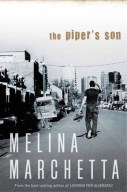
The Piper’s Son

Rating: ⭐⭐⭐⭐
Author: Melina Marchetta
Genres: Fiction
Pub. date: Mar. 2010 (read May 2019)

I am getting lax in my reviews lately. I finished The Piper’s Son about a week and a half ago and I’ve been putting off writing my review about it. I just re-read Saving Francesca and I was really excited to read The Piper’s Son, which is the only Melina Marchetta book I haven’t read, save for her newest book, which just came out.

I liked but didn’t love Saving Francesca on my first read through, but loved it when I recently re-read it. I’m wondering if I might have a similar experience with The Piper’s Son. I definitely liked it, but I did struggle to get into it for most of the novel. I love Marchetta’s writing style, but sometimes her books are hard to process on the first read through because of her unique style. I feel like Marchetta never starts her story at the beginning. I feel like her characters are already fully realized when she actually starts writing them. She doesn’t waste time on introducing us to her characters and their strengths and flaws, but rather throws them at you in all of their brokenness and let’s you try and sort out the pieces. It’s an interesting style because it is very reminiscent of real life. People are hugely influenced by all of the experiences that came before you and the result that you get is an individual that is flawed in ways you can’t quite understand because you don’t know their story. Eventually those things are teased out as you get to know someone and it becomes easier to understand how they grew into the person they are, but upon first meeting, you have no context for their behaviour.

This is how I felt with Tom and Georgie. Both of them had a lot of history and were obviously broken by it, but I didn’t understand what events happened to them to get them to that point. Tom is drowning his sorrows in things that only make him hurt more and Georgie is stuck in the past. Heartbroken and unable to forgive or move forward with her new reality. Both family members are grieving.

This is exactly the kind of character-driven story that I love. We can’t rely on the plot in this book at all, only on where the characters will take us. They make mistakes, but are human. Stuck in the past and unable to forgive the family members and people who have hurt them. I did struggle with the complete lack of plot and I struggled to feel empathy for Tom or Georgie early in the novel. I did really like the story and the characters, but I think it could maybe have used a little more plot to carry the story.

One thing I still loved though was Marchetta’s unflinching commitment to friendships. I think Marchetta writes friendships better than any author I’ve read. There’s no pinpointing the moment when Marchetta’s characters become friends. They are either already presented as fast friends with a history, or she weaves a brilliant story arc in which subtle, but lasting, friendships develop between her characters. I loved seeing all the characters from Saving Francesca flit through this book and each support Tom in their own way. The way Marchetta writes friendships makes you ache for someone who knows you so well. She’s not afraid to have her characters challenge one another and do ugly things, but those things are always deeply rooted in their character and hurts. She’s not afraid to test her characters and their relationships and I love watching those friendships grow stronger as a result.

So overall I feel like this review is a whole lot of posturing about nothing. I think I may need to pick this book up in another year or so to see what I can glean from it having already gained the perspective about Tom and Georgie’s characters. I can see how this book isn’t for everyone, but it is also largely beloved, so there’s something powerful going on with these characters.

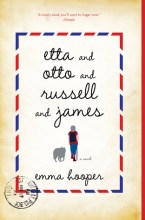
Etta and Otto and Russell and James

Rating: .5
Author: Emma Hooper
Genres: Fiction, Historical Fiction, Magical Realism
Pub. date: Jan. 2014 (read Mar. 2019)

Okay, Emma Hooper is definitely emerging as one of my favourite writers! I read her second book, Our Homesick Songs, last year and absolutely loved it! I may have been a bit biased because it’s a book about Newfoundland, but Hooper herself isn’t a Newfoundlander and I really think it’s a book that can appeal to anyone. So when I saw her debut novel on sale at Book Outlet, I had to buy it.

Hooper has a really lovely way of writing and I could see how her style wouldn’t appeal to everyone, but I really love it. I feel like joined the “Book World” last year when I started my book blog because I was suddenly exposed to all these other book bloggers and booktubers that I hadn’t before. Booktube for sure is comprised mostly of young book bloggers (like they make me feel old), so they trend towards reading a lot of YA contemporary and YA fantasy. I’ve always liked both of those genres, but when I started engaging more in the book world, suddenly I felt like this was all I was being exposed to and as a result, I started reading a lot of YA and fantasy.

This is fine, because I love both those genres, but I’ve definitely become fatigued with them over the last 4-6 months and I went on a fantasy freeze back before Christmas. I enveloped myself back in fantasy in January again and I probably should have paced myself a little because coming into March, I definitely need another fantasy break.

Anyways, this was all a long winded way of saying that I’m trying to get back into reading some more literary fiction and reading Emma Hooper’s Etta and Otto and Russell and James was like a breath of fresh air. I’ve discovered over the last few years that I prefer character-driven stories over plot-driven stories, even though they sometimes involve more of a commitment to read. I always love a good character driven story and overall I find them more rewarding.

I love Hooper’s subtle Canadian stories. I invested some time last year in reading more Canadian literature and damn, a lot of Canadian literature is just depressing. But even though both of Hooper’s books have some pretty sad themes, they are a joy to read and I love how she entwines magical elements into her stories and builds her narrative around everyday, mundane life events.

To get more to the point, Etta and Otto and Russell and James is story about people and relationships and the things we need to do in order to survive and find happiness. Etta and Otta have been married for many years when Otto wakes up one morning and finds a note from Etta saying that she needs to see the ocean and has decided to walk there. Etta and Otto live in Saskatchewan and Etta has chosen Halifax as her preferred destination. Russell is Otto’s best friend and adopted brother who lives next door and they are both affected by Etta’s absence since she has been with them since they became men.

The story follows Etta as she makes her way across Canada and Otto and Russell and they try to figure out how to live and adapt without her. We simultaneously get flashbacks to their shared childhood and the historical events that defined their lives. And like Hooper states in the synopsis, if you want to find out who James is, you’ll have to read the book.

Everything about this book is subtle, but I love how Hooper creates this sense of atmosphere throughout her novels. Do I believe Etta could survive walking across Canada without even a sleeping bag or a raincoat? Absolutely not, but Hooper makes her stories seem incredibly simple, while at the same time being very complex. I know I don’t understand even half of the nuances and themes of this story, but I like thinking about them. I love that Hooper never tells us how to feel, or even really how her characters feel. Everything is left up to our interpretation.

Like Our Homesick Songs, this is a look at the people who leave and the people who stay and how both of those journeys are impacted by that decision. Is home a place or is it the people who make up that place? How do our experiences and memories shape us?

I originally gave this book 4 stars, but after reflecting and writing this review I’m bumping it up to 4.5. I’m filled with such melancholy thinking about this book and there was honestly nothing I disliked about it. Our Homesick Songs is still my favourite of the two, but this one was wonderful too.

Our Homesick Songs

Rating: ⭐
Author: Emma Hooper
Genres: Historical Fiction, Fiction
Pub date: Aug. 2018 (read Nov. 2018)

I loved everything about this book.

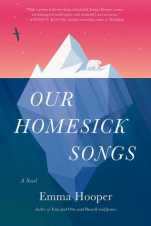
I saw it floating around on Netgalley and Goodreads over the past year and I thought it had the most gorgeous cover, which reminded me of my home in Newfoundland, but I guess I never read the synopsis because when one of the book bloggers I follow posted a review about this book, I couldn’t believe it was actually about Newfoundland. (not that there’s any shortage of books about Newfoundland, I just wasn’t expecting to find one in the mainstream book world).

Our Homesick Songs is by Albertan author, Emma Hooper, and is about the collapse of the Newfoundland fishery in 1992 and the struggle many Newfoundlanders went through in making a living after their traditional livelihood was decimated. The story focuses on the Connor family, who lives in a small town called Big Running, on an island off the coast of Newfoundland. It tells the story of Aidan Connor and Martha Murphy – how they fell in love and were later forced to travel to the Alberta camps to find work – and their two children, Finn and Cora. It’s a family drama at heart, but setting and culture play a huge role in the story.

I grew up in Newfoundland, moving to BC after I finished university. My parents and grandparents are from rural Newfoundland communities and my maternal grandfather was a fisherman. Stories about Newfoundland always hold a special place in my heart because, I think more than anywhere else in Canada, Newfoundland has a very distinct sense of culture and belonging. I was too young to understand the cod moratorium in the early 1990’s, but I’ve witnessed the impact in had on rural Newfoundland, and how the return of the food fishery in 2007 was like a right of passage and a homecoming for many people. Everyone has friends and relatives who were forced to move out west in search of employment – it’s why I have so much family located in Alberta – but there is usually a keen desire to return home.

I was a bit nervous to read this book, seeing as it’s not actually written by a Newfoundlander. I mean, I know people write books all the time about places they’re not from, but you can’t help but feel a little bit nervous about having your beloved home recounted from the point of view of someone else. But Emma Hooper did a wonderful job with this book. Her writing is lyrical and beautiful and it really does evoke a strong sense of homesickness as you read her writing. I think she did a wonderful job capturing the love people feel for Newfoundland, and communicating how heartbreaking it is for people when they are forced to leave. I’m sure I related to it a little bit more as a Newfoundlander, but I really think that anyone can love and enjoy this book.

There’s two main stories being told throughout this book. There’s a current day story set in 1992. The fish have disappeared, and as such, so have the people. Big Running gets smaller every day as families take off for the mainland in search of work. There’s an abundance of jobs in the work camps up in Northern Alberta, so this is primarily where people flock. In an attempt to stay, Martha and Aidan share a camp job on rotation, with each of them doing a month on and a month off. Their children, Finn and Cora, struggle with the loss of one of their parents each month and the disappearance of their community. Cora escapes from her broken family by studying travel guides from the library and re-creating each country in one of the abandoned homes. Finn laments the loss of their way of life and comes up with a plan to try and draw the fish back to their shores. Both children are lonely, as are their parents, who are forced to live apart indefinitely.

The second story is recounted by Finn’s accordion teacher, Mrs Callaghan. She tells Finn the story of his parents and how they met and came to fall in love back in the 1970’s. The stories contrast each other in that one tells the story of how love began, whereas the other tells the story of how it starts to fall apart. And woven through both stories is the music that calls us all together and the importance it plays in Newfoundland culture.

I actually really loved the way Hooper wove music in through the story. Music is an incredibly important part of Newfoundland culture and I thought she really showcased that and linked it in really well with her themes of homesickness and loneliness. Finn plays the accordion, Cora plays the violin, and everybody sings or plays one musical instrument or another. Aidan and Martha sang to each other over the water for years without even being aware of the other. Music plays an important role in bringing people together and reminding them where they come from and I thought Hooper showcased this multiple times throughout the book. I loved when everyone showed up to Finn’s community meeting with their instruments. They knew they might be forced out of their homes, but saw the meeting as a good opportunity for one last community kitchen party.

This book also touches on the issue of government resettlement. It’s a heavy issue in itself and has been the focus of more than one book in the past, but I thought it worked well in this story and wasn’t overdone. It’s another important historical part of Newfoundland that is ongoing to this day, and I think it’s great to inform more people about it. Rural communities are very much disappearing in Newfoundland and it is heartbreaking. It’s difficult for the government to continue maintaining services to small backwater communities and it does happen where residents are encouraged by the government to relocate. For Finn, the deadline to decide on re-settlement was a catalyst to do something. He doesn’t want to leave his home or have his family be separated any longer, so he hatches a plan to try and bring back the fish.

This is a classic kind of slow-burn family drama, but no part of this story read slowly to me. Hooper does a great job on characterization and character development and even though it’s not a plot driven book, I could not put it down. I picked this one up with the intent of reading it simultaneously with a mystery novel, but once I started this one, I literally couldn’t bear to put it down and didn’t touch my other book once until finishing this one. I can see how this kind of writing isn’t for everyone, but I personally loved it.

In conclusion, I can already tell that this is a story that will stick with me and that I’ll be recommending to my family. Everything about this book worked for me and I loved how evocative and introspective the story was. The name Our Homesick Songs is the perfect name for this book because the writing, the setting, and the characters all evoke a very keen sense of longing. 5 stars, no question.

Wuthering Heights

Rating: 
Author: Emily Bronte
Genres: Fiction, Literary Fiction, Classics
Pub Date: 1847 (read on Audible Sep. 2018)
Audiobook Narrator: Joanne Froggatt

This was AMAZING! I know most people read Wuthering Heights in high school, but it was never on my curriculum for some reason. I read Jane Eyre a few years ago and didn’t really like it that much, but when I saw Wuthering Heights for sale on Audible, I decided to try it out. I listened to Emma earlier this year, so audible has been helping me knock back some classics.

I did not expect to like this. I haven’t had that much luck with classics, they tend to be slower paced and the writing is often difficult to get through, but every now and then you find an old classic that totally surprises you! I can see what this book is so polarizing. People seem to either love it or hate it. I can totally understand why people would hate this. None of the characters are likable and Heathcliff is just downright evil. But if you’re able to enjoy books with unlikable characters, then Wuthering Heights may be the book for you!

I loved it. Granted I found it a little bit confusing at the beginning because I couldn’t tell who was narrating the story and I was overwhelmed by all the characters and what their relations were to one another. But once I figured out all the characters, I was totally enthralled with this from start to finish! I was not expecting the level of drama that I got from this book and the 18th century scandal was just delicious to read about.

Wuthering Heights tells the story of the passionate love affair between Catherine and Heathcliff (the goodreads synopsis describes their love as “intense and almost demonic” and that is pretty much the most accurate description ever). Catherine grew up at Wuthering Heights, wandering the lonely moors as a girl. And boy is this setting lonely. There is a neighbouring village, but the only other neighbours are the Lintons, who live at Thrushcross Grange. Heathcliff is a poor orphan boy adopted by Catherine’s father, but loathed by her older brother Hindley. When Catherine’s father passes away, Hindley becomes extremely abusive to Heathcliff, forcing him to be a servant to the family. Nonetheless, Catherine and Heathcliff grow close wandering the moors together and fall in love.

The story follows a series of 18th century dramatic events in which Catherine ends up marrying her neighbour, Edgar Linton, and Heathcliff disappears in a rage. He returns years later, now wealthy and determined to enact his revenge upon the entire Ernshaw and Linton families.

It’s an interesting story in that it is told (mostly) from the point of view of Nelly Dean, a housekeeper who has played maid to both the Ernshaw and Linton families over many years, as she recounts the story to the visiting Mr. Lockwood. So it does call into question the reliability of the narrator. She has some obvious biases. but overall I liked her. The story is really split into two parts, the first focusing on the original Catherine and Heathcliff, and the second half focusing on the second generation. Nellie has been involved in the lives of both generations, so she brings an interesting perspective to the story.

So why did I like this? Besides being super entertaining, I loved all these characters, despite how horrible they are. I couldn’t help but root for Catherine and Heathcliff early in the novel. Heathcliff is abused at the hands of Hindley Ernshaw and brought extremely low, so you can initially forgive him for his hatred of Hindley’s family and the wealthy neighbours, the Lintons. Catherine is fickle and ignorant of her privilege. She regularly belittles Heathcliff and despite loving him, accepts Linton’s marriage proposal because she feels he is more of her station and social standing.

“He’s more myself than I am. Whatever our souls are made of, his and mine are the same.”

This is probably one of the most popular Wuthering Heights quotes, but I love it just the same. I was more a fan of Heathcliff in the beginning because he was at least a victim of his circumstances, whereas Catherine was just haughty and mean, throwing tantrums and letting her temper get the better of her. So I didn’t really see what the attraction was between them, but really it is because they are both the same and have that same darkness and haughtiness in them. They are so enraptured in both themselves and each other and they don’t care who they hurt, so long as they will be happy. Catherine even considers her marriage to Edgar as a way to elevate Heathcliff’s position, which Nelly rightfully scoffs at, as if Catherine, a married woman, could just continue her relationship with Heathcliff after marrying Linton.

These characters are lonely and I feel like they are all victims of circumstance in a way. They have known only their wealth and they are not sympathetic to the plights of others. Lockwood draws our attention to how very out of touch they are with the world and after just a week at the manor, feels compelled to return to London to get away from the drama of it all. The entire novel is chaotic and feels very all consuming. Thrushcross Grange and Wuthering Heights is a world unto itself, focusing solely on it’s inhabitants and their isolated drama.

I preferred the first half of this book to the second. The novel reaches a climax at around the midpoint, which is when the focus switches from the first Catherine, to the second generation: Hareton (Hindley’s son), Catherine (Catherine’s daughter), and Linton (Heathcliff’s son). While I preferred the first half of the book, the second half is what makes this a classic. The second generation of characters parallels the first generation and serves to highlight how the cycle of violence is destined to repeat itself. The use of the same set of names serves to further highlight the cycle. Heathcliff becomes Hindley, Hareton becomes Heathcliff, and Linton and Catherine become Edgar and the first Catherine.

In the second half of the novel, Heathcliff returns to enact revenge on the Ernshaws and Lintons and descends further into himself as the novel progresses. Heathcliff is really a monster of a character, even having been abused himself, he perpetuates the cycle of violence worse than anyone who came before him. He is devastated by Catherine’s death and we are led to believe that he is haunted by her ghost for the rest of his life. Catherine’s daughter is just as haughty as she was, Linton is a sniveling mess, and Hareton is an uneducated servant boy. It is hard to like any of these characters, and yet Bronte has written them in a way that has made me hugely invested in them. I wanted to hate Heathcliff, he is truly awful, and yet I always hoped for him to be redeemed. I kept waiting for him to honour Catherine by loving her daughter, but he becomes so mired in his revenge scheme and haunted by Catherine’s ghost that he looses any sense of humanity and becomes obsessed with having total and complete power over everyone involved. Yet the characters still persevere and despite losing absolutely everything and being indentured to Heathcliff, Catherine is still able to find joy in life – to feel pity for Heathcliff and find it in herself to love another.

Like I said, I can absolutely see how people hate this. There’s pretty much no likable characters, save maybe for our narrators, Nellie and Lockwood. But even they have their flaws. Nellie disliked the first Catherine and tried to help Heathcliff as a boy, so it is maybe her hope for Heathcliff to repent that sustains this feeling of hope throughout the novel. We just keep waiting for Heathcliff to finally decide that his revenge is now complete. But he is never able to fully break the characters and I love when he realizes this at the end. Despite every atrocious act he commits, the young people are still able to find love and happiness through their trials. It is only at this point that Heathcliff is able to recognize how revenge has consumed his life and sanity. He finally realizes the futility of his hatred and thinks only of his longing to be reunited with Catherine.

It’s essential to give credit to the audible narrator, Joanne Froggatt. She is absolutely wonderful in this rendition of Wuthering Heights and probably a big part of what contributed to my enjoyment of the book. Her accents are excellent and I loved the different tone of voice that she used with each character. I was dismayed to learn that she also narrated a version of Jane Austen’s Emma, because I listened to Emma a few months ago and I’m sure I would have enjoyed it more had I listened to Froggatt’s version. Anyways, I would highly recommend this audiobook. It’s probably also worth mentioning that while reading this, I followed up the chapters with a quick read of the Sparknotes chapter summaries. It helped a lot at the beginning with figuring out who each of the characters were. I wish I’d done this for Emma too because I found the cast of characters super confusing in that book too.

So in conclusion to this long winded review – I am definitely a fan of Wuthering Heights! I get why people don’t like it, but it’s also clear why this has become a beloved classic.