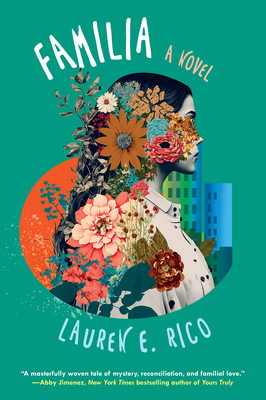
Ties That Tether

Rating: ⭐⭐⭐
Author: Lauren E. Rico
Genres: Fiction
Pub. Date: Dec. 2023

I have mixed feelings about this book. Overall, I liked it – I thought both the story and the writing were compelling and I’m impressed with it as a debut. It’s my book club pick for April and I’m really excited to talk about it because I think there are a lot of interesting themes to discuss. My main complaint is that I didn’t like the religious elements of the story and I didn’t like the ending.

I can’t discuss the parts I didn’t like without getting into spoilers, so let’s talk about what I did like first. Familia is the story of Gabby DiMarco and Isabella Ruiz, two women with very different backgrounds, connected by blood. Gabby is a well-to-do woman in New York City whose parents have recently passed away and is trying to get her big break as a journalist. Isabella is a Puerto Rican woman who lost her mother in childbirth and her father’s subsequent depression and alcohol abuse resulted in the kidnapping of her infant sister, Marianna, 7 months later. This tragic event traumatizes Isabella for the rest of her life and even 25 years later, she is determined to find her sister. When Isabella and Gabby get a 50% DNA match on a gene website, Gabby is sure there’s a mistake, but flies to Puerto Rico in hopes of breaking an interesting story.

It’s obvious where the plot is going, but I enjoyed the journey. It’s a compelling narrative and I was really interested in all the themes the author wanted to explore. Isabella feels a deep sense of resentment for her sister because her birth resulted in the death of her mother and the breakdown of her family, but she also feels guilt over having wished her sister never existed at the exact moment she disappears. When they are reunited, her guilt morphs into jealousy at the easy life her sister had growing up in America in contrast to her traumatic childhood and youth. Gabby refuses to believe that she and Isabella could possibly be sisters, because to accept that fact would be to accept that her entire life and family was a lie. Plus it raises the age-old question of what really makes a family – is it the blood you share or the relationships and trust you’ve built. 

I thought these were all fascinating questions, particularly for Isabella, who I found a more compelling character, and I thought the author did a good job at exploring the internal conflict of these two women. Their relationship was believable to me. They have an emotional connection, but not in an overly cheesy way, and the experience brings them closer together, while still being realistically challenging for them. 

Overall, I liked the format. The author opts to break the story up between the present and the past. Isabella and Gabby do their own detective work to try and figure out what actually happened to Marianna, while at the same time we have flashbacks to a wider cast of characters that were responsible for Marianna’s disappearance. It turns the book into more of a literary mystery novel and it serves to keep the reader interested in the storyline. I think this could have also worked as pure literary fiction and delved a lot deeper into the emotional impact this would have on Isabella and Gabby, as well as to question the ethics and morality of Gabby’s upbringing. I think I probably would have preferred the latter, but recognize that it would be a much more challenging novel to write and think this was still impressive for a debut.

What I didn’t like was that the author bypasses any exploration of the ethics of Marianna’s kidnapping (by Gabby’s parents). To be fair, she does explore the idea that there are almost always grey areas in the law in these types of situations. Kidnapping is obviously wrong, but if the baby grows up to live a much more comfortable and privileged life, does that justify the means? How does Gabby rationalize the fact that her parents are both loving and caring people, while also being kidnappers? As a fact checker, I thought she would want to really delve into that narrative. To me, this was the most interesting theme of the novel and I wanted to consider the dichotomy of these two conflicting facts about her parents. But the story is written to conveniently bypass these challenging ideas, which I did think was a bit of a cop-out. To be fair, I may be holding the book to an unreasonably high standard. It was well-written and I was hopeful that the author would commit to some very tough themes.

So let’s talk about what I didn’t like (spoilers ahead!). First off, I didn’t like the religious aspect of the story. There were some really interesting ethical questions here, and I think the author used spiritual intervention to avoid tackling questions of morality. This was a 7-month old baby. It’s one thing to knowingly kidnap a baby with the intention to traffic it – that is a deeply sick crime. I felt it was another thing to opportunistically kidnap a baby and then decide to kill it. I feel that most people would have deep ethical problems when presented with this scenario, even Santiago (what kind of sick person is willing to kill their widowed brother’s daughter?). Because it wasn’t a premeditated kidnapping, I couldn’t rationalize any other acceptable course of action other than to return the baby to her parent. 

I felt like the author used the whole ‘weeping Madonna’ spectacle and Lucy and Mack’s infertility to try and convince the reader that giving away someone else’s baby was an acceptable course of action. I was glad that Mack realized that the whole idea was ludicrous, but I felt the whole “you must take the baby or Santiago will kill it anyways” was a cop-out. Likewise, getting Alberto’s permission to take the baby was the ultimate way to absolve Lucy and Mack of any wrong-doing. It’s a clean way to structure your novel and it removes the conflict for Gabby that her parents were both good and immoral people. From her perspective, all they did was adopt her unknowingly from an orphanage, which conveniently absolves her from having to rationalize that people we love can make both good and bad choices. It’s a feel-good way to tie up your novel, and that’s fine, I guess I just wanted to get into gritty questions of morality. 

At the very least, if you’re going to absolve Lucy and Mack of any wrong-doing, I thought Rico would at least confront the impacts of Alberto’s decision on both him and Isabella. I struggled to believe that he would willingly hand over his baby to an American couple he knew nothing about. In fact, none of the characters knew anything about Lucy or Mack aside from the fact that Lucy was desperate for a baby. They could have been terrible people. Did Gabby have a better life in America? Most likely… she definitely had more money and opportunity. But we also will never know how things might have been different if Marianna had been returned to her family.

Maybe if Marianna had been returned to her family, it would have been the wake-up call Alberto needed to get clean and take care of his family. He proves at the end that he’s capable of it (which I also found highly unbelievable, why would he randomly get clean after 25 years?), so maybe he would have redeemed himself if he hadn’t given up his youngest daughter. But what really rubbed me the wrong way was that the sisters never found out the truth! Isabella would be devastated to learn that her father willingly gave away her sister and then lied to her about it for 25 years. I felt like this theme really should have been addressed and it did a bit of a disservice to both women to keep it a secret. 

The thing is, I don’t think Lauren Rico wanted to explore those themes. I think Rico was more interested (based on the author’s note) in exploring themes of familial bonds and heritage. I think she wanted to tell a story of sisterhood and family reunion, without doing the work to explore the deep emotional impact of this event on each family member. Which made me question why she structured her book as more of a mystery novel. To be honest, the “how” of Marianna’s kidnapping wasn’t as interesting to me as the emotional impact it had on the two women as adults. I think I would honestly have been fine not knowing how Marianna ended up in the US and just exploring the Ruiz family roots and healing of trauma. I was surprised there was no exploration of the fact that Gabby has just gone from being White to being Latina, and what it would feel like to suddenly be thrust into a completely new culture that you feel you have no right to claim. There’s so much to unpack with these concepts and I was just left feeling a little disappointed. There were great ideas, but I feel like we only scratched the surface.

Some reviews by Puerto Ricans also discuss the idea that Rico only portrays the dark side of Puerto Rico. That Puerto Rico is filled with drugs and criminals, rather than showcasing some of the more vibrant parts of the island (I think this is done primarily through Isabella’s art). I think this ties in with my general comments about why the author chooses to focus on the crime rather than the aftermath. It promotes a white saviour narrative, so I can see how that would be insulting to locals and I wanted the author to do more emotional labour in breaking this down for her readers. 

This is a more minor complaint, but I have to mention one other scene that bothered me. The scene where Mateo randomly decides to leave Isabella after she gets in the fight with Gabby. This conflict didn’t fit the story and came out of nowhere. Isabella is going through so much emotional turmoil during this time and then all of a sudden her supposedly perfect husband is like “I can’t take this, you need to figure out who you are or I’m outta here!” She is literally trying to figure it out at this exact moment Mateo! Why don’t you buckle down and be there for her for a hot minute while she works through an extreme amount of trauma! She’s just found her sister – she’s been searching for her for 25 years and she’s now realizing that the search was a way of avoiding trauma and now that she’s found Marianna, she has to acknowledge that it doesn’t heal all her old wounds. 

Anyways, take my criticisms with a grain of salt. I have so many because this book made me think a lot. It’s maybe unfair to hold a debut author to such a high standard. I would definitely read her next book because I think she has a lot of promise and it was an engaging read. Props to any novel that can inspire me to dig deep and write this long of a review. I’m excited to see what else we unearth about this book in our book club discussion and whether it changes any of my opinions! 

Lady Tan’s Circle of Women

Rating: ⭐⭐⭐
Author: Lisa See
Genres: Historical Fiction
Pub. Date: Jun. 2023

This is my 4th Lisa See book and I really love her as an author. I thought this had a slow start, but picked up a lot in the second half. It had the usual hallmarks of Lisa’s work in that it was really well written and filled with historical details and meaningful female relationships.

So I did like it, but it wasn’t quite as compelling as some of her other work. I felt she should have developed the front end of the book a little bit more because it was both boring, and didn’t have enough meat about Yunxian and Meiling’s relationship. It reminded me a lot of Snow Flower, even though it’s set several hundred years earlier. I found the character arcs and plot points similar, but Lady Tan isn’t set during any particular significant historical events, which is what I thought anchored both Snow Flower and the Island Of Sea Women.

The concept of female doctors for women is really intriguing and (I thought) quite revolutionary for the time period, so I liked that aspect. But a lot of the intrigue is fabricated, which is fine, just a bit less compelling. It took too long for the story to get going with not much happening. I felt like I was reading a history novel for the first half, before we finally got some drama in the second half.

Anyways, it wasn’t my favourite, but I still love Lisa See. I think The Island of Sea Women may be my favourite book she’s written, so if you’re new to her writing, I’d maybe suggest starting with that one! But I also enjoyed both The Tea Girl of Hummingbird Lane and Snow Flower and the Secret Fan better than this one, so check out my reviews for those too.

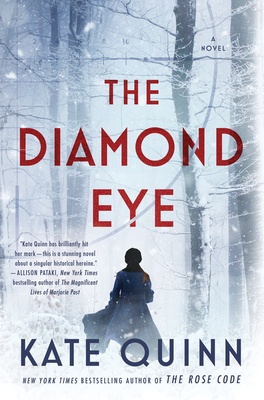
The Diamond Eye

Rating: ⭐⭐⭐
Author: Kate Quinn
Genres: Historical Fiction
Pub. Date: Mar. 2022

Now here’s a review I wish I’d written earlier. HarperCollins kindly sent me a copy of The Diamond Eye when it was released in exchange for an honest review, but I held off reading it because my book club really wanted to read it together. I wrote this review back in October (just before my book club meeting to collect my thoughts), but I never got around to posting it.

This was my third Kate Quinn novel as I’ve also read The Alice Network and The Rose Code. I read The Rose Code with book club last year and that one is still probably my favourite of the 3, but I can’t decide which I liked better of the other two. The Diamond Eye is set between Ukraine and America during the second world war. Mila Pavlichenko already has sharp-shooter training when war breaks out and immediately signs up for the war effort. Women weren’t precluded from fighting in the Soviet Union and when her skills are noticed, she quickly starts making a name for herself and winds up with her own team of snipers. Her continued success earns her the title of Lady Death and eventually she is sent to the US to rally Americans to the cause and develops an unlikely friendship with Eleanor Roosevelt.

The book starts out really strong. We learn of Mila’s history with her ex-husband and the child she’s been raising in his absence. It’s based on a true story and Mila herself is quite remarkable. That a single mother would have gotten her sharp-shooting certification at all is pretty intriguing, as is her success in the war. Women were so often relegated to the sidelines of the war effort – as nurses, or factory workers, or sometimes spies. But the Soviet Union allowed women on the front, which is quite unique on its own and presents a narrative I’ve not seen before in WWII fiction.

The first half of the book is really excellent. We accompany Mila as the Germans push the Soviets and the Soviets fight back. She develops both good and bad relationships with the men in her unit; succeeds despite the sexism of the senior male officials; and still has the odd verbal tussle with her frustrating ex, who is now a doctor in the war effort. The story is a little overly dramatized and I was annoyed that it followed a very similar sub-plot to The Rose Code, but otherwise, an excellent first half.

Unfortunately, the second half didn’t work as well for me. This book is too long. The entire second half of the book is set in America, but this plot wasn’t as engaging as the first half and was too dragged out. Had it been shorter, it might have been more effective, but I got bored around the 75% mark, which is a really bad part of the book to lose interest. Quinn takes a lot of liberty with the story in the second half and fabricates a lot of the central plot. Considering this book is centered around the real life of a real person, making up so much of the plot didn’t work for me. I felt that Quinn progressed the plot in intentionally dramatic ways and if those are not rooted in realism, it is a stain on the story. It makes the reader question what was based in fact and what was based in fiction. You have to commit one way or the other – either tell the truth, or create a fictional character with a different name. The Rose Code amalgamated several real people to form its fictional characters and I think that is a better approach if you want to deviate from real history. I don’t think you can have it both ways.

I think where this also lost me was the inclusion of another real life person, Eleanor Roosevelt, who is much more well known in real life than our protagonist. I didn’t know what to trust or where the line was for actual vs. fabricated history. The decision to include Eleanor’s “notes” and the POV of the gunmen were both interesting choices that definitely added to the drama of the story, but again, not the realism. Mila can anchor this story on her own. She is fascinating enough, Quinn didn’t need to bring Eleanor into the story in such a large way. I felt like it was a cheap way to build intrigue in the synopsis. I had similar thoughts about the inclusion of Prince Philip in The Rose Code, but I guess this is Quinn’s new thing and I’m sure it helps to sell books when you reference well-known historical figures like Eleanor Roosevelt and Prince Philip.

Anyways, overall it is a good book and an interesting story. I learned a lot and was engaged through most of the book. It wasn’t everything it could have been, but it was entertaining. Taking a peak at goodreads, my rating is on the lower side compared to the rest of my book club, who enjoyed it more than me. I’m sitting at a solid 3 star read – not bad, not great.

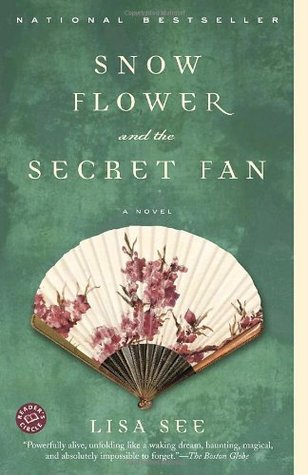
Snow Flower and the Secret Fan

Rating: ⭐⭐⭐⭐
Author: Lisa See
Genres: Historical Fiction
Pub. Date: Feb. 2005 (read May 2021)

I didn’t do much reading through summer of 2021 and there are a handful of books that I didn’t review, but I didn’t realize that Snow Flower and the Secret Fan was one of them until recently. I swear I can remember writing a review for this one, but I can’t find it anywhere and I’m really disappointed now that I don’t have one. I’m a huge fan of Lisa See and have written lengthy reviews on both The Tea Girl of Hummingbird Lane and The Island of Sea Women, so I will do my best to review this one as well, keeping in mind it’s been the better part of 6 months since I read it.

Like most of Lisa See’s books, Snow Flower and the Secret Fan is historical fiction set in China. See excels at writing about specific parts of women’s culture (tea cakes in The Tea Girl and the Haenyeo in Sea Women), Snow Flower is no exception and focuses on the practice of foot binding and the relationship between two Laotong. I believe Snow Flower was See’s first book that became really popular, so I’ve been itching to go back and read it for a while now. For some reason I always find Lisa See’s books really intimidating to pick up, but they’re always a joy to read!

Snow Flower and the Secret Fan covers a lot of history, primarily focusing on Lily and her Laotong, Snow Flower. A Laotong is basically a lifelong sistership between two girls that are considered to be “old sames”. Most girls will have sisterhood circles with other girls in their village, but few are selected for Laotong matches, so it’s a particularly auspicious pairing that is arranged by a matchmaker. In this case, Lily is a poor girl, but because her foot binding goes so well, she is matched with Snow Flower, who comes from a much wealthier family. This foreshadows a good future for Lily and will allow her to marry up. 

The book starts off as a story about foot binding and evolves into a novel about so much more. But first let’s spend a bit of time talking about foot binding. This is an old Chinese tradition where young girls’ feet are literally broken and reshaped as a symbol of status. The smaller the end result (as was the case with Lily), the higher the status. In this day and age it seems like a barbaric practice that resulted in the deaths of girls who succumbed to infections in the process of binding and left all women with limited mobility later in life. I don’t like to pass judgement on other cultures, but where it becomes frustrating is that women are still meant to perform the majority of household chores while moving around on tiny feet. 

However in Lily’s case, her successful foot binding allowed for her to move up in society. Having a Laotong is another status symbol and because Snow Flower came from a higher class than her, it further elevated her family and she eventually marries well. But like all of Lisa See’s books, the foot binding is really only a backdrop in which to set her characters and this book is primarily about sisterhood. It’s why I keep returning to her books over and over again because she invests so much time in developing the relationships between women and exploring unique aspects of female culture. These girls live in a remote Hunan country and are taught the secret women’s language of Nu Shu, which was a language created by women, for women. The girls learn it from their mothers and write back and forth to one another on their secret fan when they are unable to be together in person.

This is a hard review to write because of the magnitude of history that See covers in just a short 280 page book. Class relationships are a major theme of the book and I love how he explored compassion through Lily and Snow Flower’s social standings. At the start of the book Lily questions much about Snow Flower because she comes from more money than her, but doesn’t understand that Snow Flower’s family is also falling apart and that because of her father’s addiction to opium, they have basically lost everything. Her family clings to the Laotong relationship as a way to maintain their status, while Lily’s family clings to it as a way to elevate their status. While Lily marries up, Snow Flower is forced into the lowest of matches with that of a pig farmer. I loved the exploration of how this influences the relationship between the two women over time and how all consuming and blinding status can be, eventually driving a wedge between the two women later in life.

At the same time, See covers what I believe is the Taiping Rebellion (it’s hard for me to remember now that it was so long ago). The conflict sees the women thrown from their homes and forced to hide in the mountains while millions are murdered in the villages. I wish I could elaborate more on this conflict, but the details are so foggy in my mind – I just bring it up to highlight the scope that See is able to cover in such a short book without the plot ever feeling rushed. It’s what makes her such an accomplished writer. Though she is ambitious, she always keeps her relationships at the center of her writing and I think this is what ties her novels together without making them seem overwhelming. Though she covers a lot, she sticks to her theme of sisterhood. 

Overall it’s a heartbreaking novel that covers the entirety of Lily and Snow Flower’s lives. While a hard read at times, it’s an eye-opening and meaningful one and I definitely recommend! Even after many months, I still had so much to say about this one and her stories always stay with me for years to come afterwards.

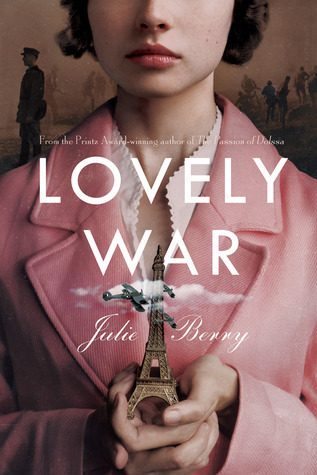
Lovely War

Rating: ⭐⭐⭐⭐
Author: Julie Berry
Genres: Historical Fiction
Pub. Date: Mar. 2019 (read Apr. 2021 on Audible)

Lovely War is another book that I found on Booktube. Hailey from Hailey in Bookland recommended it and I was really intrigued after I read the synopsis. I know Greek re-tellings are all the rage right now, but personally they’ve never really been my thing, but the idea of the Greek Gods narrating a human love story set in WW1 is somehow way more compelling to me. I was expecting something similar to the Book Thief, so I was pretty amped.

I did enjoy this book, but I would probably rate it more like 3.5 stars than 4 stars because it just wasn’t quite what I wanted it to be. The premise of the story is that when Hephaestus catches his wife Aphrodite having an affair with Ares, she convinces him to let her explain herself through the telling of a great human love affair (more or less – to be honest I thought the reasoning for her telling the whole story was somewhat weak). So she launches into a story about 2 couples during World War 1.

I think the key reason I wasn’t 100% sold on this book is because, even though I was invested in these 2 loves stories, at the end of the day, they just weren’t quite moving enough for me to be like “yeah, I understand why the God of Love was so moved by them”. I mean what would be epic enough for Aphrodite to take notice? I honestly have no idea, but I’ve definitely felt more moved by other stories.

I do wonder if I might have enjoyed this better as a paperback. I read it as an audiobook and I didn’t think the dialogue quite passed the audio test. I find audiobooks to be particularly good at exposing sub-par writing and dialogue. I didn’t think the writing was sub-par, but I can’t deny the dialogue definitely came across as a bit cheesy, which I think overall took away from the story. It’s hard to think of a couple as having a great love story when you’re rolling your eyes at some of their conversations.

So that was my biggest flaw with the book, but I do want to talk about what I liked, because there was still lots to like in this book! Namely, Aubrey Edwards. Hazel and James, in my opinion, are just another run of the mill love story, I know things go awry for them in the way things always do in war stories, but there was nothing in their relationship that I thought really made them special. Likewise, I did think parts of Aubrey and Collette’s love story were somewhat disappointing as I didn’t really feel their personal chemistry, but I was super enthralled with Aubrey’s story because it is really what sets this book apart from other WW1 books.

Because Aubrey is a Black American from the 15th New York infantry. Maybe I’m not reading the right books, but I can’t think of any popular WW books that focus on Black people. I thought this was such a great addition to the story because BIPOC are so often left out of this era of history. There’s a ton of literature focusing on slavery and the civil rights movement, but we tend to think of the world wars as a part of white history. But in the same way that Black Americans have been present for every part of America’s history (since European contact), they are often left out of the narrative. Did many Black divisions serve in the World Wars? No, but it’s as much a part of Black history as it is the history of white Americans, so I really liked seeing Aubrey’s experience represented. Plus, his experience offered something totally new. Rather than just another war romance, his was a perspective that forced me to consider something new.

Aubrey comes to Europe wanting to fight, the same as any shiny-eyed soldier. But even with the nightmare that trench warfare is, Black soldiers still weren’t considered good enough for it. Let the glory go to the White troops, Black troops were good for manual labour. Building roads and digging the trenches, all the while making sure to keep themselves separate from the White soldiers. The biggest threat Aubrey’s Regiment faces is that they’ll get on the wrong side of a trumped up White soldier who wants to make sure Black Americans remember their place in the world.  The irony being that you could go all the way to France to fight Hitler and be killed by your own compatriot. 

So Aubrey’s story was both eye-opening, but not overly surprising. It’s inspiring the optimism his Regiment carried around with them, that serving in the war would serve to elevate the position of African Americans. I also really liked how music tied in so closely with the theme and that we got exposure to the birth of the jazz age. To be honest I was more interested in the links between war and music, rather than the central theme about war and love. 

In conclusion, it’s hard to rate the book because while I was less enamoured with some parts, there were other parts I loved. Most disappointing was that overall, I just didn’t think that having the Greek Gods narrate the story actually added that much to  it. It makes the framing of your key themes a lot easier, but you could still explore the same themes without the Gods. But it’s by no means a bad book and I still really enjoyed it – I would have just liked to flip the narrative and have Aubrey as the focal character rather than Hazel. Would still recommend!