November Summary

November has been the BEST reading month! Last month I sent a new PB for most pages read in a month, but it didn’t last long because I beat it again this month. I always read a lot of books in November because I get really into the Goodreads Choice Awards and always try and read as many of the nominees as I can (I decided to make this my November monthly challenge). This month I read a whopping 17 books, granted 6 of them were graphic novels and short stories, but it was still a new personal record for most books read in one month. Here’s what I read:

Books read: 17
Pages read: 5,221
Main genres: Graphic Novels, Fantasy, Fiction
Favourite book: So many good books! So hard to choose, but probably Our Homesick Songs by Emma Hooper

So, like I said, a lot of the books I read this month were nominees in the Goodreads Choice Awards. I read a lot of books, so I won’t spend too long on each one. To start things off I read two books by V.E. Schwab, Vicious (⭐⭐⭐⭐) and it’s sequel, Vengeful (⭐⭐⭐⭐), which was nominated in the Sci-fi genre. Vicious was published 5 years ago, but it’s only just geting a sequel, so I decided to read them back to back and really liked them. I don’t think the second book was quite as good as the first, but they’re fast-paced novels that examine morality and the things that drive good people to do bad things.

I also read a few non-fiction books, which is a genre I don’t normally read. I decided to read Phoebe Robinson’s new book, Everything’s Trash, But It’s Okay (⭐⭐⭐⭐), which was nominated in the humour category, and absolutely loved it! I read Phoebe’s debut novel in 2016, which was pretty good, but I think she really upped her game in this book and I would totally recommend the audiobook. I also received a free copy of Abbi Jacobson’s new book, I Might Regret This (⭐⭐⭐), from Hachette, which I was thrilled to read, but ended up not loving quite as much as I’d hoped. Through I’m still a huge fan of Abbi and Broad City. Hatchette also sent me an early copy of Wundersmith (⭐⭐⭐⭐⭐), the sequel to Jessica Townsend’s debut novel, Nevermoor. I read Nevermoor a few months ago and was pretty much obsessed with it, so I immediately jumped right into the sequel and was delighted that it was just as wonderful as the first book! It’s a middle grade fantasy series full of whimsy that gives me huge Harry Potter vibes. A solid 5 stars – this series is incredible and I would recommend to everyone!

I read a few very short books, Sea Prayer by Khaled Hosseini (⭐⭐⭐), which is a short illustrated picture book that he wrote for charity (which I didn’t review), and For Every One by Jason Reynolds (⭐⭐.5), which was nominated in the Poetry category. Both books were nice, but honestly, I thought they were both a little too short to pack that much of a punch.

For graphic novels, I read the latest volume of Saga, by Brian K. Vaughan and Fiona Staples (⭐⭐⭐⭐). I absolutely love this graphic novel series, but the latest volume pretty much killed me, and it appears Vaughan and Staples may be going on a bit of a hiatus over the next little while, so that kills me even more. I also devoured the first 3 volumes of a new graphic novel series called Fence, by C.S. Pacat and Johanna the Mad (⭐⭐⭐⭐). Only the first volume is published at this time, but there are 12 issues available and I liked the first volume so much I actually had to seek out the individual issues instead of waiting for the next two volumes. It’s a series about a high school boys fencing team, which sounds kind of boring, but it actually excellent!

In addition to Phoebe Robinson’s new audiobook, I also listened to Kingdom of the Blazing Phoenix (⭐⭐), which is the second and final book in Julie C. Dao’s dualogy. I really liked the first book, Forest of a Thousand Lanterns, which I also read as an audiobook, but the second book was a huge disappointment. The narration changed characters and I found this one pretty boring compared to the delightful nastiness that was the first book. The first one was a retelling of the evil queen in snow white, where as this was one a more traditional snow white retelling, although they were both sent it an asian inspired fantasy world, which I liked. Speaking of asian- inspired fantasy worlds, I read R.F. Kuang’s debut novel, The Poppy War (⭐⭐⭐⭐), which was nominated in the fantasy category. It is a heavy book, but wow! Kuang’s story is rich is depth, setting and history. It examines the Sino-Japanese war and the atrocities people commit against one another in war and how we justify them. A heavy hitter, but very well written and plotted.

My book club’s November pick was You by Caroline Kepnes (⭐⭐⭐.5). I’ve been trying to get to this one for a while and with the TV series being released on Netflix in December, it was good timing. You is a mystery/thriller novel told from the point of view of a stalker and boy, is it creepy. I didn’t like it quite as much as I hoped, but it is still very well written and quite different than most other books out there. I finally finished reading Swing Time by Zadie Smith (⭐⭐⭐.5), which I started reading way back in July (shocking I know). I had put it aside around the 300 page mark, but I finally picked it up and read the last 150 pages. I quite liked this book, but it is not very compelling, and for that reason it was hard to pick up, despite liking the story.

Finally, two of my favourite books of the month, along with Wundersmith, were The Simple Wild by K.A. Tucker (⭐⭐⭐⭐⭐) and Our Homesick Songs by Emma Hooper (⭐⭐⭐⭐⭐). The Simple Wild was nominated in the romance genre and I was instantly motivated to read it when I found out it was about Alaska (I have a bit of an obsession with Alaska since reading The Great Alone earlier this year). It had a bit of a slow start and the main character was a little vapid at times, but I ended up loving this book! The main character was 26, which is refreshing since most of the books I read feature teenagers or families. I’m starting to really appreciate family dramas, and this one was a mix of family drama and romance that really worked for me.

Our Homesick Songs was my last read of the month and it was also a family drama, but this time historical, that completely captivated me. It’s about the disappearance of cod in Newfoundland in the early 1990’s and the impact it had on rural communities. It’s a simple story about a family living in a remote fishing town, but it is so beautiful written and evokes a strong feeling of homesickness and loneliness. Newfoundland is where I was born and raised, so it had particular meaning for me and I was incredibly impressed by Emma Hooper’s prose. I devoured this book and it is definitely going to be one of my top picks of the year.

So there you have it, all 17 of the books I read this month. There were some really great books. The fact that I rated three of them 5 stars is very rare since I sometimes go months without rating anything 5 stars. I feel like I’ve finally escaped the book slump that I was in over the summer and I’m feeling very inspired by all the great books I’ve been reading!

I’d love to know, what books did you read and love this month?
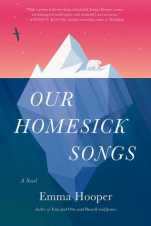
Our Homesick Songs

Rating: ⭐
Author: Emma Hooper
Genres: Historical Fiction, Fiction
Pub date: Aug. 2018 (read Nov. 2018)

I loved everything about this book.

I saw it floating around on Netgalley and Goodreads over the past year and I thought it had the most gorgeous cover, which reminded me of my home in Newfoundland, but I guess I never read the synopsis because when one of the book bloggers I follow posted a review about this book, I couldn’t believe it was actually about Newfoundland. (not that there’s any shortage of books about Newfoundland, I just wasn’t expecting to find one in the mainstream book world).

Our Homesick Songs is by Albertan author, Emma Hooper, and is about the collapse of the Newfoundland fishery in 1992 and the struggle many Newfoundlanders went through in making a living after their traditional livelihood was decimated. The story focuses on the Connor family, who lives in a small town called Big Running, on an island off the coast of Newfoundland. It tells the story of Aidan Connor and Martha Murphy – how they fell in love and were later forced to travel to the Alberta camps to find work – and their two children, Finn and Cora. It’s a family drama at heart, but setting and culture play a huge role in the story.

I grew up in Newfoundland, moving to BC after I finished university. My parents and grandparents are from rural Newfoundland communities and my maternal grandfather was a fisherman. Stories about Newfoundland always hold a special place in my heart because, I think more than anywhere else in Canada, Newfoundland has a very distinct sense of culture and belonging. I was too young to understand the cod moratorium in the early 1990’s, but I’ve witnessed the impact in had on rural Newfoundland, and how the return of the food fishery in 2007 was like a right of passage and a homecoming for many people. Everyone has friends and relatives who were forced to move out west in search of employment – it’s why I have so much family located in Alberta – but there is usually a keen desire to return home.

I was a bit nervous to read this book, seeing as it’s not actually written by a Newfoundlander. I mean, I know people write books all the time about places they’re not from, but you can’t help but feel a little bit nervous about having your beloved home recounted from the point of view of someone else. But Emma Hooper did a wonderful job with this book. Her writing is lyrical and beautiful and it really does evoke a strong sense of homesickness as you read her writing. I think she did a wonderful job capturing the love people feel for Newfoundland, and communicating how heartbreaking it is for people when they are forced to leave. I’m sure I related to it a little bit more as a Newfoundlander, but I really think that anyone can love and enjoy this book.

There’s two main stories being told throughout this book. There’s a current day story set in 1992. The fish have disappeared, and as such, so have the people. Big Running gets smaller every day as families take off for the mainland in search of work. There’s an abundance of jobs in the work camps up in Northern Alberta, so this is primarily where people flock. In an attempt to stay, Martha and Aidan share a camp job on rotation, with each of them doing a month on and a month off. Their children, Finn and Cora, struggle with the loss of one of their parents each month and the disappearance of their community. Cora escapes from her broken family by studying travel guides from the library and re-creating each country in one of the abandoned homes. Finn laments the loss of their way of life and comes up with a plan to try and draw the fish back to their shores. Both children are lonely, as are their parents, who are forced to live apart indefinitely.

The second story is recounted by Finn’s accordion teacher, Mrs Callaghan. She tells Finn the story of his parents and how they met and came to fall in love back in the 1970’s. The stories contrast each other in that one tells the story of how love began, whereas the other tells the story of how it starts to fall apart. And woven through both stories is the music that calls us all together and the importance it plays in Newfoundland culture.

I actually really loved the way Hooper wove music in through the story. Music is an incredibly important part of Newfoundland culture and I thought she really showcased that and linked it in really well with her themes of homesickness and loneliness. Finn plays the accordion, Cora plays the violin, and everybody sings or plays one musical instrument or another. Aidan and Martha sang to each other over the water for years without even being aware of the other. Music plays an important role in bringing people together and reminding them where they come from and I thought Hooper showcased this multiple times throughout the book. I loved when everyone showed up to Finn’s community meeting with their instruments. They knew they might be forced out of their homes, but saw the meeting as a good opportunity for one last community kitchen party.

This book also touches on the issue of government resettlement. It’s a heavy issue in itself and has been the focus of more than one book in the past, but I thought it worked well in this story and wasn’t overdone. It’s another important historical part of Newfoundland that is ongoing to this day, and I think it’s great to inform more people about it. Rural communities are very much disappearing in Newfoundland and it is heartbreaking. It’s difficult for the government to continue maintaining services to small backwater communities and it does happen where residents are encouraged by the government to relocate. For Finn, the deadline to decide on re-settlement was a catalyst to do something. He doesn’t want to leave his home or have his family be separated any longer, so he hatches a plan to try and bring back the fish.

This is a classic kind of slow-burn family drama, but no part of this story read slowly to me. Hooper does a great job on characterization and character development and even though it’s not a plot driven book, I could not put it down. I picked this one up with the intent of reading it simultaneously with a mystery novel, but once I started this one, I literally couldn’t bear to put it down and didn’t touch my other book once until finishing this one. I can see how this kind of writing isn’t for everyone, but I personally loved it.

In conclusion, I can already tell that this is a story that will stick with me and that I’ll be recommending to my family. Everything about this book worked for me and I loved how evocative and introspective the story was. The name Our Homesick Songs is the perfect name for this book because the writing, the setting, and the characters all evoke a very keen sense of longing. 5 stars, no question.

Buried Beneath the Baobab Tree

Rating: ⭐⭐⭐⭐
Author: Adaobi Tricia Nwaubani
Genres: Young Adult, Historical Fiction
Pub date: Sep. 4, 2018 (read Oct. 2018)

The most overwhelming feeling I have upon finishing this book is that I’m just so glad it exists. Buried Beneath the Baobab Tree is about Boko Haram and the many girls and children they have abducted to their cause since 2009. You may recall in 2014 when Boko Haram kidnapped 276 female students from their dormitory in Chibok, Nigeria. Because of the large number of girls that were kidnapped, the crisis finally garnered international attention and forced the Nigerian Government to take real action in rescuing the stolen girls.

Unfortunately, this wasn’t a one off event. Boko Harem has been pillaging and killing in the North of Nigeria since 2009 and while many of the Chibok girls have escaped, been released, or been rescued since then, many have not. Boko Haram is a radical Islamic group that believe in Sharia law and absolute Islamic government. They kill men and kidnap girls, women, and children, forcing them to convert to islam and act as slaves in their outposts hidden deep in the Sambisa Forest. The boys are radicalized and the girls either act as slaves or are married off to Boko Haram fighters called the Rijale.

Buried Beneath the Baobab Tree is a short book told from the point of view of a kidnapped young girl. She is not one of the Chibok girls, but she was stolen from her village along with several of her friends. She dreams of winning a scholarship to attend university and become educated, but instead she is forced to convert to Islam, change her name, and marry one of the Rijale and attend to his home. Her dreams sustain her through the ordeal and remind her of who she is and that Boko Harem does not adequately represent Islam. But it kills her to watch her best friend lose her grip on reality, fall for her new husband, and begins touting the benefits of Boko Harem and Sharia Law.

There’s nothing I would change about this book. I thought it struck a wonderful balance between introducing us to Nigerian village life and the hopes and dreams of these young girls to the devastating contrast of life under Boko Haram. It’s easy for Westerners to become desensitized to these stories, and I loved that Nwaubani spent the first half of the book developing characters before focusing on the girls kidnapping. It’s an upsetting read, to be sure, but an important one to remind us of the atrocities that Boko Harem has committed, and that are still ongoing.

Thanks to HarperCollins Canada and HCC Frenzy for providing me with a free review copy of this book in exchange for an honest review. Buried Beneath the Baobab Tree is currently available in stores.

September Summary

I was on vacation for 2 weeks in September, so I’m pretty satisfied with what I read this month. My monthly challenge was to start re-reading the Throne of Glass series in anticipation of the series finale coming out at the end of October. My monthly summary is:

Books read: 8
Pages read: 3,312
Main genres: Fantasy
Favourite book: Wuthering Heights
Favourite Re-read: Crown of Midnight

Like I said, I started off the month with the first 3 books in the Throne of Glass series: Throne of Glass, Crown of Midnight, and Heir of Fire. I’ve been dying to re-read this series for a while now, but I made myself wait until closer to the release of the last book so that it would all be fresh in my mind. Throne of Glass was one of my first major fantasy series, so I was curious if I’d like it as much the second time around, and I absolutely did! I’d forgotten just how epic Crown of Midnight was and I even upped my rating of Heir of Fire from 3 stars to 4 stars the second time around. I enjoyed it a lot more this time.

I read two audiobooks this month as well. I bought a copy of Wuthering Heights on Audible on impulse when they had it on sale for $5. I listened to Emma earlier this year and was keen to try out another classic. What I was not expecting was how much I absolutely adored Wuthering Heights! I know it’s a polarizing book and I know a lot of people who hate it. I kind of anticipated I wouldn’t like it as I don’t love a lot of classics, but I was so very wrong. I won’t go into detail what I loved about it though as I wrote a very detailed review about my thoughts.

The second audiobook was Neverworld Wake, a young adult/sci-fi/mystery thriller novel about a group of teenagers forced to live the same day over and over again. It had an interesting enough plot, but I didn’t love it because I thought it could have been better executed.

I also read two ARC’s this month, although I was a bit late reading the first one as it’s already been published. I read The Lost Queen, which is the first book in a new historical trilogy about 6th century Scotland, and Girls of Paper and Fire, a new YA fantasy book that I’d been hearing lots of good things about. The Lost Queen fell into the trap I’ve been having with a lot of my books lately in that I liked it at the end (appreciated the story), but found it kind of boring to read. In contrast, Girls of Paper and Fire was wonderful and kept me on the edge of my seat with the most wonderful queer relationship at the center of the story.

Finally, I read a short graphic novel/web series that’s set in Vancouver called Always Raining Here. This one was a quick read to boost my numbers, but I keep seeing it at my local bookstore and was intrigued about it. It’s about two gay high school students and the pressures of succeeding in high school and the struggles of being a gay teenager. I had mixed feelings because I liked parts of the story, but found other parts extremely problematic.

Anyways, I read some pretty large books this month, several were over 500 pages, so I’m quite happy with what I read and thrilled to be heading into October and November, which are easily my favourite reading months!

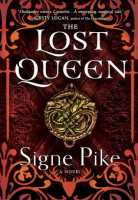
The Lost Queen

Rating: 
Author: Signe Pike
Genres: Historical Fiction
Pub Date: Sept. 2018 (read Sept. 2018)

Thanks to Touchstone for providing me with a free electronic copy of this book in exchange for an honest review.

My blog has been pretty silent over the past week. I’ve been on vacation, so you’ll have to forgive me for my continued absence next week. As a result I haven’t been doing that much reading, but I did finish The Lost Queen, which I received back in August from Touchstone and have finally found time to read.

The Lost Queen is the first book in a trilogy set in 6th century Scotland. It’s recommended for fans of Outlander (which I love) and Philippa Gregory books (which I’ve been meaning to try). It features Langoreth, one of Scotland’s former queens, who has mostly been lost to history. Langoreth was the twin sister of the man who inspired the well known character, Merlin, and had a huge impact on Scotland herself. Signe Pike delves into the histories of both Langoreth and her brother, Lailoken, starting with their childhood and formative coming of age years.

I have mixed feelings about the book. The authors note at the end was fascinating – I love historical novels that explore the history of lesser known figures, especially women because women’s history is rarely recorded and often lost. But I struggled to stay engaged in the book. I’ve had this problem with several books this year (Naomi Novik’s, Uprooted, and Madeline Miller’s, Circe, come to mind), reflecting on the book, I generally enjoyed it and learned a lot, but it wasn’t that enjoyable a reading experience.

I did find this book a bit better than previous books in that I got pretty into it in the last 30 percent and I am interested to see what happens to these characters. We’re told in the book summary that both Langoreth and Lailoken led remarkable lives, but we don’t discover in this book what made their lives so remarkable. This might be why the book read a little slower and may have lended itself better to a single volume instead of a trilogy. It was pretty slow moving and served mainly to introduce us to the characters and the setting. I think it has the potential to get much better in subsequent books.

However, the setting was pretty great. I can say for sure that I’ve never read a book set in 6th century Scotland. I’m not sure I’ve even ever read a book set in the 6th century. I haven’t read a lot of old, old history, so I found this fascinating in that the history is so ancient that England and Scotland don’t remotely resemble the countries they are today. This was a time when Christianity was starting to spread. Scotland had always practiced the “old ways”, but in an effort to gain support from powerful Rome, Christianity comes to the country, creating tension between this new religion and the old ways. It’s incredibly frustrating to read about the injustices committed in this book in the name of Christianity, but still relatable to today.

I also appreciated the familial relationships. So often in this time period, women were seen as little more than property. But I liked how both her father and brother respected and treated Langoreth. Everyone was forced to acknowledge that despite their wishes that things could be different, Langoreth would need to wed to form political alliances for their kingdom. Both the King and Lailoken see value and strengths in Langoreth outside of being a wife, but they also acknowledge that in their time and age, marrying is one of her greatest strengths as well.

Like I said, I struggled with the book in the first half, but ultimately I am interested to see what happens to Langoreth in the next 2 books and to discover what makes her such a remarkable woman. I think this book could have been shorter and I’m hoping for more action in the next book, but I really liked learning about the spread of Christianity and the tension it created in it’s condemnation of the old ways.