State of Wonder

Rating: ⭐⭐⭐
Author: Ann Patchett
Genres: Fiction
Pub. Date: May 2011

It took me ~4 months to read this book, so it’s going to be challenging to write a full review about it because a lot of it is not fresh in my mind anymore, but I have to try because I have very strong feelings about it.

This was only my second Ann Patchett book, but I loved The Dutch House when I read it a few years ago, so I was keen to read more of her work. State of Wonder seems to be one of her more popular books and after reading Lily King’s book, Euphoria, earlier this year (which is often compared to State of Wonder), I decided it was time to pick this one up. Maybe this was a bad idea because I couldn’t help but compare it to Euphoria (which I loved), but even without that book as a reference, I doubt I would ever have liked State of Wonder.

If you’re not familiar, State of Wonder is set in the Amazon – I’m not sure what year, but given that this was published in 2011, I’d guess in the early Aughts sometime. Our main character, Marina Singh, is a research doctor with a pharmaceutical company. One of the company’s biggest projects is a new fertility wonder drug that’s being developed by Dr. Swenson in the Amazon. After the disappearance of Marina’s other colleague, Anders, she is convinced to travel to Brazil to track down Dr. Swenson and report back to the company on the progress of the drug.

Given the project’s remoteness and Dr. Swenson’s total lack of interest in transparency to her employers, she proves difficult to find. When Marina does finally locate her, she is swallowed into an entirely new world and is shocked by her discoveries. The ideas presented in the plot are definitely compelling and we are soon enmeshed in a web of moral dilemmas for which there are no simple solutions. I can see why this would shake up the genre of literary fiction because it is quite an intelligent book and it provides a lot of fodder for the reader to reflect on. My main issue was that the storytelling itself was so incredibly tedious and boring.

It’s a modest 350 page book, but Marina spends more than a third of the book just tracking down Dr. Swenson, and it isn’t until around page 250 before the narrative picks up at all. To be honest, I’m shocked that I didn’t DNF it, which I think is a testament to the idea of the book because the story itself is compelling and I genuinely wanted to know what would happen, it just took soooo long to get there. I’d give Patchett 4 stars for creativity and themes, but 1 star for execution because it was terribly painful to get through it.

That said, the longer I sit and reflect on this book, the madder I get about it, but not for the reason you might expect. The story finally picks up in the last 100 pages to the point that I was suddenly engrossed as it goes completely off the rails. After 4 months of tedious pre-ample, I felt like I was on drugs as the narrative gets more and more unhinged and the morals more and more dubious. All of which culminates in an explosive ending followed by a quick exit from the scene, from which I was left with a huge book hangover.

I hated the ending. It is shocking and upsetting and infuriating all at once. I did not see it coming and I was devastated by it. I understand why Patchett chooses to end the book this way, without this explosive ending I would have been left questioning what was the point of the entire story. The ending is set up to shock you and it drives home a very crucial theme about Westerners and our sense of compassion and responsibility. When is it our duty to intervene and when should we take a step back and not insert ourselves into cultures which we know nothing about? This theme is initially explored through Dr. Swenson’s feelings on the locals and is reiterated when Marina finally makes her departure from the jungle in the final pages.

But the reason why I get madder the longer I reflect on it is that despite genuinely hating most of this book, I can’t stop thinking about the damn thing!  Honestly, the plot is good, it just gets lost in such heavy handed writing. I spent so long getting to know everything about Marina, all her character strengths and flaws, to deciding that I liked her, only to have Patchett eviscerate her character in the last 10 pages. It’s really brilliant because we’re presented with these two contrasting characters: Marina and Dr. Swenson, who have very different feelings on the ethics of their work. Yet fundamentally, they’re not that different and the entire book is really a master class in the development of their characters. I almost want to read it again now that I know the ending, I just can’t stand to suffer through it a second time. Although I think I might finally have to pick up Heart of Darkness, which has been on my TBR for over a decade.

So how do I rate this book? I was very settled on two stars when I finished it, but I think I will have to increase it to 3 stars at the end of the day. It’s a smart book, but it leaves me unsure of how to approach Ann Patchett’s books in the future. I don’t think I can read another book with a narrative as thick as this one, but I can’t deny the appeal of the depth of thought and character psyche that goes into each of her stories. I may have to return to audiobook form if I read anything else by her. The Dutch House really worked for me as an audiobook, but I can see how it would maybe read similarly to this in physical form. Either way, I think I will give her older novels (like Bel Canto) a pass, and maybe try some of her newer stuff (commonwealth maybe?) to see how she has developed her storytelling craft.

This was a good story told very poorly. I think if the first third had been tightened up a lot, this would have been a much better book. Either way, it haunts me.

Saga, Volume 10

Rating: ⭐⭐⭐
Author: Brian K. Vaughan, Fiona Staples
Genres: Graphic Novel, Sci-fi
Pub. Date: Oct. 2022

In celebration of the release of Volume 10 after a 3 year hiatus, I re-read the first 9 volumes and wrote a collective review about them. Since Volume 10 is a pretty big departure from the rest of the series, I had to also dedicate a review just to this volume.

I get what Vaughan and Staples are trying to do with this new installment. The entire series has taken place in the midst of a war and despite lots of deaths, it’s naive to think our central family wouldn’t also be impacted. So I get what Vaughan and Staples are trying to convey… but I still hate it. It’s too depressing. I know that’s the point and that war is devastating and heartbreaking and people just have to go on living anyways. But my poor heart can’t take it.

I’ve spent 3 years waiting for Volume 10, and now that it’s here, I kind of wish it didn’t exist. It’s like when a popular show from your childhood gets a reboot. You think it’s going to be great to spend more time with your favourite characters, but it’s somehow never quite the same… it’s not able to capture the joy and goodness of the original. You’re trying to time travel and all you’re left with is a poor imitation.

That’s what volume 10 was for me without a certain someone. It’s still timely and perceptive, but the joy is gone. That special thing that made the original so wholesome and heartwarming is no longer there. Saga for me has always been first and foremost about family. I know a lot of people are here for the creativity of the series and the artwork, but that’s just what makes this family unique. I was here for the love and all I felt in this installment was the loss.

I’m not sure if I’ll continue with the series after this. It’s hard to walk away from, it is truly something special, but I left a piece of my heart in volume 9. After waiting 4 years for this, I’m disappointed.

Saga, Volume 1

Rating: ⭐⭐⭐⭐.5
Author: Brian K. Vaughan, Fiona Staples
Genres: Graphic Novel, Sci-fi
Pub. Date: Oct. 2012

I’ve been reading Saga for the better part of 5 years now, so let’s talk about it. I recently bought the special edition box set of Volumes 1-9 and decided to re-read the series before jumping into Volume 10, which was just released after a 3 year hiatus.

I’m so glad I made the decision to re-read these because I remembered very little of them and yet somehow I think I liked them even more! Saga is a graphic novel sci-fi series that is the brain-child of Brian K. Vaughan and the stunning visuals of Fiona Staples. It is far reaching in scope and the content is explicit, including violence, sex, and nudity. It is undeniably weird and unlike everything else I normally read. Despite all this, something about it speaks to a large audience of people because it has a huge fan base.

I know there are a lot of readers who are here for the imagination of it. It’s extremely creative and the artwork is amazing. For those who like graphic novels or sci-fi, it’s easy to understand the appeal. However, the reason I believe it’s so popular is because the storyline is so human in nature. This world is filled with all kinds of foreign planets and beings, with convoluted politics stretching to the far reaches of the galaxy. But Vaughan decides to center the narrative around a new mother and father (Alana and Marko) and their infant daughter Hazel.

Alana and Marko are very reminiscent of Romeo and Juliet. They are from enemy planets who have been embroiled in war longer than either of them can remember. Their love is forbidden and their daughter considered an abomination by most in the galaxy. There’s a whole host of secondary characters, but at its core, this is a familial love story. They are just 2 individuals trying to find some semblance of peace in which to raise their daughter away from the hate. This is what I think makes it brilliant. I’m not a big sci-fi fan, but I love a good family drama, which is why the series popularity is so wide-reaching.

In addition to their well realized central characters, Vaughan and Staples have a VERY large cast of secondary characters. Sometimes it’s hard to keep track of everyone and some characters come and go, but it contributes to the very rich world-building and highlights diversity in a non-traditional way. Each volume is just ~150 pages, but the creators tackle a lot of societal issues within its pages. We’re exposed to war, violence, death, revolutionaries, religious fanatics, drugs, sex trafficking, abortion, racism, sexism, and transphobia, as well as more positive themes, such as family, friendship, and love. Like I said, it’s far reaching in scope.

The plot is at times shocking and the series should have pretty much every trigger warning you can think of. If you’re in a healthy enough place, I think it’s an excellent read. I view volumes 1-9 as a kind of first era of the series. Volume 9 is heartbreaking and after the 3 year hiatus, Volume 10 felt very different in scope as the plot takes a major departure from the early volumes. To acknowledge this, I wrote a separate review for Volume 10 as the series starts what I feel is its second era. I may or may not continue with the series, but view the first 9 volumes as an incredible read. Collectively, I would give this series 4.5 stars.

The It Girl

Rating: ⭐⭐⭐
Author: Ruth Ware
Genres: Mystery, Thriller
Pub. Date: Jul. 2022

The title of this book has been driving me nuts ever since I saw the cover. I hate that the title is in all-caps because I can’t help but read it as The I.T. Girl every time! After having read it, I can confirm this is about an “it” girl and in fact has nothing to do with I.T. In case you also work in a technical field and were unsure, lol.

It’s no secret that I love Ruth Ware. I’ve read everything she’s ever written. In terms of storytelling, I don’t think she’s the best mystery/thriller writer ever and I actually rate most of her books very middle of the road. But I do think she is an excellent suspense writer and I find her books so compulsively readable, which is why I return to them over and over again. Even though I haven’t loved all her books, this was the first one where I actively struggled to read it.

This book is about 50-100 pages longer than all of her other books, and it felt like it. She employs the dual timeline in this book and while I think it was effective, in the first half, it only served to slow down the story. Hannah Jones is our main character and we learn from the start that her Oxford University experience came to a quick end when her roommate, April, is murdered at the end of her first year. An Oxford Porter is convicted of the crime based on Hannah’s testimony and when he dies in prison, Hannah starts questioning her memory and whether there was more to that night than she remembers.

The story is told between flashbacks to her time at Oxford and her cool group of friends that centered around “it girl” April Coutts-Cliveden, and her quiet current day life in Edinburgh. I was mildly interested in her life at Oxford – April is an interesting character. She is manipulative and makes a lot of questionable choices, but you know from the beginning that she ends up dead, so it’s hard to be overly critical of her. Hannah is more of a forgettable character, which is not aided by the fact that in her desire to forget April’s death, she is leading a very forgettable life herself – a life that is undeniably tedious and boring to read about. 

I understand why Ware uses the dual timeline and I do think it is effective later in the story, but it’s too indulgent in the early stages and it slowed down the pace. I think if the book had been shortened by about 50 pages, it would have tightened up the story a lot and made the whole book more compelling. In general, the second half of the book was executed better and I was much more invested in the story past the 50% mark. It has some classic Ruth Ware twists and I felt like we were finally getting to the grit of the story.

Overall, I think Oxford is a compelling setting for a story like this because of the whole “closed campus” intrigue. The notion of the “it girl” was interesting – April is a vibrant and outgoing character with a lot of self-confidence, yet there’s no denying that she is mean-spirited. Why do these two things often seem to go hand in hand? Do people get drunk on their popularity and privilege? Why do other people tolerate such meanness from their supposed friends? These are all interesting questions (to me anyways), that I would have loved to see Ware address to give the book more depth. Unfortunately, we don’t look at any of these themes and I was left feeling conflicted about what I was supposed to think about April. 

Overall, I think this book held a lot of promise, but unfortunately was poorly executed. Not her best.

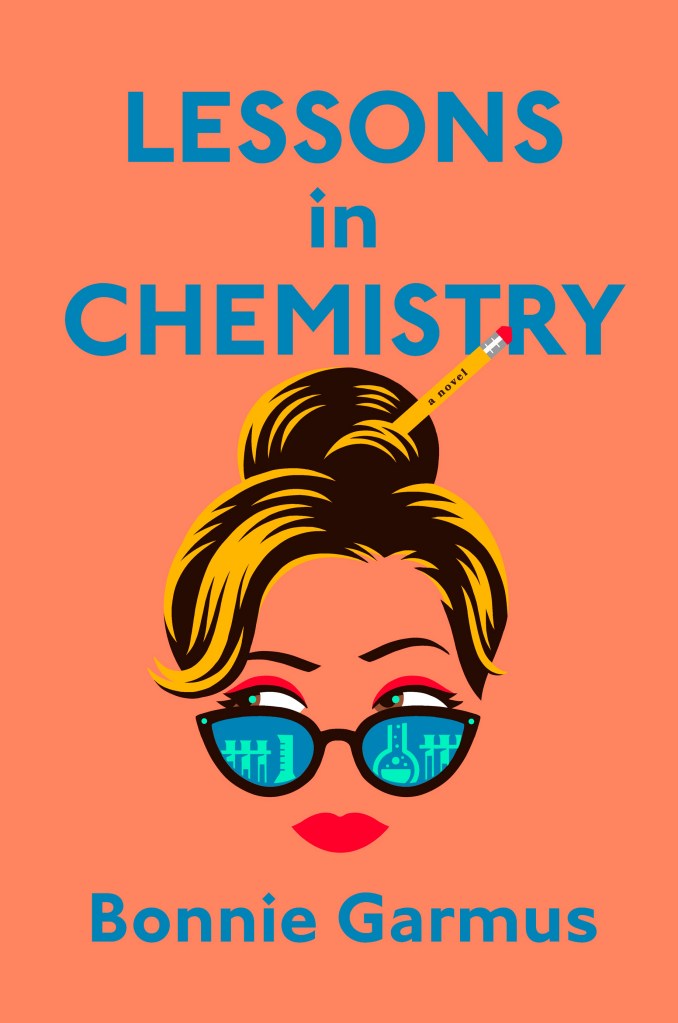
Lessons in Chemistry

Rating: ⭐⭐⭐⭐
Author: Bonnie Garmus
Genres: Historical Fiction
Pub. Date: Mar. 2022

I have been seeing this book absolutely everywhere this year! When it first popped on my radar I immediately wrote it off because it sounded kind of boring and I wasn’t interested in reading about a cooking show. But then I kept seeing non stop reviews for it and my book club decided to read it and I became pretty excited to finally pick it up.

I was a little bit nervous because I find when a book is really hyped up it often doesn’t live up to the hype, but this one actually did! I don’t know if it’s because I didn’t have the highest expectations, but it was so much funnier than I was anticipating! I’ve seen it compared to Where’d You Go, Bernadette, which I think is apt; and I would also compare it to Eleanor Oliphant is Completely Fine.

Lessons in Chemistry is set in the 1960’s and focuses on the life of Elizabeth Zott, a chemist turned TV cooking personality. As you can imagine, being a female chemist in the 1960’s was not a fun time and Elizabeth is forced to endure sexist attitudes everywhere she goes. She is fired from her research job when she becomes pregnant and a series of mishaps land her with the opportunity to work in television, which she begrudgingly accepts in order to provide for herself and her young daughter.

I do want to acknowledge upfront that this is 100% white feminism rhetoric. I’m sure that women of colour were a lot more concerned with the human rights movement and segregation in the early 1960’s than they were about breaking into the extremely racist and sexist academic spaces. While Elizabeth had limited access to these spaces, BIPOC women were shut out of them entirely and it’s important to acknowledge this disparity and that the setting is very white feminist in nature.

Acknowledging the limitations of the narrative, I enjoyed it for what it was. I think it’s a real skill to write the kind of conflict that is both relatable and enraging while maintaining sharp wit and humour. In this case I think the humour is actually key because otherwise the narrative could easily get bogged down in anger, turning it from a perceptive comedy to a drama. Some might argue that with these kinds of themes, maybe it should be a drama, but I liked how Garmus uses the juxtaposition of straight-faced humour to expose blatant sexism.

The women in this story were a joy to read. Elizabeth is downright comical, which eases the tension, while Mad and Harriett are great supporting characters. I was even endeared to characters like Ms. Frask by the end of the book. In some ways, women who enable sexism sometimes seem worse than men, so it was prudent to be reminded that those women are often victims themselves. Although it is a fine line and we should be wary of any kind of gatekeeping, especially keeping in mind that though white women have broken into many of these academic spaces in more recent years, BIPOC women are often still excluded.

There are some really frustrating antagonists in the book, but there were still some meaningful male characters. I had a soft spot for Calvin and I thought characters like Dr. Mason, Walter, and the Reverend were also great additions. The inclusion of a dog as a character is both genius and insane. It feels like it should be out of place, but it somehow works so well in the story. Which is really what left me so impressed with the book. It has a surprisingly large cast of characters and yet somehow they’re all well realized. I think it’s a skill to carry so many meaningful secondary characters and when done well, it really adds to a story. It’s what brings a story to life and enables the characters to walk right off the page.

I haven’t really gotten into the plot – this book covers a lot of ground and I liked the way Garmus ties everything together. I did find the ending a bit abrupt and I didn’t like the storyline about Calvin’s past and the mysterious donors. It got a little bit confusing and garbled at the end and I don’t think it added much to the overall story.

Keeping in mind the limitations of the character diversity, I do think the book captures women’s desire to break out of traditional gender roles and find their own place in the world. It’s not a new concept in 2022, but I still enjoyed Elizabeth’s character and the humour Garmus brought to the story. She is unapologetic about her desire for more and she doesn’t ask permission or try to manipulate her way into her field. She knows she deserves to be there on the basis of her drive and accomplishments and she’s not going to dim her shine to make some self-important man feel like he’s doing her a favour.

So overall, I can acknowledge that the book has some shortcomings, but I still had a great time reading it!