Beneath a Scarlet Sky


Rating:
 .5
Author: Mark T. Sullivan
Genres: Historical Fiction
Read: July 2017 on audiobook

Ugh, this book.

This is a challenge to rate because it really is a fascinating story that deserves to be told, but oh my god, the writing was brutal. I really wish this story could have been told by someone like Markus Zusak, Anthony Doerr, Kristen Hannah, or literally anyone who knows how to better write emotions and dialogue.

Beneath a Scarlet Sky is the fictional telling of Pino Lella’s true story. Lella is an 17 year old Italian from Milan who comes of age at the height of World War II. His parents send him out of Milan and he ends up guiding jews and other people looking to escape Italy through the snowy alps to neutral Switzerland. He does this until just before his 18th birthday, when his parents call him back to Milan and force him to enlist with the Germans to avoid being drafted to what would likely be sure death with the Italian Army. This is a huge source of shame for Pino and when he finds himself assigned to be the driver for German General Hans Leyers, he seizes the chance to redeem himself by turning spy for the Allies. Oh, and along the way he falls in love with this girl Ana.

This was an incredible true story, but the writing failed on so many levels for me. Disclaimer, this was my first audiobook, so it’s possible that maybe audiobooks are just not the right format for me, but I really think it’s the writing. First of all, the dialogue was awful – it didn’t feel at all natural. Secondly, it was not dynamic. I know this book is based on a true story, but it’s still supposed to be fiction. As an author you can take some liberties on a true story, to infuse emotion into the story and make it more palatable to your readers. Historical fiction writers do this all the time.

I think Sullivan should have just written a biography because this novel was way too precise. I felt like I was reading a boring chronology of Pino’s life. “Pino did this, and then he went here, and then he saw this, etc…” It was way too long and Sullivan tried to make every single event seem so intense, he spent so much time detailing each alpine crossing and everywhere Pino went as a driver. It was weird how precise he was with everything, even down to the specific distances Pino hiked and specific time he did something. I didn’t need to know how many metres Pino traversed for every part of his mountain crossings and I didn’t need to know where exactly he took General Leyers at 2, 4, and 6pm.

Sullivan conducted extensive interviews with Pino Lella and I felt like he didn’t give enough voice to the character and tried to stay too close to Lella’s story. Pino’s narrative felt like that of an 80 year old man recounting what happened to him during the war rather than that of a 17 year old actually living these experiences. This experience happened to Pino 70 years ago and I’m sure it was hard for him to articulate his emotions about it, which is where I had the biggest issue with Sullivan’s writing.

Sullivan didn’t know how to emote. Pino felt like the most basic character ever. He’s constantly talking about how he “feels”, but it had no depth for me. I think Sullivan should have taken a bit more liberty with the story to better connect with or imagine what Pino really would have felt. This book was an example of telling your audience instead of showing them. Sullivan obviously admires Pino (as do I), but it got in the way of his writing because Pino didn’t really have many flaws. I feel like Sullivan didn’t imagine what it would really have been like for Pino to enlist with the Nazis and the struggle he would have faced being shunned by his brother and best friend. Sure he was “sad” or “angry”, but his emotions were so basic and lacked depth.

This went for all the characters. Most upsetting for me was Ana. She had no personality whatsoever and her relationship with Pino was so romanticized. I mean, Pino was 18 at the time, so I could believe his fawning over her, but ugh, there were way too many descriptions of Pino being intoxicated by her “female scent”. Bletch. Seriously, what did Pino like about her besides her beauty? We never learn anything of substance about her except a quick flashback to her father’s tragic death.

But enough about the writing, on to the story: it was so heartbreaking! Pino was a busy teenager during the war and made a truly incredible contribution to the war. The synopsis gives no indication about the time Pino spent in the alps guiding refugees across the border, which I found even more fascinating than his spy work under General Leyers. It’s wild how many historical events he bore witness to and I really liked learning about Italy’s occupation. I’ve read a lot of WWII fiction about the camps and what it was like during the war in England, France, Germany, Poland, Russia, and even Hungary, but I’ve never read any WWII fiction about Italy.

The ending and epilogue were some of the most meaningful parts of the book for me. I don’t want to spoil it for anyone, but there was one death (it’s war, there’s obviously going to be deaths) at the end of the story that was actually one of the most horrifying things I could ever imagine and I was extremely disturbed reading it. Honestly, everything about the end of the war in Italy was disturbing: the civil war in Milan, the revenge killings, the desecration of Mussolini’s body in the square. Death is so unpredictable and it was one thing that Sullivan did a good job of demonstrating towards the end of the book. 

Sullivan’s depiction of the aftermath of the war in Italy was also meaningful because it really showcased the hardships the people of Milan had experienced and their anger at the Nazis and the fascists. It’s a frightening look at the depravity of humans and how even after suffering so much, we can still want to see others suffer. Can revenge actually soothe your soul after bearing witness to so much pain? Pino was so detached emotionally at the end of the novel that I thought this was the one scene where Sullivan actually showed us his pain instead of just telling us about it. Pino was numb inside, so Sullivan stopped narrating his internal emotions and we were able to discern them from his actions rather than being told how he felt.

After finishing this book, I’m not surprised that Pino kept his experiences to himself. I don’t think him a coward, but I understand now why he thought himself one. He was shamed and shunned by a lot of people when he joined the Nazis and when he becomes a spy, he’s frustrated by not being able to share it with his family or Carletto and hates for them to think of him as a traitor Nazi. But to an extent, he was. He did join the Nazi party and it was only by fate that he ended up as a driver to Hans Leyers. I’m glad he was able to rebel under the Nazi regime and secretly fight against the Nazis, but the story could easily have gone another way if he had had no opportunity to fight for the Allies and ultimately, the winners.

But in a time of war we can’t know how things will turn out. Pino was young and not equipped for the situations he was put in. It’s impossible to predict how we will act and react in extreme situations and how the bounds of right and wrong can become blurred and confused by the people and events around you. I can see how Pino would be haunted by his experiences for the rest of his life and how war can really change the trajectory of your entire life and character.

I am very glad that Mark Sullivan has created a record of Pino’s life so that history will remember him, but don’t expect a well-written book.
The Upside of Unrequited


Rating: ⭐⭐⭐⭐
Author: Becky Albertalli
Genres: Young Adult
Read: July 2017


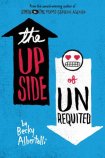
This was a cute book and it definitely surpassed my expectations. I thought it sounded a bit juvenile when I read the synopsis, but it was just so relatable! I have almost nothing in common with Molly, who is a twin, has two moms, a bi-racial family, and is fat, and yet I could totally remember what it was like being a teenager and thinking everyone has grown up and left you behind.

Molly’s the only one in her friend group who has never kissed anyone, but it never really bothered her until her twin sister, Cassie, gets her first girlfriend and Molly begins to feel like she’s been left behind. She’s had dozens of crushes over the years and Molly desperately wants a boyfriend, but she’s afraid to put herself out there and what people might think of her.

Every little thing matters when you’re a teenager. Your friends are your lifeline and the most important people in the world to you. But teenagers are really bad at balancing friends and boyfriends/girlfriends and I could absolutely relate to Molly’s fears that she was slowly losing her sister. Your romantic partner does eventually become the most important person in your life, but when only half of a friendship is having the experience of falling in love, it can be really hard to watch and it can make you feel really lonely.

It can also make you feel really uncomfortable when the people around you are having their first sexual experiences and you can’t relate with them. I liked that Albertalli addressed that a lot of teenagers exaggerate their sexual experiences to try and fit in. Molly felt so out of her depth when her friends started talking about sex and Reid expresses that he thinks half of them are just making things up to fit in. Molly is surprised to learn later that even though Cassie’s girlfriend Mina talked a big game, Cassie was the first person she had ever had any kind of romantic relationship with.

There was a lot going on in this novel and the sister relationship reminded me a little of Fangirl, but healthier. It’s a quick read and I enjoyed watching Molly grow and how her relationships changed. I could see people being upset that she ultimately resolves her issues by finding love (why couldn’t she just love herself?), but I thought that Molly actually did love herself already and that she needed to believe that other people could love her too. There was no antagonizing over how she was fat and trying to lose weight – she loved to eat and generally seemed happy with her body. It was more that she was worried that society tells us that fat girls are unlovable and that boys wouldn’t be able to see beyond her weight to who she actually is.

Side note, I also loved that Molly took medication for anxiety, but that it wasn’t part of the story. There wasn’t a sub-plot about her overcoming anxiety, she just takes medication and that helps her, end of story. Overall, I thought this was a sweet, coming-of-age story that had a ton of diversity! I know everyone is obsessed with Albertalli’s other book, Simon vs. the Homo Sapiens Agenda, but I actually found that one a little heavy handed and preferred the Upside of Unrequited!

Beartown


Rating: ⭐⭐⭐⭐⭐

Author: Fredrik Backman
Genres: Fiction
Read: May 2017


I really liked A Man Called Ove and Britt-Marie was Here, but Beartown was definitely my favourite Fredrik Backman novel to date! This was quite different then his other work, but it was excellent!

This is how you do large casts. I just read Paula Hawkins’ new book, Into the Water, which had a huge cast of characters, but she did justice for none of them. Beartown has a huge number of characters as well, but it really worked in this book. The characters are slowly introduced throughout the course of the novel and their relationships to one another are clearly indicated, so it wasn’t hard to follow and I was thrilled to see a lot of who I thought would be minor characters have some really interesting stories. Every character was well realized and well developed considering how little focus some of the characters got.

The characters reminded me a little of Melina Marchetta‘s work in that they grew in ways you did not anticipate and that you grew to like characters that you didn’t like initially. This shouldn’t have been a surprise though as Backman does an excellent job at making you love slightly unlikeable characters in all his novels. I loved the way Backman would present characters in different ways depending on whose point of view you were reading and that perspective could totally change your opinion of any character. For example I loved how characters like Bobo flip-flopped throughout the entire novel – you wanted to love him and then he would disappoint you and then you would love him again.

“It doesn’t take long to persuade each other to stop seeing a person as a person. And when enough people are quiet for long enough, a handful of voices can give the impression that everyone is screaming.”

I was totally impressed with the writing in Beartown. I highlighted so many passages throughout reading the book and I was really impressed with how Backman handled the serious topics in the novel as a male writer. I don’t want to give anything away because I think it’s best to go into this book blind, but it was definitely culturally relevant and very moving.  

I found the entire novel to be very insightful into sports culture and rape culture, both of which are often largely entwined, as well as the emotions that cause us to perceive things the way we do. It was a great novel about family, friends, sportsmanship, winning, and community (among many other things). There was so much going on in this book and so many different themes explored alongside the main theme.

“Hate can be a deeply stimulating emotion. The world becomes much easier to understand and much less terrifying if you divide everything and everyone into friends and enemies, we and they, good and evil. The easiest way to unite a group isn’t through love, because love is hard. It makes demands. Hate is simple.”

Definitely recommend this one for everyone! There was no part of this novel that I disliked and I think anyone can relate to the story.

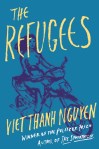
The Refugees


Rating: ⭐⭐⭐
Author: Viet Thanh Nyugen
Genres: Fiction, Short Stories, Historical Fiction
Read: April 2017


I have a lot of mixed feelings about this collection of short stories. It didn’t deliver what I was expecting and at times I found it slow moving and pretty boring. However, it did offer a different perspective on the experiences of refugees, that while different from my expectations, was still valuable.

The Refugees featured in Nguyen’s stories were all from Vietnam and had all eventually settled in America. I expected this collection to focus on refugees who were attempting to flee their homeland or trying to build new lives in America. However, most of the stories took place years after the refugees had settled in America and in some ways didn’t even feel like stories about refugees.

I thought that Nguyen’s stories about a wife whose husband is suffering Alzheimer’s, a man who meets his liver donor, and a father who travels to Vietnam to visit his daughter studying abroad weren’t stories that were unique to refugees – they easily could have happened to anyone. During a time when many Americans (and Canadians) are afraid of refugees, I thought Nguyen’s stories were an important reminder that refugees are normal people who build lives, put down roots, and contribute to society in the same way as everyone else. Unfortunately, they are just people who have been forced to flee their home country, often due to horrifying circumstances.

While I didn’t love all the stories, there were some that I enjoyed. I sympathized with Mrs. Khanh, whose husband was slowly forgetting their past together and her horror when he begins to call her by an unknown woman’s name. I felt Phuong’s frustration when her privileged half-sister returned to Vietnam and won her father’s affection but refused to help her create a better life. And I understood the mother who was conflicted at giving her hard earned money to what she believed to be a lost cause, but couldn’t say no to another mother mourning her husband and son.

Overall this was still a decent read, but I would recommend The Best We Could Do by Thi Bui over this one, which I loved! It’s also a refugee story about a family fleeing Vietnam for America, but I felt much more connected to the characters.

Little Fires Everywhere

Rating: ⭐⭐⭐⭐⭐
Author: Celeste Ng
Genres: Fiction
Read: Oct. 2017


Celeste Ng is at it again!! I loved her debut novel, Everything I Never Told You, and she totally blew me away again with Little Fires Everywhere. In fact, I liked this one even better than her debut novel!

Like Everything I Never Told You, this is a slow-paced, character driven novel. Ng spends time on every single one of her characters, showing us their dreams and fears, their strengths and flaws. At times the characters are so frustrating, but they are always fascinating.

There’s a lot going on in this book. The Richardson family, with their four children, have lived their entire lives in the Shaker Heights community just outside of Cleveland. Shaker Heights prides itself on being a planned city and regulates everything about the city, from the colour you can paint your house, to the time you’re allowed to go trick-or-treating, to when and how often teens receive sex-ed classes in school.

Struggling artist Mia and her daughter Pearl have just moved to Shaker Heights and are renting from the Richardson’s. Without meaning to, their lives become incredibly intertwined with the Richardson’s and as the story unravels, we learn that everyone has their secrets and that with so many secrets, it’s hard to stop all the little fires from spreading.

Ng weaves questions of class and race throughout the novel that really bring her characters and her setting to life. Shaker Heights has always maintained their mantra that they “don’t see colour”, but when a court case arises around the custody of a young Asian child, the community is polarized and it becomes harder to deny that despite what everyone says, race and class still matter.

This novel felt almost like a Shakespearean tragedy. Everyone is so consumed with their own lives and secrets – trying to contain their personal fires – that the plot felt like an out of control train barrelling towards a broken bridge. The people inside the train are so caught up in their own drama that they don’t even realize they’re careening towards their impending doom.

But I loved every second of it. Ng’s writing is what makes this such a huge win. Not only has she written a fascinating drama and character study, but she has penned some truly beautiful prose. There is a lot of depth to this story and I would definitely recommend this book!