Jane Eyre

Rating: ⭐⭐⭐.5
Author: Charlotte Bronte
Genres: Fiction, Classics
Pub. Date: 1847 (read Mar. 2021)

This was a re-read for me. I first read Jane Eyre about 10 years ago and I didn’t love it – I think I gave it 3 stars – but I remember expecting to really like it because it’s a lot of people’s favourite classic, and then just not being into it at all.

I’ve had a lot of success with classics lately. I finished reading all of Jane Austen’s books over Christmas and was a huge fan, and I read Wuthering Heights a few years ago and absolutely LOVED it! So I thought it might be time to re-visit Jane Eyre and see if I would finally jump on the bandwagon.

I can’t talk about the book without revealing spoilers, so if you still haven’t read this one – SPOILER ALERT AHEAD.

.

.

.

Reader, I definitely liked this better the second time around. I really enjoyed the first quarter of the book about Jane’s childhood and the definite highlight of the book for me was when Jane makes the decision to leave Mr. Rochester and basically destitute herself on principal (like come on, she could have still left him and taken a bit of money with her, there’s morality and then there’s just insanity). I had forgotten a lot of the plot points of the book, so after re-reading it… I get it. I understand why this is beloved by so many people. Jane really is a true heroine and so far ahead of her time. Despite a very difficult childhood, she grows into a very well adjusted young woman who is both loving and kind. She is quiet and timid, but she is not meek. She has developed a very acute sense of self and ideals of morality. In short, she is very high in character.

Like the many readers that have come before me, I did admire her for her grit. She has finally found what she most desires in the world, love and a home, and she walks away from all of that so as not to diminish herself or live in a way that she feels is not right. She faces more hardships only to again rise from the ashes of her former life to build a new one for herself. It’s really hard to believe this book is from the 1840’s because it really is filled with so many modern ideals and I admire Charlotte Bronte for penning this in her time!

So why I am not as enamoured with this book as everyone else seems to be? It’s definitely a dense book – I listened to it on audio and there are multiple HOUR LONG monologues by some of the characters. I do think it was a good choice to rely heavily on dialogue for these and even though they were long, they did still hold my attention, but like, good riddance on all the philosophical conversations.

Honestly, what I think it comes down to for me is a bit of the ick factor. Like, I know there are women out there in love with Mr. Rochester and I find it so creepy. He’s so large and old and menacing – I just couldn’t move beyond a 40 year old man preying on a 19 year old girl. I know Jane Austen’s books are filled with age gaps too and I love those, so I shouldn’t judge because it was 1847, but the whole power dynamic and Mr. Rochester’s temper were just too much. Then the fact that he tries to wed Jane while already secretly married and the whole F-ed up idea of shutting someone up in the attic for literal years and THEN JUSTIFYING IT. And the reader is actually expected to empathize with Mr. Rochester’s plight when poor Bertha’s been suffering away up there?! So I think it’s a bit ahead of its time in some ways and other ways definitely right in its time period.

Personally I got more of a kick out of the whole ordeal with St. John. I found this escapade a bit more light hearted and loved Jane using sarcasm against his faith near the end of the novel. I did think the book had a good blend of religion and morality. Sometime classics can be a bit heavy on the religion, which to an extent this was, but I liked that even though Jane did believe in God, I felt that she had developed a strong sense of personal morals outside of religion. St. John started to manipulate his religion at the end to get Jane to marry him because he felt it was ordained by God, but Jane very firmly held her own ground and recognized that thinking something might be good for your ministry doesn’t necessarily mean it will be good for you.

So how to rate this? I’m on the fence because Jane really is a first rate heroine, but I felt so uncomfortable reading about the romance. It’s funny to me that I adore Wuthering Heights, which honestly has zero likeable characters, yet I struggle with Jane Eyre, which has a truly lovable protagonist. I’m probably at a 3.5 stars, but I will round up to 4 stars because the second read through did allow me to recognize the value in this book and I understand now why it has survived the test of time. I’d just take Elizabeth and Mr. Darcy over Jane and Mr. Rochester every day of the week folks! So in conclusion, a worthy classic, but not my favourite.

Side note, why do so many people hate Wuthering Heights? I think it’s like the pinnacle of classic literature and I love everything about it, but so many people really dislike it. Give those unlikable characters a chance readers and see what you can learn from them! Also, the audiobook I read was narrated by Thandie Newton, who did a GREAT job! But she pronounces St. John like SinJin and it was really confusing for me at first.
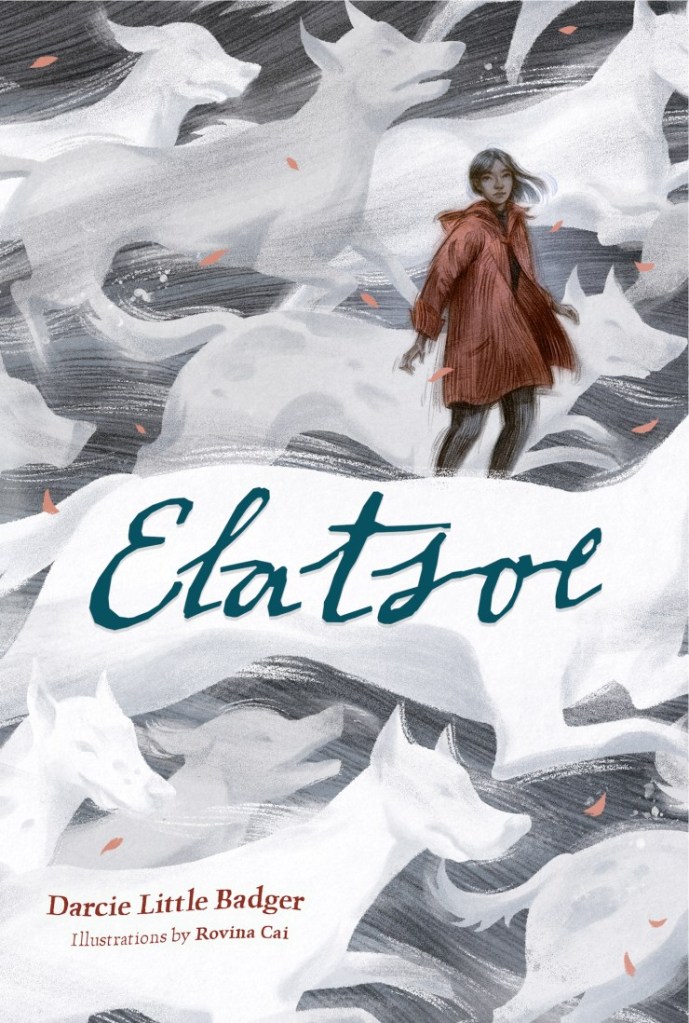
Elatsoe

Rating: ⭐⭐⭐⭐.5
Author: Darcie Little Badger
Genres: Young Adult, Fantasy
Pub. Date: Aug. 2020 (read March 2021)

I’m not sure how I stumbled upon Elatsoe, it may have been on Booktube, but I was immediately intrigued by the plotline. Elatsoe is a young adult story about 17 year old, Lipan Apache member, Elatsoe. She is one of a long line of women who can raise the ghosts of dead animals and is inspired by her six-great grandmother for whom she is named.

When her cousin, Trevor passes after a car crash and his ghost visits her in a dream, warning her that he was actually murdered, Elatsoe is catapulted on a mission to bring her cousin’s murderer to justice. She travels to his hometown with her parents to comfort his widow and immediately starts searching for the truth of Trevor’s untimely passing. In the process, she encounters more ghosts and makes a worrisome journey that causes her to seek advice from her elders.

I loved this book. It is such a wholesome story – it deals with heavy themes, yet it always feels like a light and fun read. I thought it read a little more like middle grade than YA, but that is really what made this feel like such a wholesome read. Instead of the teenage angst you usually find within the pages of a YA novel, Elatsoe is an individual who is very much comfortable with who she is and maintains good relationships with her friends and family. In a way it’s a coming of age story, but one in which she is respectful of her family members and seeks guidance from them. It is mentioned in passing that she is asexual and I loved that it’s just accepted by all the characters and we move on from there. Her best friend is male, but there is no love story between them and their friendship is very much built on trust and respect. It’s refreshing to read a book with such well balanced and respectful characters.

The author, Darcie Little Badger, is also Lipan Apache and she brings a very interesting fantastical element to the story. Elatsoe lives in a similar world to us, but her world is filled with monsters both seen and unseen. Personally, I thought the monster idea could have been a bit better developed and overall could probably have done without it, but the inclusion of ghosts in the story is really what makes it shine. She integrates Lipan Apache culture into the story flawlessly and I loved how she wove the verbal storytelling of Elatsoe’s ancestors into the book. I found it very engaging and it added so much depth to the story.

This was really close to a 5 star read for me. I thought it got a little plot heavy towards the end, and while we do see character growth throughout, I would have liked to see a little more character development at the end instead of going heavy on a ghost showdown. But it’s really a minor comment and I would still absolutely recommend this book to everyone. The writing is lovely and it reads very quickly. I think it’s a story that can be enjoyed by all ages and am so happy to see more indigenous voices and indigenous stories being published. 4.5 stars!

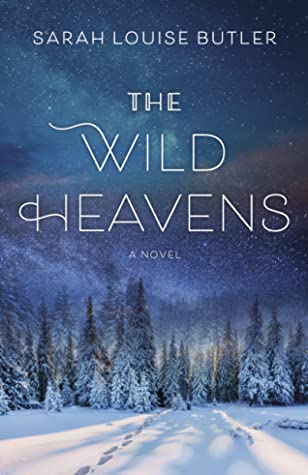
The Wild Heavens

Rating: ⭐⭐⭐⭐⭐
Author: Sarah Louise Butler
Genres: Fiction
Pub. Date: Mar. 2020 (read Jan. 2021)

I rarely buy books without first looking up the ratings and reviews on goodreads or checking out the hype about it. I like to stay on the pulse and read new and upcoming books, but I’ve been trying to stop reading books solely because of the hype and focus more on finding stories that intrigue me and that I think I will really like.

I love exploring local indie bookshops because the owners always have a deep love of reading and spend a lot of time crafting their inventory. I also love them because they’re a great place to find Canadian lit and books by local authors. The Wild Heavens was a purchase from a pop-up bookshop that showed up in my neighbourhood over the holidays and I was immediately drawn to the cover, which is gorgeous, and then the synopsis, which is set in BC.

I loved this book. It is a classic slow burn character driven novel, which is one of my favourite kinds of books, and I adored everything about it. It’s an extremely atmospheric book set in BC’s interior mountains and covers most of Sandy Langley’s life spent living there. Her grandfather settled in a cabin in the woods in the 1920’s and after the death of her mother, Sandy is brought up by her grandfather and becomes close friends with the only other kid in a neighbourhood, a young boy named Luke.

They grow up together exploring the wilderness and eventually become privy to one of Sandy’s grandfather’s greatest secrets – the encounter he had with a large 2 legged creature when he was wondering the mountains in the 1920’s and has spent the rest of his life trying to understand. The creature is known to Sandy as Charlie, but to the rest of us, names like Bigfoot or Sasquatch might sound more familiar.

Did I expect to fall in love with a book about Bigfoot? Definitely not, despite my intrigue at the story, the concept did sound just a little bit weird to me. But like any good book, the story is not always about what we think it will be about and even though Charlie formulates the narrative of the story, ultimately it’s not really about him. Rather it’s a story about growing up and growing old. It’s about the ways that life will challenge us and how our early experiences shape us into the people we become. It’s about finding love and losing it, the people who influence us, and the moments that make up a life – both happy and sad.

It’s a totally different story, but it some ways it reminded me a little of The Great Alone, which I also love. Setting is a critical part of the story and the isolated cabin in the mountains contributes to a deeply atmospheric feel that permeates the whole novel. More than anything, setting formulates these characters and I got completely lost in the romanticism of it. I love the mountains and the forests and the lakes and the snow. Despite not having a Charlie of my own to inspire me, I understood how a sense of place influenced and motivated these characters.

It is a heartbreaking story, but the characters moved me. The plot is subtle and if you’re looking for a fast paced novel, this is not it. But if you’re looking for a reflection of a life lived and a place loved, pick up The Wild Heavens and get lost in the story and setting within.

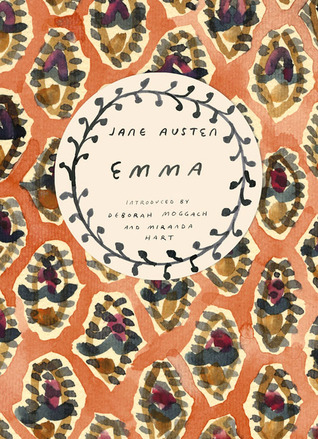
Emma

Rating: ⭐⭐⭐⭐
Author: Jane Austen
Genres: Fiction, Classics
Pub. Date: 1815 (read Jan. 2021 on audible)
Narrator: Emma Thompson & full cast

Emma was my final book in the Austen Audible collection! It was a re-read, but I knew I would like it better than the last time I read it. You can see my original review here, but I have written a new one to reflect my new opinions.

Emma is really quite the character. At the start of novel I found her hilarious, but I must admit I did find that my opinion of her character regressed the more time I spent with her. She is both a person that sees the best in people, but still wants to maintain the social order. She loves Mrs. Westen and is genuinely thrilled for her happiness. Likewise, she sees only good in Harriet, someone who is in reality much below her in social status. However her determinedness to see the best in Harriet is more indicative of her desire to commend herself than to actually elevate Harriet. What she really seeks is Harriet’s admiration as a friend and mentor. This makes her blind to the reality of Harriet’s situation and causes Harriet a great deal of harm over the course of the novel.

But while she sees nothing but good in characters like Harriet (who admire her), she sees only faults in characters like Jane Fairfax, who in reality she is jealous of. For all her class and wealth, Emma is clever, but she is also undisciplined and unable to appreciate in others what she herself lacks.

This book is very smart, yet I did find the narrative a little repetitive after a while. I said in my first review that I thought the book long and I am still inclined to agree. Where I think this book differs from her other books, is that there is no true villain. There are flawed characters, like Mrs. Elton (and Mr. Elton) and Frank Churchill, but they are only that – flawed. We are suspicious of Frank and from other novels, I’d come to expect a grand deception, so it was refreshing to see only poor judgement rather than outright malintent.

What this book really has going for it though is Mr. Knightly. I think the reason I gravitated to P&P and NA is because they both have well developed male leads. Mr. Knightly is present through the entirety of the novel and offers very sound judgement and advice throughout. Austen takes a bit of a different tact in this book by having characters that discuss Emma outside of her personal narrative. Emma is vain and Mr. Knightly is one of the few people that calls her out on it. I liked that he had a meaningful relationship with Emma, though he was somewhat more of a father figure for most of her life rather than a lover.

I also loved the inclusion of Jane Fairfax in the novel. She’s an excellent character through which to judge Emma because while we’re supposed to dislike her because Emma does, it quickly becomes evident that Emma is unfair and their relationship serves more to highlight Emma’s flaws. Where the novel is disappointing though is in Emma’s treatment of Harriet.

Harriet definitely gets the worst end of the stick. Fortunately Harriet’s prospects are not ultimately damaged by Emma and once they are finally separated, I’d argue that Harriet’s prospects are actually much improved as she is finally free to accept Mr. Martin’s proposal which would easily have made her happy from the start. But Emma’s meddling causes nothing but harm to Harriet and it was disappointing to see Emma avoid the situation by basically ditching Harriet, rather than to admit she’s been a bad friend. While she does admit this to herself, she never admits it to either Harriet or Mr. Knightly. It’s an interesting choice because it doesn’t show a huge amount of growth of Emma’s character.

Overall though, I liked this a lot better on the second read through and think this is one of Austen’s tightest plots.

Some of my personal highlights were (in no particular order):
– Emma immediately f*ing up Harriet’s marriage prospects
– Emma refusing to advise Harriet, but still manipulating her, only to be called out on it immediately by Mr. Knightly
– Emma’s dislike of Jane and how evident her jealousy
– Emma’s general obliviousness
– Mr. Knightly’s goodness, especially when he asks Harriet to dance
– Mrs. Elton’s meddling to the annoyance of everyone
– Emma still wanting the best for everyone, even if ill-informed

Mansfield Park

Rating: ⭐⭐⭐.5
Author: Jane Austen
Genres: Fiction, Classics
Pub. Date: 1814 (read Jan. 2021 on audible)
Narrator: Billie Piper & full cast

Mansfield Park – my final Jane Austen. I left Emma for last in the Audible collection, but as it will be a re-read, I’ve now finished them all!

I was curious what I would think about Mansfield Park. I’ve heard it’s not a favourite and I was determined to like it just as much as the others, but alas, I didn’t. I still think it’s a great book and overall I would give it 3.5 stars, but something about it just wasn’t quite as endearing.

The reason a lot of people dislike MP (I’ve heard) is because of how timid and meek Fanny Price is. I admit, she doesn’t have quite the same draw as characters like Elizabeth Bennet and Emma, who are very self-assured, but it’s clear she’s intentionally written that way. One thing I appreciate about Austen is that despite having similar themes in all her books, each of her heroines is quite unique and Fanny was really a victim of circumstance.

Of all Austen’s books, this one reminded me the most of Wuthering Heights, which is one of my favourite classics. While Fanny eventually finds her place at Mansfield Park, as a child, she is mistreated by every member of the family save Edmond. It wasn’t surprising that she grew to be so quiet and timid, yet I must praise her developing such morality. While everyone else at Mansfield lets their egos and vanity run away with them, Fanny is the sole voice of reason and propriety. Doesn’t sound like quite as much fun, but she becomes a very good reader of people.

I confess I struggled a little bit on this one to read the characters as well as Fanny. I had no idea where the plot was going as Austen is both reliable in her story telling, yet unpredictable. Knowing how it ends now I think I shall have to go back a read it again some day to see if I can’t pick up some more telltales of each of the character’s motivations. Fanny was much more perceptive than me as I found myself forgiving all of Henry’s previous transgressions and becoming quite a fan. Probably it was because I desperately didn’t want the novel to end with 2 cousins getting married, but while I could see through Mary Crawford, Henry had me quite duped.

However I think the main reason I didn’t love MP quite as much is because I didn’t find it as comic as Austen’s other books. To be fair, I had just read Northanger Abbey, which I think is the most comic of the lot, but I found the characters more vexing than funny. Still a sign of a good author, but I found it hard to find anything humorous about characters like Mrs. Norris. Likewise, while characters like Lydia are annoying, I still found her funny, whereas I found Maria extremely shallow and felt bad for thinking that she got her just reward (unfair I know when characters like Henry are just forgiven by society thanks to their wealth and sex). But mostly I was just sad about how Fanny was treated by her relatives.

The one thing I really liked about this book though was Fanny’s resolve not to marry Henry. She was pressured so much by her family and I honestly thought Henry seemed so sincere. I both wanted her to accept him, but also wanted her not to because it would only reinforce the terrible notion that a ‘no’ doesn’t really mean no, only that the individual needs to be better convinced. Women should be respected enough to know their own mind. Fortunately this wasn’t beyond Austen either and this quality in Fanny ended up raising her in everyone’s opinions when it was discovered what a scoundrel Henry really was.

Some of the my personal highlights were (in no particular order):
– Sir Thomas having his character redeemed and being good to Fanny
– The realization that while Fanny had a tough time at MP, she did ultimately gain from it and was raised in social class
– Henry deciding to woo Fanny for sport only to fall in love with her
– Fanny’s decidedness in not marrying Henry despite the pressure from every single person at Mansfield
– The love triangles and lack of discretion
– Fanny’s impression of her family when she returns home
– Grown adults acting out a play like children