The Women

Rating: ⭐⭐⭐⭐.5
Author: Kristin Hannan
Genres: Historical Fiction
Pub. Date: Feb. 2024

4.5 stars, rounded up. I absolutely flew through this book! I was really excited to read it, but for some reason I was expecting it to be a slow read. I enjoyed The Nightingale, absolutely loved The Great Alone, and didn’t really care for The Four Winds. But Kristin Hannah is back on her game with The Women.

She said in the author’s note that this is a story she’s been wanting to write for a long time, but didn’t want to write it until she was a more mature author. I think now was the right time and that writing about Vietnam captures her at her best. While The Great Alone isn’t really about Vietnam, the fact that Ernt Albright is a POW from Vietnam is really critical to the story. I feel like the Vietnam War is something close to Hannah’s heart, and it shows in her writing.

I think “The Women” is a very uninspired title, but it does fit this book. Hannah explores a lot of themes, but above all, she asks the question, “what about the women?” Frankie McGrath is 21 years old and has just obtained her nursing license in California. Her family has a proud history of military service and her brother, Finlay, is quick to enlist to serve in Vietnam. At that time, America was portrayed as winning the war and the extent of casualties were either limited, or not communicated to the public. 

Frankie misses her brother and is frustrated by the limitations of being a junior nurse. In an effort to get on her Dad’s “hero wall”, which memorializes their family’s service, she decides to enlist as an Army Nurse. Shortly after, the family learns that Finlay’s helicopter has been shot down and he has been killed. But it’s too late for Frankie to back out and she proceeds to basic training and ships out to Saigon.

Once in Vietnam, Frankie quickly has to adapt to the chaotic nature of war. After her initial shock, she becomes a very adept surgical nurse and develops close friendships with the other women. But over time, Frankie becomes disillusioned with the American government and their portrayal of the war and its success. Her mother keeps her updated on the protests at home, but when she returns to America, she is surprised at the level of antipathy the public has towards veterans. As Frankie struggles with PTSD, she realizes that no one even considers nurses to be veterans, and she is refused the few scarce benefits and supports that are offered to the men who served. (it’s not stated, but I’m curious if the male doctors were able to access veteran benefits?)

I love the way this book is written. We spend the first half of the book in Vietnam, where Frankie is exposed to unfathomable terrors, which includes a steady stream of maimed, wounded, and dying soldiers, as well as severely burned Vietnamese civilians who are the accidental (I hope) target of America’s extensive use of Napalm. Frankie rises to the occasion, becoming steady, reliable, and knowledgeable as a combat nurse.

As the reader, you go through this journey with Frankie. Even though I was aware of many of these atrocities, Hannah does an excellent job of conveying the chaos and heartbreak of war through Frankie’s eyes. It’s a brilliant set-up for the rest of her book because she is showing the reader exactly why so many people suffered PTSD from the War. It’s hard to empathize with characters like Ernt Albright in The Great Alone, because I didn’t really know what he went through. But we go through the war with Frankie, so it’s so much easier to understand her struggles.

The entire novel is compelling, but the first half definitely sucks you in. It’s a high stress setting and I could not put the book down. The second half of the book is slightly more understated, but the aftermath of Frankie’s time in Vietnam is the real reason why Hannah is telling this story. To shine a light on the injustices faced after the war by the women who served their country, and in my opinion, this second half is still gripping.

When Frankie returns to America, the culture shock is immense. She is literally spit upon at the airport and her 2 years of service are dismissed by her parents. She has nightmares and trauma responses to stimuli around her. She initially lashes out (justifiably) at both her parents and friends, but she does try to seek help from a veteran’s clinic and is turned away. She’s repeatedly told that “there were no women in Vietnam”, that “she didn’t see combat”, and so as a result “she doesn’t understand what it’s really like”. Her only coping mechanism is to remain silent and try and forget about the war. I’m sure it was still very challenging for the male veterans, who were also experiencing PTSD and public opposition to their service, but I can’t imagine having to also deal with the mass societal gaslighting of being told your experience didn’t even happen.

There’s so much to unpack in this book. At its core, it is a book about women’s history. The late 60’s and early 70’s were a time of change in America, the era of free love. White women were gaining more rights, but women overall still faced a lot of injustice and erasure. The book focuses heavily on Frankie’s PTSD, as well some issues of equal and civil rights. Frankie becomes very close with Ethel and Barb, who were nurses with her in Vietnam, and she relies heavily on these women throughout the novel.

Barb is a black woman, and even though she’s only one character, I’m glad Hannah opted to include her perspective. This is still primarily a white woman’s book, but there is recognition that there were a lot of black men who served their country in Vietnam and that their grassroots organization in the civil rights movement was also largely applied in protesting the war in Vietnam. I don’t think we really get a deep look at how Barb would have been marginalized in the Army and as an activist, or how she might have struggled being friends with two privileged white women, but I was glad to see the inclusion of a strong black woman in the story.

Frankie is a mess in the second half of the book and despite some of her gains, her life continually goes from bad to worse. I could see how her trauma could get repetitive to some readers, but I’m glad that Hannah wrote it this way because PTSD is repetitive. At this time period, PTSD still wasn’t very well understood, especially in women. It is shocking to hear about the high rates of alcohol, drug abuse, and suicide among Vietnam veterans, which is further exacerbated when you learn that many of them also developed cancer or had miscarriages or birth defects as a result of the chemicals the American’s were spraying all over the countryside.

The Vietnam War was really unlike any other war the Americans had participated in at the time. First of all, they lost it, but second of all, because of the opinion of the public, there was no glory in it. The soldiers weren’t coming home to parades like WWI and WWII. I think my problem now is that I don’t really know who is to blame, although this may be a byproduct of a lack of knowledge on my part. America was committing atrocities in Vietnam. The book doesn’t outright address incidents like the My Lai massacre, but it is demonstrated through the number of Vietnamese civilians that Frankie treats in her OR and what she witnesses at the mobile clinics. The question this book doesn’t answer is, who is accountable? 

How aware was the average soldier about the injustices the US committed against Vietnamese citizens? Can you separate the war from the soldiers? Frankie asks the question, can’t the American public support the troops and protest the government? These men and women are still serving their country, the same as in WWI and WWII, but what if your government or your superiors are acting in bad faith? I honestly don’t know the answer. Many people who are tried for war crimes throughout history use the excuse that they were just following orders, at what point are you serving your country and at what point do you become the villain? 

As a set-up to examine the impacts of war and the struggles of a country divided, I think this book is brilliant. I think Hannah asks all the right questions and focuses on the right themes. Her execution is excellent. What you’ll notice I haven’t mentioned yet is any of the personal drama in the novel, of which there is no shortage. Frankie has varying relationships with 3 men throughout the book and while this narrative is compelling, it’s secondary. I liked Frankie’s interactions with Jamie and Rye and Henry. I think they all add something different to the story and are good tools for engaging the reader. Jamie and Rye are used to explore Frankie’s personal moral code and demonstrate the heartbreak of war, while Henry is a good man and friend who helps Frankie along her healing journey. What I didn’t think was needed was the soap opera plot.

This is probably my one criticism of the book. This is my 4th Kristin Hannah book, so I knew the final act soapbox was coming, but it disappoints me every time. Hannah always adds a surprising (or not so surprising) twist to her books and it irks me because I think it’s both unnecessary and manipulative. Some readers love it because it really reinforces the heartbreak and tragedy of the story, but while still compelling, I think that Frankie’s romantic relationships are the least interesting thing about her.

Yes, Frankie did need to hit rock bottom to finally seek the help she needed. Overall, I did like how her healing journey was handled, but I feel that certain elements of the story are included only to shock and manipulate the reader emotionally. You don’t need the intense personal drama Kristin! I adore Frankie of her own merits. I had the same criticism about The Great Alone and felt the dramatic ending marred an otherwise perfect story.

But I can get over it. These dramatic elements are a way to further engage your reader. It does make for compelling storytelling and I know a lot of readers love it. I just don’t want Frankie’s personal relationships to detract from the much more important themes of this book. I’d still highly highly recommend this book. It evoked so much critical thought for me and I’m holding it to such a high standard. I questioned whether I’d outgrown Kristin Hannah after I didn’t care for The Four Winds, but I will absolutely continue to read her books. A fantastic read!

The Women is my book club’s pick for May, so my rating may change after I meet with them next week, but for now, it’s 4.5 stars, rounded up.
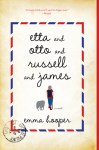
Etta and Otto and Russell and James

Rating: .5
Author: Emma Hooper
Genres: Fiction, Historical Fiction, Magical Realism
Pub. date: Jan. 2014 (read Mar. 2019)

Okay, Emma Hooper is definitely emerging as one of my favourite writers! I read her second book, Our Homesick Songs, last year and absolutely loved it! I may have been a bit biased because it’s a book about Newfoundland, but Hooper herself isn’t a Newfoundlander and I really think it’s a book that can appeal to anyone. So when I saw her debut novel on sale at Book Outlet, I had to buy it.

Hooper has a really lovely way of writing and I could see how her style wouldn’t appeal to everyone, but I really love it. I feel like joined the “Book World” last year when I started my book blog because I was suddenly exposed to all these other book bloggers and booktubers that I hadn’t before. Booktube for sure is comprised mostly of young book bloggers (like they make me feel old), so they trend towards reading a lot of YA contemporary and YA fantasy. I’ve always liked both of those genres, but when I started engaging more in the book world, suddenly I felt like this was all I was being exposed to and as a result, I started reading a lot of YA and fantasy.

This is fine, because I love both those genres, but I’ve definitely become fatigued with them over the last 4-6 months and I went on a fantasy freeze back before Christmas. I enveloped myself back in fantasy in January again and I probably should have paced myself a little because coming into March, I definitely need another fantasy break.

Anyways, this was all a long winded way of saying that I’m trying to get back into reading some more literary fiction and reading Emma Hooper’s Etta and Otto and Russell and James was like a breath of fresh air. I’ve discovered over the last few years that I prefer character-driven stories over plot-driven stories, even though they sometimes involve more of a commitment to read. I always love a good character driven story and overall I find them more rewarding.

I love Hooper’s subtle Canadian stories. I invested some time last year in reading more Canadian literature and damn, a lot of Canadian literature is just depressing. But even though both of Hooper’s books have some pretty sad themes, they are a joy to read and I love how she entwines magical elements into her stories and builds her narrative around everyday, mundane life events.

To get more to the point, Etta and Otto and Russell and James is story about people and relationships and the things we need to do in order to survive and find happiness. Etta and Otta have been married for many years when Otto wakes up one morning and finds a note from Etta saying that she needs to see the ocean and has decided to walk there. Etta and Otto live in Saskatchewan and Etta has chosen Halifax as her preferred destination. Russell is Otto’s best friend and adopted brother who lives next door and they are both affected by Etta’s absence since she has been with them since they became men.

The story follows Etta as she makes her way across Canada and Otto and Russell and they try to figure out how to live and adapt without her. We simultaneously get flashbacks to their shared childhood and the historical events that defined their lives. And like Hooper states in the synopsis, if you want to find out who James is, you’ll have to read the book.

Everything about this book is subtle, but I love how Hooper creates this sense of atmosphere throughout her novels. Do I believe Etta could survive walking across Canada without even a sleeping bag or a raincoat? Absolutely not, but Hooper makes her stories seem incredibly simple, while at the same time being very complex. I know I don’t understand even half of the nuances and themes of this story, but I like thinking about them. I love that Hooper never tells us how to feel, or even really how her characters feel. Everything is left up to our interpretation.

Like Our Homesick Songs, this is a look at the people who leave and the people who stay and how both of those journeys are impacted by that decision. Is home a place or is it the people who make up that place? How do our experiences and memories shape us?

I originally gave this book 4 stars, but after reflecting and writing this review I’m bumping it up to 4.5. I’m filled with such melancholy thinking about this book and there was honestly nothing I disliked about it. Our Homesick Songs is still my favourite of the two, but this one was wonderful too.

Our Homesick Songs

Rating: ⭐
Author: Emma Hooper
Genres: Historical Fiction, Fiction
Pub date: Aug. 2018 (read Nov. 2018)

I loved everything about this book.

I saw it floating around on Netgalley and Goodreads over the past year and I thought it had the most gorgeous cover, which reminded me of my home in Newfoundland, but I guess I never read the synopsis because when one of the book bloggers I follow posted a review about this book, I couldn’t believe it was actually about Newfoundland. (not that there’s any shortage of books about Newfoundland, I just wasn’t expecting to find one in the mainstream book world).

Our Homesick Songs is by Albertan author, Emma Hooper, and is about the collapse of the Newfoundland fishery in 1992 and the struggle many Newfoundlanders went through in making a living after their traditional livelihood was decimated. The story focuses on the Connor family, who lives in a small town called Big Running, on an island off the coast of Newfoundland. It tells the story of Aidan Connor and Martha Murphy – how they fell in love and were later forced to travel to the Alberta camps to find work – and their two children, Finn and Cora. It’s a family drama at heart, but setting and culture play a huge role in the story.

I grew up in Newfoundland, moving to BC after I finished university. My parents and grandparents are from rural Newfoundland communities and my maternal grandfather was a fisherman. Stories about Newfoundland always hold a special place in my heart because, I think more than anywhere else in Canada, Newfoundland has a very distinct sense of culture and belonging. I was too young to understand the cod moratorium in the early 1990’s, but I’ve witnessed the impact in had on rural Newfoundland, and how the return of the food fishery in 2007 was like a right of passage and a homecoming for many people. Everyone has friends and relatives who were forced to move out west in search of employment – it’s why I have so much family located in Alberta – but there is usually a keen desire to return home.

I was a bit nervous to read this book, seeing as it’s not actually written by a Newfoundlander. I mean, I know people write books all the time about places they’re not from, but you can’t help but feel a little bit nervous about having your beloved home recounted from the point of view of someone else. But Emma Hooper did a wonderful job with this book. Her writing is lyrical and beautiful and it really does evoke a strong sense of homesickness as you read her writing. I think she did a wonderful job capturing the love people feel for Newfoundland, and communicating how heartbreaking it is for people when they are forced to leave. I’m sure I related to it a little bit more as a Newfoundlander, but I really think that anyone can love and enjoy this book.

There’s two main stories being told throughout this book. There’s a current day story set in 1992. The fish have disappeared, and as such, so have the people. Big Running gets smaller every day as families take off for the mainland in search of work. There’s an abundance of jobs in the work camps up in Northern Alberta, so this is primarily where people flock. In an attempt to stay, Martha and Aidan share a camp job on rotation, with each of them doing a month on and a month off. Their children, Finn and Cora, struggle with the loss of one of their parents each month and the disappearance of their community. Cora escapes from her broken family by studying travel guides from the library and re-creating each country in one of the abandoned homes. Finn laments the loss of their way of life and comes up with a plan to try and draw the fish back to their shores. Both children are lonely, as are their parents, who are forced to live apart indefinitely.

The second story is recounted by Finn’s accordion teacher, Mrs Callaghan. She tells Finn the story of his parents and how they met and came to fall in love back in the 1970’s. The stories contrast each other in that one tells the story of how love began, whereas the other tells the story of how it starts to fall apart. And woven through both stories is the music that calls us all together and the importance it plays in Newfoundland culture.

I actually really loved the way Hooper wove music in through the story. Music is an incredibly important part of Newfoundland culture and I thought she really showcased that and linked it in really well with her themes of homesickness and loneliness. Finn plays the accordion, Cora plays the violin, and everybody sings or plays one musical instrument or another. Aidan and Martha sang to each other over the water for years without even being aware of the other. Music plays an important role in bringing people together and reminding them where they come from and I thought Hooper showcased this multiple times throughout the book. I loved when everyone showed up to Finn’s community meeting with their instruments. They knew they might be forced out of their homes, but saw the meeting as a good opportunity for one last community kitchen party.

This book also touches on the issue of government resettlement. It’s a heavy issue in itself and has been the focus of more than one book in the past, but I thought it worked well in this story and wasn’t overdone. It’s another important historical part of Newfoundland that is ongoing to this day, and I think it’s great to inform more people about it. Rural communities are very much disappearing in Newfoundland and it is heartbreaking. It’s difficult for the government to continue maintaining services to small backwater communities and it does happen where residents are encouraged by the government to relocate. For Finn, the deadline to decide on re-settlement was a catalyst to do something. He doesn’t want to leave his home or have his family be separated any longer, so he hatches a plan to try and bring back the fish.

This is a classic kind of slow-burn family drama, but no part of this story read slowly to me. Hooper does a great job on characterization and character development and even though it’s not a plot driven book, I could not put it down. I picked this one up with the intent of reading it simultaneously with a mystery novel, but once I started this one, I literally couldn’t bear to put it down and didn’t touch my other book once until finishing this one. I can see how this kind of writing isn’t for everyone, but I personally loved it.

In conclusion, I can already tell that this is a story that will stick with me and that I’ll be recommending to my family. Everything about this book worked for me and I loved how evocative and introspective the story was. The name Our Homesick Songs is the perfect name for this book because the writing, the setting, and the characters all evoke a very keen sense of longing. 5 stars, no question.