Ties That Tether

Rating: ⭐⭐⭐
Author: Lauren E. Rico
Genres: Fiction
Pub. Date: Dec. 2023

I have mixed feelings about this book. Overall, I liked it – I thought both the story and the writing were compelling and I’m impressed with it as a debut. It’s my book club pick for April and I’m really excited to talk about it because I think there are a lot of interesting themes to discuss. My main complaint is that I didn’t like the religious elements of the story and I didn’t like the ending.

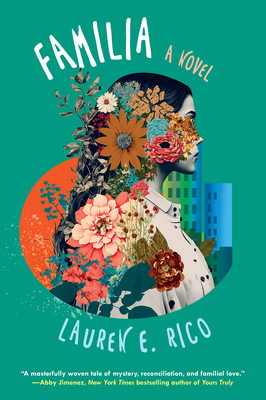
I can’t discuss the parts I didn’t like without getting into spoilers, so let’s talk about what I did like first. Familia is the story of Gabby DiMarco and Isabella Ruiz, two women with very different backgrounds, connected by blood. Gabby is a well-to-do woman in New York City whose parents have recently passed away and is trying to get her big break as a journalist. Isabella is a Puerto Rican woman who lost her mother in childbirth and her father’s subsequent depression and alcohol abuse resulted in the kidnapping of her infant sister, Marianna, 7 months later. This tragic event traumatizes Isabella for the rest of her life and even 25 years later, she is determined to find her sister. When Isabella and Gabby get a 50% DNA match on a gene website, Gabby is sure there’s a mistake, but flies to Puerto Rico in hopes of breaking an interesting story.

It’s obvious where the plot is going, but I enjoyed the journey. It’s a compelling narrative and I was really interested in all the themes the author wanted to explore. Isabella feels a deep sense of resentment for her sister because her birth resulted in the death of her mother and the breakdown of her family, but she also feels guilt over having wished her sister never existed at the exact moment she disappears. When they are reunited, her guilt morphs into jealousy at the easy life her sister had growing up in America in contrast to her traumatic childhood and youth. Gabby refuses to believe that she and Isabella could possibly be sisters, because to accept that fact would be to accept that her entire life and family was a lie. Plus it raises the age-old question of what really makes a family – is it the blood you share or the relationships and trust you’ve built. 

I thought these were all fascinating questions, particularly for Isabella, who I found a more compelling character, and I thought the author did a good job at exploring the internal conflict of these two women. Their relationship was believable to me. They have an emotional connection, but not in an overly cheesy way, and the experience brings them closer together, while still being realistically challenging for them. 

Overall, I liked the format. The author opts to break the story up between the present and the past. Isabella and Gabby do their own detective work to try and figure out what actually happened to Marianna, while at the same time we have flashbacks to a wider cast of characters that were responsible for Marianna’s disappearance. It turns the book into more of a literary mystery novel and it serves to keep the reader interested in the storyline. I think this could have also worked as pure literary fiction and delved a lot deeper into the emotional impact this would have on Isabella and Gabby, as well as to question the ethics and morality of Gabby’s upbringing. I think I probably would have preferred the latter, but recognize that it would be a much more challenging novel to write and think this was still impressive for a debut.

What I didn’t like was that the author bypasses any exploration of the ethics of Marianna’s kidnapping (by Gabby’s parents). To be fair, she does explore the idea that there are almost always grey areas in the law in these types of situations. Kidnapping is obviously wrong, but if the baby grows up to live a much more comfortable and privileged life, does that justify the means? How does Gabby rationalize the fact that her parents are both loving and caring people, while also being kidnappers? As a fact checker, I thought she would want to really delve into that narrative. To me, this was the most interesting theme of the novel and I wanted to consider the dichotomy of these two conflicting facts about her parents. But the story is written to conveniently bypass these challenging ideas, which I did think was a bit of a cop-out. To be fair, I may be holding the book to an unreasonably high standard. It was well-written and I was hopeful that the author would commit to some very tough themes.

So let’s talk about what I didn’t like (spoilers ahead!). First off, I didn’t like the religious aspect of the story. There were some really interesting ethical questions here, and I think the author used spiritual intervention to avoid tackling questions of morality. This was a 7-month old baby. It’s one thing to knowingly kidnap a baby with the intention to traffic it – that is a deeply sick crime. I felt it was another thing to opportunistically kidnap a baby and then decide to kill it. I feel that most people would have deep ethical problems when presented with this scenario, even Santiago (what kind of sick person is willing to kill their widowed brother’s daughter?). Because it wasn’t a premeditated kidnapping, I couldn’t rationalize any other acceptable course of action other than to return the baby to her parent. 

I felt like the author used the whole ‘weeping Madonna’ spectacle and Lucy and Mack’s infertility to try and convince the reader that giving away someone else’s baby was an acceptable course of action. I was glad that Mack realized that the whole idea was ludicrous, but I felt the whole “you must take the baby or Santiago will kill it anyways” was a cop-out. Likewise, getting Alberto’s permission to take the baby was the ultimate way to absolve Lucy and Mack of any wrong-doing. It’s a clean way to structure your novel and it removes the conflict for Gabby that her parents were both good and immoral people. From her perspective, all they did was adopt her unknowingly from an orphanage, which conveniently absolves her from having to rationalize that people we love can make both good and bad choices. It’s a feel-good way to tie up your novel, and that’s fine, I guess I just wanted to get into gritty questions of morality. 

At the very least, if you’re going to absolve Lucy and Mack of any wrong-doing, I thought Rico would at least confront the impacts of Alberto’s decision on both him and Isabella. I struggled to believe that he would willingly hand over his baby to an American couple he knew nothing about. In fact, none of the characters knew anything about Lucy or Mack aside from the fact that Lucy was desperate for a baby. They could have been terrible people. Did Gabby have a better life in America? Most likely… she definitely had more money and opportunity. But we also will never know how things might have been different if Marianna had been returned to her family.

Maybe if Marianna had been returned to her family, it would have been the wake-up call Alberto needed to get clean and take care of his family. He proves at the end that he’s capable of it (which I also found highly unbelievable, why would he randomly get clean after 25 years?), so maybe he would have redeemed himself if he hadn’t given up his youngest daughter. But what really rubbed me the wrong way was that the sisters never found out the truth! Isabella would be devastated to learn that her father willingly gave away her sister and then lied to her about it for 25 years. I felt like this theme really should have been addressed and it did a bit of a disservice to both women to keep it a secret. 

The thing is, I don’t think Lauren Rico wanted to explore those themes. I think Rico was more interested (based on the author’s note) in exploring themes of familial bonds and heritage. I think she wanted to tell a story of sisterhood and family reunion, without doing the work to explore the deep emotional impact of this event on each family member. Which made me question why she structured her book as more of a mystery novel. To be honest, the “how” of Marianna’s kidnapping wasn’t as interesting to me as the emotional impact it had on the two women as adults. I think I would honestly have been fine not knowing how Marianna ended up in the US and just exploring the Ruiz family roots and healing of trauma. I was surprised there was no exploration of the fact that Gabby has just gone from being White to being Latina, and what it would feel like to suddenly be thrust into a completely new culture that you feel you have no right to claim. There’s so much to unpack with these concepts and I was just left feeling a little disappointed. There were great ideas, but I feel like we only scratched the surface.

Some reviews by Puerto Ricans also discuss the idea that Rico only portrays the dark side of Puerto Rico. That Puerto Rico is filled with drugs and criminals, rather than showcasing some of the more vibrant parts of the island (I think this is done primarily through Isabella’s art). I think this ties in with my general comments about why the author chooses to focus on the crime rather than the aftermath. It promotes a white saviour narrative, so I can see how that would be insulting to locals and I wanted the author to do more emotional labour in breaking this down for her readers. 

This is a more minor complaint, but I have to mention one other scene that bothered me. The scene where Mateo randomly decides to leave Isabella after she gets in the fight with Gabby. This conflict didn’t fit the story and came out of nowhere. Isabella is going through so much emotional turmoil during this time and then all of a sudden her supposedly perfect husband is like “I can’t take this, you need to figure out who you are or I’m outta here!” She is literally trying to figure it out at this exact moment Mateo! Why don’t you buckle down and be there for her for a hot minute while she works through an extreme amount of trauma! She’s just found her sister – she’s been searching for her for 25 years and she’s now realizing that the search was a way of avoiding trauma and now that she’s found Marianna, she has to acknowledge that it doesn’t heal all her old wounds. 

Anyways, take my criticisms with a grain of salt. I have so many because this book made me think a lot. It’s maybe unfair to hold a debut author to such a high standard. I would definitely read her next book because I think she has a lot of promise and it was an engaging read. Props to any novel that can inspire me to dig deep and write this long of a review. I’m excited to see what else we unearth about this book in our book club discussion and whether it changes any of my opinions! 
The Sweetest Remedy

Rating: ⭐⭐.5
Author: Jane Igharo
Genres: Fiction, Romance
Pub. Date: Sep. 2021

I picked this up right away after really enjoying Ties That Tether, but unfortunately, it didn’t have any of the same charm. Both books are a bit overwritten and don’t do a very good job at “show don’t tell”. But the characters in Ties That Tether had a lot of chemistry, which I felt was really lacking from this story. The romance was very instalove and it didn’t feel organic to the rest of the story.

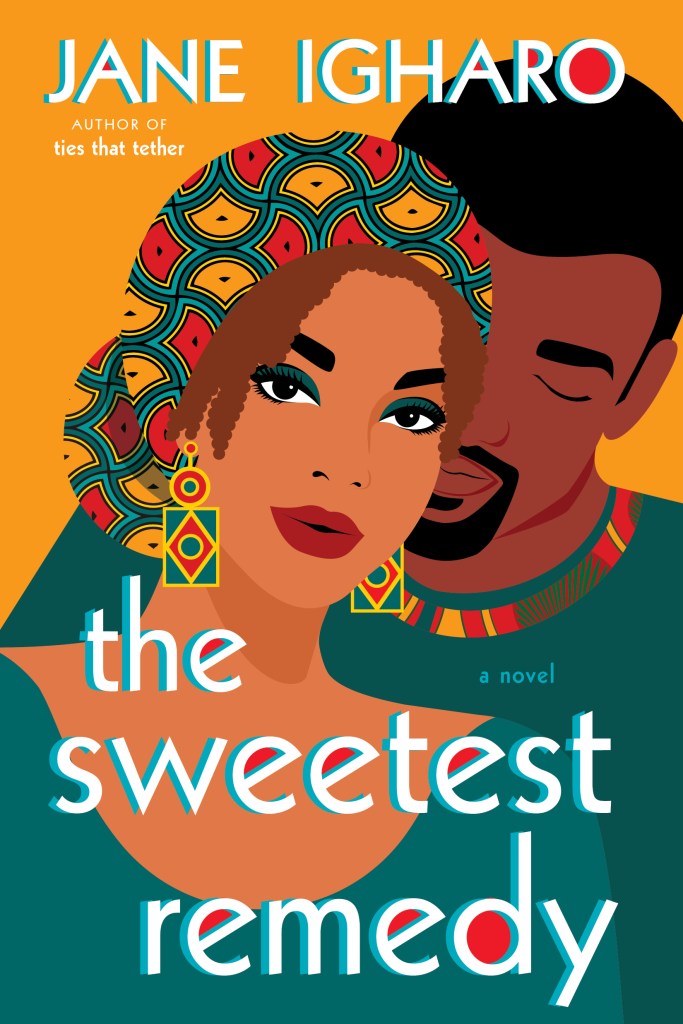
The central story is really about Hannah meeting her estranged family for the first time and discovering her Nigerian heritage. Hannah grows up bi-racial, living with her white mother and never knowing her Nigerian father. When he passes away suddenly, she is invited to attend his funeral and get to know the rest of her family, meeting an interesting family friend, Lawrence, along the way, to whom she is attracted.

Overall, I thought the story had a very strong central idea, with lots of really great themes to explore around identity, class, family, heritage, and racism. Even though this is labeled as a romance, I actually found the romance detracted from the rest of the story. While it had a great premise, it was lacking in depth.

All of the characters felt really one dimensional and there wasn’t real tension between any of them, despite the author continuously setting up barriers between each of the characters. In my opinion, none of the conflicts had any real emotional depth, and the characters were basically wealthy Nigerian royalty, so it was really hard to relate to them or feel any empathy for them. I empathized with Hannah, but I don’t think the author committed to the entire spectrum of grief that Hannah likely would have experienced. Where was the rage at her father and his family for casting her out? Where was the deep sadness about never having the opportunity to know her father? Even the children who did know him hardly seemed to be mourning him, so the entire thing just read like a fantasy.

Which is really the problem I had with this book. I felt like the author had lived Ties That Tether. She understood Azere’s interpersonal conflict and feelings. Even though Azere and I have almost nothing in common, her emotions and longing were still incredibly relatable. I’m not convinced the author really understood the content of what she was trying to say in this book. Everything about this story read like a self-insert fantasy to me. If you grew up disconnected from your heritage, I could see the longing of gaining a family and a culture and finally feeling seen. But how easily the siblings accepted Hannah, and how they were so rich, and how she immediately meets a sensitive and nice Nigerian man to instruct her in the ways of Nigerian culture, seemed so transparently a fantasy to me. Like the author was dreaming about being adopted into a rich and affluent family.

There was no tension between Hannah and Lawrence, and there was no tension between the siblings – except for Tiya. Everyone was too easily accepted and forgiven. Sure, everyone wants a happy ending, but this was too convenient. Give me some grit! It’s a fluffy read, but neither of Igharo’s books are really fluffy stories. Ties That Tether had a good balance, but it was lost in The Sweetest Remedy and the plotline felt detached from reality.

Anyways, I like it less now that I’ve written the review. It was a disappointment. Read Ties That Tether and skip this one. 2.5 stars.

Crying in H Mart

Rating: ⭐⭐⭐⭐
Author: Michelle Zauner
Genres: Memoir, Non-fiction
Pub. Date: Apr. 2021 (read Sep. 2021 on Audible)

I’ve had a bunch of people asking me my thoughts on this one and it’s a book that has me really conflicted. I’ve heard so many great things about Crying in H Mart, and I would definitely not hesitate about recommending this book. But I was really on the fence about how to rate it. I decided on a 3 star rating because I had started to lose interest during the last third of the book, but after writing this review, I found a lot more arguments for why this was actually a really good book, so I decided to increase my rating to 4 stars. One of the reasons I love taking the time to actually write reviews is it forces me to meaningfully reflect on what I’ve read.

Crying in H Mart is a memoir about the author’s relationship with her mother, food, and how the two have become intertwined. It is a deeply personal book. The primary reason I would recommend this is because the author has such raw honesty, it really did blow me away. She lost her mother to cancer a few years ago and this book is very much a manifest of her grief. It is sad and moving to read – it almost feels wrong to rate it at all, even highly, because the author so clearly wrote this book for herself more than anyone else.

The story does have some ebbs and flows. Like I mentioned, I found the last third a bit slow moving because it focuses more on the author’s life after her mother’s death (which I found somewhat monotonous and not as interesting to read), whereas the first half is so shocking in its honesty that you become completely engrossed. But what makes it powerful is it’s not just about the author’s grief, instead it’s an in-depth look at her complicated relationship with her mother, her culture, and her mixed-race family. A lot of her observations about her mother are very unforgiving. She doesn’t remember all the good things about her mother, but rather, she remembers everything about her mother – the good, the bad, and the ugly. It takes so much courage to write that kind of memoir about grief, which is why I applaud the author and ultimately why I decided to bump my rating up to 4 stars.

Even though parts of this story were less compelling to me as a reader, I feel like Zauner is committed to the memory of her mother as she was and the exploration of her grief through and through. It doesn’t matter what path grief takes or how it looks to other people, it only matters how it feels for you. It’s kind of beautiful to think that our memories of our loved ones don’t have to be confined to one narrative. We are not only the good things or the bad things that we did, we are all of those things, and I can see how remembering it all, good and bad, could be cathartic.

Overall, I think I would recommend the paperback over the audiobook. The audiobook is read by the author, which I usually love, but she is very monotone and I think that may have contributed to my fatigue with the book.

Watch Over Me

Rating: ⭐⭐⭐⭐⭐
Author: Nina LaCour
Genres: Fiction
Pub. Date: Sep. 2020 (read Dec. 2020)

Watch Over Me was an impulse buy at a local bookstore. I’ve heard a lot of good things about Nina LaCour’s other book, We Are Okay, and the phrase “aged out of foster care” in the book synopsis intrigued me. Plus the cover art and end pages for this book are absolutely gorgeous, so I wanted it for my shelf. Publishers, never underestimate the power of beautiful end pages! I really wish more books had them.

Anyways, I started reading this almost right away and it’s one of those slow burn character driven novels that I absolutely love. The plot wasn’t quick paced, but I was sucked into the story and more or less read it in two sittings (it’s a short book). This was a weird mix of magical realism and ghosts and it just really worked for me.

18 year old Mila has aged out of foster care and been accepted to work as a teaching intern on a farm. The owners, Terry and Julia, have supported many foster children over the years and offer Mila room and board in exchange for help teaching some of their existing foster children. Mila eagerly accepts and travels to the remote farm to stay in her little one room cabin.
 
At first everything seems too good to be true. Everyone on the farm is extremely welcoming and she finally has a little space and family to call her own. But she soon discovers that the farm is haunted and that she may be forced to confront the trauma of her past. 

It’s a bit of a weird book and I could definitely see this not being for everyone, but I really loved it. First off, the writing is gorgeous – I really felt that there were no words or ideas out of place. At 250 pages, with a large font, it’s a short book, but I felt that the author said what she needed to say and then ended it. She spent time on what mattered and didn’t waffle around on what didn’t. 

Ultimately this is a story of grief and loss and learning to forgive ourselves. Mila had a very traumatic childhood, which compelled her to make choices that she’s not proud of. Yet she’s still an incredibly kind and loving person – her mistakes have not influenced her caring demeanor and ability to see good in others. But they are tearing her apart inside and not permitting her to grow and flourish. 

I really didn’t know how this book was going to go once Mila showed up on the farm. There’s an atmosphere of grief and longing that permeates throughout the entire novel and I wasn’t sure whether to expect good or bad things from the farm and the people who lived there. Everyone was so kind at the farm that I kept waiting for a big reveal for what’s actually going on underneath the surface. This happened, but not in the way I expected.
 
Overall, LaCour does a really good job of conveying the longing we all feel to be loved and accepted. Though Mila is forced to confront her demons, she finds everything she’s ever been longing for on the farm. We can always begin anew. We don’t have to be defined by the mistakes of our past and we are always still worth being loved. Especially in these pandemic times, aren’t we really all just longing for home? Sometimes it’s a place, sometimes it’s a person, but we all long to belong.

The Dutch House

Rating: ⭐⭐⭐.5
Author: Ann Patchett
Genres: Fiction
Pub. date: Sep. 2019 (read Apr. 2020)

I read The Dutch House way back in April and I really wish I had reviewed it back when I read it. But it was in the middle of Covid back then and I wasn’t feeling much motivation to do anything, so I let it slide, which is a shame because I really loved this book. I’m going to do my best to review it now, but I apologize if some of the details are now a little foggy.

I read The Dutch House as an audiobook, which was a real treat because it is narrated by Tom Hanks! I wasn’t too sure what to expect, but it’s touted as a family drama that spans 50 years, so I was definitely intrigued. The story is about brother and sister Danny and Maeve – from their childhood right up to their late adulthood. At the center of the story is the Dutch House, an old and extravagant manor that was purchased by their father when they were children. Through a serious of events and misunderstandings, Danny and Maeve find themselves kicked out of the Dutch House, and though it’s decades before they ever cross the threshold again, the house and the fall out from the house still dominates their lives for many years to come.

It’s really a fascinating concept for a story. You don’t think of a house as being a protagonist to a story, but I also read Melina Marchetta’s, The Place on Dalhousie, last year and it’s interesting how much value we’ve learned to place on our childhood homes and how those spaces can influence us far into our adult years. Houses are after all so much more than just buildings, they are homes and the memories and feelings we attach to them are powerful driving forces.

At it’s heart I think this is really a novel about the influence our parents have on us and how powerful family bonds can be. Danny grew up tagging along after his father, Cyril, who was a self made business man who finds wealth in owning and renting real estate. Cyril thought he had finally escaped the cycle of poverty for his family, so it comes as a shock to Danny when he finds himself at the bottom and forced with making his own way in the world. At the same time, Maeve’s childhood is defined by the disappearance of her mother. Her mother never loved the extravagance of the Dutch House and leaves to volunteer in India. Danny and Maeve are always told about their mother’s goodness, but all they can see is the woman who was never there.

Both struggle from abandonment in different ways and the eventual falling out with their stepmother Andrea over the ownership of the Dutch House casts a shadow over the rest of their lives. Maeve is discontented at being cut out of the Dutch House and puts all her effort into helping Danny become as successful as possible, despite how miserable it makes him. Each character’s greed over the Dutch House ultimately consumes their lives, with each thinking that wealth will make them happy, when really it’s only the family that lived in the Dutch House that could do that.

This is the exact kind of literary fiction I love and reminds me that I really should read more family dramas. Each character is enormously flawed and nuanced. To the outsider it’s so obvious that Maeve needs to let go of the Dutch House and Danny to start pursuing his own happiness, but each continues down their own path of destruction, completely blinded by their feelings of injustice. Every character is complex, as are their relationships with one another. I suppose some people might find the plot lacking in drive, but these characters and their relationships with one another were like a train wreck I couldn’t look away from.

Tom Hanks narration is excellent and I think this is one book that time has improved for me. The characters were definitely frustrating at times, but looking back on it, the whole song and dance and obsession over the Dutch House was just so enthralling. Families can pick you up, but they can also let you down, and I loved watching how Danny and Maeve both grew and were stunted by their emancipation from the Dutch House. Would definitely recommend this book!