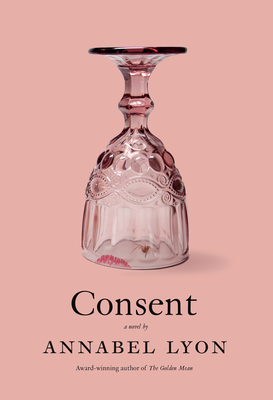
I picked up Consent at my local indie bookstore because it’s written by a Vancouver author. I was slightly deterred from purchasing because it has quite low ratings on goodreads, but the plot featured two sets of sisters and sounded really interesting to me, so I decided to go for it. Now that I’ve read it, I would say that Consent is one of those uniquely weird Canada lit books that really works for some people and doesn’t work at all for others. I admit I do like a good weird book and fortunately, this one worked for me!
It’s been a while now since I read it, so bear with me if some of the details are a little foggy. The book features two sets of sisters that briefly connect with each other within the story, but aren’t really related to one another. The first set of sisters, Sara and Mattie grow up in Vancouver in their large family home. Mattie has a cognitive disability and lives full time with their mother, while Sara goes off in search of a different life in Toronto. With the death of their mother, Sara begrudgingly returns to Vancouver to take care of Mattie.
The second set of sisters, Saskia and Jenny are about a decade younger and are twins. Despite their closeness, they lead very different lives and when Jenny is in an accident, Saskia begins to question everything about herself, her sister, and their relationship. It’s a character driven story that focuses primarily on Sara and Saskia and examines familial bonds and the effects of both grief and guilt. Both sets of sisters experience tragedy and discover they have a common link between them in the character of Robert, who was connected to each set of sisters.
I can see how this book wouldn’t work for a lot of people, for the most part, the characters are pretty unlikeable and have very questionable motivations, but I found it to be a really interesting character study and liked how different each sister was. Despite the strained relationships, each woman’s choices are guided by a sense of affection and I liked that the author delves into the complicated relationships that exist within many families. Skip this one if you need likeable characters, but check it out if you like character driven family sagas that examine some of the grey aspects of our psyche.
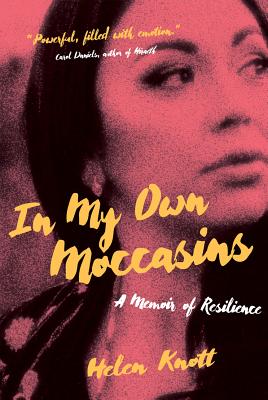
Rating: ⭐⭐⭐⭐⭐ Author: Helen Knott Genres: Memoir, Non-fiction Pub. Date: Aug. 2019 (read Nov. 2021)
I picked this book up last summer when I was book shopping in Sidney on Vancouver Island (aka the book capital of the Island!). It’s been sitting on my shelf ever since taunting me. In an effort to finally read it, I put it on our book club voting list and it won as our December book pick.
I was momentarily daunted when I first started the book because I thought it might be a dense read, but I was quickly pulled into Helen’s writing style and engaging storytelling. He holds nothing back in her book foreward, making it clear who she wrote this memoir for and that she doesn’t want your pity or judgement. It’s a sobering reminder that might be off-putting to some, but I thought it was so great because it set the tone upfront that Helen is the custodian of her own story and it is hers to share for her own means. Colonialism has taken enough from her and it is her turn to take something for herself.
I definitely don’t judge her and I hope I empathize with her rather than pity her. But mostly I admire her. Technically, this is well written and I was really impressed by her calibre of writing. She says she is a great lover of literature and self reflection and I definitely found both of these to be true. Memoirs can often be more about the story than the writing since we can’t expect everyone with a meaningful story to tell to necessarily also be a good writer. But Knott has both and it made the reading experience all the more enjoyable.
Emotionally, this book is a roller coaster. Knott splits her story into 3 parts: the dreamless void, the in-between, and the healing. The dreamless void is the longest part of the book and covers her struggles with all kinds of abuse, both from violent acts perpetrated against her, as well as her ensuing addictions to alcohol and drugs. It is the hardest section to read and very much like peeling back the layers of an onion. Her turbulent home-life and the many racial injustices she and her family face chip away at her self worth and she looks for relief in all the wrong places. However, where the right places would be, I really have no idea.
Knott feels like a bit of an enigma to read about because through all her suffering and addiction, you still get glimpses of a very reflective and accomplished individual. She has pulled herself together on several occasions only to have it all fall apart again when she is unable to face her past trauma. What I admire her for are the in-between and the healing and these are the parts of her story that really stuck with me. She is able to identify the many ways in which colonialism and racism have worked against her and her family. She is able to pinpoint the long term impacts of residential schools while also not being afraid to look critically at herself. Many are unable to escape the cycle of abuse and addiction and I thought her incredibly courageous in being able to face her trauma head on and say, ‘no, I am worth something and I will not let this rule my life anymore.’
So while it is hard to read about the dreamless void, it is critical that we bear witness to it. Not, as Helen says, to educate ourselves or gain insight or humanize indigenous voices. But because these are voices we need to amplify and we have been silencing them for too long. We should be uncomfortable, but we should also be inspired.
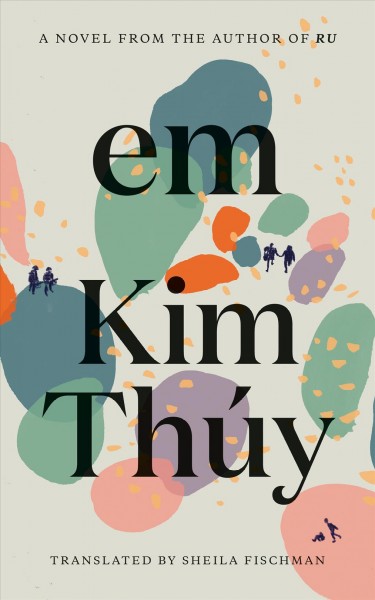
This is going to be a short review to match a short book. Em was the last of the Giller Prize nominees that I read. I’ve seen the author’s other book, Ru, floating around the Canadian Lit scene for years and decided to give this one a try when I saw it on the longlist. I was intrigued by the time period, ‘Operation Babylift’, and the impact of the Vietnam War on the beauty salon industry in North America, as detailed in the synopsis.
I’ll say upfront that of all the nominees I read, this was my least favourite. I did still like it and was impressed by how much history Thuy was able to cover in such a short book – I thought it was a solid 3 star read. But it was an ambitious novel and I felt it just didn’t deliver on what I thought I was getting from the book jacket. The book is told mostly in prose, which makes for a quick reading experience, which is exacerbated by how quickly Thuy jumps from topic to topic.
I can see why it would be nominated for it’s unique style and it is perceptive. She says a lot with a limited amount of words, which is definitely a skill, the style just didn’t quite work for me. I think the first part of the novel is the strongest, which focuses on the My Lai massacre. This really drew me into the book and it was interesting the associations Thuy made to move the story along. I just wanted more from the rest of the narrative and didn’t find the part of the story set in America to be as tightly executed. It almost worked, I just wanted a bit more from it.
My attempt to read a bunch of the Giller Prize longlist has been going so well this year! As a Canadian I always get excited about this list, but I’ve never dedicated so much time to working through the nominees before. I usually get more into Canada Reads in March, but I have to say, reading through the Giller nominees was a much more satisfying experience than I’ve ever had participating in Canada Reads. This just seemed to be a much more quality selection for me and I can say that I really liked everything I read!
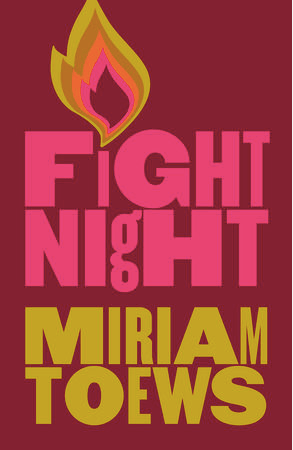
In total I read 4 of the 12 nominees on the long list, but Fight Night was the only one I read that made it to the short list. I’ve been aware of Miriam Toews for a long time, but the only book of hers I’ve read is Women Talking, which I absolutely loved. I didn’t like Fight Night as much as that one, but I was so pleasantly surprised with this book! Because Women Talking tackles such a heavy topic, I think I was expecting something a little darker from this book – it was so lovely to read this humourous take on a multi-generational family instead.
Fight Night is told from the point of view of 9 year old Swiv. She has been expelled from school and as a result is living at home full time and being (somewhat) tutored by her grandmother. Her mother is pregnant and her father is missing; to help her process her circumstances and surroundings, her grandmother has her write letters to her unborn sibling “Gord”.
I’ll say upfront that I struggled a bit with Swiv’s voice – not that I found it hard to read or that I didn’t enjoy it – just that I struggled to believe she was actually 9 years old. She read a bit more mature to me and kept picturing her as a 12 year old rather than 9, but otherwise, this was such a sweet and fun book to read.
We get to spend time with Swiv, her mother, and her grandmother and I came to love each of them very dearly. Grandma has an incredible zest for like that immediately endears everyone around her, while her mother struggles with her mental health and missing husband. She loves Swiv fiercely and fights to stay strong for both her and Gord. It is an entirely character driven novel that captures a truly beautiful relationship between 3 generations of women.
I don’t have too much else to say about the novel except that it’s a great read if you’re ever feeling down and the humour is really what carried the book for me. I did think there were some structural weaknesses – one of my favourite parts was when Grandma recounts Swiv’s mother’s history for her while they’re on the plane to California, but I found the timing and delivery to be a bit awkward, like Toews knew what she wanted to include, but couldn’t find a graceful way to do it. Overall I could have done without the trip to California entirely and found it a bit distracting to the greater themes of the novel. I don’t think it’s the strongest of the nominees I read (I really would have liked to see The Strangers make it to the shortlist), but I would definitely still recommend Fight Night. Overall it was a joy to read!
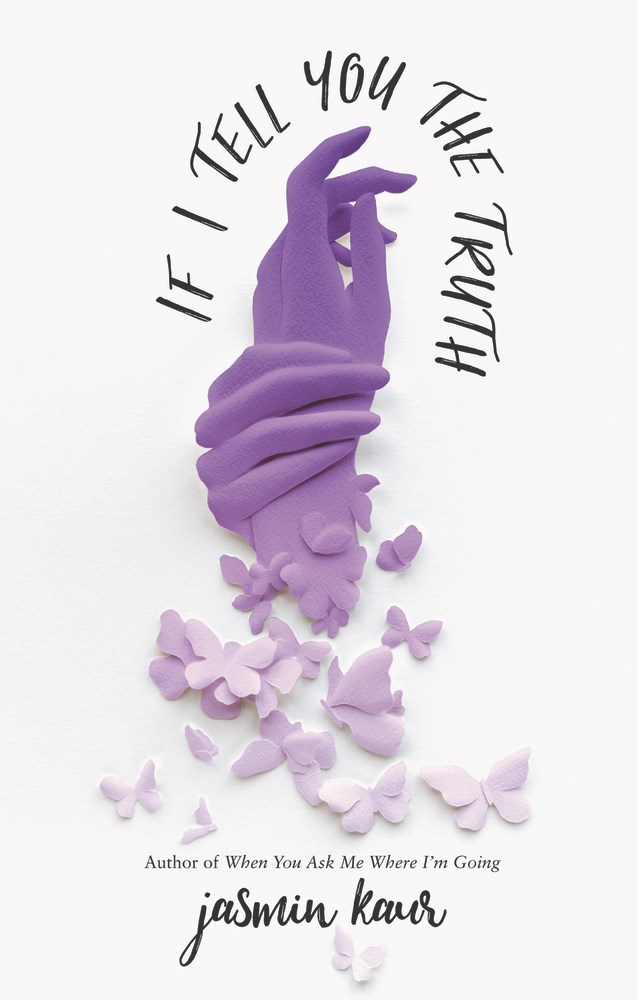
Rating: ⭐⭐⭐⭐ Author: Jasmin Kaur Genres: Fiction, Young Adult Pub. Date: Jan 2021 (read May 2017)
This was an impulse buy at my local bookstore because I saw the author lives in Vancouver and the synopsis sounded so good! I’m so glad I did pick it up because it was excellent! It’s half written in prose, which made for some very dynamic storytelling.
If I Tell You the Truth is about a 19 year old Punjabi girl named Kiran. She grew up in Punjab and is accepted to study at Simon Fraser University. Her parents goal is for her to get an education and then return to marry the son of the neighbour. However, before Kiran flies to Canada, she is raped by her betrothed’s brother and becomes pregnant. She travels to Canada and tries to keep her pregnancy secret as long as possible, but when she decides she doesn’t want to have an abortion, she is forced to tell her family and unfortunately is rejected by them.
She does her best to continue her education as a young mother, but it is difficult and eventually her visa expires, forcing her to take whatever work she can to survive without papers. The narrative eventually transfers from Kiran to her daughter, Sahaara, and we learn more about the struggles their family faces. There are few avenues to citizenship, so they live a small life to avoid attention.
This book is about so many things – rape, teen pregnacy, immigration, #metoo, family, diaspora, healing – just to name a few. The writing is excellent and switches from traditional text to prose throughout the book. I think the first quarter of the book is the most powerful. I was immediately drawn into the story – the trauma Kiran had experienced and her struggles to come to terms with what happened to her and her subsequent choices. It is hard to read about her fear and grief, but I think the author really touches a nerve here and the reality of Kiran’s feelings leap off the page and into your heart. I admired and empathized with her so much throughout the first part of the novel.
After Sahaara is born the narrative switches primarily to Sahaara and follows her as she grows up. I enjoyed this part of the novel as well, even though it takes us in a different direction than the first part of the book. I loved that the story is set in Surrey – it just made it so much more impactful to me as someone who also lives in the lower mainland. Since I’ve lived in Vancouver, it has become a Sanctuary City (since 2018) and I’ve always thought of it as a pretty progressive place. I’ve come to learn since the pandemic started that it is definitely not that diverse safe haven that I thought it was and I think it’s really important to have books about what it’s like to live undocumented in Canada (so many books on this topic are set in America).
So with that in mind, this is definitely a book that I would recommend to anyone and everyone, especially Canadians. That said, I did think the pacing was a little bit off. I felt like the book reached its climax around the 75% mark, and I was curious about what else would happen with so much book remaining. The author goes in a totally new direction for the final quarter. It wasn’t unrelated to the rest of the book – the main plights for the characters are resolved in the first 3 quarters – leaving the rest of the book for them to really heal and take action for others.
This part of the book is also powerful, but I didn’t love it as much as what came before. I think it’s so important to have people that are willing to speak out against injustice, but the plot took such a diversion that I found it a little distracting and almost like I was reading a different book. Don’t get me wrong, I still thought the content was really important, it just felt like the author was maybe trying to address too many things in one book, like it was almost a little too cathartic. Plus I felt it delved away from the ‘show don’t tell’ theme, which was strong for most of the novel.
Overall though, it is a minor criticism. I just thought the first part of the book was a 5 star read, but landed more around 4 stars by the end of the book. It’s still superbly written and I think something like this should be required reading for high school students. Books like this are so much more relevant and important to young people than reading books like Dracula and Catcher in the Rye (a few of my least favs from my high school education). Honestly, as much as I loved some of the classics I read in High School, I become more and more convinced over time that we need to stop forcing them on high school students. I don’t think a lot of students have the maturity at 16 to appreciate them and I fear it does more harm in fostering bad feelings about literature. A total tangent, but I do really wish our education system spent more time on contemporaries like If I Tell You the Truth, The Hate U Give, Punching the Air, Far From the Tree, and The Nowhere Girls. READ IT!
 The Paperback Princess