The Underground Railroad

Rating: .5
Author: Colson Whitehead
Genres: Historical Fiction, Re-imagined History
Pub Date: Aug. 2016 (read Apr. 2018)

This book is breaking my heart…. because I didn’t love it…. I didn’t even really like it.

I picked this for my April Challenge to read 3 award-winning books. This won the Pulitzer Prize and the National Book Award for fiction, so I had high hopes that I would enjoy this. It’s definitely a good book, I won’t debate that, but it’s just so unbelievably SLOW! It’s only 300 pages and it took me 2 and a half weeks to read. On average I read a book every 3 days, so this felt like the longest slog ever and I actually had to take a break in the middle to read my book club selection because I wasn’t going to finish this in time.

The Underground Railroad re-imagines the network of people and safehouses that helped black people to escape the south and slavery as an actual underground railroad. It’s an interesting concept, but personally I didn’t really think the railroad had any real impact on this story. Whitehead tells the story of Cora, a young slave in Georgia who after being beaten by her masters, decides to try and escape the cotton plantation where she’s lived her entire life. The plantation has a long and sorry history of slaves escaping the plantation, but they were always caught and returned to the plantation to be killed for trying to escape, except for Cora’s mother Mabel, who abandoned her when she was just a girl and was never re-captured.

Cora begins a journey through many states and is pursued by Ridgeway, a slave catcher who still can forget about Mabel, the one the got away, and is determined to catch Cora to right his past failings. She travels through several states and is witness to the kindness and hate of the people around her, sometimes catching a glimpse of like as a free-woman, and other times forced back into hiding as she continues towards her ultimate goal of escaping to the North.

This is an interesting story, as difficult as it sometimes was to read (content wise, which is sometimes disturbing). But I couldn’t get past the pace of the book and like I said, I thought the whole idea of the underground railroad fell flat. It serves to move our story around, but I didn’t actually find the concept that engaging. I would have liked to know more about the railroad and how it came to be – it was obviously built by slaves, like everything else in America at that time – but we don’t learn that much about it. I understand that this is part of the mystery, but I kind of wondered what the point was. Cora could have travelled between states hidden in the back of a cart and the story wouldn’t have really been any different.

There’s not very many high points in the story. The format was interesting, with Whitehead separating each chapter by a different state and separating the states with short chapters from the points of view of some of the minor characters. I had no idea what the point of the grave digger chapter was, but some of the other chapters were interesting. I was intrigued by Ridgeway’s character and found his and Cora’s relationship interesting.

Maybe I’m too dense for this book, but I just can’t get on board. I appreciate what Whitehead did with this book, but I’m not convinced it was worthy of all the awards. I wanted to love it, but it was just so slow and boring. It had some faster paced parts where I would finally get into the story, but then the chapter would end and everything would change up and be boring again. The story just had no momentum – a disappointing read.

The Humans

Rating: ⭐.5
Author: Matt Haig
Genres: Science Fiction
Pub Date: May 2013 (Read Apr. 2018)

I have mixed feelings about this book. The author definitely provided some interesting social commentary on humans and some of our eccentricities and social norms, but I thought the story was flawed and there were a lot of things that bothered me.

The Humans is a sci-fi novel very reminiscent of Douglas Adams’ writing. Hitchhiker’s Guide to the Galaxy isn’t one of my favs, but I did appreciate some of the humour in this book. The book starts with an alien who has taken over the body of professor Andrew Martin. Martin worked at Cambridge University as a mathematician and had a breakthrough in his work with prime numbers that could have changed everything for humans and greatly accelerated their technological advancements. The aliens are apparently threatened by this and send an unnamed alien to inhabit Martin’s body and destroy all evidence of his discovery (and anyone he might have told).

The alien is confident in his mission, but he quickly becomes baffled by humans and their emotions and begins to develop feelings for Andrew’s wife and son. He had thought the humans were a primitive race and is confused by many of their social norms and customs, but he starts to learn there are more to humans than meets the eye and that their ability to love and care for one another is actually one of their greatest strengths.

Like I said, this did have some interesting social commentary and made me think about how odd we can actually be. Humour is an effective way to highlight shortcomings and I thought the author did this well. But I just got so hung up on some of the inconsistencies in this book that I couldn’t love it. Minor spoilers below.

First of all, why do the aliens care about earth at all? They live a million light years away and I couldn’t understand why they would care if earth started to become more advanced. I kind of pictured things like star trek, but where humans are the primitive species that hasn’t yet progressed enough to be invited to join the federation, so the rest of the galaxy just leaves us to our ignorance. If there’s so many galaxies and other life forms, I don’t see what the big deal would be with earth advancing. We’d probably just accelerate the destruction of the planet knowing humans. So I thought the story was incredibly flawed for this reason.

Second, there were too many inconsistencies in what part of our culture the alien just inherently understood and didn’t understand. He can extrapolate the entire english language from one reading of Cosmo magazine, but he doesn’t understand why it might be imperative that he find himself some clothes so as not to draw attention to himself? Likewise, he knows to hit up a bar to drown his sorrows in alcohol, but he doesn’t understand that infidelity is not an acceptable thing? He read Cosmo! He should know better!

I get the whole not understanding emotions, but I feel like the author was just picking and choosing what would make sense to this alien to try and make the points he wanted to make. I was too frustrated by what was the point of it all to be enamoured with the author’s writing and I couldn’t suspend my disbelief that the alien would adapt to earth so quickly. If this alien came from a race without emotions, would he really start to develop emotions so quickly? Wouldn’t he be more like the vulcans and just not understand emotion at all? And don’t get me started on the “advice to a human” chapter. I’m sorry, but this was one giant eye-roll for me. This alien has been on the planet for like 2 weeks, no way he understands complex human emotions or is able to offer any meaningful insight about it that writers, artists, philosophers, and psychologists haven’t already observed.

So this wasn’t a win for me, but sci-fi isn’t really my genre. I don’t like being beaten over the head with social commentary and prefer for it to be woven into a story in a more meaningful way. This storytelling was more, ‘I’m going to tell you want’s wrong with humanity and what’s impressive about it’, vs telling me an emotional story that is going to indirectly lead me to the same conclusions. I can understand why some people like this, but overall not for me. Just taking the time to reflect and write this review has already lowered my opinion of this book, but I have a book club meeting about it on Friday, so I’ll see if maybe they can drag me back up on this one. (spoiler: they didn’t)

Love, Hate & Other Filters

Rating: ⭐⭐
Author: Samira Ahmed
Genres: Young Adult
Pub Date: Jan. 2018 (read Apr. 2018)

This was disappointing. I picked this from my library’s limited selection of audiobooks because I’ve been having a lot of success with Young Adult audiobook’s lately and I’ve been seeing some buzz about it.

To be honest, I didn’t even look at the synopsis, I just new it was about an Indian teenager who was into film. I didn’t like the Maya’s voice from the beginning and I found her such a whiny narrator to listen to. When I hit the 20% mark and this book was still just a surface level romance novel, I debated DNFing and went back to look at the synopsis. When I realized the main premise of this book was actually supposed to be about a terrorist attack and the struggles many Muslim people suffer to be accepted after any terrorist attack, I decided to stick it out.

I appreciate what Samira Ahmed was trying to do with this book. She addressed several different themes: the struggle of Indian daughters to breakaway from their parents expectations, the struggle of any teenager to pursue a career in something as unstable as the film industry, and the xenophobia and hate against Muslims and those who are “othered” in the United States. These are all great themes and I was interested in exploring the different ways people react in the aftermath of a tragedy and how some people let their hate overcome them, while others fight for those who are marginalized. But I thought the execution in this book was terrible.

Honestly, this was a romance novel with a brief look at some of the themes I’ve discussed above. It didn’t explore any of these themes in any great depth and I thought all of the characters emotions were very surface level. This book had more unyielding parents (I’ve read a lot of books of this nature lately), but the drama felt really forced and not authentic. In theory I understood that Maya’s parents were trying to protect their daughter in a world that is not very kind, but no one used any reason in this book (Maya included), except for her Aunt, and everyone felt extremely 1-dimensional. The main story was ultimately a romance and it wasn’t a very well written one. It was so cliche and I just couldn’t help rolling my eyes through the entire thing. This book just had so much more potential, but it got bogged down with a heavy romance and the author barely explored any of the complex themes she introduced into the story.

Even though this tacked something I haven’t seen addressed much in literature, I would not recommend this book. It was too poorly written and executed. Pick up I Am Not Your Perfect Mexican DaughterThe Nowhere Girls, or The Poet X instead.

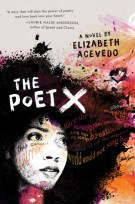
The Poet X

Rating: ⭐⭐
Author: Elizabeth Acevedo
Genres: Poetry, Young Adult
Pub Date: Mar. 2018 (Read Apr. 2018)

“Burn it! Burn it.
This is where the poems are,” I say,
thumping a fist against my chest.
“Will you burn me? Will you burn me, too?”

Yes! I loved this!

Xiomara is the teenage daughter of Dominican Republican immigrants. Her mom is extremely religious and is adamant that Xiomara be confirmed in the catholic church. Xiomara has always been a little rough around the edges, getting in fights to protect her twin brother and against the lewd remarks men in her neighbourhood make about her body. She just wants to be a normal teenager and date boys like the other girls her age.

She feels repressed in her day to day life and turns to poetry to express herself, which she records in her private journal. She really enjoys writing her English assignments and when her English teacher, Ms. Galiano starts a slam poetry club, she is intrigued because it feels like the poetry is just bursting out of her. But the poetry club meets at the same time as her confirmation class, which Mami would never allow her to miss.

At the same time, Xiomara meets a boy, Aman. She just wants to spend time with him like any other teenager. But her mother is strictly opposed to dating and she is forced to hide her relationship with him. She questions everything in her life, from her mother’s strict rules to the religion that is being forced on her. It becomes increasingly difficult to hide what’s going on in her life and Xiomara becomes more and more at odds with her mother. Poetry becomes the only way she can expresses the conflict she feels building inside her.

I have read so many books lately about latinx teenagers and I have learned so much about latinx family culture (although most of the books were about Mexican culture). What has been hardest for me to understand is the relationship between these American-born daughters and their immigrant mothers. Every single book I’ve read has had the same conflict of strict latina mothers and their teenage daughters trying to break away from the confines of their mother’s perspective and rules. I grew up in a religious home as well, but I can’t imagine the frustration of mother and daughter not being able to relate to each other. My mom can have a pretty strong personality, but she was never anything but supportive and understanding of where I was coming from. I think the difference is that we both grew up in Canada and shared the same cultural perspective, whereas Xiomara and her mother grew up in very different circumstances and struggled to relate to one another.

I always talk about liking gritty books with gritty writing and this is another great example. I recently read I Am Not Your Perfect Mexican Daughter and The Authentics at the same time and loved the first and disliked the second because one book was so gritty and authentic while the other seemed to have this protective layer of film over the story, lacking any real emotional depth. I had the same experience with this book as I read it at the same time as I read Love, Hate & Other Filters, which I felt had that same disconnect between the emotional potential of the story and the actual depth the author achieved. I am here for the emotions and Acevedo was not afraid to go there in this book. It’s what makes one book great and another book sadly mediocre.

The poetry in this book was fantastic. I don’t read a lot of poetry, but I really love books like this that are not a collection of poems, but a whole story told in poetry. I’ve already picked Brown Girl Dreaming as one of my reading challenge books for April, which I understand is written in a similar fashion, so I’m excited to pick that one up later this month! Definitely recommend this book!

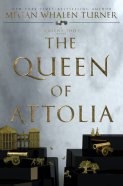
The Queen of Attolia

Rating: .5
Author: Megan Whalen Turner
Series: The Queen’s Thief #2
Genres: Fantasy
Pub Date: 2000 (read Apr. 2018)

This is a surprisingly hard book to rate! It has such high reviews and I went into it with such high expectations and it just didn’t quite live up to them 😦

The Queen of Attolia is the 2nd book in the Queen’s Thief series and follows where The Thief left off, so there are spoilers from The Thief in here if you haven’t read the first novel. Gen has returned to Eddis to continue in his role as the Queen’s Thief. He continues to steal into the Queen of Attolia’s court and when he is caught, she takes swift vengeance against him. He is returned to Eddis, but he barely recovers from his run-in with Attolia and is listless, hiding away from the rest of the court. Eddis, Attolia, and Sounis war with each other and Eugenides comes up with a plan to steal the Queen of Attolia and find justice for his country.

Megan Whalen Turner is definitely a good writer and I really like how clever her plots are. Every character and every sentence matters. I think I said this in my last review, but it reminds me of Melina Marchetta’s writing in that every single character matters and nothing happens by chance. This book has a pretty brutal start, but I only grew to love Eugenides more and more. I like that she gives Attolia a back story and that she’s not just an evil shadow queen. It’s still a pretty short book for fantasy and I’m interested to see what she’d going to do with the story in the next book.

The only part I didn’t really like in this book was the romance. I liked the little surprise in the middle, but I just didn’t really buy into the romance. I could buy into the proposal as a bid for power, but I didn’t get the love.

Anyways, I don’t have a whole lot else to say about this book. It’s a struggle to rate because it didn’t quite live up to my expectations, so I want to rate it a 3.5, but I gave the Thief a 4 and this was just as good as the Thief. I didn’t expect much from the Thief and it ended up really surprising me with how clever it was, which is why I gave it a 4. I was expecting this one to be clever, which is maybe why I didn’t love it as much – my expectations were just too high.