Neverworld Wake

Rating: ⭐
Author: Marisha Pessl
Genres: Young Adult, Mystery, Science Fiction
Pub Date: June 2018 (read Sept. 2018 on Audible)

I finished Neverworld Wake a few days ago as an audiobook and I’ve been thinking about it over the last few days and I’ve been struggling to come to a conclusion about how I felt about it. I decided I didn’t really like it, but then when I sat down to write the review I discovered that there were elements to the story that I did really enjoy. So I think I’m landing on a borderline 3 star review.

Neverworld Wake has a great science fiction concept. It brings together a group of friends who have somewhat lost touch in the year since graduating high school at Darrow. Our main character Beatrice was once very close with her group of 6 friends in high school, but after the death of her boyfriend, Jim, at the end of senior year, she cuts herself off from the rest of her friends. Jim’s death is marked down by the police as a suicide, but Beatrice and her friends still have a lot of questions about what really happened to Jim. They reunite one night a year later and a car accident catapults them into an event known as the neverworld wake. A old man appears and informs the 6 friends that they will be forced to relive the same day over and over again until they can all agree on a decision to a specific course of action (I won’t explicitly state what decision they must make to avoid spoilers).

I’ll talk first about what I liked. Most of all I liked that the story had two key elements driving the plot. There’s the Neverworld Wake, which is a fascinating concept in itself and is what makes this a science fiction novel. The 6 friends are forced to relive the same day over and over again. They could do whatever they like, initiate any sort of consequence, but at the end of each day, time will reset for them at the start of the same day. Whatever sequence of events they set in course during the day are effectively rendered moot at the end of the day and they are forced to start over. It raises a lot of interesting questions about human behaviour and how a group of individuals will react when faced with a dire decision. In this case, it involves a lot of frustration at the beginning and then a certain amount of avoidance by each of the characters as they struggle to come to any kind of consensus.

The second element of the story is the mystery of what happened to Jim. Beatrice was torn apart by his death and is really a wreck. All of the friends seems to be harbouring secrets about what happened the night Jim went missing and when they fail to come to a consensus to escape the neverworld wake, they decide to start investigating the circumstances of Jim’s death. I thought both the mystery element and the science fiction element were great and integrating both of them together made for a much more dynamic story. Honestly, either of these elements could have been a story on it’s on.

What I didn’t like was that for what should have been a really fast paced and dynamic thriller, I was kind of bored. What can be a strength for a novel (integrating 2 different storylines) can also work as a weakness if the author fails to do justice to both storylines, which is what I think happened in Neverworld Wake. Pessl had two great concepts that I wanted to see developed, but I think she failed to develop either in sufficient detail. The concept of reliving the same day over and over again raises so many questions about group dynamics. It’s a Lord of the Flies type scenario as we watch a group of individuals try to come to terms with what’s happening to them so that they can escape, but ultimately start to fall apart and descend into anarchy. There are no consequences for these teenagers. No matter what they do, time will reset for them at the end of the day. As a result, some characters lose hope and start to fall a part, while others are incentivised to figure out how to escape.

The friends research into what happened to Jim serves a similar purpose. For some it provides much needed answers and an opportunity for closure, while for others, it exposes truths they’d rather remain hidden. Both elements are great, but for the first half of the book, I struggled to figure out how they were related and there was no real urgency driving the story. I felt like the characters desperation at being stuck in the neverworld would drive a lot of action, but it actually stalls it in the beginning with an incapacity of any of the characters to move forward. I was surprisingly bored. I thought the main point of the story was going to be to examine this Lord of the Flies type scenario, but then it ended up really being about what happened to Jim. I feel like the author had two great ideas, but didn’t really know how to execute either.

Ultimately, I wanted to like this, but at the end of the day it fell a little flat for me.

Girls of Paper and Fire

Rating: 
Author: Natasha Ngan
Genres: Fantasy, Young Adult, LGBTQIA+
Pub. date: Nov. 6, 2018 (read Sept. 2018)

Okay! I finally have a minute to review this book! I’ve been on vacation for the last two weeks, so I haven’t had a computer to blog from, but I did read 3 books on my vacation and of the 3, this was definitely my favourite!

Special thanks to Hatchette Book Group Canada for providing me with a free advanced copy of this book in exchange for an honest review.

Girls of Paper and Fire is set in a world that has 3 different castes: paper caste, steel caste, and moon caste. Paper caste are essentially humans and moon caste are essentially demons with strong animal characteristics. Steel falls somewhere in the middle. As you can guess, this world is ruled by the moon caste, who are much stronger than paper caste, who are considered fragile. I will admit that I found the concept a little juvenille at the beginning, mostly because pictured the moon caste as like, these comical Zootopia type characters, and that’s just not very scary, but I ended up getting really into it!

Lei is Paper caste and the book starts with her being stolen away from her home to be one of the Demon King’s Paper Girls. Every year the king selects 8 paper girls to live in the palace as his concubines. Some of the girls are there by choice, others offered up by their families in exchange for good favour from the palace, and then there are some girls like Lei, who are stolen from their homes. Most of the other Paper Girls are excited to take up a life of luxury in the palace, but Lei is terrified of the King and wants nothing more than to return home to her father.

At first I didn’t think the world building had that much depth, but the story was really easy to read and I got into it almost immediately. I didn’t know much about the book going in except that it had some mature themes, was heavily influenced by Asian (specifically Malaysian) culture, and that there were scenes of rape and sexual abuse. I was looking for a real voices, feminist fantasy novel and that is definitely what I got. I did not realize that this book had a queer relationship in it and it was such a thrill to read about! I can’t think of any young adult fantasy books that I’ve read featuring a lesbian romance and it was a wonderful surprise to find one in this book!

The author definitely tackles some heavy topics in this book. I struggle to classify this book as a young adult fantasy book because of the mature themes. The girls are forced to be concubines to the king, who is a violent tyrant and often takes out his anger on them. The story is a great example of how rape is not about sex – but power, the affect it has on women, and taking back some of that power for yourself. I did think the plot was a little superficial, I wish it had a bit more depth, but it was still very different from all the other fantasy I’ve read and I really hope it gets a sequel because I feel like this world has a lot of potential and that Ngan has only scratched the surface.

I love that I’ve been seeing a lot more Asian and African inspired fantasies in the last year or so and that we are getting more diverse voices in literature. I love the escapism of fantasy, but still tackling real life issues that are just as relevant to me in my day to day life. I feel like there are so many awesome female authors out there writing about the struggles that women face in real life every day, and the contrast of writing them in a fantasy world draws more attention to the injustice of it all. Representation is so important.

Overall I was impressed with this book and would definitely recommend, but maybe to more mature readers. My biggest struggle was that the world building seemed on the younger side, while the themes were definitely more mature.

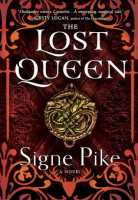
The Lost Queen

Rating: 
Author: Signe Pike
Genres: Historical Fiction
Pub Date: Sept. 2018 (read Sept. 2018)

Thanks to Touchstone for providing me with a free electronic copy of this book in exchange for an honest review.

My blog has been pretty silent over the past week. I’ve been on vacation, so you’ll have to forgive me for my continued absence next week. As a result I haven’t been doing that much reading, but I did finish The Lost Queen, which I received back in August from Touchstone and have finally found time to read.

The Lost Queen is the first book in a trilogy set in 6th century Scotland. It’s recommended for fans of Outlander (which I love) and Philippa Gregory books (which I’ve been meaning to try). It features Langoreth, one of Scotland’s former queens, who has mostly been lost to history. Langoreth was the twin sister of the man who inspired the well known character, Merlin, and had a huge impact on Scotland herself. Signe Pike delves into the histories of both Langoreth and her brother, Lailoken, starting with their childhood and formative coming of age years.

I have mixed feelings about the book. The authors note at the end was fascinating – I love historical novels that explore the history of lesser known figures, especially women because women’s history is rarely recorded and often lost. But I struggled to stay engaged in the book. I’ve had this problem with several books this year (Naomi Novik’s, Uprooted, and Madeline Miller’s, Circe, come to mind), reflecting on the book, I generally enjoyed it and learned a lot, but it wasn’t that enjoyable a reading experience.

I did find this book a bit better than previous books in that I got pretty into it in the last 30 percent and I am interested to see what happens to these characters. We’re told in the book summary that both Langoreth and Lailoken led remarkable lives, but we don’t discover in this book what made their lives so remarkable. This might be why the book read a little slower and may have lended itself better to a single volume instead of a trilogy. It was pretty slow moving and served mainly to introduce us to the characters and the setting. I think it has the potential to get much better in subsequent books.

However, the setting was pretty great. I can say for sure that I’ve never read a book set in 6th century Scotland. I’m not sure I’ve even ever read a book set in the 6th century. I haven’t read a lot of old, old history, so I found this fascinating in that the history is so ancient that England and Scotland don’t remotely resemble the countries they are today. This was a time when Christianity was starting to spread. Scotland had always practiced the “old ways”, but in an effort to gain support from powerful Rome, Christianity comes to the country, creating tension between this new religion and the old ways. It’s incredibly frustrating to read about the injustices committed in this book in the name of Christianity, but still relatable to today.

I also appreciated the familial relationships. So often in this time period, women were seen as little more than property. But I liked how both her father and brother respected and treated Langoreth. Everyone was forced to acknowledge that despite their wishes that things could be different, Langoreth would need to wed to form political alliances for their kingdom. Both the King and Lailoken see value and strengths in Langoreth outside of being a wife, but they also acknowledge that in their time and age, marrying is one of her greatest strengths as well.

Like I said, I struggled with the book in the first half, but ultimately I am interested to see what happens to Langoreth in the next 2 books and to discover what makes her such a remarkable woman. I think this book could have been shorter and I’m hoping for more action in the next book, but I really liked learning about the spread of Christianity and the tension it created in it’s condemnation of the old ways.

Wuthering Heights

Rating: 
Author: Emily Bronte
Genres: Fiction, Literary Fiction, Classics
Pub Date: 1847 (read on Audible Sep. 2018)
Audiobook Narrator: Joanne Froggatt

This was AMAZING! I know most people read Wuthering Heights in high school, but it was never on my curriculum for some reason. I read Jane Eyre a few years ago and didn’t really like it that much, but when I saw Wuthering Heights for sale on Audible, I decided to try it out. I listened to Emma earlier this year, so audible has been helping me knock back some classics.

I did not expect to like this. I haven’t had that much luck with classics, they tend to be slower paced and the writing is often difficult to get through, but every now and then you find an old classic that totally surprises you! I can see what this book is so polarizing. People seem to either love it or hate it. I can totally understand why people would hate this. None of the characters are likable and Heathcliff is just downright evil. But if you’re able to enjoy books with unlikable characters, then Wuthering Heights may be the book for you!

I loved it. Granted I found it a little bit confusing at the beginning because I couldn’t tell who was narrating the story and I was overwhelmed by all the characters and what their relations were to one another. But once I figured out all the characters, I was totally enthralled with this from start to finish! I was not expecting the level of drama that I got from this book and the 18th century scandal was just delicious to read about.

Wuthering Heights tells the story of the passionate love affair between Catherine and Heathcliff (the goodreads synopsis describes their love as “intense and almost demonic” and that is pretty much the most accurate description ever). Catherine grew up at Wuthering Heights, wandering the lonely moors as a girl. And boy is this setting lonely. There is a neighbouring village, but the only other neighbours are the Lintons, who live at Thrushcross Grange. Heathcliff is a poor orphan boy adopted by Catherine’s father, but loathed by her older brother Hindley. When Catherine’s father passes away, Hindley becomes extremely abusive to Heathcliff, forcing him to be a servant to the family. Nonetheless, Catherine and Heathcliff grow close wandering the moors together and fall in love.

The story follows a series of 18th century dramatic events in which Catherine ends up marrying her neighbour, Edgar Linton, and Heathcliff disappears in a rage. He returns years later, now wealthy and determined to enact his revenge upon the entire Ernshaw and Linton families.

It’s an interesting story in that it is told (mostly) from the point of view of Nelly Dean, a housekeeper who has played maid to both the Ernshaw and Linton families over many years, as she recounts the story to the visiting Mr. Lockwood. So it does call into question the reliability of the narrator. She has some obvious biases. but overall I liked her. The story is really split into two parts, the first focusing on the original Catherine and Heathcliff, and the second half focusing on the second generation. Nellie has been involved in the lives of both generations, so she brings an interesting perspective to the story.

So why did I like this? Besides being super entertaining, I loved all these characters, despite how horrible they are. I couldn’t help but root for Catherine and Heathcliff early in the novel. Heathcliff is abused at the hands of Hindley Ernshaw and brought extremely low, so you can initially forgive him for his hatred of Hindley’s family and the wealthy neighbours, the Lintons. Catherine is fickle and ignorant of her privilege. She regularly belittles Heathcliff and despite loving him, accepts Linton’s marriage proposal because she feels he is more of her station and social standing.

“He’s more myself than I am. Whatever our souls are made of, his and mine are the same.”

This is probably one of the most popular Wuthering Heights quotes, but I love it just the same. I was more a fan of Heathcliff in the beginning because he was at least a victim of his circumstances, whereas Catherine was just haughty and mean, throwing tantrums and letting her temper get the better of her. So I didn’t really see what the attraction was between them, but really it is because they are both the same and have that same darkness and haughtiness in them. They are so enraptured in both themselves and each other and they don’t care who they hurt, so long as they will be happy. Catherine even considers her marriage to Edgar as a way to elevate Heathcliff’s position, which Nelly rightfully scoffs at, as if Catherine, a married woman, could just continue her relationship with Heathcliff after marrying Linton.

These characters are lonely and I feel like they are all victims of circumstance in a way. They have known only their wealth and they are not sympathetic to the plights of others. Lockwood draws our attention to how very out of touch they are with the world and after just a week at the manor, feels compelled to return to London to get away from the drama of it all. The entire novel is chaotic and feels very all consuming. Thrushcross Grange and Wuthering Heights is a world unto itself, focusing solely on it’s inhabitants and their isolated drama.

I preferred the first half of this book to the second. The novel reaches a climax at around the midpoint, which is when the focus switches from the first Catherine, to the second generation: Hareton (Hindley’s son), Catherine (Catherine’s daughter), and Linton (Heathcliff’s son). While I preferred the first half of the book, the second half is what makes this a classic. The second generation of characters parallels the first generation and serves to highlight how the cycle of violence is destined to repeat itself. The use of the same set of names serves to further highlight the cycle. Heathcliff becomes Hindley, Hareton becomes Heathcliff, and Linton and Catherine become Edgar and the first Catherine.

In the second half of the novel, Heathcliff returns to enact revenge on the Ernshaws and Lintons and descends further into himself as the novel progresses. Heathcliff is really a monster of a character, even having been abused himself, he perpetuates the cycle of violence worse than anyone who came before him. He is devastated by Catherine’s death and we are led to believe that he is haunted by her ghost for the rest of his life. Catherine’s daughter is just as haughty as she was, Linton is a sniveling mess, and Hareton is an uneducated servant boy. It is hard to like any of these characters, and yet Bronte has written them in a way that has made me hugely invested in them. I wanted to hate Heathcliff, he is truly awful, and yet I always hoped for him to be redeemed. I kept waiting for him to honour Catherine by loving her daughter, but he becomes so mired in his revenge scheme and haunted by Catherine’s ghost that he looses any sense of humanity and becomes obsessed with having total and complete power over everyone involved. Yet the characters still persevere and despite losing absolutely everything and being indentured to Heathcliff, Catherine is still able to find joy in life – to feel pity for Heathcliff and find it in herself to love another.

Like I said, I can absolutely see how people hate this. There’s pretty much no likable characters, save maybe for our narrators, Nellie and Lockwood. But even they have their flaws. Nellie disliked the first Catherine and tried to help Heathcliff as a boy, so it is maybe her hope for Heathcliff to repent that sustains this feeling of hope throughout the novel. We just keep waiting for Heathcliff to finally decide that his revenge is now complete. But he is never able to fully break the characters and I love when he realizes this at the end. Despite every atrocious act he commits, the young people are still able to find love and happiness through their trials. It is only at this point that Heathcliff is able to recognize how revenge has consumed his life and sanity. He finally realizes the futility of his hatred and thinks only of his longing to be reunited with Catherine.

It’s essential to give credit to the audible narrator, Joanne Froggatt. She is absolutely wonderful in this rendition of Wuthering Heights and probably a big part of what contributed to my enjoyment of the book. Her accents are excellent and I loved the different tone of voice that she used with each character. I was dismayed to learn that she also narrated a version of Jane Austen’s Emma, because I listened to Emma a few months ago and I’m sure I would have enjoyed it more had I listened to Froggatt’s version. Anyways, I would highly recommend this audiobook. It’s probably also worth mentioning that while reading this, I followed up the chapters with a quick read of the Sparknotes chapter summaries. It helped a lot at the beginning with figuring out who each of the characters were. I wish I’d done this for Emma too because I found the cast of characters super confusing in that book too.

So in conclusion to this long winded review – I am definitely a fan of Wuthering Heights! I get why people don’t like it, but it’s also clear why this has become a beloved classic.

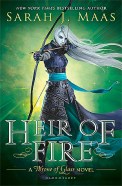
Heir of Fire

Rating: 
Author: Sarah J. Maas
Genres: Fantasy, Young Adult
Pub Date: Sep. 2014 (first read June 2016)
Series: Throne of Glass Book #3

I flew through this 600 page book in a whopping 3 days! I remembered Heir of Fire as my least favourite Throne of Glass book, but it was sooo much better the second time around. I remembered this being so slow moving, and it was for about the first 100 pages, but I was so much more enthralled in the characters.

The first time I read this I gave it 3 stars, I think I was disappointed that our 3 main characters were no longer together and I struggled to get invested in Manon’s storyline and I wasn’t really interested in Rowan. But since I already know these characters now and I know that Celaena is going to be in Wendlyn for the whole book, it was easier to settle in and just enjoy the story.

I loved Rowan at the beginning of this book for being so mean and not taking any of Celaena’s shit. She makes some of the stupidest decisions and no one ever calls her out on it, so I loved Rowan for not coddling her. But I also loved how their relationship changed and it even made me appreciate Celaena a little more. She is so broken in this book. She has always been broken in this series, but Nehemia’s death really did a number on her and she can only see herself now as a coward and nothing else. She never makes any excuses for herself when training with Rowan, but when Rowan realizes how shitty he’s been to Celaena and why some of the things he said to her may have triggered her, I felt empathy for her in a new way. This book has a very different pacing from it’s predecessors, but I feel like we got some more depth to Celaena’s character. It’s easy to be mad at her for running from her birthright, but when you get her full backstory towards the end of the book, it helped me to understand her character a little more. Plus I loved FINALLY seeing her embrace who she is and actively make a decision to do something good.

With each passing novel I love Dorian more and more, and I was sooo dreading the ending of the book throughout the entire thing. Dorian finally moves on from Celaena with one of the castle healers, Sorsha, and while I didn’t really care for Sorsha – I found her personality pretty lacking – I loved watching Dorian become a man and a king. Chaol is so caught up by the notion of honour that it’s almost paralyzing for him. He has no idea what side of the war he is on and his opinions of honour and duty prevent him from listening to his heart. I love how simple it is for Dorian though and I love when he called Chaol out on touting his love for both Dorian and Celaena, but not really being able to accept either of them. Dorian knows what his father is doing is wrong. He values his friendship with Celaena and accepts her for who she is because they were friends and that is what friends do. He is not threatened by her power or the ‘what if’ of the future. He believes in the love that Celaena had for him and that they will work things out between them when the time comes. Dorian is absolutely the king that Adarlan needs and it has been so wonderful to watch him become that person.

Poor Chaol is just trapped in this novel. My love for Chaol diminished with each book in my first read through because I was so enamoured with him in the first two books that I thought Sarah J Maas had forgotten who his character really was. But on the second read through, I think it was really me who didn’t see Chaol for who he is. Chaol wants the world to be simple. He wants to just be able to live his life serving the King and Dorian, he doesn’t want to have to deal with all the blurred lines of right and wrong, duty and honour. He made an oath to protect the King, which he wants to honour, but he struggles to realize that honour isn’t always about keeping promises. If you made a promise to serve a bad person, sometimes the honour comes from recognizing that mistake and taking action to make things better. He knows the King is a monster, but he can’t admit it to himself because then what does that make him. He keeps making decisions based on what he thinks is best for other people, and never on what is best for himself. I would say that one of his flaws is in that selflessness. Was it a good thing that Celaena went to Wendlyn? Yes, but I would be pissed if I was her and Chaol had made that decision for me. Chaol has a need to always be in control and that just keeps getting harder and harder for him.

I was definitely more into Manon’s storyline this time around, but it’s still probably my least favourite of the book. I was super invested in Celaena’s storyline in this book and I got frustrated whenever it would switch. I don’t really have a whole lot to say about the witches. There are some interesting dynamics with the different covens; I liked Asterin and I’m interested to see what happens between the Blackbeak and Yellowlegs covens (I honestly don’t remember). But I really didn’t care for the extended scenes about wyvern training. I personally didn’t care about all the drama with Manon and Abraxos, but I guess it serves to help us get to know Manon’s character. Everything that happens to the witches in this book is really just about setting the scene for the next book.

Overall there are so many new characters in this book. Honestly I’m even more excited for Queen of Shadows when the cast will grow further. I liked getting introduced to Aedion and getting to understand his character, but I am so excited for Arobynn to finally re-enter the story in the next book. It never really bothered me in my first read through that he’s not in any of the books, because he’s only every mentioned in relation to Celaena’s history, but now that I’ve read The Assassin’s Blade, I’ve been dying for him to re-enter the story. He and Celaena have so much unfinished business and it’s been killing me to read 3 whole books with no resolution on how they left things at the end of TAB. I’m also dying for Lysandra to enter the story again for all the DRAMA.

We get a brief intro to Rowan’s cadre in this book and we meet Maeve for the first time, who we all know is freaking Undesirable No. 1. Maeve is like the Umbridge of this series. She’s not the main villain and she’s not as classically evil as the main villain, but you hate her SO MUCH MORE. She’s barely even in this book and she still made me feel so much rage at the end.

So in conclusion, I am definitely knocking my 3 star rating up to at least 4 stars. My main criticisms would be that it was too slow at the beginning and that overall, a lot of what happened with the witches just wasn’t really that important to the rest of the story. But I know there are some pretty die-hard witch fans out there, so many this storyline was a highlight for other people, it just didn’t really do it for me.

I did not find this book boring this time and I was totally on the edge of my seat for the last 200 pages. It’s crazy that I’m 4 books in and yet, I feel like this story is just about to get started. I can’t wait for Celaena to get back to Adarlan and wreak all kind of havoc! I’m heading on vacation now in a few days though for the rest of the month, so I’m going to have to wait a few weeks before I read the last 3 books. I’m debating reading QoS, followed by ToD, and then EoS… anyone have opinions on this order? It’s not the publishing order, but since ToD and EoS take place simultaneously, I kind of want to finish with that killer cliffhanger from Empire of Storms. Would love to hear your thoughts!