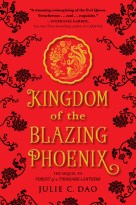
Kingdom of the Blazing Phoenix

Rating: ⭐⭐
Author: Julie C. Dao
Genres: Fantasy, Fairytale retelling
Pub date: Nov. 2018 (read Nov. 2018 on Audible)
Series: Rise of the Empress #2

Well, this was a huge disappointment after the surprisingly good first book, Forest of a Thousand Lanterns. I was not expecting to love the first book because I thought it was a Snow White retelling, and I’m not that into fairytale retellings. But it ended up being a retelling of the evil queen in snow white – her slow descent into evil and how she became to be so obsessed with beauty. I do love a good villain origin story, and this one was an Asian-inspired retelling full of all kinds of nastiness, so I thought it was a great twist of the classic fairytale.

In contrast, Kingdom of the Blazing Phoenix was the boring Snow White retelling I thought I was getting in the first book. Honestly, you don’t even really need to have read the first book to read this one. The first book is told entirely from Xifeng’s point of view (evil queen), but this book is told from Jade’s point of view (snow white). In this book Xifeng is basically evil incarnate and Jade is the good girl out to save Feng Lu. It made me wonder why Dao spent so much time on Xifeng’s characterization in the first book if she was just going to abandon her in this book. I actually didn’t have a problem with this being a Snow White retelling, it just would have been so much more interesting if it was told from Xifeng’s point of view.

But Xifeng has basically lost her humanity in this book, so instead we get to listen to Jade’s inner monologue for 300 pages. Jade is the daughter of the late Empress Li-Wa (sorry, listened to this on Audiobook and can’t find the spelling), who Xifeng usurped in the last book. Xifeng didn’t want any of Li-Wa’s children around, so she sent Jade off to live in a monastery, thinking she would bear the Emperor new male heirs, and more or less forgot about her. However, Xifeng has been unable to produce an heir and calls Jade to the royal palace.

Up to this point, Jade had no idea that she was the lost princess, the true heir to the throne. So she struggles with suddenly being Royalty, but becomes indignant when she arrives at the palace and discovers how much her people have been suffering under Xifeng. She discovers that Xifeng is a servant of the Serpent God and has been killing women and eating their hearts to remain young, so Jade sets off on a quest to collect the dragon relics so that she can raise the lost dragon army (she is apparently the daughter of the Dragon Lord). She teams up with Ren, a young girl and warrior from the palace, and Koichi (again, not sure of spelling), who is a little person and Shiro’s son.

From there, this becomes a classic kind of fantasy quest novel. Jade, Ren, and Koichi travel around Feng Lu collecting the relics, hiding from the Serpent God and Kong, who is now Xifeng’s hunter. They meet a number of people and ghosts who help them along their journey and learn all kinds of stuff about these individuals, but honestly, I can’t remember half of it now or what the importance was, but I’m sure they would have been somewhat shocking twists had I cared at all about Jade.

That was probably my biggest complaint about this book. I just didn’t care about Jade. Okay, I was pretty into the fact that the main romantic relationship in this book involves a little person, but otherwise I just found Jade such a do-gooder that it was boring. She supposedly doesn’t know she’s a princess, but as soon as she finds out, she’s suddenly like the ultimate philanthropist and all obsessed with ending the suffering of her people. She didn’t care at all about the empire before finding out she was a princess and now she’s all incensed about it and has to like swoop in and save the world. She’s constantly trying to be this good, noble person and it was just sooo boring. Like she tries to save Ren from having to work by making her a fake handmaiden, and Ren is just like, “B*tch, don’t feel bad for me, I could kick your ass and I’m not too proud to work.” And then Jade kept trying to send Ren and Koichi away cause she just couldn’t bear for something bad to happen to them. Like, get over yourself Jade, you would literally be dead 8 times without them and this quest belongs to them just as much as it does you. Just because you’re the princess, you’re no more entitled to take down Xifeng than Ren, whose grandmother was murdered by her.

So yeah, mostly I thought Jade was just like, super boring, and I didn’t care at all about the relics or their quest to find them. Honestly, this whole book felt like it was just a lead up to the real plot. I was interested in Xifeng and the havoc she was wreaking on the empire, and I did want to see a showdown between Xifeng and Jade, but I didn’t care at all about the quest and the relics. It just all felt like filler to me and overall I found the plot disappointing. Plus, like where were the seven dwarves? If you’re going to do a Snow White retelling you should at least commit to the dwarves.

And finally, I really didn’t like the ending. The entire book is narrated by Jade, but then when she goes into her enchanted apple sleep it gets narrated by like 3 other characters in her absence and it just felt really disjointed. Plus, Dao tries to tie the ending back to Xifeng’s story with a few random twists relating to the first book. I think she was trying to make us empathize with Xifeng again, but it just didn’t work at all for me. You can’t have her be this psycho, evil queen for 90% of the book and then try and make us care about her again.

So overall, I was really not impressed with this book. I was so excited to read it and I thought the story had so much potential. I just wish it had been from Xifeng’s point of view. What is Jade like from her perspective? I don’t want to totally discount the book though because it is possible this has some important cultural aspects that I’m just missing as a white person. I also just finished The Poppy War, which is a historical fantasy about China that I’ve heard holds a lot of meaning for Chinese People. This said though, I enjoyed The Poppy War a lot more than this, even though I probably didn’t pick up a lot of the nuances that people more familiar with the culture and history would.

Fence

Rating: ⭐⭐⭐⭐
Author: C.S. Pacat & Johanna the Mad
Genres: Graphic Novel, Young Adult, Fiction
Pub date: July 2018 (read Nov. 2018)

Disclaimer: This is a review for the first 3 volumes. However, I’ve kept it spoiler free so read on!

Why is this so good?!?! I really don’t understand, it’s just a comic about a couple of pretentious boys trying to make their high school’s fencing team, and yet I got so into it! Usually I just wait for the volumes to be released, but after reading the first volume, I had to go in search of the individual issues because it was just so good! (and I knew I would forget who all the boys were) I just finished issue #12, which encompasses the first 3 volumes, I’m just going to review them all here.

Fence is ultimately about two freshman fencers, Nicholas and Seiji, but it features an extended cast of secondary characters. Nicholas is new on the fencing scene and just really wants to be a fencer like his estranged father was. Nicholas is lacking in technique because of his lack of training, but he is very fast and has natural instinct. In contrast, Seiji has been fencing his whole life and is very technically skilled. He’s ranked 2nd nationally to fencing all-star Jesse.

Everyone expected Seiji to go to Exton, an elite fencing academy, but at the start of term, he shows up at Kings Row, expecting to win one of the 3 coveted spots on the fencing team, even though he’s only a freshman. Nicholas has won a fencing scholarship to Kings Row, but he’s only allowed to stay if he makes the team. In a surprise twist of fate, Nicholas and Seiji are roommates and quickly become rivals.

The entire first 3 volumes are just about the tryouts to make the fencing team. The boys compete in 24 matches and the top 3 ranked fencers make the school team to compete against Exton. It shouldn’t be so interesting to read 12 issues about high school fencers competing to make a school fencing team (like who actually cares about fencing these days?), but it is extremely readable and enthralling. Fence has a great extended cast that explores the rivalries and relationships that exist between all the fencers, what it means to be a good fencer, and a good sport, and how our familial relationships and support affects our abilities and psyche. There’s lots of drama between the fencers, but there’s also camaraderie. You come to like each and every one of the fencers (and the coach) and we start getting the back stories of some of the fencers.

My assumption is that after the team is established in the first 3 volumes, Pacat will expand the series to include Jesse (the #1 ranked fencer) and the rivalries between Exton and Kings Row. The first 3 volumes were fantastic and I can’t wait to see where this series goes in the future!

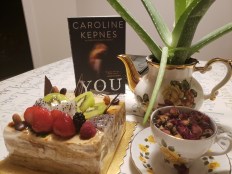
You

Rating: ⭐⭐⭐.5
Author: Caroline Kepnes
Genres: Mystery, Thriller
Pub date: Sep. 2014 (read Nov. 2018)

This book wasn’t quite what I was expecting, but it is definitely unlike anything I’ve read before and I thought the author did a great job on blurring the lines of morality and exposing our human ability for empathy.

I was really intrigued about this book because I heard it was written in 2nd person and it’s not a POV that we often see. It didn’t have quite the same shock value I was anticipating because I was already expecting this to be creepy and it reminded me a little of JK Rowling’s, Career of Evil, which is partially told from the point of view of a serial killer. It also reminded me of The Talented Mr. Ripley. Both protagonists are obsessive and violent and have a very flawed way of looking at the world. But even though both of these books are told from the point of view of the villain, You definitely had a unique narrative style that I think was very effective in this story.

You tells the story of Joe Goldberg, a book seller who meets a woman named Beck in his shop and falls hard and fast for her. His whole world centers around Beck; he hacks her email and manipulates her and those around her in order to insert himself into her life. Joe’s voice is jarring and crude, but felt authentic. I’m curious what kind of research Kepnes did for this book because Joe definitely suffers from mental illness and I would like to know how she got into his mindset. Even though it’s crude, I say his voice is authentic because some of the things he says definitely mirrors some of the offensive things men say on the internet and in toxic tinder threads.

Joe eludes to another woman he’s been obsessed with in the past and it becomes obvious that he is extremely troubled and has stalked and hurt people before. He doesn’t have personal social media accounts, but he has learned how to manipulate other people’s accounts to discover disturbing amounts of information about them. Kepnes explores so many themes in this book, one of which being the way social media has transformed our lives and the inherent dangers of it.

Personally, I didn’t find the social media stalking that creepy, but I think that is probably a byproduct of having read this in 2018 as opposed to 2014 when it was originally published. Social media has really blurred the lines and changed what hasn’t always been considered appropriate social behaviour. It’s so easy now to cyber-stalk people that I think many of us don’t even really think twice about it. We’ve become accustomed to having instant access to information, and while most of us aren’t trying to figure out where people live so we can stalk them, I think the average person does a lot more creeping on others than say 10 years ago.

Social media has also normalized some pretty asshole-like behaviours. People feel bolder voicing their thoughts and opinions on the internet than they do in person and repeatedly seeing hurtful and violent opinions voiced on the internet emboldens other people to say more hurtful and violent things in turn. Internet trolls have made it the norm to harrass and bully people (disproportionately women) who threaten their way of life or thought. Suddenly it’s okay to send death threats to female gamers who call for better depictions of women in video games, or say hateful things about immigrants and refugees just trying to escape their unfortunate circumstances. Joe has come to believe that he is entitled to a relationship like those he has seen depicted in books and movies and that there is no consequence too high to achieve that relationship.

But I think the main theme Kepnes explores is our human nature to want to root for someone. It becomes increasingly clear to the reader that Joe is sick, and yet Kepnes somehow makes you care about him. It makes you wonder what that says about you as a person and how you can have anxiety about a stalker potentially getting caught! Part of you wants Joe to get caught with what he’s doing, you know it’s eventually inevitable, yet at the same time you’re like, ‘OMG Joe, how could you let it slip you know her favourite movie is Pitch Perfect, she’ll guess you’re cyber stalking her!’, ‘Don’t go into her apartment, what if you get caught!’, ‘Be careful around Peach’s beach house, they might see you!’ You simultaneously want him to get caught for the betterment of everyone involved, but at the same you worry for him….the crazy stalker.

The other thing I liked about this book is that Kepnes made her other characters incredibly flawed. I think this probably helped in our ability to empathize with Joe, but the fact that Beck, Peach, and Benji are all self-obsessed, toxic people too messes with your head even more. It would be easier to condemn Joe if they were all perfectly lovely people, but they are all extremely flawed to the point that you start understanding why Joe hates them all. They’re all pretty annoying and you find yourself wishing them out of the picture as well because they are foils to Joe and Beck’s happiness, but at the same time, you know none of their actions are justification for what Joe does to them. I thought Peach was an especially great character because she’s also super obsessed with Beck and is super dislikable, but she still stays firmly on the ethical side of the line. In the same way, Beck is also a very unlikable character, which makes it easier to empathize with Joe, which makes you think you’re going crazy to actually empathize with the stalker!

I can’t pinpoint exactly why I didn’t love this. I think it’s a pretty solid 3.5 stars, but I sometimes struggle with disturbing plots like this and I think that prevented me from loving it. I appreciate these kind of books because they make me think, but they also creep me out so much, especially when they mess with your mind.

I fully anticipated how this book would end, although I did really hope I would be wrong. Overall, I am impressed with the book, but I have no desire to see this series any further. I didn’t realize it had a second book until I was almost done this book (I thought Hidden Bodies was a completely unrelated novel), but I don’t think I can see this story through any farther. As sad as it was, I liked the ending of this book and I think You works well as a standalone.

I have my book club discussion of this book tomorrow and I suspect it is going to have mixed reviews, so I’m excited to see what the rest of my club thinks of this one!

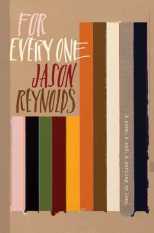
For Every One

Rating: ⭐⭐.5
Author: Jason Reynolds
Genres: Poetry
Pub date: Apr. 2018 (read Nov. 2018 as an Audiobook)

I got this as an audio CD from the library (BPL can I please say, NO ONE WANTS THIS, audio download straight to my phone PLEASE), and I spent about 20 minutes trying to figure out how to upload the disc on to my phone, before remembering that it was only going to be short anyways, so why not listen to it directly from the car (flashback to 2005, I know).

I knew this was going to be short, but it was like no more than 20 mins tops. I was so shocked when it ended. People are calling it motivational poetry, which is pretty accurate. It’s basically a letter Jason Reynolds wrote (to himself?) about dreams and being willing to take risks and not give up on those dreams, even if they don’t unfold the way you envision.

I wanted to like it and was pretty convinced that I would, but honestly it was just too short. I wanted more. I felt like Reynolds was just getting started and then it was over, so I was left feeling kind of meh. It is what it is though. His book, Long Way Down, has been on my TBR for a while and I am not deterred from reading it based on this short letter. 2.5 stars

The Simple Wild

Rating: 
Author: K.A. Tucker
Genres: Fiction, Romance
Pub date: Aug. 2018 (read Nov. 2018)

5 Stars?! Are you okay Maria? Are you really going to give a romance novel 5 stars??

This book was so out of my element that I feel like it actually came full circle so that it was exactly in my element. I don’t read very many purely romance novels, but I definitely love a good romance subplot in other genres. However, I was drawn to this book for the setting over the plot. I’ve been obsessed with Alaska ever since I read The Great Alone earlier this year and I couldn’t turn this book down,

I say it’s out of my element because it’s romance. But the setting is right up my alley. I’ve been living in Vancouver for the last five years and I’ve become a little bit obsessed with the great outdoors. I spent almost every weekend this summer either hiking, backpacking, camping, or kayaking, so I love books with isolated settings. Even though I would have had a totally different approach to visiting Alaska than Calla did, I still found this book very relatable.

Calla Fletcher was born in Alaska, but she’s spent her entire life in Toronto. Her mom fell in love with an Alaskan bush pilot, but she couldn’t handle the Alaskan wilderness and moved back to Toronto when Calla was only 2. Her dad, Wren, couldn’t bear to leave his plane company, Alaskan Wild, and over time, Wren and Calla became estranged.

Fast forward 24 years; Calla is 26 and has just been restructured out of her bank job. She loves city life and has been pursuing fashion and lifestyle blogging with her best friend Diana when she receives a call from Alaska that her Dad is sick and this may be her only chance to finally re-connect with him and re-visit the place where she was born. She’s out of a job and her and Diana think the photos would be great for their blog, so she makes the trip up to Bangor, Alaska.

In the beginning, Calla struggles with Alaskan life. She’s used to fast paced city life, being able to get a soy latte where ever she wants, and spending lots of time every day making herself look good for photos. Next to the wild people of Alaska, she seems vapid and vain. I’m a lot different than Calla. I don’t wear very much makeup and I wouldn’t bat an eyelash at wearing the same grungy outfit every day if I had to (I certainly would never bring two large suitcases on a one week trip to the wilderness). But even so, she’s very relatable. I understand her desire to look good and take beautiful pictures. She’s in the great unknown and I would definitely be posting pictures all over my instagram if I was her. But she has a hard time adapting to the change of pace in Alaska and struggles with other emotional issues, like re-connecting with her sick father.

The setting of this story was different than I expected. I was expecting the gorgeous mountain and glacier views that I got in The Great Alone, but what we get instead is a dingy little town in the middle of the flat, Alaskan bush. I thought Tucker’s description of the run-down buildings when Calla first drives through town was so great because I could just picture this little town in my head and because it doesn’t have the stunning mountain backdrop that I was anticipating, it was a lot easier to relate with Calla’s initial culture shock. This book ended up being a lot more than just the setting of Bangor, but the community of it. You really get a sense of what it’s like to live in a backwater community in rural Alaska – the way people depend on one another and support each other. It gave the setting depth. And though Calla was slow to appreciate it, she got there in the end.

This was my second romance book in the last month (recently read Colleen Hoover’s, All My Perfects) and what I liked about both books was that they weren’t solely romance novels. I wouldn’t really even call The Simple Wild romance because it has so much else going for it. This book is really about all the different kinds of love in the world. It’s about making peace with your past, being open to new experiences, and making time for the things that really matter to you. Tucker strikes a wonderful balance between Calla’s relationship with her dad, the romance, and all the different kinds of platonic love that are showcased in this book.

So on to the romance! I haven’t even mentioned Jonah yet. It’s obvious from the synopsis where the book is going, but it was a super fun ride. Jonah is Wren Fletcher’s best pilot. He’s a little rough around the edges sometimes, but he has a lot of love for his job and helping the villages scattered around Alaska get the supplies and resources that they need. He will go above and beyond to help someone in need. But this is not the person Calla first meets. Wren sends Jonah to pick Calla up in Anchorage and they get off to a bad start. Jonah has seen girls like Calla before and he doesn’t have any patience for them. He thinks she’s entitled and vapid. But Calla also has little time for Jonah. He’s rude to her from the get go and dismisses her intelligence. It’s the classic couple hates each other, misunderstands each other, and then loves each other dynamic. But it worked.

Calla is many of the things Jonah thinks of her, but she is not dumb and she does care about her dad and his business. In the same way, Jonah was many of the things she thought about him, he was very mean to her and his honesty starts them off on the wrong foot, but he is also a deeply caring individual. I definitely loved Jonah. Any guys who loves the outdoors already has brownie points in my book and I liked that he was honest, even though it was sometimes hurtful. He realized his mistakes and apologizes in his own way, but I think he also had a lot of fun bantering with Calla and kept it up because it was fun for him to set her off kilter. I also loved that he was able to laugh at himself and his joy for life.

I definitely got a kick out of all the pranks they played on one another. I was a little concerned when he stole her make-up bag because make-up is definitely a crutch for some people and has the potential to be pretty traumatizing (plus there’s absolutely nothing wrong with loving make-up). But I ultimately decided it was okay because Calla’s prank on Jonah was pretty bold and could easily have crossed the line. She pulled a prank on him that made him more attractive to her and by swiping her make-up from her, he was essentially doing the same thing.

Overall this book makes me yearn for more quality new adult fiction. I am years past lusting over the 17 year olds in YA contemporary and most YA fantasy, but I can’t yet relate to books about parents, their kids, and their failing marriages. Don’t get me wrong, I love a good family drama, but I think the romance in this book appealed to me so much because it’s actually where I’m at in my life. I’ve talked a few times about how literature needs more books about college and university (which I still think it does), but I also think we need more books about mid to late twenties, when people are out of school and starting to figure out their lives, but haven’t yet settled down into the standard family dynamic. I would love some great new adult reads. I’m sure they’re out there already, but they definitely aren’t getting the kind of love and promotion that other types of books get.

Finally, I loved the ending of this book. I love books that hit me with tough choices. Nothing annoys me more in love triangles then when the author makes one of the triangle into a jerk so that we don’t have to feel bad for them getting the axe. There’s no love triangle in this book, but I love stories and decisions that have two equal sides that are both valid. I love when the author doesn’t try to push us toward one ideal or the other or write the story in such a way as to make one choice easier or more obvious. Calla and Jonah are basically re-living her mother and fathers love story. Calla is a city girl, Jonah’s in love with the wild. They know there’s an expiration date on their relationship, but they fall in love anyways. There’s no easy answer to their dilemma. One of them has to be willing to move for the other to make it work and no one wants to be the one to either give up their life, or ask the other to give up their life. I thought the ending happened just a little bit too fast, but I really liked how Tucker approached their conflict.

So overall, I really liked this book. My only problem was that it took me a little while to get into it at the beginning. I’m not really sure why. I wouldn’t change the beginning. Overall it’s a bit of a slow burn type novel, but it reads really fast and once I got invested in the characters, I totally flew through the book!


SPOILER: The ending is still left pretty vague, but I really liked Jonah’s compromise. It actually broke my heart to see him in Toronto because it’s obvious he wouldn’t be happy there and that it would never work. But he wasn’t willing to give up and he was still willing to move somewhere where they might both have a chance at being happy. Would moving to anchorage so that Calla could still have a semblance of city life be enough? Maybe not, but I loved that he recognized what wouldn’t work for them and decided to try and find something that would work. With this approach, I feel like there are a lot of places that the two of them could be happy. There are many Canadian centres where Calla and Jonah could make a life and still be on the brink of rural life. It was such a simple approach and I really think it could work for them. Relationships don’t have to always be about sacrifice – they shouldn’t be about sacrifice – but about compromise, and this compromise made me really hopeful for this fictional couple. Plus I think it sends a way better message then having Calli give up her life in Toronto for a guy. Women and girls have been preached that message enough.