The Tattooist of Auschwitz

Rating: ⭐⭐.5
Author: Heather Morris
Genres: Historical Fiction
Pub. date: Sep. 2018 (read Apr. 2020 on Audible)

This was supposed to be my book club pick for March, but then of course our meeting was cancelled and I couldn’t bring myself to pick up a holocaust book during a global pandemic. We’ve rescheduled our book club meeting so I decided to give the audiobook a go since I’ve been struggling with paperbacks recently, but have been doing a lot of jigsaws. This was definitely the way to go and a flew through this short book and my latest jigsaw in a single weekend.

Aside from the whole pandemic thing, I still wasn’t really looking forward to reading this because I’ve read a lot of holocaust books over the years and though there’s many great and emotional books on the topic, after reading so many books about the camps I find not a lot of new content offered anymore, so it’s just easier not to read such upsetting works.

The Tattooist of Auschwitz does offer a point of view I haven’t seen before, that of a Jewish prisoner conscripted to work as the tatowierer who inks all of the prisoners with their number when they enter the camps. It was an interesting story in that is was told from the point of view of someone who received preferential treatment in the camps. Lale was spared from physical labour and given his own room in one of the camp blocks. He didn’t have to report for roll calls and so was able to move about the camp a lot easier than many other prisoners would have been able to. He uses this privilege to build up a bit of an underground trade. The girls who go through the prisoners clothing provide him with jewels, which he trades for extra food. Building up a stockpile which he shares with other prisoners and uses to cash in on favours.

Unfortunately this book made me really uncomfortable, but not in the way you might expect a holocaust story to make one feel uncomfortable. I feel like I might be a bit callous in critiquing a story such as this one, but there were 3 issues I had with the story.

First of all, on Lale’s first night in the camp, he is stunned to see two men shot and killed for sport by the Nazis while using the bathroom. Upon witnessing this act, he vows that he will do whatever it takes to survive the camp. That’s all good and I admire his tenacity, but Morris revisits this theme several times throughout the novel and I felt like I was supposed to believe that Lale survived Auschwitz out of sheer force of character. This was not the case – he relies heavily on the kindness of others, which he takes advantage of to improve his own situation and that of those he cares about. But on more than one occasion his life is saved by other individuals. This in itself isn’t a big deal, but pushing the narrative that Lale’s grit is what enabled his survival is belittling to all the people that didn’t make it out of the camps. Grit and determination have literally nothing to do with surviving the atrocities of a concentration camp. Lale traded on the kindness of others and was incredibly lucky. I don’t find any fault in Lale’s actions, but let’s just call it what it is.

The second issue that bothered me, and what made this an uncomfortable read for me, was the love story between Lale and Gita. I can’t say I’ve ever read a love story set in a holocaust camp. I’ve read so many beautiful holocaust stories in which love is the central theme, but definitely not a ‘meet and fall in love in a camp’ story. Again, the idea of a couple falling in love in a concentration is not that unbelievable – this is based on the true story of real life couple Lale and Gita, so it obviously happened, but the writing about the love story just made me soooo uncomfortable.

Like I said, I believe two individuals could fall in love in a camp. Under unthinkable emotional trauma, it would be natural to seek comfort and reassurance from those around you. To be brought together by your shared experience and build a deep and lasting bond of trust and understanding. I didn’t struggle to believe that Gita would fall in love with Lale, he looked after her most basic needs, found her better work, food, and medication, and provided emotional support through a traumatic experience. But please don’t try and portray this relationship as sexy. Lale and Gita were both victims of their situation and I really think the author grossly romanticized their relationship. I know this is based on a true story, but it’s also based on one man’s 70 year old memories. Maybe this is the way Lale remembered his experience, but this is still “fiction” and the author has a duty to question how those memories may have been manipulated an warped over the years to block out a traumatic experience.

I find it hard to believe that after living several years in a concentration camp, being beaten and starved, that anyone would use a chocolate bar to try and seduce someone. In general I just couldn’t help but cringe at all of the romance scenes. Especially how Lale talked about women – how “all women are beautiful” and you have to take care of women, and what a womanizer he was. It was so eye-rolling, but again, obvious that it was probably lifted straight from her interview with Lale. Of course an old man who grew up in the 1930’s would talk like that, but nothing about it felt genuine or reflective of how Lale actually might have felt in 1942.

But this is just one example of the ways in which I struggled to buy into the story and felt Morris’ should have taken more artistic license in how she told it. Everything about Lale’s experience seemed to be romanticized. How easy it was for him to trade in diamonds and food, how he was able to manipulate almost everyone around him to get what he wanted, how no part of the camp was closed off to him and he could pretty much just do and go where ever he wanted, how easy it was for him to survive an interrogation without breaking down, and then just pick up the pieces of his fabricated life in the camp once he was released again. I don’t disbelieve that this was the account Morris’ received from Lale, but again, it’s where your duty to history and the reader comes in to question the authenticity of those experiences and how your portrayal of a concentration camp might read to those who have lived through similar, though very different experiences. I felt the author failed to portray the horror of the concentration camps, which should really be the easiest part of the story.

The Tattooist of Auschwitz reminded me a lot of another WWII book I read a few years ago, Beneath a Scarlet Sky. Both are fascinating stories in themselves, but both books were inspired by late-in-life interviews with their subjects. In both books I think the authors rely too heavily on the source material from their interviewees and somehow fail to connect to their characters on an emotional level.

Which brings me to my final point. This book was poorly written. This is more a flawed chronological account of Lale’s 3 years in the camps than a meaningful piece of historical fiction. Morris relies heavily on dialogue and plot to carry her story, but misses out on any kind of characterization. Somehow an emotional story of 3 terrible years in concentration camps lacks in any real emotional connection. Now obviously this is a personal opinion. I know a lot of people really loved this and connected with Lale, so it makes me feel like a bit of troll saying that I didn’t feel anything from a holocaust story, but I just felt that Morris didn’t give these characters the humanity they deserved. Her writing style is very detached and as such, I always felt detached as well. The story just seemed to be “and then he did this and then he said this and then she did that”. It was just kind of boring.

It was a story with a lot of promise, and like I said, it does show a different experience of life at Auschwitz, but I just wanted more from it. Lale is a flawed individual and I would have loved to see more exploration of how his morality was impacted by his time in the camp. He alludes a few times that he was worried he might be considered a collaborator and I would have liked to see more of that internal struggle. He was a generally selfless person and i felt he likely would also have struggled with the fact that he couldn’t help everyone and the impact having to decide who he would help might also have on him. At 250 pages, there was certainly room to better develop this story, so I was disappointed that the author decided to just retell an interview rather than do the hard emotional reflection on how this experience would impact Lale and those around him.

I think I’ll end it there. I could probably say more, but this is getting long enough. I see there’s a sequel. I am intrigued that it’s about Cilka, she is one of the characters that I probably empathized with the most and it was really upsetting to learn she was convicted as a collaborator. I’m curious if her sequel is fabricated or actually based on a real person. Anyone know? I won’t be reading it either way, but I am intrigued.

The Silent Patient

Rating: ⭐⭐.5
Author: Alex Michaelides
Genres: Mystery, Thriller
Pub. date: Feb. 2019 (read Mar. 2020 on Audible)

I have very mixed feelings about this book. I can’t deny that the ending was pretty good and the story was compelling for the last hour (I listened to this one). but the rest of the book was just so damn boring!!!

The Silent Patient tells the story of Alicia Berenson and her therapist, Theo Faber. Alicia was found years earlier in her home having shot her husband in the head 5 times. But after the event she completely clams up and refuses to speak, being admitted to a psychiatric hospital called The Grove. Theo is a psychotherapist and is intrigued by Alicia’s story and believes he can help her. He gets hired on at the Grove and begins looking into Alicia’s past, trying to get her to speak.

What surprises me most after finishing this book is how everyone calls it a page turner and says they couldn’t put it down. Until the big twist, I honestly thought this book was so dull. I really didn’t like Theo and found his repeated attempts to get Alicia to speak super boring. There’s a bunch of red herrings along the way, but I didn’t find any of them particularly compelling either.

At the same time that Theo is investigating Alicia’s past, we get snippets from her diary that she wrote prior to the murder of her husband. In the audiobook, her diary is narrated by a female voice actor, while the rest of the book is narrated by a male voice actor for Theo. I do have to acknowledge that the audiobook may have played a role in my lack of enjoyment of this book. The audio sample was of the female voice actor, who I actually really liked, but it turned out that 70-80% of the book is actually narrated by Theo, and I really didn’t like his voice actor. Although that might be the point because in the audiobook Theo comes across as really pretentious and patronizing. Not sure if others got the same tone from reading the book.

Anyways, despite liking Alicia’s voice actor, I still had a lot of problems with the diary, namely that NO ONE WRITES LIKE THIS IS A DIARY. Alicia includes full dialogue in her diary, which to me was a huge oversight on behalf of the author. I found the story in Alicia’s diary compelling, but it just wasn’t the right medium to tell it if you’re not going to commit to the idea that your character actually wrote it as a private memoir. Diaries are written for the writer and this diary was clearly written for an audience. It just felt like sloppy writing to me.

Moving on, I thought the twist was pretty good, but not totally shocking. I kind of saw it coming, I just wasn’t really sure the logistics of how the author was going to make it work. It’s one of those things where I felt like I knew what the end result was going to be, I just didn’t know how I would get there. I’ll give the author some credit though because I definitely did miss the signs.

I think I’m going to rate to rate this one 2.5 stars. I get the attraction, but I was definitely disappointed with it and was anxious to just finish so that I could move on to something more enjoyable. Maybe I would have had a different experience with this book had I read the paperback, but I just really didn’t like Theo and I felt the story was lacking in intrigue.

Wild at Heart

Rating: ⭐⭐⭐⭐.5
Author: K.A. Tucker
Genres: Fiction, Romance
Pub. date: Feb. 2020 (read Mar. 2020)
Series: Wild #2

Okay, I have many feelings about Wild at Heart and it’s time to write them down before I forget! I was super apprehensive when I first heard that Tucker was writing a sequel to The Simple Wild. The Simple Wild was an unexpected favourite read from 2018, so I was kind of excited when I heard about Wild at Heart because I wanted to see what happened to Calla and Jonah and laugh along at all their witty banter again. But I’m also weary of books with sequels that don’t really need them because they’re often pandering to the readers or cheapen the story from the original book. Plus I really didn’t like Tucker’s new book from last year and I was afraid she was a one hit wonder.

But there’s a lot to like about Wild at Heart! I’m don’t think it has quite the same charm as The Simple Wild, but I really liked the direction Tucker decided to go with the story in her sequel. It was easy to predict the trajectory of the story, like I could pretty much guess it without even reading the synopsis, but it ended up being less predictable than I thought and explored a lot of new themes.

So let’s get into it. If you haven’t read The Simple Wild, please don’t bother with this review, just go check out my glowing review for the first book. For readers who have read The Simple Wild, but not Wild at Heart, I’ll try and keep it spoiler free or give you a warning if I’m about to get into major spoilers.

What made Wild at Heart a winner for me was that it really met the requirements of what I’m looking for in a New Adult book. There’s so few good books out there in the New Adult genre and until I read this book, I didn’t realize how much I’m actually looking for relatable fiction about adults who have started their career, but haven’t yet moved into the parenting world. So much literature is either YA or about fully developed families. That’s all totally fine and I’m sure I’ll be thrilled once I enter that next demographic, but right now it was so refreshing to read about a mature couple just trying to make it work and figure out their professional lives. Wild at Heart is free of childish relationship drama and older family drama. I mean don’t get me wrong, I love me a good family drama, but this really delivered something that I haven’t seen in many books.

At the end of The Simple Wild, Jonah shows up in Toronto to ask Calla to move to Anchorage with him. We don’t know what she decides, but it’s a safe assumption that she says yes. Wild at Heart picks up exactly where The Simple Wild left off and we see Calla pack up her life in Toronto to go all in on a life in Alaska with Jonah.

The move is scary, but also exciting, and at the beginning Calla and Jonah strike a wonderful balance of accommodating one another and making compromises to try and make each other happy. As you can imagine though, as time goes on, things become more challenging. Calla struggles to fit in in the Alaskan wild and Jonah stresses about money and doing something where he feels he’s making a meaningful contribution to the world. Neither doubts their love for the other, but they have to acknowledge that the new relationships is not without its struggles.

The first half of the book does have a bit of a meandering plot. It’s not obvious where the story is going and their relationship is still in its honeymoon phase, and so it’s somewhat lacking in tension. However I don’t fault Tucker for this because what I think she does provide is a very accurate portrayal of a relationship between two mature adults. It was wonderful to read about two people thinking about buying their first home together and making decisions about their professional careers. I just bought my first home and it wasn’t until Calla and Jonah started house hunting that I realized I’ve literally never seen this aspect of a relationship portrayed in a book before! It’s so much more common to read about how a couple falls in love, or how a married couple is struggling. There are so few stories dedicated to what happens after the big romantic gesture that brings a couple together. Arguably this is because romantic tension is what sells a story and it’s just not as exciting to read about the “happily ever after”, but it really worked in this book and I found it extremely relatable.

The other thing I liked about this book was Calla and Jonah’s maturity. Sure,they have their moments of weakness, and I kept waiting for them to fall apart, which they inevitably do, but not at all in the way I expected. They’re both afraid of resenting each other and they put a lot of effort into how they communicate with each other. Resentment has always been what has scared me the most about my own relationships. My fear is that if communication breaks down, then resentment builds, and that is what can ultimately kill a relationship. I spend so much time in my own life ensuring that resentment stays out of my relationships, and it was really nice to see that maturity reflected in these characters. I think Tucker had an easy narrative she could have followed in this book and she could have dramatized Calla and Jonah’s relationship more, but I’m glad she didn’t. I think it would have cheapened the story. Instead this was more a book about two people learning to live with each other and deciding if it’s something they can do forever.

I will admit, Tucker is pretty gratuitous with the sex scenes in this book. None of them were as romantic as their first night together in the safety cabin in The Simple Wild and they did start to get a bit repetitive after a while because apparently they’re both just so damn perfect. But if you’re coming to this series as a romance reader, you’ll probably be pretty happy. The book does have a lot of side plots though, which give the story more substance and I really enjoyed meeting all the new characters. I liked both Calla’s relationship with Muriel and with Roy, though I would have loved to see her make some real girl friends earlier in the book, because I think that would have made the transition a lot easier for Calla. I was really hoping for her to strike up a close friendship with Marie because I think that would have been quite radical and progressive, but I think we ended up getting something in the middle.

To conclude, Wild at Heart was a real winner for me. It wasn’t quite a 5 star read, but I’d put it at a solid 4.5 stars. Please bring this energy and insight with you to your next book K.A. Tucker, because Say You Still Love Me was such a miss for me and I really want to love all your books!

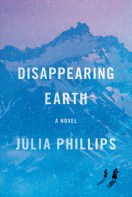
Disappearing Earth

Rating: ⭐⭐⭐
Author: Julia Philips
Genres: Fiction, Mystery
Pub. date: May 2019 (read Mar. 2020)

so 2020 is definitely not my best reading year. I always knew reading 100 books a year was not sustainable, but I’ve really struggled this year. I feel like I should be reading more books then ever during this pandemic, but I did just get a new puppy and have generally been feeling unmotivated when it comes to reading. That said, after giving it some thought, I think public transit might be one of my critical success factors. I spend about an hour on public transit every day and I always read during that time. So on top of the benefit of getting a consistent hour of reading in every day, it also forces me to stay super engaged with my books because I’m forced to pick them up every day. Without that I think I’ve just been feeling less inclined to pick up new books or stick with them through the early chapters.

Anyways, enough with the life update, the real goal here is to sit down and finally write a review for Disappearing Earth, which may be somewhat challenging as it took me 4 months to read and I finished it over a month ago. However, the length of time it took me to read is not at all indicative of how much I enjoyed the book. I made the mistake of starting this one at the beginning of my 5 week honeymoon in New Zealand over Christmas. I got about 40% in and then didn’t read anything for the rest of the vacation because I was having too much of a blast! So it was months later by the time I picked it up again.

Disappearing Earth is about 2 sisters in rural Russia who disappear one day while out visiting the beach. The disappearance rocks the community, impacting many who never even knew the girls, and serving to highlight the inequities that exist among the many community members.

The book has an interesting structure – each chapter is narrated by a different character and we never return to the same character twice. All of the characters are loosely connected in some way, but many are still strangers to each other. Regardless, they are all in some way impacted by the disappearance of the two girls.

While interesting, I do think the structure of the novel was one of the contributing factors to why it took me so long to read the book. It was a little disheartening to finish the end of a chapter and then feel like you had to start again with getting to know a new character. However, I do think the structure is one of the beauties of the book, so it’s not something I would change. The writing is fantastic and I loved how everyone was somewhat connected and somewhat impacted by the disappearance of the sisters. It really highlights the impact that tragedy can have on a community and how it can be perceived by different people.

Class, race, and gender are all important themes in Disappearing Earth. Many of the characters are native and while they lament the probable death of the girls, the community’s reaction to the disappearance of two young white girls mostly serves to highlight how native women are de-valued and de-prioritized by law enforcement and the general public. Culture is an important piece of this book and it is steeped in Russian culture and attitude, but I still found it a stark reminder of the inequalities here in our Canadian indigenous communities as well.

Atmosphere is one of the key parts of the book and a dark atmosphere pervades the entire novel. The disappearance of the sisters in the first chapter clouds a sense of unease over the entirety of the novel. All of the characters are struggling in some way or another, with some being made scared or uncomfortable by the disappearance of the girls, and others jaded about it. All the while you wonder if it will ever be revealed what happened to them, or if, like much of life, we’re destined to go on forever not knowing. The real pain and anguish of disappearance is the uncertainty and unknowing.

So I don’t think this book is for everyone. I wouldn’t call it a fast paced read and I do wish I had read it at a different time. It’s a heavy read, but with gorgeous and perceptive writing, I’m so glad that I stuck with it.

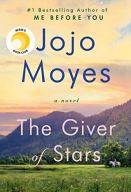
The Giver of Stars

Rating: ⭐⭐.5
Author: Jojo Moyes
Genres: Historical Fiction
Pub. date: Oct. 2019 (read Feb. 2020)

Gah, the disappointment! I am definitely the minority, but only 2.5 stars from me.

My book club voted for The Giver of Stars as our February pick and it came highly recommended. I was a bit weary of it because I didn’t love Moyes most popular book, Me Before You, but the content of this book couldn’t be more different, so I was optimistic that as a lover of historical fiction, I would enjoy it.

I didn’t not enjoy the book. It’s a fine piece of work that creates an interesting enough fictional narrative about a real piece of history (the pack horse library). I’ve since learned that this is the second fictional book about the subject though, so please note that there is another book called, The Book Woman of Troublesome Creek by Kim Michele Richardson, which is also about the pack horse library. I liked the story well enough, but it was just so damn slow and I can’t deny I find Moyes writing a bit amateur.

But I’m getting ahead of myself. The Giver of Stars is about two women, Alice Van Cleve, a newly married Englishwoman who moves to rural Kentucky with her new husband Bennett, and Margery O’Hare, a free spirit who refuses to be defined by her father’s poor reputation or be forced into the narrow confines of what it means to be a woman in 1930’s Kentucky.

The women are recruited to be part of the Pack Horse Library, to deliver books to rural families in hopes of increasing education and literacy among the population. Despite initial suspicion of the library, the people are won over, finally getting access to information on everything from recipes, to their rights, and even clandestine info on the joys of “married love”. As you can imagine, the more conservative of the townspeople feel threatened by the women and tensions rise.

What I liked about the book was learning about the Pack Horse Library. It’s an initiative that was started by then first lady Eleanor Roosevelt and was incredibly successful. The writing of the early days of the library itself was somewhat dull, but It was interesting to learn about the conditions the women worked in, the amount of hostility they received, and how books eventually won the hearts of their readers. I found Margery’s character a bit more interesting than Alice’s, but they both had their own strengths.

But I do have to admit there was a lot I didn’t like about the book too. My biggest complaint is that I thought the author fell victim to the age old trap of ‘Show, Don’t Tell’. I really wanted to see the relationships between characters grow on their own, but I felt that almost every relationship in the book was dictated to me. Moyes tells me that Bennett was a caring and attentive suitor in England and I feel like it’s supposed to be a shock when he does a 180 when they arrive back in America, but as Alice provides no recollections of how the two fell in love, I wasn’t very torn up about the Van Cleve’s turning out to be assholes and thought they were just another sexist Southern family like many others during that era.

Likewise, there’s very little interaction between any of the women in the Pack Horse library to actually cement their friendships. I thought it was obvious the women would eventually become friends because women are generally pretty sociable and supportive of one another and have been finding great value in female friendships LITERALLY FOREVER. It’s sad that suddenly having female friends seemed to be a great revelation to almost every character except maybe Margery, but I didn’t believe it. No way none of these women wouldn’t have built any other meaningful relationships before this point. Although regardless, we weren’t given a lot of anecdotes about how these friendships developed, except for Kathleen, whose story arc I really liked. I guess they eventually all bond with Alice over their dislike of Bennett, but like, friendships are generally born out of mutual interest and respect rather than pity.

Disclaimer: Spoilers ahead, there’s really too much I want to discuss to keep it all spoiler free.
.
.
.
.
.
The same went for the romantic relationship. Supposedly Fred loves Alice from the moment he sees her, but can anyone give me some interactions that led to their mutual interest in one another? I thought they had no chemistry and even though it was obvious Moyes was going to put them together, it was only because she told me they were constantly aware of the other and sneaking peeks at each other rather than any meaningful interactions that would cause two people to be attracted to one another. Maybe I’m a grump, but I wasn’t feeling it and thought the whole thing stank of Instalove.

On a similar note, I wasn’t impressed with how the author handled Bennett’s character. We never find out what his deal is. Is he gay? asexual? repressed from the era’s opinions on sex and therefore just uncomfortable with it? I’m fine with any of these reasons and think any of them are understandable. Personally, I would have loved to see a thoughtful look at how the church’s views on purity and abstinence impact both men and women and create unhealthy perceptions about sex, but I really don’t think that’s what Moyes was going for in this book. Mostly it seemed he just didn’t have any actual information on what sex is? When he marries Peggy at the end I thought “Oh, I guess he was just in love with someone else”. But when Peggy comes looking for the Married Love book I just felt bad for everyone involved and mad at the author and her characters for finding the whole thing funny, which I did not. Like goodness, you think they’d feel some compassion for unsuspecting Peggy who was essentially in the same position Alice had been months prior. It’s not like Peggy stole Alice’s husband – they had no reason to mock or resent her.

So I didn’t love it. It’s a good book in that it raises a lot of questions and I think it’ll be fun to debate at book club, but overall disappointing. I thought my biggest complaint was just going to be that I found it boring, but evidently I had a bit more beef with some of the characters. I was planning to give it 3 stars, but I might have to bump it down to 2.5 (I really don’t think it’s a 2 star book though). I felt it just didn’t measure up to its potential.

There were a lot of side narratives happening that didn’t seem to go anywhere. The birth of the travelling library was interesting, but it did beg the question, what is the story leading up to? We start to get a glimpse into the poor conditions in the mine and how the mining company was essentially tricking people out of their land. When this happened, I was like, “okay cool, I see where this is going now, the librarians are disseminating information on land rights that will start some kind class war between wealthy mine owner (Van Cleve) and the poor”, but that’s never really where the story went. It all seemed to just be ammunition for why we shouldn’t like Van Cleve (as if we needed any more) and to serve his feud against Margery.

Then there was the side story with the flood and the slurry dam. I was like, “OMG the mining company destroyed all this land with a toxic tailings pond that of course disproportionately impacts black people, this is going to start another class war that gets us thinking about how wealthy people get away with murder because the injustice is always perpetrated against poor people and minorities.” But then that storyline went absolutely no where too, so I can only assume it was just another anecdote to make us dislike Van Cleve even more and provide an opportunity for the women to shine by saving everyone from the flood. But honestly, the whole flood scene ended up seeming like it was just drama for drama’s sake, which I have very little interest in.

Overall there were just too many loose ends and undelivered plot lines. I couldn’t believe that with all these other great themes, Moyes decided to focus the climax of her book on a single random incident with a character (McCullough) who doesn’t feature in any other part of the novel! It felt so unrelated to the rest of what was happening. I would have much rather read about the women using their influence as librarians to lead a charge against Van Cleve and his poor mining practices. I know that never actually happened historically, but from what I understand Margery’s whole trial was fabricated anyways, so what’s the point in any of it.

That said, one thing Moyes got right was the righteous anger at how women are treated. Van Cleve was a bit too classically evil for my tastes, but he did serve the purpose of highlighting how rich white men can get away with whatever they want. Margery being thrown in jail and then FORCED TO GIVE BIRTH THERE was enraging and definitely upped the ante, but at the end of the day, I’m not sure what the point was? What theme was the author really trying to make? The only impact that the outcome of the trial has is that Margery gets to return to her family. There’s no ultimate consequence for Van Cleve. Nobody in the town really changes, they just eventually go back to business-as-usual with no lessons learned. Am I supposed to be impressed that Bennett is pushing for a concrete wall on the next slurry dam? Because I’m sure that idea will be steamrolled by his father in 2 seconds because neither of them ever sees any consequence to their actions.

The only message I’m left with is that women are resilient? Not really groundbreaking stuff. I felt like the whole narrative was just manipulative and trying to force an emotional response that I just didn’t feel. I felt like Moyes was constantly trying to tell me how to feel when her characters and writing should just speak for themselves.