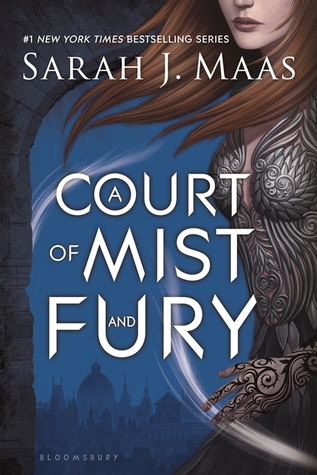
Rating: ⭐⭐⭐⭐⭐ Author: Sarah J. Maas Genres: Fantasy Pub. Date: May. 2016 (read Dec. 2016) Series: A Court of Thorns and Roses #2
I recently re-read ACOMAF and ACOWAR (but not ACOTAR because I hate it). I had a review for ACOMAF on my goodreads that I’ve apparently never posted here, and discovered I’d never actually written a review for ACOWAR. So check out my old review for ACOMAF here and I’ll post my ACOWAR review shortly.
This review has some spoilers for ACOTAR and ACOMAF.
———————————-
I love this book so much!!
I read this series for the first time about 5 months ago because I love Maas’ Throne of Glass series. Unfortunately, I really didn’t like ACOTAR, but I stuck with it because I heard ACOMAF was much better and I’m so glad I did!
I love Feyre’s journey in this book. She was such a contradiction in the first book, being both strong, but also whiny and pathetic. I thought she was so real in this book. What happened Under the Mountain completely destroyed her and I appreciated Maas for recognizing that it’s okay for strong characters to fall apart. It took time for Feyre to accept the things that happened to her and her slow healing felt so natural and cathartic.
This book was quite a bit longer than the first of the series, but I thought the flow of the story was fantastic. I love where the story went and all the new characters we were introduced to throughout. I loved everyone in Rhysand’s inner circle and I felt they were all well-realized characters, yet I’m excited because I know there’s so much more to learn about them.
And of course, this book was sexy. The slow build flirtation and romance throughout completely moved the story along. I absolutely love the love story in this book. Feyre and Rhys’ relationship was so moving and healthy, I totally fell in love with Rhys too. A lot of romances feel very one sided (i.g., the man as protector or decision maker), but the romance in ACOMAF was built on equality and the freedom to make your own choices. What I loved about Rhys was that all his imperfections were what made him perfect. I loved that Maas took a character that had been pretty awful and made me fall in love with him.
As much as I didn’t like ACOTAR, I can appreciate it a little bit more now that I’ve seen where Maas was planning to take the story. This was my second read-through and I am going to start A Court of Wings and Ruin immediately because it just came out today!!
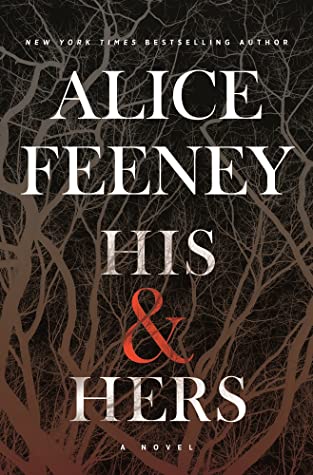
Alice Feeney’s debut, Sometimes I Lie, was a big hit with my book club when it came out. So I was excited to read His & Hers as our book club pick for February. I don’t think it’s as strong as Sometimes I Lie, but it is a quick, edge-of-your-seat thriller that I devoured in just a few hours.
I don’t want to get too much into the synopsis because it’s always better to go into these kind of books blind, but as the name suggests, the narrative bounces between two central characters, divorced couple Jack and Anna. Jack is a detective and Anna a news reporter. When a woman is murdered in the small English village of Blackdown, both Jack and Anna find themselves covering the story, but they are both also secretly connected to the victim.
Like I said, this is a quick paced thriller that takes you on a winding path. If you’re looking for a quick read that you don’t have to think about too much, this is it. The writing is good in that we really have no idea where the story is going. The author constantly toys with your train of thought, giving you some answer throughout, but always more questions. Overall it was a fun read, but there were a few things I didn’t like about it.
Before I get into the spoiler part of my review, I’ll just say that I thought the story had quite a few plotholes and while the author does always keep you guessing, I didn’t love the writing style. I found the writing a bit disjointed and confusing at times. I think that it was intentional not to give too much away, but I often felt like I just had no information. It’s hard to describe, but I felt like the fun of guessing who did it was removed from the story because the order of information was intentionally confusing I didn’t even bother.
I also found the content disturbing – I know murder mysteries are bound to be a bit disturbing, so it’s not a critique, just a note that it made me uncomfortable and that some people might like a trigger warning for rape. I also hate the use of children as a plot device in murder mysteries. Lots of mysteries center around children and trauma and that is fine, in a way this book does, but the author also leaves several children orphaned and generally I just thought it unnecessary. I felt more like they were used to make the reader feel bad rather than for any important plot reason.
Finally, this is a criticism of the title of the book more than anything. But “His & Hers” implies to me an exploration of two different sides of the same story. Yes this story had two protagonists, but to me it was really no different than any other dually narrated story. I didn’t think the book really explored his and her perspectives of an event. It really was just a simple shared narrative. A minor criticism as it doesn’t affect the enjoyment of the story, but hey, I’m a reader, I care about word choice.
Anyways, those are my critiques. Overall it was a standard 3 star mystery thriller. I liked it, but didn’t love it.
Okay now for the spoiler part of my review. I found quite a few plot holes and I want to document it while it’s still fresh in my mind because it’s bound to come up at my book club discussion!
.
.
.
Plot holes: – Why did Anna go into Zoe’s house on the day of her murder? The end confirmed she didn’t do it, so what was she doing? – Why did the killer tip Anna off after they murdered Helen Wang? I assumed originally it was to throw suspicion on her, but wouldn’t the killer want to avoid any suspicion on Anna? – Why was Priya always talking to Anna’s mom? The author alludes that we should be concerned about this – I figured originally it was because of her mom’s dementia and the body in the backyard. But in light of the final revelation, I’m not sure why we should be concerned about this. Do we think Priya suspects the real killer? – Not a plot hole, but overall I just thought both Priya and Richard were weak red herrings. Catherine was the obvious suspect, so I did like the little plot twist with Cat Jones. – Why was Jack absolved of all suspicion? They make reference to the discovery of Catherine’s diaries, but they wouldn’t have found any murder plans within them… I know Priya witnessed Cat attack Anna’s mom as well, but again, not proof she was the murderer. Her children had been kidnapped, surely hysteria would be expected, or did the police not figure this out. They would have had to know now that both the kids parents were dead.
Rating: ⭐⭐⭐ Author: Jessica J. Lee Genres: Non-Fiction, Memoir, History Pub. Date: Jul. 2020 (read Jan. 2021)
I was really intrigued by the title and synopsis of this book and picked up a copy from my local bookstore. Soon afterwards it was shortlisted for Canada Reads 2021 and I was even more excited to read it!
Two Trees Make a Forest is Canadian author Jessica J. Lee’s second book. As the name suggests, it’s about her travels in Taiwan whilst trying to learn more about her grandparents past. Her grandparents were both Chinese, but immigrated to Taiwan where they raised their daughter, before eventually all settling in Canada. Lee grew up in close proximity to her grandparents, yet in many ways felt like she didn’t really know them. They talked little about the past and though her family held a close connection to Taiwan, Lee knew very little about their life there. After the death of her grandfather, the family discovered a letter he left behind about his past, inspiring Lee to visit Taiwan and learn more about both her family history, and the unique history of the island.
This was a well written book, but it was a struggle for me to finish it. I found Lee’s stories about her grandparents and family to be really interesting, however, they are really only a small piece of this book. Revisiting the title of the book, it does tell us that this book is as much about “Taiwan’s mountains and coasts” as it is about her family, but I guess I was just expecting something a little different. This is not a story of Lee following her roots around Taiwan, but rather Lee finding herself around Taiwan, while simultaneously coming to terms with the family history that has been in many ways lost to her.
Lee is an interesting storyteller and the book focuses just as much on Taiwan’s geographical history as it does her personal history. She talks about the history of the island the geographical uniqueness of it. Her love for Taiwan certainly shines through and I did learn some interesting facts about Taiwan and it’s history, but I also learned a lot more about Taiwan’s trees and mountains than I really bargained for. On paper, as an avid hiker, you would think I’d love it, but I’m not really a big non-fiction reader, and certainly not a history reader, so it just didn’t quite deliver on something I was excited about reading.
So it’s a bit of a hard book to rate because I did think it was good, I just wasn’t invested in it. I read everything about her family history, but I ended up skim reading a lot of the geographical information. Good, just not for me.
Rating: ⭐⭐⭐⭐.5 Author: Kate Moore Genres: Non-Fiction, History Pub. Date: Jun. 21 2021 (read Jan. 2021)
To all the women who have had someone call them crazy.
I stumbled across The Woman They Could Not Silence on Netgalley and immediately put in a request because I loved Kate Moore’s last book, The Radium Girls. In a similar vein, her new book shines a light on an important part of women’s history that has been somewhat lost to time. Moore excels at writing this kind of journalistic memoir in a way that is riveting to read and immediately connects readers to the protagonists. Despite this being a non-fiction book, it reads like fiction, bringing historical figures to light in a way that makes readers really empathize with their plight. In short, Moore knows how to ignite righteous anger at the injustices that have been, and continue to be, perpetrated against women.
This story starts in Illinois in 1860 and centers around one woman, Elizabeth Packard. After 21 years of marriage and bearing 6 children with her husband Theophilus, he has Elizabeth committed to the Illinois State Insane Asylum against her will. Her crime? Questioning Theophilus’ bible study teachings in the church in which he is a pastor. Pushing back against your husband, questioning religion, and being intelligent in general were all signs of mental illness in the 1860’s, and as such, Theophilus has no difficulty in getting his wife locked up.
Elizabeth immediately fights back against the claim that she is insane, but recognizing that such pleas will only make her look more insane, she does her best to maintain her dignity at the asylum and after her first meeting with the state hospital director, Dr. Andrew McFarland, with whom she develops a good relationship, she is sure her release will not be long in coming.
Though Dr. McFarland is unable to determine the root of Elizabeth’s insanity, he is convinced it is there and will be revealed in time. Due to her intelligence, she is granted special privileges at the hospital. However, despite these privileges, Elizabeth soon becomes aware of the level of abuse that is being perpetrated by hospital aides within the walls of the hospital and starts stirring up trouble with the other inmates. This results in the revoking of Elizabeth’s privileges and life at the hospital soon becomes very hard for her.
The rest of the novel is about Elizabeth’s struggles in the asylum and her fight for freedom. Elizabeth is very intelligent and an accomplished writer, and though Dr. McFarland tries to silence her within the walls of the hospital, she is determined to record and share her story. She makes friends within the asylum and keeps a secret journal of all the abuses she witnesses. I couldn’t help but compare her to Alexander Hamilton because the woman constantly wrote like she was running out of time!
However, her goals are not only to record history, but to change it. Elizabeth is strategic in going about this. She knows that raging against the machine will get you nowhere in an insane asylum and so she goes about cultivating relationships and manipulating those around her, including McFarland. I found it really interesting to read about Elizabeth’s experiences and progression while at the asylum.
The whole system is completely unjust for so many reasons, but the two that stand are that, first, almost no proof is required to lock a woman up in an asylum. All Theophilus needed was 2 certificates of insanity from local doctors, which he was easily able to procure thanks to his influence as a man and pastor. Unmarried women are entitled to a trial before being shipped off to the asylum, but married women need only the desire of their husbands. As they are considered his property, they are not permitted any voice of their own. Many of the other women in the asylum were in the same situation as Elizabeth and had been sent there without any legal rights.
Second, the whole premise of what qualifies a person as insane or cured is entirely stacked against the patients. Like I said, women could basically be committed for showing any inkling of self thought or governance. Theophilus didn’t like that Elizabeth was questioning things or flouting his authority, so he quickly put an end to it. But what’s really enraging is that women who push back against the diagnosis of insanity only further the diagnosis. Showing any kind of indignation at anything is basically a sign of insanity. Women were only considered cured when they would finally submit to everything: the will of the abusive attendants, their doctor, and their husbands. The injustice of the system is that it literally conspires to make you insane and then only release you at the moment when your spirit is finally irreparably broken.
I say Elizabeth’s progression is interesting because she somehow manages to hold on to this one thread of truth throughout the entire ordeal, the idea that ‘I am not insane’. She is determined to be free and she is determined to be free under her own will, not through submission. The longer she is imprisoned, the more frenzied she becomes in her desperation to get out. She documents her experiences and ideas in a kind of manic fervour that you can’t help but question if maybe she is going a little bit insane. Rather than diminish, her ideas of justice and equality of women only grow more and more ambitious to the point where she envisions women as totally equal to men and able to even hold public office, something that is quite radical in 1860 and unlikely to get you released from an insane asylum.
I don’t want to give away the whole book because even though it’s historical, it’s still a story and I did take joy from the experience of having no idea whether Elizabeth was going to succeed and to what degree. She inspired a book to be written about her, so I knew she was going to have some level of success, but it was honestly so bleak, it was hard to imagine how a woman would ever recover from either the trauma or the stigma of such an asylum.
But Elizabeth is a fighter and I honestly can’t imagine a woman with more spirit. She had a lot of influence on early American politics and it is a shame that her name is virtually unknown, even among the roll call of suffragettes. But such is the way of women’s history and I love that we keep hearing about more and more women who have contributed greatly to our society but who’s legacies have been little preserved.
The author added a post script at the end of the book that I really liked. The book will make obvious the impact Elizabeth’s writings and efforts had on the women’s rights movement, but it also highlights how these same ideas are still present in today’s society. The idea of insanity is still used today to threaten, discredit, and silence women. Men have always used the excuse of ‘craziness’ to belittle women. The idea that fault lies only with women is still wildly believed by many men and women, even if only subconsciously. When men don’t like the ideas or actions put forth by women, it’s only too easy for them to dismiss them entirely with the callously thrown away phrase “she’s crazy”. I think we see it used most often by men to either dismiss the actions or requests or a partner or to speak of their ex. But even women use it to describe other women, particularly in scenarios where it relates to how other women interact with men (I’m thinking of reality television here).
But the idea is everywhere. Moore draws attention to its presence even at the top level of the American government when Trump once screamed at Pelosi for being wrong in the head. Powerful men still seek to silence women through the threat of insanity. For this reason, I thought this an extremely important read. A lot of the content didn’t surprise me, but experiencing it through Elizabeth’s eyes did help to put it into perspective. Even after all the work that Elizabeth did, Dr. McFarland is still kindly remembered by the eyes of history while Elizabeth has more or less been forgotten.
This wasn’t a perfect book. I thought the writing was a little simplified in the beginning, though it got much stronger as the story went on. I also thought the story could have been shortened, some parts are a little over indulgent and I fear the length may deter some readers from this. But overall, still an excellent read and I would definitely recommend!
I read The Humans with my book club a few years ago and really didn’t like, so I’m not sure why I thought this would be any different. I couldn’t help but be intrigued by the synopsis and the title, but at the end of the day this was pretty disappointing.
The concept of the book is that between life and death there is a place called the Midnight Library, which allows you to check out the lives you did not live. It centers around the idea of parallel lives and that every time we make a choice our lives diverge into the decisions we make and didn’t make. I’ve read a handful of books about parallel universes and I think it is a tough concept to get right. It’s a complex idea, so you better put a lot of thought into your execution.
I can see why this is a beloved book to a lot of people. It is about reflection and looking back on our lives, examining the decisions and mistakes we made. It’s a meaningful exercise to think about how our lives might have been different had we made different choices, but if examined too closely has the potential to ultimately lead to disappointment. Our main character Nora is granted the opportunity to look back on her life and I think a lot of readers are moved by how the experience changes and heals her.
Personally I didn’t like this book for two reasons. First, I thought the parallel universe theme was executed poorly and that the author didn’t go deep enough into the concept. And second, I thought the writing was too heavy handed. I felt like every single parallel life was an exercise in emotional manipulation. The author spells out every single lesson that Nora learns, even though they are all embarrassingly obvious. From Nora’s first attempt at settling in a parallel life, I predicted exactly how the rest of the story was going to go and at no point did the plot surprise me after that.
Let’s talk first about the execution of the concept of the Midnight Library. The concept is that you can visit any other life, with the idea being you find another one to settle in. However, the second you start to become disappointed with that life, you are instantly transported back to the library to try again. If you could actively make the decision to return to the library, I’d probably be okay with this concept, but in what universe are you going to live a life that is totally devoid of disappointments? Disappointment is a part of being human. Even if you are generally content in your life and wouldn’t trade it for the world, you will still face disappointments. So in my opinion Nora was pretty much doomed from the start. If you could make the choice to pursue a life despite disappointment, I might buy in, but inevitably something was always going to disappoint her and send her reeling back to the library.
Then there’s the fact that the more lives you live, the more likely you are to be disappointed by one life compared to another. It’s hard to be satisfied in any life when you know there are more possibilities out there. The author did address this through the inclusion of Hugo’s character, but combined these two factors just made the entire existence of the Midnight Library too flawed for me to really enjoy it. Also, the sheer exhaustion of constantly entering lives where you don’t know what’s going on is bound to continually send you running back to the library. If Nora was able to downloaded the sub-conscious of her parallel self whenever she entered a new life, it might be more believable that she might actually find happiness in one of them.
Finally, my last flaw with the concept was that in every choice Nora made, she became the most accomplished version of herself. I know the idea is that with infinite universes, every scenario is possible and that the reason Nora was so accomplished in every life was because that’s the life she desired to see when she checked the book out of the library. But I feel like it is the most basic of concepts that success doesn’t equal happiness. I didn’t like the dichotomy that with every choice you make you are giving up a life of extreme success. Success is not based solely on choice. You can make all the right choices in your life and never achieve even a moderate level of success. There are all kinds of other factors at play such as gender, privilege, race, ability, social class, economic background, etc. Which is why I felt the author didn’t commit to the plot. I think there’s a lot of room here to explore all kinds of social commentary, but the author came up with a shallow idea of parallel universes and never looked to delve any deeper.
Which leads me to my final criticism that the book is over-written. I feel like a broken record sometimes, but show don’t tell! I hate nothing more than when an author tells me how to feel. Good writing evokes sentiment and feeling. I don’t need you to spell out the disappointment of Nora’s many parallel lives, it’s extremely obvious. Like I said, from the start of the book, I could pretty much predict exactly how it was going to end. I felt like I’d stumbled upon a script of Chicken Soup for the Soul from 2000 with the intense catharsis constantly being shoved down my throat. Yet even though I knew where Nora was destined to end up, I still felt it was disingenuous to act like we’re all currently living the best version of ourselves and that all we need is a little perspective to cheer us up.
The one thing I did like about the book was Nora’s discovery that sometimes it is the mundane that is the most meaningful. After chasing after every kind of success, she finally realized that sometimes the quieter lives are the most fulfilling. Her life with Ash was the one thing I didn’t quite see coming and I was glad to see her finally find a modicum of happiness in one of her many lives. But that was really the only part of the story that I liked and mostly I just found it extremely tedious to go from one failed life to another.
The one thing I haven’t touched on is the portrayal of depression in this book. I did like that in almost every life Nora was taking medication for depression. But like I said, when someone is deeply discontented with their life, I find it hard to believe a little perspective would change their whole outlook on life. I’m not super knowledgeable about depression though, so I’ll leave that for other readers to comment on.
So in conclusion, definitely not a win for me. It was an interesting concept, but the execution was painfully tedious. Sadly I just don’t think this author is for me.


 The Paperback Princess