Heartstopper

Rating: ⭐⭐⭐⭐
Author: Alice Oseman
Genres: Graphic Novel, Young Adult, LGBTQIA+
Pub. Date: Feb. 2019 (read Apr. 2022)

Heartstopper has been on my TBR for literally years, so the new TV show was what I needed to finally read it – that and I was able to get all 4 volumes at once from my local library. I read Radio Silence a few years ago and really liked it, so I knew I would like this, especially based on all the hype.

I admit, it did take me a little bit to warm up to the story. I wasn’t immediately sold on the artwork or the characters because I felt like not a lot happened in the first volume, but the story very quickly grew on me in subsequent volumes. I wrote part of this review before watching the show, but decided to hold off on posting it until I’d seen it, and I’m so glad I did, because I am now 100% obsessed and invested in this series!

I like that Oseman addresses issues which a lot of teens struggle with – not just in terms of figuring out your sexuality and coming out to your friends and family, but also in regards to mental health. The first 3 volumes are extremely feel good. It’s what makes the series and the show such a triumph. We know that Charlie had a very hard time coming out and we are repeatedly subjected to homophobic characters, bullies, and micro-aggressions, but at its core, this story is a joyous celebration of queer love.

It’s filled with a diverse cast of characters and for every bully, there are multiple loving and supportive characters. Many people have very difficult experiences with coming out and I feel like there’s already a lot of trauma porn about those experiences, so I appreciated Heartstopper for its lighthearted approach, that coming out is also something to be celebrated and doesn’t always have to be a negative experience. Nick still struggles with identity, but I liked that his experience contrasted to Charlie’s and that isn’t it beautiful to have allies and safe spaces in which to open up about who you really are.

For this reason, Nick really wormed his way into my heart, especially thanks to Kit Connor’s portrayal in the TV series, which I thought was phenomenal (all the performances were excellent, but I particularly loved Kit’s). He’s a very soft character, unsure of himself in some ways, and very sure of himself in others. Mostly I just loved his self-awareness, which I think is even more pronounced in the show and I liked the subtlety in how Kit portrayed Nick’s internal conflicts. His fear that he’s treating Charlie the same way as Ben, when in reality he’s just taking the time he needs to figure out his own identity.

Why I think this series and show is getting such universal approval comes down to how centered in reality it is. These kids act like proper teenagers and I appreciate the show so much for deciding to cast actual teens in all their awkwardness. So many depictions of high school settings are so overly dramatized and sexualized, I felt very grounded by this depiction of high school, which is what makes it so relatable to any individual, queer or not. I also have to acknowledge that my initial comment about how not a lot happens in the first volume is actually part of what makes the story so lovable.

We get three whole volumes just about coming out, identity, and self discovery. Coming out is not just a one-time thing, it’s something gay people have to do over and over again. Likewise, identity and self discovery are an ongoing process, and the more I think about it, the more I appreciate that Oseman dedicates the time and space to this exploration. For straight people, learning that someone is gay is a one-time thing, you adjust your perception and try to be supportive (hopefully), but for these queer teens, it is an ongoing and monumental thing to manage. So I appreciate that Oseman gives it the gravitas it deserves and makes her entire narrative a celebration of that process.

I only mention the first 3 volumes because the 4th volume is a bit of a departure from her initial themes. It is darker and explores some of the more challenging struggles that teenagers often face, including depression, eating disorders, and self harm. Like many teenage relationships, in their all-consuming passion, Charlie and Nick begin to develop a bit of co-dependency and their families quite wisely advise them to focus on balance in their lives. Charlie learns that he can’t ignore all of his issues and Nick has to come to terms that he can’t be the one to fix all of Charlie’s issues either. Both characters still need to be able to stand on their own two feet and take responsibility for their own struggles. It doesn’t mean they can’t support and be there for one another, but each needs to take ownership over their own mental health as well.

I thought there was only 4 volumes, so I was a bit disappointed when I couldn’t finish the series in one go, but I’m stoked I still get to look forward to spending more time with these characters. I whole heartedly recommend both the graphic novels and the Netflix series to everyone!
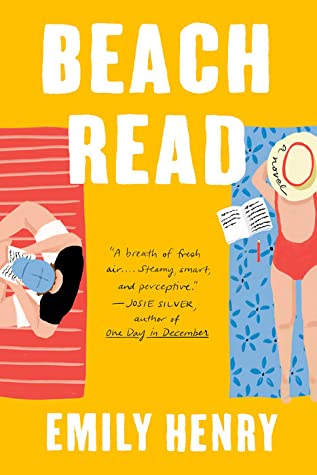
Beach Read

Rating: ⭐⭐⭐⭐
Author: Emily Henry
Genres: Fiction, Romance
Pub. Date: May 2020 (read Apr. 2022)

I read and loved People We Meet on Vacation earlier this year, so I was excited to pick up Beach Read this month. The two books together have firmly cemented Emily Henry as a “auto buy” author and I’m looking forward to her 2022 release, Book Lovers, coming out next month.

The two books are rated almost the exact same on Goodreads, but most people I know that have read both preferred Beach Read. I kind of wonder if it matters which one you read first (everyone seems to love their first pick), because as much as I liked this one, I did still like People We Meet on Vacation better. I feel like friends to lovers is an underdone trope (enemies to lovers seems very on trend these days, at least according to Booktok), so that’s why I liked People We Meet on Vacation so much.

I must conclude though that Emily Henry (or her publisher?) is not very good at naming her books. Beach Read and People We Meet on Vacation are both kind of misnomers to me, what are we actually going to get in Book Lovers? A book bonfire? But I guess I can overlook it because I love her approach to romance writing. Both are very much romance books, but they have a lot going on for them beyond just the romance. Plus the smut is limited, which some people will like and others won’t, but for me it just helps to present the book as more than simply a romance.

Anyways, let’s talk about Beach Read. It was quite emotional for what I thought was going to be a light read. Our protagonist, a novelist by the name of January, is reeling after the death of her father and the realization that he was living a double life. She decides to spend the summer in his secret beach house to write her next book while cleaning it out to sell. The problem is that she is a romance writer and with the disintegration of her relationship, along with the death of her father, she’s feeling a little low on inspiration.

Along comes Gus, another writer trying to pen the next great literary novel. The two decide to trade genres and Gus attempts romance while January makes a run at literary fiction. Of course drama ensues as the two get to know each other better and address the pre-conceived notions they had about one another.

I liked it – it’s fun and thoughtful, though ultimately a bit forgettable. I would love to know what kind of literary fiction these two are reading though (or Emily Henry is reading), because I read A LOT of lit fic, and nothing either of these two characters proposed sounded anything like lit fic to me. Gus’ cult family drama sounded more like mystery or horror, while January’s circus saga belonged somewhere in the historical fiction genre. But I guess they’re both literary in their own way, I just gravitate to contemporary lit fic I suppose.

On another note, it just about killed me when these two went off into the wilderness in street clothes. Thank goodness Gus knew what he was doing and brought a tent, but as an avid backpacker, it was high-key unbelievable to me that these two wouldn’t have spent a freezing, soaking wet night in the tent with only one blanket. Trust me, in reality it’s not quite the romantic scenario you’re envisioning. But I guess I live in a much colder climate, so what do I know?

Anyways, I’m going off on a lot of tangents because I don’t really have a lot to say about the book overall. It’s fun and sexy, it has emotional depth, but it didn’t sing to me the same way People We Meet on Vacation did. January and Gus are two complex individuals, but they did both have a lot of shit to work out, although I did like that it wasn’t a “ride off into the sunset” type of ending. I feel that Emily Henry’s romances have a strong dose of realism in them and I think that while this wasn’t quite as strong a novel for me, it’s what will keep me coming back to her books. 4 stars – a solid read, despite there being no actual beach reading to speak of in this book.

The Cartographers

Rating: ⭐⭐⭐.5
Author: Peng Shepherd
Genres: Fiction, Fantasy
Pub. Date: Mar. 2022 (read Apr. 2022)

I was super excited when I first read the synopsis and saw the cover art for The Cartographers! Everything about the blurb appealed to me and I was stoked to jump into this one. Since its release, it’s getting some pretty mixed reviews, which I can definitely understand. It’s a very compelling story and there’s a lot that I liked about it. Initially I gave it 4 stars, but upon closer reflection, I have to admit that parts of the book are pretty flawed and that I loved the premise of the book more than the execution, so I decided to bump my review down to 3 stars. Still a great read, but not everything it could have been. So let’s talk about it.

The Cartographers features protagonist Nell Young and opens with the death of her estranged father. He passes away at work and when the police notify her of the incident, she discovers a map hidden in his office and sneaks it away with her. She quickly discovers that despite the unassuming nature of this cheap gas station map, it appears to be extremely desirable and is the only remaining map in existence. A shadowy group called the Cartographers appears to be after the map and Nell is quickly catapulted into a mission to unravel the maps secrets before the dangerous cartographers find her.

Sounds great right? It is. I found the writing to be pretty fast paced and the mystery super compelling. There’s a fantastical element to the story as we discover some of the secrets that maps can hold and slowly get answers about who the Cartographers are as we unravel Nell’s family history. I loved the idea that maps can be portals and that some places exist only within the maps on which they are shown. I got totally caught up in the story, in solving the mystery and exposing the secrets.

Unfortunately, as smart as the premise of the plot is, the execution and backstory are so flawed that it does take away from my overall impression of the book. Without getting into spoilers yet, a lot of the characters make questionable decisions, portions of the story are left unexplained, and the ending is perfect and messy in a way that doesn’t really make sense. We are introduced to a lot of characters, but many are left only partially developed. The premise of the plot is excellent, but it’s left unsupported by weak characterization and themes.

I would still recommend this book because of how fun it is. It really captured my imagination and it is very fast paced and I found it hard to put down. It’s just not quite as good as I believe it could be and beyond the extremely creative premise, I felt the author lost that creativity in telling the rest of the story. So I’d still encourage you to check it out, but for now, I’d like to jump into the spoiler part of the my discussion because I want to further explore some of the plot points and would love to hear opinions from others who have read the book.
.
.
.
SPOILERS
.
.
.
My main criticism relates to the Cartographers and their motivations. I feel like Shepherd created this wonderful idea of having the errors on maps become real places and I loved the discovery of Agloe, I just didn’t understand the choices the rest of the characters made. I didn’t understand why Nell’s mother opted to stay in Agloe for 30 years. Actually, I understood it in theory, it’s more that I didn’t believe it.

I didn’t believe that her motivations for deciding to stay in Agloe were strong enough. To say she is hiding from, or afraid of Wally is unfair. While he did become an extremely unstable character, I believe this was mostly due to his grief and ongoing fanaticism about the map. Had Tam simply left Agloe and not been presumed dead, he would not have spent 30 years trying to get back to her and I believe the combined effort of the Cartographers could have managed and support Wally in his grief. Instead they stood idly by for 30 years – allowing Wally to become more and more unhinged and permitting a young girl to grow up without her mother. This is selfish and irresponsible. I could excuse some of the Cartographers since it was only Daniel that knew Tam was still alive, but together Nell’s parents are a bunch of idiots.

Secondly, I didn’t believe any sane individual could stay in a fictional town for 30 years. The perceived danger wasn’t real, but even if it was, what person wouldn’t risk it to be with their husband and daughter. There’s no way Tam would still be sane after 30 years in a make-believe town, but clearly she wasn’t sane to begin with if she thought self isolating for 30 years was a good idea.

So all of the decisions made by the Cartographers were based on this flawed fear of an unhinged individual that they themselves created. It just wasn’t a good enough motivator for me to understand of empathize with their decisions. Tam made the decision to abandon her daughter and Daniel made the decision to ruin her career and slander her. What kind of life are they even trying to protect for Nell? A life where she is estranged from her family and forced to work in a dead end job, never having known a mother or father’s love? What is even the point? Leave Agloe and burn the map. No one should love cartography this much.

Tam being alive explains the motivation for hiding the map for so long, but honestly I thought this book would have been a lot stronger if Tam had actually died in the fire. It would explain why the rest of the Cartographers repressed the entire ordeal out of grief and I would have understood better why they hid it from Nell. Tam being secretly alive for 30 years just made me mad about Nell’s abandonment and weakened the premise for the rest of the story.

Anyways, overall this is leaving me thoroughly confused about the book. Like I said, I can’t deny I had a lot of fun reading it, my frustrations are mostly because I thought it could be stronger and I was sad to end the book feeling disappointed when I wanted so badly to love it. I didn’t quite understand the ending, but it was a wonderful blend of magical realism and I would read it again in hopes of picking up on some other subtleties about how the map magic system works. If you want to enjoy it, you just have to be willing to accept the story for what it is. A great idea, just maybe not perfectly thought out. 3.5 stars

Ghost Forest

Rating: ⭐⭐⭐⭐
Author: Pik-Shuen Fung
Genres: Fiction
Pub. Date: Jul. 2021 (read Mar. 2022)

I’ve been putting off my review for Ghost Forest because I don’t have a lot to say about it, but I do still want to write a short review because I think this is a very understated book and I really loved it!

I stumbled upon it at my local indie bookstore and admit to be primarily drawn to it for the cover art, but it’s also Canadian lit, so I quickly purchased it and let it sit on my shelf for a few months before finally reading it. I guess I forgot immediately after buying that it was also written in prose, or likely I would have read it sooner since it’s a quick read.

Ghost Forest features an unnamed narrator, a young girl whose family immigrates to Canada in the 1990’s. Though most of her family settles in Vancouver, her father continues to work in Hong Kong as an “astronaut father”. The novel explores her relationship with her father over the years, as a young girl living in Canada, to a young adult also living in Hong Kong when her father becomes very sick. Over time her relationship with her father has become strained as she never really felt like he was around and she re-examines her family history as her father becomes sicker.

The writing is really beautiful and I loved how the author explored family dynamics and all the ways in which immigration and new cultures can fracture a family. While the book centers around the protagonist and her father, it also features an oral history of her other family members, including her sister, mother, and grandmother. It’s a family history, but it’s also a book about love, grief, and memory. How things became what they are and the thoughts of what might have been. Many returned to Hong Kong years later, but this family opted to stay in Canada, even though they partially relocate back to Hong Kong when the father is sick. It explores identity and belonging and is a classic immigration story that I’d recommend to any Canadian. A quick read filled with gorgeous prose!

Yinka, Where is Your Huzband?

Rating: ⭐⭐⭐.5
Author: Lizzie Damilola Blackburn
Genres: Fiction
Pub. Date: Jan. 2022 (read Mar. 2022 on Audible)

So far 2022 is turning out to be the most off brand reading year for me. I feel like I’m reading a lot of different type books than I normally do and I am loving it! Whatever the opposite of a book slump is, that has been my 2022 so far! 

Yinka, Where is Your Huzband? is maybe a little less off brand than some of my other reads and I was drawn to it because it sounded a lot like Queenie. It’s definitely a different book than Queenie, but like Queenie, it has been compared to Bridget Jones, and also like Queenie, people are pissed about the comparison. Honestly, it seems like everything is compared to Bridget Jones these days, but I disagreed with the haters about Queenie and I disagree with the haters about this one too. In my opinion, Yinka has the most similar voice to Bridget Jones, while solidly still being her own original character. Yinka has the self deprecating humour or Bridget, without being quite as self sabotaging as Queenie.

Yinka, Where is your Huzband? is set in London and features a British-Nigerian family. Yinka grew up in Peckham, is Oxford educated, and has a great job in investment banking. Unfortunately, despite her career success, she’s still seen as the black sheep of her family because she is in her 30’s and still not married. While her sister, cousins, and friends are getting married and having kids, Yinka hits a tough spot at work and struggles to get over her last relationship. For the most part, she is content with who she is, but the repeated pressure and embarrassment from her family to settle down spurs her to make a plan to do whatever it takes to get a date to her cousin’s upcoming wedding.

I read this as an audiobook and it did take me a little while to get into it. Things aren’t too bad for Yinka at the start of the novel, but they slowly start to fall about and the more she tries to fix things, the worse it seems to get. There are a lot of cultural expectations placed on her and it’s sad that while her family is very proud of her achievements, she is still seen as a failure for being unmarried and childless. Her mother’s greatest fear for her is that she will be an old maid who never gets married, as if marriage is the pinnacle of achievement. I thought it was a great look into the Nigerian diaspora in Britain and I both loved and was extremely frustrated by Yinka’s family, especially her cousin. Yinka gets shit on a lot, and while she had some growing to do, I do think her outbursts and anger were entirely justified.

Like I said, this is a more subtle book than Queenie. Whereas Queenie drowned her pain and depression in abusive sexual relationships, Yinka is still looking for her Prince Charming and tries to change her looks and personality to be more attractive to the men in her life. She has a deep rooted insecurity about being dark skinned and equates her self worth and beauty with not having lighter skin. She disappears into trying to be who she thinks other people want her to be, yet I admired that there were still some things she wasn’t willing to compromise on. Faith is a key part of this novel and Yinka isn’t willing to compromise her decision to remain chaste until marriage. Sometimes it felt a bit preachy, but I feel we don’t often see characters like this in mainstream literature, so I liked that it was different. Plus Yinka was never pushy about her faith.

I wish this book wasn’t being marketed as a romance though. I kind of knew going in that it wasn’t a romance and I liked that instead it’s a book about learning to love and take care of yourself. But if you’re going into this looking for romance, you will likely be disappointed. That said, I had whiplash from how many romantic interests are presented throughout the story. I kept trying to guess who Yinka was actually going to end up with, but in the end it didn’t really matter because it’s not really what the book is about. 

As with any kind of book like this, I think some people will struggle with Yinka’s character. I really liked her and found her struggles to be very relatable. I understood the complicated relationships she had with a lot of her friends and family, but loved that she also had some solid relationships in her life too, namely Nana and Auntie Blessing. Her relationship with her cousin (I can’t remember her name now… Oola? Oona?) was really frustrating, but I liked the exploration of how friendships can turn toxic and how family dynamics can create unhealthy and competitive environments with the people we should love. Her cousin is looked down on by her mother for not having an education, while Yinka is looked down on by her mother for not having a husband. It’s hard for anyone to feel good about themselves and it really pitted the two cousins against one another. 

So there was a lot I liked about the book, but there were also some things I didn’t like, the first of which was Yinka’s career trajectory. It was tiring how everyone kept pushing Yinka to switch careers – on the one hand, it’s great to have friends that encourage you to pursue something you’re passionate about, but I didn’t really get the vibe that Yinka was passionate about helping the homeless. It just read more to me that the author thought there is something inherently wrong with being an investment banker and that Yinka should so something more “meaningful” (as is constantly preached to us through characters like Dominic). I don’t like attaching this kind of social or moral value to jobs because most people aren’t privileged enough to have the luxury to choose since, like Yinka, their number one priority is paying the bills. Working for a homeless charity is great if that’s what you really want to do, but it doesn’t necessarily make you make you a better or more virtuous person.

In addition, I feel like Yinka was chastised a little too much for changing and experimenting with herself. Like I get the whole “be true to yourself” thing, but I don’t think there’s anything fundamentally wrong with trying new things. Like, if Yinka wants to try having a weave or learn to make Nigerian food, is that really so bad? She shouldn’t suppress and lie about who she is, but I felt she was unfairly criticized for trying something new. The poor woman just lost her job, let’s cut her a bit of slack.

Likewise I didn’t blame her at all when she freaked out at her cousin and I was a bit annoyed at Nana for her whole “you’re better than this” speech. I think that kind of attitude likely goes back to the whole Christianity aspect, that you should always self-sacrifice and take the high ground, but Yinka’s cousin was a bit of a bitch and honestly I was glad to see Yinka stand up for herself. I just feel like everyone held Yinka to an unreasonably high standard and she was always in the wrong in every interaction.

For example, you’re not a bad person for having a few drinks because you’re sad and then showing up drunk at your sister’s house. If anything I was pissed that her sister was only concerned about Yinka exposing her apologetically drunk self to her newborn baby and then putting her in a cab home. How about instead, she have an honest conversation with Yinka about what’s going on in her life and how she is coping with being jobless and husband-less in such a toxic and challenging family environment. Only one of the two sisters was being a jerk in that interaction and it wasn’t Yinka. So give me a break, Yinka was only in the wrong half the times she was made out to be. So overall, I found it to be a bit too preachy and felt the rest of Yinka’s family could also do with a bit of personal growth.

But it did feel real. The author accurately captures the unfair pressures we put on women and how we de-value each other based on social achievements and milestones. Single women can be just as fulfilled as married women, as can childless women be just as fulfilled as mothers. It was a good exploration of the pressures women face and how sometimes the easiest way to achieve happiness is through self reflection and acceptance. Overall, the novel had some flaws, but I still enjoyed reading it and admired Yinka for her perseverance and personal growth. 3.5 stars.