When All is Said

Rating:
Author: Anne Griffin
Genres: Fiction
Pub. date: Jan. 2019 (read in Aug. 2019)

I’d heard such wonderful things about When All is Said that I convinced my book club to read it… and then missed the discussion for it! Turns out, they all loved it! It was our highest rated book so far this year and a much needed “good read” after a bunch of disappointments.

That said, while I liked this one, I think it might have been slightly overhyped to me and it wasn’t quite as good as I was anticipating. It definitely delivered on the heartwarming novel I was expecting, but there wasn’t really anything unexpected in the plot, which ended up being a tiny bit of a disappointment. I kept hoping for just a little bit more, but I guess that is the beauty of the book too. It’s narrated by Maurice as he looks back on his life after the death of his wife. What makes it beautiful I guess, is that his life is both remarkable and unremarkable at the same time, much like most of us that live on this earth.

The story is told through a series of 5 toasts to 5 of the most important people in Maurice’s life. There’s a real feeling of nostalgia and finality throughout the course of the book as Maurice toasts all the people that had an impact on his life to his son. Each toast reveals a different part of Maurice’s life, from his childhood, to the courtship of his wife and birth of their children, to the great sadness of his life, the death of his wife. Throughout his life story, he also reveals the impact that some of his early interactions working for a rich Irish family, the Dollards, had on both his life and on the Dollards. How one action can have long lasting impacts and influence your outlook on life for years to come.

The story with the Dollards was quite interesting and I liked how the author wove it into the rest of the novel. It’s never the center of the story, but it pulls it together. I thought the writing was good and I’m impressed that this was a debut novel. But like I said, nothing really unexpected happened in this story and I kept wanting just a little bit more out of it. It reminded me of other books I’ve read that have featured senior protagonists (A Man Called Ove is the most popular book that comes to mind), and while I love all these books, I would have liked to see this one do something a little bit different with the story, although the storytelling through toasts was undeniably creative.

An excellent debut though and I’m excited to see what Anne Griffin writes next!

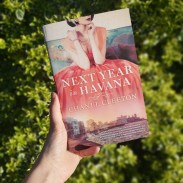
Next Year in Havana

Rating: ⭐
Author: Chanel Cleeton
Genres: Historical Fiction, Romance
Pub. date: Feb. 2018 (read Apr. 2019)

Well that was the most disappointing book I’ve read in a while. I was really expecting to like this. I’ve been really into romances lately and I love historical fiction. I haven’t read any books about Cuba, so I thought this was a great opportunity to learn something new. This is my book club’s selection for April, but it immediately got off to a bad start because my co-chair finished the book before I even started it and gave it 1 star! We usually have the same taste in books, but I was still determined to like Next Year in Havana because it has such great reviews and I was so optimistic about it.

But alas, it was not meant to be. I really tried, I kept telling myself I was liking it, but eventually I had to admit to myself that I really just didn’t like it. It took me over two weeks to read and if it hadn’t been for my looming book club deadline, it probably would have taken a lot longer. It was just really boring and I never wanted to pick it up. The topic should have been super engaging, but the author’s writing and dialogue left a lot to be desired and I didn’t believe in any of her characters.

Next Year in Havana follows the classic historical fiction narrative where one storyline is set in the past and one set in the present. Overall, I’m a bit tired of this narrative. I think it’s overdone and the modern day timeline is almost always less engaging than the historical one. However, this was one book where I thought the decision to tell two timelines actually made sense. The modern day timeline is set in 2017, right after Castro’s death, when US-Cuban relations are finally starting to thaw and change. The historical storyline is set in 1958/9 around when Castro was coming to power. Eliza grew up as part of the wealthy Perez family and the change in government results in the exile of her family to America. In 2017, her granddaughter, Marisol, decides to travel to Cuba to spread her grandmother’s ashes under the guise of writing a tourism article (she is a journalist).

I thought the split timeline worked well because both settings are historically important and mark the changes in Cuba’s politics. It was interesting to see the two factions of Cubans: those who stayed and those who left, and how those decisions played a role in how they viewed Cuba into the future. So the setting definitely had lots of potential and demonstrated the differences between the wealthy and the poor and the locals and the exiles.

But I had a lot of problems with the book. The first was with the romance(s). The story starts with Eliza meeting and falling in love with a revolutionary, Pablo, and Marisol being infatuated with her tour guide, Luis. It’s a lot to carry two romances in a book like this and I thought the author did justice to neither. They were both classic insta-love romances and I have very little interest in those types of love stories. I didn’t understand what was attracting any of the characters to each other and there was very little development of them falling in love. Definitely not a slow burn romance type book. I had a little more sympathy for Eliza because of the era she was living in, but Marisol needs to get a grip.

My second problem with the book was the way in which the author conveyed historical information. This whole book was just a huge history info dump and it was extremely un-engaging to read about. Having one of your characters be a journalist is such an uninspired way to communicate history. It’s easy to have a tour guide that explains everything, but it’s boring. At times I felt like I was reading a history book. I’d much rather be shown the history through Eliza’s eyes or through stories she shared with Marisol. I don’t want to listen to a history professor drone on and on about the author’s obviously biased opinions on Cuba.

‘Show don’t tell’ was probably one of the main problems with this book. Cleeton tells us her characters are in love, she tells us about Cuba’s history, she tells us about the conflict Marisol feels between the exiles and those who stayed, but she doesn’t show us any of it. Sometimes it was hard to tell the difference between her two protagonists because they constantly just cycled through the same thoughts. “he’s a revolutionary, we can’t be together”, “I’m American, we can’t be together”, “it sucks to lose your home and fear for you life”, “it sucks not to have freedom of speech”, “Castro is bad, Castro is bad, Castro is bad.” Honestly, it got so repetitive.

My understanding is that Cleeton’s family basically lived Eliza’s exile, so she’s definitely coming at this story from the perspective of the exiles. I liked that she included a revolutionary, because I really wanted to see and understand both sides of Cuba’s history. Castro represented a lot of bad things to the Americans, but he represented a lot of good things to a lot of Cubans. I feel like the author tried to cover both sides of the story, but her storytelling was still extremely biased and it was not what I was looking for from this story.

This is where my biggest problem with the novel was. I feel like the author took Cuba’s history and its pain and used it to write a drama for the purpose of entertainment. Frankly, I was insulted by Marisol’s character. When she refers to the injustices that have been perpetrated against Cubans, she repeatedly includes herself in that narrative. She refers to Cubans using the collective ‘we’, as if she really understands how Cuban’s have suffered since 1959. I agree that the Cuban-Americans absolutely know their own kind of pain, but she does not understand Luis or what he has been through. She doesn’t get to come back 60 years later and insert herself into Cuba’s story. I know immigrants face their own kind of pain and hardship with the loss of their culture and the diaspora of living in another country. But portraying Marisol as someone who understood what Cubans went through totally erases them from their own story.

It was just so irritating how oblivious Marisol was to much of Cuba’s history and suffering (as evidenced in every single conversation where Luis is explaining some part of Cuba’s history to her). Yet she was so indignant and self-righteous about it. It was the typical “American-comes-to-save-the-oppressed” type of story. Luis was a revolutionary in his own right. He was incredibly intelligent and politically-savvy, so I struggled to believe that he would give an entitled journalist like Marisol the time of day. I hated the ending. I thought it belittled everything Luis had worked for. Cuba’s history is Cuba’s history. You can’t write it into some perfect little historical romance. I felt like this did no justice to Cuba or to Cubans. Am I super knowledgeable about Cuba? Hell no, but I get the feeling its history is a lot more nuanced than this book is able to portray. Sometimes you can’t have nice little endings. Privileged people feel like they can fix everything. But they can’t and sometimes it’s not their responsibility to. Cuba will ultimately be transformed by its own people.

So yeah, I did not enjoy this book. I still learned something from it, but I would much prefer to read about Cuba from a different perspective. I felt like this was very much the Westernized view of Cuba, and I would have preferred to read about it from the point of view of someone who has lived Cuban history first-hand. Mostly I was just insulted that the author took Cuba’s history and used it to write a dramatic, historical romance. It was belittling.

Nine Perfect Strangers

Rating: ⭐
Author: Liane Moriarty
Genres: Fiction, Mystery
Pub date: Nov. 2019 (read Jan. 2019)

Nine Perfect Strangers was totally different than what I was expecting. For some reason I thought this was going to be a murder mystery (spoiler, it’s not), not really sure why, so the plot ended up taking me totally by surprise, but in a good way.

Nine Perfect Strangers centers around Tranquillum House, a spa/resort where people come for all sorts of reasons, but primarily to make some kind of change, whether it’s with their body, personal habits, or even to save their relationship. The resort was founded by russian immigrant, Masha, who had a near death experience when she suffered a heart attack from overwork and neglecting her health, and found a new outlook on life that centered around personal health and wellbeing. Nine people have assembled at Tranquillum for a 10 day retreat.

Tranquillum House is known for having slightly revolutionary practices; no electronics are permitted at the spa and there are mandatory fasts, juice cleanses, and periods of silence throughout the 10 day retreat. However, many people swear that Tranquillum House gave them a whole new outlook on life, so most of the guests are willing to give it a try for 10 days. This group of guests includes a washed up romance novelist and footballer, a tired mom, a divorce lawyer, a couple trying to save their marriage, and a family trying to heal after the death of their son/brother. They are mostly optimistic about the retreat; however, what these strangers don’t know is that Tranquillum House has decided to try a new protocol for this retreat and that they will be physically and emotionally tested over the course of their ten day visit.

I’ve read two other books by Liane Moriarty: Big Little Lies and The Husband’s Secret, and I must say, she is really good at tackling tough subjects with humour. Her characters are all pretty humourous in this book in how ridiculous they are. They all grapple with some pretty serious issues, yet still provide a lot of comic relief. I’m still not quite sure what to make of the plot. It was a really different concept and it was actually quite shocking where Moriarty took the plot in the seond half of the book.

What I liked most about the book though was the theme, which centered around the idea of change. All of the guests decide to attend the retreat because they are seeking some kind of change in their lives, and the resort itself was founded because of the change that Masha underwent after her near death experience. Masha experienced a huge change in her life and really wants to help others to change their lives for the better. However, what she begins to realize is that it’s easy to help people change over a 10 day period, but that it is immensely difficult for her guests to make permanent changes once they return to their old lives. It raises the question of whether people really can change.

It really is a roller coaster ride because some of Tranquillum House’s practices seem really out there and it’s easy to dismiss them as “hippy-dippy nonsense”. But the further you read, you start to question yourself because it’s hard to deny that the practices actually do seem to work. However, when the plot takes a drastic turn around the half way point, you see the characters starting to revert back to their original tendencies, which again begs the question of whether change is truly possible. I liked the book because even though the resort seems to be a bit of a farce and I think a lot of the people would only be temporarily changed by the experience, it’s hard to deny by the end of the novel that the guests have been changed by their time at Tranquillum, just in ways you wouldn’t necessarily expect.

I don’t want to say any more because I don’t want to ruin the plot and I think it is actually best to go into this book blind if possible. It is quite different from the other work I’ve read by Moriarty, but it did make me think and reflect and I think it is an interesting commentary on the human ability to change, so I did quite like it. It also does a great job at developing each of the nine characters and I was really impressed with how each them grew throughout the novel and I enjoyed getting each of their back stories. I read this for my January book club, so I’m really interested to hear what the rest of my book club thought because I can see how some people might not like this book.

November Summary

November has been the BEST reading month! Last month I sent a new PB for most pages read in a month, but it didn’t last long because I beat it again this month. I always read a lot of books in November because I get really into the Goodreads Choice Awards and always try and read as many of the nominees as I can (I decided to make this my November monthly challenge). This month I read a whopping 17 books, granted 6 of them were graphic novels and short stories, but it was still a new personal record for most books read in one month. Here’s what I read:

Books read: 17
Pages read: 5,221
Main genres: Graphic Novels, Fantasy, Fiction
Favourite book: So many good books! So hard to choose, but probably Our Homesick Songs by Emma Hooper

So, like I said, a lot of the books I read this month were nominees in the Goodreads Choice Awards. I read a lot of books, so I won’t spend too long on each one. To start things off I read two books by V.E. Schwab, Vicious (⭐⭐⭐⭐) and it’s sequel, Vengeful (⭐⭐⭐⭐), which was nominated in the Sci-fi genre. Vicious was published 5 years ago, but it’s only just geting a sequel, so I decided to read them back to back and really liked them. I don’t think the second book was quite as good as the first, but they’re fast-paced novels that examine morality and the things that drive good people to do bad things.

I also read a few non-fiction books, which is a genre I don’t normally read. I decided to read Phoebe Robinson’s new book, Everything’s Trash, But It’s Okay (⭐⭐⭐⭐), which was nominated in the humour category, and absolutely loved it! I read Phoebe’s debut novel in 2016, which was pretty good, but I think she really upped her game in this book and I would totally recommend the audiobook. I also received a free copy of Abbi Jacobson’s new book, I Might Regret This (⭐⭐⭐), from Hachette, which I was thrilled to read, but ended up not loving quite as much as I’d hoped. Through I’m still a huge fan of Abbi and Broad City. Hatchette also sent me an early copy of Wundersmith (⭐⭐⭐⭐⭐), the sequel to Jessica Townsend’s debut novel, Nevermoor. I read Nevermoor a few months ago and was pretty much obsessed with it, so I immediately jumped right into the sequel and was delighted that it was just as wonderful as the first book! It’s a middle grade fantasy series full of whimsy that gives me huge Harry Potter vibes. A solid 5 stars – this series is incredible and I would recommend to everyone!

I read a few very short books, Sea Prayer by Khaled Hosseini (⭐⭐⭐), which is a short illustrated picture book that he wrote for charity (which I didn’t review), and For Every One by Jason Reynolds (⭐⭐.5), which was nominated in the Poetry category. Both books were nice, but honestly, I thought they were both a little too short to pack that much of a punch.

For graphic novels, I read the latest volume of Saga, by Brian K. Vaughan and Fiona Staples (⭐⭐⭐⭐). I absolutely love this graphic novel series, but the latest volume pretty much killed me, and it appears Vaughan and Staples may be going on a bit of a hiatus over the next little while, so that kills me even more. I also devoured the first 3 volumes of a new graphic novel series called Fence, by C.S. Pacat and Johanna the Mad (⭐⭐⭐⭐). Only the first volume is published at this time, but there are 12 issues available and I liked the first volume so much I actually had to seek out the individual issues instead of waiting for the next two volumes. It’s a series about a high school boys fencing team, which sounds kind of boring, but it actually excellent!

In addition to Phoebe Robinson’s new audiobook, I also listened to Kingdom of the Blazing Phoenix (⭐⭐), which is the second and final book in Julie C. Dao’s dualogy. I really liked the first book, Forest of a Thousand Lanterns, which I also read as an audiobook, but the second book was a huge disappointment. The narration changed characters and I found this one pretty boring compared to the delightful nastiness that was the first book. The first one was a retelling of the evil queen in snow white, where as this was one a more traditional snow white retelling, although they were both sent it an asian inspired fantasy world, which I liked. Speaking of asian- inspired fantasy worlds, I read R.F. Kuang’s debut novel, The Poppy War (⭐⭐⭐⭐), which was nominated in the fantasy category. It is a heavy book, but wow! Kuang’s story is rich is depth, setting and history. It examines the Sino-Japanese war and the atrocities people commit against one another in war and how we justify them. A heavy hitter, but very well written and plotted.

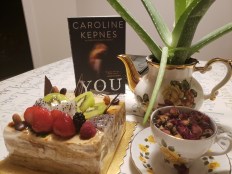
My book club’s November pick was You by Caroline Kepnes (⭐⭐⭐.5). I’ve been trying to get to this one for a while and with the TV series being released on Netflix in December, it was good timing. You is a mystery/thriller novel told from the point of view of a stalker and boy, is it creepy. I didn’t like it quite as much as I hoped, but it is still very well written and quite different than most other books out there. I finally finished reading Swing Time by Zadie Smith (⭐⭐⭐.5), which I started reading way back in July (shocking I know). I had put it aside around the 300 page mark, but I finally picked it up and read the last 150 pages. I quite liked this book, but it is not very compelling, and for that reason it was hard to pick up, despite liking the story.

Finally, two of my favourite books of the month, along with Wundersmith, were The Simple Wild by K.A. Tucker (⭐⭐⭐⭐⭐) and Our Homesick Songs by Emma Hooper (⭐⭐⭐⭐⭐). The Simple Wild was nominated in the romance genre and I was instantly motivated to read it when I found out it was about Alaska (I have a bit of an obsession with Alaska since reading The Great Alone earlier this year). It had a bit of a slow start and the main character was a little vapid at times, but I ended up loving this book! The main character was 26, which is refreshing since most of the books I read feature teenagers or families. I’m starting to really appreciate family dramas, and this one was a mix of family drama and romance that really worked for me.

Our Homesick Songs was my last read of the month and it was also a family drama, but this time historical, that completely captivated me. It’s about the disappearance of cod in Newfoundland in the early 1990’s and the impact it had on rural communities. It’s a simple story about a family living in a remote fishing town, but it is so beautiful written and evokes a strong feeling of homesickness and loneliness. Newfoundland is where I was born and raised, so it had particular meaning for me and I was incredibly impressed by Emma Hooper’s prose. I devoured this book and it is definitely going to be one of my top picks of the year.

So there you have it, all 17 of the books I read this month. There were some really great books. The fact that I rated three of them 5 stars is very rare since I sometimes go months without rating anything 5 stars. I feel like I’ve finally escaped the book slump that I was in over the summer and I’m feeling very inspired by all the great books I’ve been reading!

I’d love to know, what books did you read and love this month?
You

Rating: ⭐⭐⭐.5
Author: Caroline Kepnes
Genres: Mystery, Thriller
Pub date: Sep. 2014 (read Nov. 2018)

This book wasn’t quite what I was expecting, but it is definitely unlike anything I’ve read before and I thought the author did a great job on blurring the lines of morality and exposing our human ability for empathy.

I was really intrigued about this book because I heard it was written in 2nd person and it’s not a POV that we often see. It didn’t have quite the same shock value I was anticipating because I was already expecting this to be creepy and it reminded me a little of JK Rowling’s, Career of Evil, which is partially told from the point of view of a serial killer. It also reminded me of The Talented Mr. Ripley. Both protagonists are obsessive and violent and have a very flawed way of looking at the world. But even though both of these books are told from the point of view of the villain, You definitely had a unique narrative style that I think was very effective in this story.

You tells the story of Joe Goldberg, a book seller who meets a woman named Beck in his shop and falls hard and fast for her. His whole world centers around Beck; he hacks her email and manipulates her and those around her in order to insert himself into her life. Joe’s voice is jarring and crude, but felt authentic. I’m curious what kind of research Kepnes did for this book because Joe definitely suffers from mental illness and I would like to know how she got into his mindset. Even though it’s crude, I say his voice is authentic because some of the things he says definitely mirrors some of the offensive things men say on the internet and in toxic tinder threads.

Joe eludes to another woman he’s been obsessed with in the past and it becomes obvious that he is extremely troubled and has stalked and hurt people before. He doesn’t have personal social media accounts, but he has learned how to manipulate other people’s accounts to discover disturbing amounts of information about them. Kepnes explores so many themes in this book, one of which being the way social media has transformed our lives and the inherent dangers of it.

Personally, I didn’t find the social media stalking that creepy, but I think that is probably a byproduct of having read this in 2018 as opposed to 2014 when it was originally published. Social media has really blurred the lines and changed what hasn’t always been considered appropriate social behaviour. It’s so easy now to cyber-stalk people that I think many of us don’t even really think twice about it. We’ve become accustomed to having instant access to information, and while most of us aren’t trying to figure out where people live so we can stalk them, I think the average person does a lot more creeping on others than say 10 years ago.

Social media has also normalized some pretty asshole-like behaviours. People feel bolder voicing their thoughts and opinions on the internet than they do in person and repeatedly seeing hurtful and violent opinions voiced on the internet emboldens other people to say more hurtful and violent things in turn. Internet trolls have made it the norm to harrass and bully people (disproportionately women) who threaten their way of life or thought. Suddenly it’s okay to send death threats to female gamers who call for better depictions of women in video games, or say hateful things about immigrants and refugees just trying to escape their unfortunate circumstances. Joe has come to believe that he is entitled to a relationship like those he has seen depicted in books and movies and that there is no consequence too high to achieve that relationship.

But I think the main theme Kepnes explores is our human nature to want to root for someone. It becomes increasingly clear to the reader that Joe is sick, and yet Kepnes somehow makes you care about him. It makes you wonder what that says about you as a person and how you can have anxiety about a stalker potentially getting caught! Part of you wants Joe to get caught with what he’s doing, you know it’s eventually inevitable, yet at the same time you’re like, ‘OMG Joe, how could you let it slip you know her favourite movie is Pitch Perfect, she’ll guess you’re cyber stalking her!’, ‘Don’t go into her apartment, what if you get caught!’, ‘Be careful around Peach’s beach house, they might see you!’ You simultaneously want him to get caught for the betterment of everyone involved, but at the same you worry for him….the crazy stalker.

The other thing I liked about this book is that Kepnes made her other characters incredibly flawed. I think this probably helped in our ability to empathize with Joe, but the fact that Beck, Peach, and Benji are all self-obsessed, toxic people too messes with your head even more. It would be easier to condemn Joe if they were all perfectly lovely people, but they are all extremely flawed to the point that you start understanding why Joe hates them all. They’re all pretty annoying and you find yourself wishing them out of the picture as well because they are foils to Joe and Beck’s happiness, but at the same time, you know none of their actions are justification for what Joe does to them. I thought Peach was an especially great character because she’s also super obsessed with Beck and is super dislikable, but she still stays firmly on the ethical side of the line. In the same way, Beck is also a very unlikable character, which makes it easier to empathize with Joe, which makes you think you’re going crazy to actually empathize with the stalker!

I can’t pinpoint exactly why I didn’t love this. I think it’s a pretty solid 3.5 stars, but I sometimes struggle with disturbing plots like this and I think that prevented me from loving it. I appreciate these kind of books because they make me think, but they also creep me out so much, especially when they mess with your mind.

I fully anticipated how this book would end, although I did really hope I would be wrong. Overall, I am impressed with the book, but I have no desire to see this series any further. I didn’t realize it had a second book until I was almost done this book (I thought Hidden Bodies was a completely unrelated novel), but I don’t think I can see this story through any farther. As sad as it was, I liked the ending of this book and I think You works well as a standalone.

I have my book club discussion of this book tomorrow and I suspect it is going to have mixed reviews, so I’m excited to see what the rest of my club thinks of this one!