The Women

Rating: ⭐⭐⭐⭐.5
Author: Kristin Hannan
Genres: Historical Fiction
Pub. Date: Feb. 2024

4.5 stars, rounded up. I absolutely flew through this book! I was really excited to read it, but for some reason I was expecting it to be a slow read. I enjoyed The Nightingale, absolutely loved The Great Alone, and didn’t really care for The Four Winds. But Kristin Hannah is back on her game with The Women.

She said in the author’s note that this is a story she’s been wanting to write for a long time, but didn’t want to write it until she was a more mature author. I think now was the right time and that writing about Vietnam captures her at her best. While The Great Alone isn’t really about Vietnam, the fact that Ernt Albright is a POW from Vietnam is really critical to the story. I feel like the Vietnam War is something close to Hannah’s heart, and it shows in her writing.

I think “The Women” is a very uninspired title, but it does fit this book. Hannah explores a lot of themes, but above all, she asks the question, “what about the women?” Frankie McGrath is 21 years old and has just obtained her nursing license in California. Her family has a proud history of military service and her brother, Finlay, is quick to enlist to serve in Vietnam. At that time, America was portrayed as winning the war and the extent of casualties were either limited, or not communicated to the public. 

Frankie misses her brother and is frustrated by the limitations of being a junior nurse. In an effort to get on her Dad’s “hero wall”, which memorializes their family’s service, she decides to enlist as an Army Nurse. Shortly after, the family learns that Finlay’s helicopter has been shot down and he has been killed. But it’s too late for Frankie to back out and she proceeds to basic training and ships out to Saigon.

Once in Vietnam, Frankie quickly has to adapt to the chaotic nature of war. After her initial shock, she becomes a very adept surgical nurse and develops close friendships with the other women. But over time, Frankie becomes disillusioned with the American government and their portrayal of the war and its success. Her mother keeps her updated on the protests at home, but when she returns to America, she is surprised at the level of antipathy the public has towards veterans. As Frankie struggles with PTSD, she realizes that no one even considers nurses to be veterans, and she is refused the few scarce benefits and supports that are offered to the men who served. (it’s not stated, but I’m curious if the male doctors were able to access veteran benefits?)

I love the way this book is written. We spend the first half of the book in Vietnam, where Frankie is exposed to unfathomable terrors, which includes a steady stream of maimed, wounded, and dying soldiers, as well as severely burned Vietnamese civilians who are the accidental (I hope) target of America’s extensive use of Napalm. Frankie rises to the occasion, becoming steady, reliable, and knowledgeable as a combat nurse.

As the reader, you go through this journey with Frankie. Even though I was aware of many of these atrocities, Hannah does an excellent job of conveying the chaos and heartbreak of war through Frankie’s eyes. It’s a brilliant set-up for the rest of her book because she is showing the reader exactly why so many people suffered PTSD from the War. It’s hard to empathize with characters like Ernt Albright in The Great Alone, because I didn’t really know what he went through. But we go through the war with Frankie, so it’s so much easier to understand her struggles.

The entire novel is compelling, but the first half definitely sucks you in. It’s a high stress setting and I could not put the book down. The second half of the book is slightly more understated, but the aftermath of Frankie’s time in Vietnam is the real reason why Hannah is telling this story. To shine a light on the injustices faced after the war by the women who served their country, and in my opinion, this second half is still gripping.

When Frankie returns to America, the culture shock is immense. She is literally spit upon at the airport and her 2 years of service are dismissed by her parents. She has nightmares and trauma responses to stimuli around her. She initially lashes out (justifiably) at both her parents and friends, but she does try to seek help from a veteran’s clinic and is turned away. She’s repeatedly told that “there were no women in Vietnam”, that “she didn’t see combat”, and so as a result “she doesn’t understand what it’s really like”. Her only coping mechanism is to remain silent and try and forget about the war. I’m sure it was still very challenging for the male veterans, who were also experiencing PTSD and public opposition to their service, but I can’t imagine having to also deal with the mass societal gaslighting of being told your experience didn’t even happen.

There’s so much to unpack in this book. At its core, it is a book about women’s history. The late 60’s and early 70’s were a time of change in America, the era of free love. White women were gaining more rights, but women overall still faced a lot of injustice and erasure. The book focuses heavily on Frankie’s PTSD, as well some issues of equal and civil rights. Frankie becomes very close with Ethel and Barb, who were nurses with her in Vietnam, and she relies heavily on these women throughout the novel.

Barb is a black woman, and even though she’s only one character, I’m glad Hannah opted to include her perspective. This is still primarily a white woman’s book, but there is recognition that there were a lot of black men who served their country in Vietnam and that their grassroots organization in the civil rights movement was also largely applied in protesting the war in Vietnam. I don’t think we really get a deep look at how Barb would have been marginalized in the Army and as an activist, or how she might have struggled being friends with two privileged white women, but I was glad to see the inclusion of a strong black woman in the story.

Frankie is a mess in the second half of the book and despite some of her gains, her life continually goes from bad to worse. I could see how her trauma could get repetitive to some readers, but I’m glad that Hannah wrote it this way because PTSD is repetitive. At this time period, PTSD still wasn’t very well understood, especially in women. It is shocking to hear about the high rates of alcohol, drug abuse, and suicide among Vietnam veterans, which is further exacerbated when you learn that many of them also developed cancer or had miscarriages or birth defects as a result of the chemicals the American’s were spraying all over the countryside.

The Vietnam War was really unlike any other war the Americans had participated in at the time. First of all, they lost it, but second of all, because of the opinion of the public, there was no glory in it. The soldiers weren’t coming home to parades like WWI and WWII. I think my problem now is that I don’t really know who is to blame, although this may be a byproduct of a lack of knowledge on my part. America was committing atrocities in Vietnam. The book doesn’t outright address incidents like the My Lai massacre, but it is demonstrated through the number of Vietnamese civilians that Frankie treats in her OR and what she witnesses at the mobile clinics. The question this book doesn’t answer is, who is accountable? 

How aware was the average soldier about the injustices the US committed against Vietnamese citizens? Can you separate the war from the soldiers? Frankie asks the question, can’t the American public support the troops and protest the government? These men and women are still serving their country, the same as in WWI and WWII, but what if your government or your superiors are acting in bad faith? I honestly don’t know the answer. Many people who are tried for war crimes throughout history use the excuse that they were just following orders, at what point are you serving your country and at what point do you become the villain? 

As a set-up to examine the impacts of war and the struggles of a country divided, I think this book is brilliant. I think Hannah asks all the right questions and focuses on the right themes. Her execution is excellent. What you’ll notice I haven’t mentioned yet is any of the personal drama in the novel, of which there is no shortage. Frankie has varying relationships with 3 men throughout the book and while this narrative is compelling, it’s secondary. I liked Frankie’s interactions with Jamie and Rye and Henry. I think they all add something different to the story and are good tools for engaging the reader. Jamie and Rye are used to explore Frankie’s personal moral code and demonstrate the heartbreak of war, while Henry is a good man and friend who helps Frankie along her healing journey. What I didn’t think was needed was the soap opera plot.

This is probably my one criticism of the book. This is my 4th Kristin Hannah book, so I knew the final act soapbox was coming, but it disappoints me every time. Hannah always adds a surprising (or not so surprising) twist to her books and it irks me because I think it’s both unnecessary and manipulative. Some readers love it because it really reinforces the heartbreak and tragedy of the story, but while still compelling, I think that Frankie’s romantic relationships are the least interesting thing about her.

Yes, Frankie did need to hit rock bottom to finally seek the help she needed. Overall, I did like how her healing journey was handled, but I feel that certain elements of the story are included only to shock and manipulate the reader emotionally. You don’t need the intense personal drama Kristin! I adore Frankie of her own merits. I had the same criticism about The Great Alone and felt the dramatic ending marred an otherwise perfect story.

But I can get over it. These dramatic elements are a way to further engage your reader. It does make for compelling storytelling and I know a lot of readers love it. I just don’t want Frankie’s personal relationships to detract from the much more important themes of this book. I’d still highly highly recommend this book. It evoked so much critical thought for me and I’m holding it to such a high standard. I questioned whether I’d outgrown Kristin Hannah after I didn’t care for The Four Winds, but I will absolutely continue to read her books. A fantastic read!

The Women is my book club’s pick for May, so my rating may change after I meet with them next week, but for now, it’s 4.5 stars, rounded up.
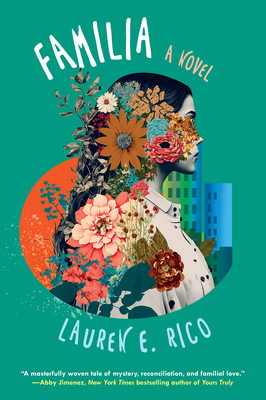
Ties That Tether

Rating: ⭐⭐⭐
Author: Lauren E. Rico
Genres: Fiction
Pub. Date: Dec. 2023

I have mixed feelings about this book. Overall, I liked it – I thought both the story and the writing were compelling and I’m impressed with it as a debut. It’s my book club pick for April and I’m really excited to talk about it because I think there are a lot of interesting themes to discuss. My main complaint is that I didn’t like the religious elements of the story and I didn’t like the ending.

I can’t discuss the parts I didn’t like without getting into spoilers, so let’s talk about what I did like first. Familia is the story of Gabby DiMarco and Isabella Ruiz, two women with very different backgrounds, connected by blood. Gabby is a well-to-do woman in New York City whose parents have recently passed away and is trying to get her big break as a journalist. Isabella is a Puerto Rican woman who lost her mother in childbirth and her father’s subsequent depression and alcohol abuse resulted in the kidnapping of her infant sister, Marianna, 7 months later. This tragic event traumatizes Isabella for the rest of her life and even 25 years later, she is determined to find her sister. When Isabella and Gabby get a 50% DNA match on a gene website, Gabby is sure there’s a mistake, but flies to Puerto Rico in hopes of breaking an interesting story.

It’s obvious where the plot is going, but I enjoyed the journey. It’s a compelling narrative and I was really interested in all the themes the author wanted to explore. Isabella feels a deep sense of resentment for her sister because her birth resulted in the death of her mother and the breakdown of her family, but she also feels guilt over having wished her sister never existed at the exact moment she disappears. When they are reunited, her guilt morphs into jealousy at the easy life her sister had growing up in America in contrast to her traumatic childhood and youth. Gabby refuses to believe that she and Isabella could possibly be sisters, because to accept that fact would be to accept that her entire life and family was a lie. Plus it raises the age-old question of what really makes a family – is it the blood you share or the relationships and trust you’ve built. 

I thought these were all fascinating questions, particularly for Isabella, who I found a more compelling character, and I thought the author did a good job at exploring the internal conflict of these two women. Their relationship was believable to me. They have an emotional connection, but not in an overly cheesy way, and the experience brings them closer together, while still being realistically challenging for them. 

Overall, I liked the format. The author opts to break the story up between the present and the past. Isabella and Gabby do their own detective work to try and figure out what actually happened to Marianna, while at the same time we have flashbacks to a wider cast of characters that were responsible for Marianna’s disappearance. It turns the book into more of a literary mystery novel and it serves to keep the reader interested in the storyline. I think this could have also worked as pure literary fiction and delved a lot deeper into the emotional impact this would have on Isabella and Gabby, as well as to question the ethics and morality of Gabby’s upbringing. I think I probably would have preferred the latter, but recognize that it would be a much more challenging novel to write and think this was still impressive for a debut.

What I didn’t like was that the author bypasses any exploration of the ethics of Marianna’s kidnapping (by Gabby’s parents). To be fair, she does explore the idea that there are almost always grey areas in the law in these types of situations. Kidnapping is obviously wrong, but if the baby grows up to live a much more comfortable and privileged life, does that justify the means? How does Gabby rationalize the fact that her parents are both loving and caring people, while also being kidnappers? As a fact checker, I thought she would want to really delve into that narrative. To me, this was the most interesting theme of the novel and I wanted to consider the dichotomy of these two conflicting facts about her parents. But the story is written to conveniently bypass these challenging ideas, which I did think was a bit of a cop-out. To be fair, I may be holding the book to an unreasonably high standard. It was well-written and I was hopeful that the author would commit to some very tough themes.

So let’s talk about what I didn’t like (spoilers ahead!). First off, I didn’t like the religious aspect of the story. There were some really interesting ethical questions here, and I think the author used spiritual intervention to avoid tackling questions of morality. This was a 7-month old baby. It’s one thing to knowingly kidnap a baby with the intention to traffic it – that is a deeply sick crime. I felt it was another thing to opportunistically kidnap a baby and then decide to kill it. I feel that most people would have deep ethical problems when presented with this scenario, even Santiago (what kind of sick person is willing to kill their widowed brother’s daughter?). Because it wasn’t a premeditated kidnapping, I couldn’t rationalize any other acceptable course of action other than to return the baby to her parent. 

I felt like the author used the whole ‘weeping Madonna’ spectacle and Lucy and Mack’s infertility to try and convince the reader that giving away someone else’s baby was an acceptable course of action. I was glad that Mack realized that the whole idea was ludicrous, but I felt the whole “you must take the baby or Santiago will kill it anyways” was a cop-out. Likewise, getting Alberto’s permission to take the baby was the ultimate way to absolve Lucy and Mack of any wrong-doing. It’s a clean way to structure your novel and it removes the conflict for Gabby that her parents were both good and immoral people. From her perspective, all they did was adopt her unknowingly from an orphanage, which conveniently absolves her from having to rationalize that people we love can make both good and bad choices. It’s a feel-good way to tie up your novel, and that’s fine, I guess I just wanted to get into gritty questions of morality. 

At the very least, if you’re going to absolve Lucy and Mack of any wrong-doing, I thought Rico would at least confront the impacts of Alberto’s decision on both him and Isabella. I struggled to believe that he would willingly hand over his baby to an American couple he knew nothing about. In fact, none of the characters knew anything about Lucy or Mack aside from the fact that Lucy was desperate for a baby. They could have been terrible people. Did Gabby have a better life in America? Most likely… she definitely had more money and opportunity. But we also will never know how things might have been different if Marianna had been returned to her family.

Maybe if Marianna had been returned to her family, it would have been the wake-up call Alberto needed to get clean and take care of his family. He proves at the end that he’s capable of it (which I also found highly unbelievable, why would he randomly get clean after 25 years?), so maybe he would have redeemed himself if he hadn’t given up his youngest daughter. But what really rubbed me the wrong way was that the sisters never found out the truth! Isabella would be devastated to learn that her father willingly gave away her sister and then lied to her about it for 25 years. I felt like this theme really should have been addressed and it did a bit of a disservice to both women to keep it a secret. 

The thing is, I don’t think Lauren Rico wanted to explore those themes. I think Rico was more interested (based on the author’s note) in exploring themes of familial bonds and heritage. I think she wanted to tell a story of sisterhood and family reunion, without doing the work to explore the deep emotional impact of this event on each family member. Which made me question why she structured her book as more of a mystery novel. To be honest, the “how” of Marianna’s kidnapping wasn’t as interesting to me as the emotional impact it had on the two women as adults. I think I would honestly have been fine not knowing how Marianna ended up in the US and just exploring the Ruiz family roots and healing of trauma. I was surprised there was no exploration of the fact that Gabby has just gone from being White to being Latina, and what it would feel like to suddenly be thrust into a completely new culture that you feel you have no right to claim. There’s so much to unpack with these concepts and I was just left feeling a little disappointed. There were great ideas, but I feel like we only scratched the surface.

Some reviews by Puerto Ricans also discuss the idea that Rico only portrays the dark side of Puerto Rico. That Puerto Rico is filled with drugs and criminals, rather than showcasing some of the more vibrant parts of the island (I think this is done primarily through Isabella’s art). I think this ties in with my general comments about why the author chooses to focus on the crime rather than the aftermath. It promotes a white saviour narrative, so I can see how that would be insulting to locals and I wanted the author to do more emotional labour in breaking this down for her readers. 

This is a more minor complaint, but I have to mention one other scene that bothered me. The scene where Mateo randomly decides to leave Isabella after she gets in the fight with Gabby. This conflict didn’t fit the story and came out of nowhere. Isabella is going through so much emotional turmoil during this time and then all of a sudden her supposedly perfect husband is like “I can’t take this, you need to figure out who you are or I’m outta here!” She is literally trying to figure it out at this exact moment Mateo! Why don’t you buckle down and be there for her for a hot minute while she works through an extreme amount of trauma! She’s just found her sister – she’s been searching for her for 25 years and she’s now realizing that the search was a way of avoiding trauma and now that she’s found Marianna, she has to acknowledge that it doesn’t heal all her old wounds. 

Anyways, take my criticisms with a grain of salt. I have so many because this book made me think a lot. It’s maybe unfair to hold a debut author to such a high standard. I would definitely read her next book because I think she has a lot of promise and it was an engaging read. Props to any novel that can inspire me to dig deep and write this long of a review. I’m excited to see what else we unearth about this book in our book club discussion and whether it changes any of my opinions! 

The Midnight Library

Rating: ⭐⭐.5
Author: Matt Haig
Genres: Science fiction
Pub. Date: Sep. 2020 (read Jan. 2021)

2.5 stars.

I read The Humans with my book club a few years ago and really didn’t like, so I’m not sure why I thought this would be any different. I couldn’t help but be intrigued by the synopsis and the title, but at the end of the day this was pretty disappointing.

The concept of the book is that between life and death there is a place called the Midnight Library, which allows you to check out the lives you did not live. It centers around the idea of parallel lives and that every time we make a choice our lives diverge into the decisions we make and didn’t make. I’ve read a handful of books about parallel universes and I think it is a tough concept to get right. It’s a complex idea, so you better put a lot of thought into your execution.

I can see why this is a beloved book to a lot of people. It is about reflection and looking back on our lives, examining the decisions and mistakes we made. It’s a meaningful exercise to think about how our lives might have been different had we made different choices, but if examined too closely has the potential to ultimately lead to disappointment. Our main character Nora is granted the opportunity to look back on her life and I think a lot of readers are moved by how the experience changes and heals her.

Personally I didn’t like this book for two reasons. First, I thought the parallel universe theme was executed poorly and that the author didn’t go deep enough into the concept. And second, I thought the writing was too heavy handed. I felt like every single parallel life was an exercise in emotional manipulation. The author spells out every single lesson that Nora learns, even though they are all embarrassingly obvious. From Nora’s first attempt at settling in a parallel life, I predicted exactly how the rest of the story was going to go and at no point did the plot surprise me after that.

Let’s talk first about the execution of the concept of the Midnight Library. The concept is that you can visit any other life, with the idea being you find another one to settle in. However, the second you start to become disappointed with that life, you are instantly transported back to the library to try again. If you could actively make the decision to return to the library, I’d probably be okay with this concept, but in what universe are you going to live a life that is totally devoid of disappointments? Disappointment is a part of being human. Even if you are generally content in your life and wouldn’t trade it for the world, you will still face disappointments. So in my opinion Nora was pretty much doomed from the start. If you could make the choice to pursue a life despite disappointment, I might buy in, but inevitably something was always going to disappoint her and send her reeling back to the library.

Then there’s the fact that the more lives you live, the more likely you are to be disappointed by one life compared to another. It’s hard to be satisfied in any life when you know there are more possibilities out there. The author did address this through the inclusion of Hugo’s character, but combined these two factors just made the entire existence of the Midnight Library too flawed for me to really enjoy it. Also, the sheer exhaustion of constantly entering lives where you don’t know what’s going on is bound to continually send you running back to the library. If Nora was able to downloaded the sub-conscious of her parallel self whenever she entered a new life, it might be more believable that she might actually find happiness in one of them.

Finally, my last flaw with the concept was that in every choice Nora made, she became the most accomplished version of herself. I know the idea is that with infinite universes, every scenario is possible and that the reason Nora was so accomplished in every life was because that’s the life she desired to see when she checked the book out of the library. But I feel like it is the most basic of concepts that success doesn’t equal happiness. I didn’t like the dichotomy that with every choice you make you are giving up a life of extreme success. Success is not based solely on choice. You can make all the right choices in your life and never achieve even a moderate level of success. There are all kinds of other factors at play such as gender, privilege, race, ability, social class, economic background, etc. Which is why I felt the author didn’t commit to the plot. I think there’s a lot of room here to explore all kinds of social commentary, but the author came up with a shallow idea of parallel universes and never looked to delve any deeper.

Which leads me to my final criticism that the book is over-written. I feel like a broken record sometimes, but show don’t tell! I hate nothing more than when an author tells me how to feel. Good writing evokes sentiment and feeling. I don’t need you to spell out the disappointment of Nora’s many parallel lives, it’s extremely obvious. Like I said, from the start of the book, I could pretty much predict exactly how it was going to end. I felt like I’d stumbled upon a script of Chicken Soup for the Soul from 2000 with the intense catharsis constantly being shoved down my throat. Yet even though I knew where Nora was destined to end up, I still felt it was disingenuous to act like we’re all currently living the best version of ourselves and that all we need is a little perspective to cheer us up.

The one thing I did like about the book was Nora’s discovery that sometimes it is the mundane that is the most meaningful. After chasing after every kind of success, she finally realized that sometimes the quieter lives are the most fulfilling. Her life with Ash was the one thing I didn’t quite see coming and I was glad to see her finally find a modicum of happiness in one of her many lives. But that was really the only part of the story that I liked and mostly I just found it extremely tedious to go from one failed life to another.

The one thing I haven’t touched on is the portrayal of depression in this book. I did like that in almost every life Nora was taking medication for depression. But like I said, when someone is deeply discontented with their life, I find it hard to believe a little perspective would change their whole outlook on life. I’m not super knowledgeable about depression though, so I’ll leave that for other readers to comment on.

So in conclusion, definitely not a win for me. It was an interesting concept, but the execution was painfully tedious. Sadly I just don’t think this author is for me.

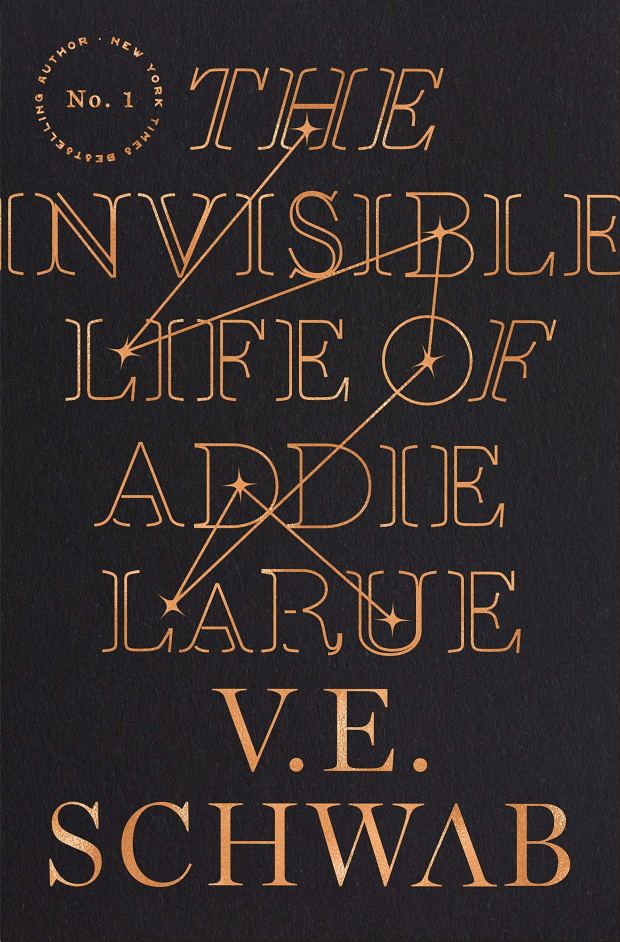
The Invisible Life of Addie LaRue

Rating: ⭐⭐⭐⭐
Author: V.E. Schwab
Genres: Fantasy
Pub. Date: Oct 2020 (read Nov. 2020)

Addie LaRue was my book club’s pick for December. Despite having already read a lot of V.E. Schwab’s work and having liked most of it, I wasn’t super enthused to pick this one up for some reason. It’s probably related to my ongoing fatigue with fantasy, but mostly I just wasn’t that into the premise of a 300 year long love affair with the devil.

I heard a lot of good things about this book though and I ended up eating my words as I was completely sucked into the narrative almost immediately. Addie is born in the late 1600’s and yearns for the opportunity to travel and really experience life. She’s disenfranchised by the expectations of her sex and wants to marry for love rather than duty. So on the eve of her wedding, she strikes a deal with the devil to allow her to escape her obligations and be granted the time to live her life. The catch, she becomes invisible. She can still interact with people, but the second she is out of their sight, they immediately forget her – nor can she tell them her name – giving her a long life, but one where she is unable to develop relationships or leave a mark on the world.

If this sounds like a nightmare to you, it is to Addie as well. The first few years of her life are dedicated to just surviving in 1700’s Paris. It was horrifying to read about, but Addie is still determined to make the most of her life and does her best with the gift of time she has been given.

Like I said. I was sucked into the story pretty quickly. Addie was ahead of her time and her determination and stubbornness are endearing. The devil continually tries to break her, but it only spurs Addie on and she becomes more determined in her quest to leave her mark on the world. She discovers that while she cannot be remembered herself, she can inspire ideas and dedicates the rest of her life to seeking out artists and musicians for whom she can be a muse. Until 2014 when she walks into a bookstore in New York and suddenly everything changes.

While this is a compelling story, it’s also a long one. The story jumps back and forth between the past and modern day. Initially I was more intrigued in Addie’s early days trying to make sense of her curse, while after Henry enters the story, I wanted to spend more time in the modern day. The story is both entertaining and made me think a lot, but I also thought it could have been about 100 pages shorter. The length and scope of storytelling definitely made me feel like I was reading an epic, but I think the author could have shortened a few parts of the book. After a while the past did start to feel a bit repetitive and I wanted to spend more time in the present since at least something new was happening there. 

I also felt there were a few plot holes with how Addie’s curse actually worked, but I can let it go because it doesn’t take away from what the author is trying to evoke. It’s both enthralling and horrifying to think of what it would be like to have all the time in the world but to be forgettable. I really enjoyed the relationship that developed between Addie and Luc over the years and despite the length, I did really enjoy reading this one. Can’t decide where it sits in my repertoire of Schwab books though… certainly better than her monsters duology, but on par with Vicious and Darker Shade of Magic. 

Great Small Things

Rating: ⭐⭐⭐
Author: Jodi Picoult
Genres: Fiction
Pub. date: Oct. 2016 (read in May 2019)

Small Great Things has been on my TBR for a while, but I doubt I would have gotten to it if we hadn’t picked it for our May Book Club meeting. I have very mixed feelings on it – my book club meeting tonight may change that, but right now I’m feeling very middle of the road about the book. I didn’t like it, I didn’t dislike it. I’m probably firmly in the 2.5-3 star range.

Small Great Things is about labour & delivery nurse, Ruth Jefferson. She’s worked hard her entire life to overcome institutionalized racism and succeed as a black woman. She studied nursing at Yale and has been working in L&D for 20 years. She is well respected and has worked hard to give her son Edison the best start in life. For the most part, Ruth looks beyond race. It’s hard not to acknowledge the microaggressions she deals with on a daily basis, but she is not jaded by them. Until two white supremacists, who have just given birth to their first son, ask for Ruth to be removed from their son’s care due to personal prejudices, and the hospital acquiesces. A series of emergency events leave Ruth in an impossible position and before she knows it, she finds herself at the centre of a criminal investigation, making it harder to pretend that her race doesn’t matter.

Ruth is the protagonist of the story, but we also read from the perspective of Kennedy, Ruth’s white lawyer, and Turk, the white supremacist father. I was a little apprehensive going into this book because I’m never sure what to make of white author writing from the perspective of a black person and the last thing I wanted to read was a white saviour narrative. I’m glad the author included her note at the end, it provided an interesting perspective and I was glad to see her acknowledge her own personal shortcomings and privilege. I had questioned (while reading) whether she was the right person to write this book, which she also acknowledged, and I could appreciate that she decided to take the opportunity to target her white audience and get them thinking about racism.

The book has some interesting themes. I struggled with it at first because it’s an extremely heavy topic and I dreaded every time I would have to return to Turk’s chapter because I just hated reading from his perspective. This book is only 3 years old and it’s incredible how much more relatable (by which I mean, less shocking) Turk’s narrative has likely become since Trump came to power. I think this perspective may have shocked me a little more 3 years ago when neo-nazi’s and white supremacists were still mostly hiding in the shadows, but they’ve since become a lot more mainstream and it was exhausting and disgusting to read from Turk’s point of view, understanding there are people that think just like him in America right now.

My initial thought about Turk and Brit was that they were too much. I was sad to see the author take such a blatantly racist couple and make them the main antagonist. I was initially disappointed because I believe that white people need to read about subtle racism so they can better understand the ways in which they unknowingly perpetuate racism. Swinging too far in one direction makes it easy for people to condemn the racists and hide behind the “I’m not that bad” or “I’m not like them” narrative. But props to the author because it turns out she was trying to make the same point. I was really worried about Kennedy fitting into the white saviour narrative, which I think she still did to an extent, especially with her closing argument, but her character served the bigger purpose of drawing attention to the more subtle forms of racism and the way white people indirectly benefit from it.

So I do think the author did some small great things (see what I did there!) with this book, but it still had some shortcomings. Honestly, I just found the plot a little too basic, although maybe it fit just right for some of Picoult’s audience. I was looking for more from the plot and I wanted to challenge my thinking about race more than this book did. This is a great book if you’re just starting to think about race as a white person and you’ve never really questioned your privilege before. It was evident to me while reading that many of Picoult’s ideas came out of Peggy McIntosh’s essay on unpacking white privilege, which I think it a fantastic starting point, but I was hoping for something more thought-challenging. Personally, I’d recommend picking up Patrisse Khan-Cullors book When They Call You a Terrorist, or one of Phoebe Robinson’s books, Everything’s Trash, but It’s Okay or You Can’t Touch My Hair, to better understand what it’s like to be black. (other great memoirs include Trevor Noah’s, Born a Crime or Michelle Obama’s, Becoming)

Overall though, I just thought the book was too long. 500 pages is a lot and I do not feel like this plot warranted it. I wasn’t really impressed with the ending and thought some of the items were really overdone. So all of that leaves me firmly unsure of how to rate this. At the end of the day, I do hope this book challenges the perspective of Picoult’s audience, which is likely mostly white women who relate well with characters like Kennedy. I do applaud the author for taking on a topic like this, but given the choice, I would have preferred to spend my time reading a more thoughtful book written by a black author.