The Subtle Knife

Rating: .5
Author: Philip Pullman
Genres: Fantasy, Middle Grade
Pub. date: 1997 (read on Audible Sep. 2019)

I flew through The Golden Compass and The Subtle Knife and I’m currently about halfway through the Amber Spyglass (Or I was at the time of writing – I’ve since finished it). It was my second time reading the first two books and I have to say, I’m enjoying the series a lot more on my second read-through.

Unfortunately I didn’t like The Subtle Knife quite as much as I liked The Golden Compass, although I did still in enjoy it. I think it may suffer from middle book syndrome in that is does a lot to prepare the plot for the final book, but doesn’t seem to have that much action. The Golden Compass was extremely fast paced after the initial few chapters and The Subtle Knife just doesn’t quite carry that momentum through. The biggest change is that it goes from a single story narrated by Lyra, to a multi POV book featuring a large cast of characters – most of whom are new characters.

Lyra was one of the highlights from the first book for me. She’s spunky and outgoing and has a bit of a lying streak that becomes a large part of her character. Pullman takes the story in a very different direction in The Subtle Knife. It was interesting to see the introduction of other worlds into the narrative, but the religious themes definitely become a little more heavy handed. I liked the subtle commentaries that Pullman makes in the first book about the church, but there’s nothing subtle about it in the second book as Lord Asriel is off on a mission to destroy the Authority.

I really liked the introduction to Will’s character though. He’s probably my second favourite character after Lyra and it was fun getting to learn more about him and postulate on what his significance will be to the greater story. Like I said, I found the existence of many worlds really interesting and thought the knife was a fascinating subject, but I did feel that  a lot of this book was set up for the finale and that too much world building took place to prepare for that. It’s a complicated system and there’s a lot going on. I got a bit bogged down by the details at times and just kept waiting for something more exciting to happen.

I think where this book fails is that it loses some of the mystery element from the first book, as well as the villains that were driving the story. It’s just not as exciting without the creepy Mrs. Coulter and the enigmatic Lord Asriel. That said though, I did still enjoy this one a lot and flew through it.

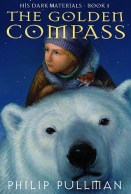
The Golden Compass

Rating:
Author: Philip Pullman
Genres: Fantasy, Middle Grade
Pub. date: 1995 (read on Audible Sep. 2019)

The Golden Compass was a re-read for me. I started the series back when I was in University, but I never finished it because University is just a huge giant time suck that doesn’t allow you to read for pleasure. I read the first two books, but never got around to the final book.

I had heard lots of great things about the series and my husband raved about it, so I expected to love it, but ended up being very underwhelmed by it. I think I would have been unlikely to return to it had I not stumbled upon the full cast audiobooks and known there was a tv series coming out later this year. But I’m so glad I made a second attempt at the series because I have been absolutely loving it on Audible!

The Golden Compass is set in a world similar to ours, but with some substantial differences. In this world, everyone has a daemon, which is a sort of animal companion that is bonded to you. Children’s daemon’s can change and take any animal form, while adults daemon’s eventually settle into one form. The story starts with our protagonist Lyra, a young girl whose age I can’t recall (let’s say ~10 or 11), hiding in the retiring room at Oxford and overhearing a very interesting discussion surrounding the concept of Dust.

Lyra is an orphan who grew up at Oxford, surrounded by scholars and street urchins. She’s a bold girl who’s not afraid to boss the other children around and has a terrible habit of lying. She doesn’t know what Dust is, but the scholars are fascinated by this Dust and are enthralled to learn that Lyra’s Uncle, Lord Asriel, has been able to photograph it in the North. Lyra’s curiousity is piqued and she becomes desperate to explore the North and see the Dust and magnificent aurora for herself.

At the same time, mysterious things are happening at Oxford and children start disappearing. To explain the disappearances, the other children blame the mysterious Gobblers, who are said to kidnap and eat children. Suddenly Lyra finds herself engulfed in the plot and travelling to the North to save her friend from the Gobblers and find out more about Dust and why everyone is so concerned about it.

The first thing I’ll say about this book is that I’m a bit shocked it’s a children’s book. I know children read all kinds of horrific stuff without being affected by it, but this book has some seriously crazy shit in it. But more impressively, it has a seriously convoluted plot, which is what impresses me more about it as a children’s book.

I will always maintain that the best children’s books are the books that appeal to both children and adults. The Golden Compass is definitely one of those books that is sold to children, but really targets adults. There are so many levels to the storytelling that it can really be enjoyed at any age. Children enjoy it for its strong protagonist and fantastical elements, like flying witches and armoured bears, while adults will enjoy it for its mature themes about religion and the church.

Yes, you read that right, the underlying themes of this book centre most prominently on the church and its power. Pullman explores other themes like the loss of innocence, morality, and the existence of souls, but at its core this is a book about the role religion plays in our society and how religious doctrine has snuck its way into our governments and legal systems.

The religious overtones are subtle for most of The Golden Compass, but it becomes more clear towards the end of the book where Pullman plans to take this series. There’s a great air of mystery throughout most of this book – what is dust, who are the Gobblers, what is the Magisterium doing – but once we start getting answers to some of these questions, it becomes clear how far the power of the church reaches. They have a great fear of sin, which causes them to commit unspeakable atrocities.

The church, or Magisterium, is strongly reminiscent of the catholic church, however, I think Pullman’s themes apply to really any branch of the christian church. I’m about halfway through the second book now (or I was at the time of writing this – I’ve since finished the series) and I do find Pullman a bit heavy handed at times, but sometimes exaggeration is required to make a point and do I think he makes several relevant arguments. The “church” in general is a very powerful institution, and no matter what religion you look at (christianity, islam, hinduism, etc), it has very much infused itself into modern governance. The question is, does the church belong in our governance systems?

Personally, I think no. The core message of most religious texts is simple – love others. If that was as much as we tried to infuse into our government, I’d say sure, but unfortunately the church is much more caught up in control, and that’s where it gets dangerous. The christian church in America (and yes Canada), is very caught up in controlling everything from women’s reproductive rights, to marriage rights, to access to healthcare, to scientific freedom, and what can be taught in schools. Then if you look further into institutions like the catholic church, they’re also interested in controlling families by keeping women out of positions of influence.

But why is the church so interested in this control? If your mandate is to love others, why does any of that other stuff matter. For me, everything that the right-wing christians are selling in America right now is about protecting the long held power and privilege of straight, white men.

One of the best ways that I think they do this is through misdirection. One example is the anti-choice movement. They would have us believe that they’re all about fetus rights and the sanctity of life, but it’s really about power and control. If the anti-choice supporters actually believed in the sanctity of life and protecting women and children, they would support access to birth control, healthcare, welfare, and sex education. There is no wealth and power without poverty and those in power want to maintain all the privileges they’ve become accustomed to.

But a lot of it leads back to this notion of “sin”. The church condemns women who want abortions as immoral, gay marriage as abhorrent, and science as the loss of faith. But this fear of sin is what drives the need to control it. Religion generally acknowledges that everyone sins, but all these additional rules and restrictions just make it that much easier to “sin”.  The theme of sin is only introduced at the end of The Golden Compass, but I’m interested to see where Pullman takes it in the rest of the series because the word “sin” means different things to different people and part of the problem is that we all have our own definition of what constitutes “sin”.

In Lyra’s world, the magisterium wants to eliminate sin from the world, and in their quest to do that, they cause incredible harm. Not unlike the way the church still alienates everyone who is different or who does not fit within their narrow view of what is “right”.

Anyways, I didn’t expect to get into such an in-depth discussion on religion, but these are issues that I do spend a lot of time thinking about. I do want to keep the ideas of the church (or organized religion) separate from spirituality though because I do think they are two completely different things. You can condemn the church as an institution, without condemning the idea of spirituality and the existence of a greater being.

So I did like this book a lot more on the second read through and I’m interested to see where Pullman takes these themes in the next two books. The full cast for this audiobook was fantastic. Lyra drove me nuts sometimes because she can be really obtuse and made a lot of stupid decisions, but she’s a child and she has a lot of spunk, so I can forgive her for that. Mrs. Coulter was deliciously evil, Lord Asriel enraging, and Iorek endearing.

But mostly what I liked was how wild the plot was. I truly never knew what was coming in this book. There were so many twists and turns and it had a huge amount of depth. I love stories that have a lot of balls in the air and maintain several different plotlines at the same time, while weaving an air of mystery under the whole story. Pullman did this very well and when we arrive at the conclusion of the novel, it really just feels like the beginning.

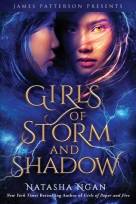
Girls of Storm and Shadow

Rating: ⭐⭐
Author: Natasha Ngan
Genres: Fantasy
Pub. date: Nov. 5, 2019 (read Nov. 2019)

I read and liked Girls of Paper and Fire last year. It was a dark fantasy that featured a queer female protagonist – something you don’t see too much in fantasy. So I was really excited to receive an advance copy of Girls of Storm and Shadow from Hachette.

Unfortunately, I just couldn’t get on board with this sequel. It felt a bit like a parody of the first book and I felt that Ngan’s writing left a lot to be desired. I’m not sure if maybe she was rushed in writing the second book or whether I got caught up in the hook of the first book and didn’t notice, but I found her writing very lacklustre in this book. I thought it didn’t have a lot of style and the dialogue could have been stronger. The writing was just kind of boring, as was the plot.

In Girls of Storm and Shadow, Lei and Wren have escaped from the King’s Court and are trying to win themselves more allies so that they can finally take down the king once and for all. It’s more of a political book, with our gang of misfits traveling from Court to Court, trying to win favour from other demon clans. Ngan does do some interesting things with her characterization of Lei and Wren towards the end of the book, but I felt it took too long to get there. Lei and Wren are just a happy little couple for most of the book and I’m sorry but, even if it’s a groundbreaking queer relationship, you need tension to keep romantic relationships interesting.

Both the character growth and the plot progression of this book are slow. It reminded me a bit of the second book in the Belles series, because in both these series, I really liked the first book, but found the sequel entirely lacking. Even though we had a roughly outlined plot – get more allies – I felt like the story was just too one dimensional in all aspects. I wanted more depth from the plot, more tension between characters, and more overall nastiness. This was just too vanilla and generic of pretty much any other YA fantasy novel. It no longer has anything to set it apart from the rest of the pack.

My hope is that it’s simply a victim of second book syndrome. I’m sure it can be hard to follow up a successful first book. First books generally read kind of like standalones and it’s not until the 2nd and 3rd books that we actually get into the meat of the story or the saga. I’m hopeful that Ngan has a clear vision of where she wants to take this series, but it didn’t come across in this book and honestly, the whole thing felt like filler. I think it’s easy to fall into that trap when you’re writing a traveling book because everything that happens on the way to the destination can just feel like unnecessary, added drama. I know lots of people read fantasy for the action, but I still want my thinking to be challenged and I expect multi-book series to have much greater depth in the plot. There just wasn’t a whole lot else happening here.

The one part I did like is the slow conflict that starts to wedge its way between Lei and Wren. I think it was too long in coming, but I liked the new darkness in Wren that Ngan introduces. It brought more intrigue to the story and I am interested to see where she may take that in the next book.

Anyways, I hate writing downer reviews like this, especially about a book I was really excited about, but unfortunately it just couldn’t live up to the first book. The story and characters have lots of potential, but I think Ngan needs to put a bit more thought into both her characters and her plot and spend a bit more time honing her writing skills.

Return of the King

Rating: ⭐⭐⭐⭐⭐
Author: JRR Tolkien
Genres: Fantasy
Pub. date: 1954 (re-read in Oct. 2019)
Series: The Lord of the Rings #3

I re-read the first two books in the series back in June, but I got a little sidetracked over the summer before finally picking of Return of the King this month. I’ve had the goal to re-read Lord of the Rings for several years now and I’m so proud to have finally accomplished it!

The Fellowship of the Ring has pretty much always been my favourite of the 3 movies, but there’s no denying that it’s the weakest of the trilogy in book form. Tolkien spends a lot of time in the Shire in Fellowship and to be honest, it’s pretty boring, But TT and ROTK don’t suffer from that flaw at all! I found them both to be so fast paced and Tolkien has really created the most immersive fantasy world and some of the best heros and anti-heros.

All of the characters have grown so much since they first set out from Rivendell and it was really enjoyable to watch Merry and Pippin come into their characters in this book. Legolas and Gimli’s roles are much smaller in this book, but there was a marked change in Aragorn’s character as he finally lays claim to his birthright. There are also some really wonderful secondary characters in this book. I really liked Theoden. He suffers a little bit of pride in the Two Towers, but he’s incredibly kind and selfless in ROTK Eowyn is also totally badass in this book and it’s so fun to watch her and Merry team up and prove themselves.

Faramir proves himself at the end of TT, but is driven by his need for the approval of his father, which results in some bad decisions. However, you cannot doubt his love for his city and his people. Even Denethor seemed to be a better character in the book then his is portrayed in the movie. He is obviously flawed, but he has been corrupted by the seeing stones and is grieving the loss of his son. Unfortunately, he fails to maintain morale and be loyal to his soldiers and citizens, so it is hard to forgive him his faults.

I talked a lot about Sam in my review of TT and I have to devote some time again to him here because he is really the hero of the series for me. Sam is the most selfless, loyal, and caring character. He never gives a thought to himself and gives his whole being over to the cause of the ring and Mr. Frodo. I don’t want to dismiss Frodo’s role in the story, because he is also a hero, despite his failings. He was served a very hard choice and a heavy burden, and it took everything he had just to carry that burden.

But undeniably, he could never have made it to Mount Doom without Sam. Even when Sam is rejected by Frodo, he never gives up on him. He thinks little of himself, but he is one of the most courageous characters. He is driven only by love for the shire and Frodo and he is propelled by hope. Frodo has no room for hope, so Sam takes on that burden too – constantly pushing the two hobbits forward by his belief in a better world. The chapter where they are climbing the slopes of Mount Doom was one of my favourite chapters and I was totally inspired by Tolkien’s writing of these two characters and their ability to just keep pressing on despite all the odds stacked against them.

If I have one complaint about this book though, it’s that the climax is followed by 100 pages of “what happened after”. It’s not surprising because Tolkien is an indulgent writer, but it’s a little hard to power through for so long once the ring has been destroyed. Although, it is a story of epic proportions and in some ways it does feel fitting to give it all this closure.

The Scouring of the Shire is definitely Tolkien’s indulgence at its best. The whole chapter seems entirely unnecessary, but I have to admit I did still kind of love it. It seems more appropriate as a short story, but it was fun to watch the hobbits flexing their muscles around the shire to purge it of all the “ruffians” and “sharkey”. Plus it wasn’t totally without virtue and serves to highlight how all of the hobbits have grown and been changed by their experiences. Most poignant to me was Frodo’s total aversion to violence. I would argue that Frodo actually saw the least violence throughout his quest, but he is the most impacted by it. He wants to save the shire, but he is adverse to partaking in any more death.

But overall, this is a totally epic conclusion to a classic fantasy series. There’s a reason people respond so much to Lord of the Rings. Tolkien lived in this world and explored every part of it, so it’s existence feels so complete. It’s a classic story of good versus evil, but it is filled with flawed and inspirational characters. Now I can’t wait to go re-watch the entire movie trilogy to complete this experience!

Recursion

Rating:
Author: Blake Crouch
Genres: Science fiction, Thriller
Pub. date: Jun. 2019 (read Oct. 2019)

Okay, I need to get my thoughts down about this book before I start to forget them! Recursion was my book club’s pick for October and I was pretty excited to read it because we also read Dark Matter together a few years ago and all really liked it. I really hadn’t wanted to read Dark Matter, but I ended up loving it, so I was cautiously optimistic about Recursion.

I am going to have to give the edge to Dark Matter, but Recursion takes you along the same wild ride as Dark Matter does. Crouch writes this really interesting blend of sci-fi and thriller, which I think works really well. His plotlines are totally f-ed up, but embody everything that makes for a great I-cant-put-this-book-down read. They have lots of mind-bending science and crazy plot twists, but also maintain a nice balance of emotional depth and characterization. It’s easy to get caught up in the science, but Crouch always grounds his characters through their relationships and it makes for a much more compelling read.

I think it’s best to go into Dark Matter and Recursion blind, but if you want a small synopsis, Recursion basically looks at memory functions – how we remember (or don’t remember) things and how those memories impact our personal well being and understanding of time. What would happen if we could record and map our memories? Would it help people who suffer from diseases like Alzheimer’s, or does it have the potential to completely warp our sense of time and space.

I did really like this book – it has a strong start, it’s very engaging, and it’s definitely hard to put down. But I ultimately decided to give it 3 stars instead of 4 because I struggled with the last third of the plot, which I found numbingly repetitive, and I thought the ending had some major plot holes.

But that’s all I’ll say about that for now. For the rest of this review, I’m going to have to get into some spoilers. I have a lot of thoughts about the ending and I’m hoping that other readers (or my book club) might be able to clear up some of my questions, but if you haven’t read the book and are planning to, definitely tap out of this review now. Major spoilers ahead. You’ve been warned!

.

.

.

So here’s where I struggled with this book. I thought it had great pacing during the first half, but the more messed up everything got with the chair, the less interested I got. The world ending time loop at the end was a nightmare and it just went on forever. It gave me anxiety while also being super long and boring. You could tell Helena was taking the total wrong approach to ending the time loop and with every reset I was counting how much older she was getting and just kept finding it less and less believable that she would be able to live the same life over so many times without losing her mind. By my count she was like 282 years old when she finally died!! As someone who has not even yet reached the age of 33 (the length of the time loop), I found it hard to fathom reliving your life for that long. I thought it was realistic that she finally just passed away from sheer mental exhaustion, but it was a little annoying to have Barry then come in less than a year later and solve everything. Helena was the hero of this story for me and it was really annoying to watch stupid Barry take all her glory.

Fellow readers, I need your help in understanding the ending, because to my mind it has some serious flaws. Here’s all my issues:

1. How did Barry just go back to a dead memory? Going to a dead memory killed the original test subject (forget his name), so why was Barry able to do it? I feel like this should have been explained.

2. On that note, when the first guy died from going to a dead memory he had this wonderful experience where he went to heaven (or whatever you want to call it), which was enough to make him kill himself later, how come no one else had this experience in their many deaths?

3. Barry basically solved the time loop by going back to the original timeline and stopping Helena from dying, which is what started Slade’s obsession with the chair, but I don’t see how this was any different than Helena going back to the age of 16? She was always returning to that time because it was still part of her original timeline, but the fake memories would always still catch up with everyone later. Wouldn’t the fake memories still catch up with everyone in Barry’s original timeline?

4. Or does the memories not catching up have to do with the fact that Barry is springing off of a dead timeline? I don’t really get why that would matter though, I guess the fake memories from the other timelines haven’t been created when you launch off a dead timeline, but it still begs the question, how did Barry return to a dead timeline?

5. What happened to Helena’s memories from her original timeline – the one where she worked for the R&D company? Slade apparently kills her for the first time in 2018, but I don’t remember her ever gaining those memories?

I think that mostly sums it up. But like I said, it was kind of disappointing to see Barry solve the problem, especially when Slade tells us that Helena originally figured it out and then he reset her memories (which also doesn’t make sense, she would have got those memories back n’est pas?) Or did she not get the memories back because Slade went back to a dead timeline? That would make sense actually, maybe that is the answer to why she never remembers Slade killing her either? I guess I will go with the answer that previous memories don’t catch up with you in a dead timeline, which would explain a lot of my confusion and questions 3-5, but still raises the question of how you travel to a dead timeline?

Anyways, this helped me sort through my thoughts, but still doesn’t change my rating. Crazy action doesn’t always make your story compelling and I just didn’t find the last third of this book compelling. But I’d love to hear everyone else’s thoughts on the ending and all the plot twists! Am I right about the dead memories thing? Do you have the answer to any of my other questions? Would love to know what everyone else thought!