Rating: ⭐⭐⭐.5 Author: Charlotte Bronte Genres: Fiction, Classics Pub. Date: 1847 (read Mar. 2021)
This was a re-read for me. I first read Jane Eyre about 10 years ago and I didn’t love it – I think I gave it 3 stars – but I remember expecting to really like it because it’s a lot of people’s favourite classic, and then just not being into it at all.
I’ve had a lot of success with classics lately. I finished reading all of Jane Austen’s books over Christmas and was a huge fan, and I read Wuthering Heights a few years ago and absolutely LOVED it! So I thought it might be time to re-visit Jane Eyre and see if I would finally jump on the bandwagon.
I can’t talk about the book without revealing spoilers, so if you still haven’t read this one – SPOILER ALERT AHEAD.
.
.
.
Reader, I definitely liked this better the second time around. I really enjoyed the first quarter of the book about Jane’s childhood and the definite highlight of the book for me was when Jane makes the decision to leave Mr. Rochester and basically destitute herself on principal (like come on, she could have still left him and taken a bit of money with her, there’s morality and then there’s just insanity). I had forgotten a lot of the plot points of the book, so after re-reading it… I get it. I understand why this is beloved by so many people. Jane really is a true heroine and so far ahead of her time. Despite a very difficult childhood, she grows into a very well adjusted young woman who is both loving and kind. She is quiet and timid, but she is not meek. She has developed a very acute sense of self and ideals of morality. In short, she is very high in character.
Like the many readers that have come before me, I did admire her for her grit. She has finally found what she most desires in the world, love and a home, and she walks away from all of that so as not to diminish herself or live in a way that she feels is not right. She faces more hardships only to again rise from the ashes of her former life to build a new one for herself. It’s really hard to believe this book is from the 1840’s because it really is filled with so many modern ideals and I admire Charlotte Bronte for penning this in her time!
So why I am not as enamoured with this book as everyone else seems to be? It’s definitely a dense book – I listened to it on audio and there are multiple HOUR LONG monologues by some of the characters. I do think it was a good choice to rely heavily on dialogue for these and even though they were long, they did still hold my attention, but like, good riddance on all the philosophical conversations.
Honestly, what I think it comes down to for me is a bit of the ick factor. Like, I know there are women out there in love with Mr. Rochester and I find it so creepy. He’s so large and old and menacing – I just couldn’t move beyond a 40 year old man preying on a 19 year old girl. I know Jane Austen’s books are filled with age gaps too and I love those, so I shouldn’t judge because it was 1847, but the whole power dynamic and Mr. Rochester’s temper were just too much. Then the fact that he tries to wed Jane while already secretly married and the whole F-ed up idea of shutting someone up in the attic for literal years and THEN JUSTIFYING IT. And the reader is actually expected to empathize with Mr. Rochester’s plight when poor Bertha’s been suffering away up there?! So I think it’s a bit ahead of its time in some ways and other ways definitely right in its time period.
Personally I got more of a kick out of the whole ordeal with St. John. I found this escapade a bit more light hearted and loved Jane using sarcasm against his faith near the end of the novel. I did think the book had a good blend of religion and morality. Sometime classics can be a bit heavy on the religion, which to an extent this was, but I liked that even though Jane did believe in God, I felt that she had developed a strong sense of personal morals outside of religion. St. John started to manipulate his religion at the end to get Jane to marry him because he felt it was ordained by God, but Jane very firmly held her own ground and recognized that thinking something might be good for your ministry doesn’t necessarily mean it will be good for you.
So how to rate this? I’m on the fence because Jane really is a first rate heroine, but I felt so uncomfortable reading about the romance. It’s funny to me that I adore Wuthering Heights, which honestly has zero likeable characters, yet I struggle with Jane Eyre, which has a truly lovable protagonist. I’m probably at a 3.5 stars, but I will round up to 4 stars because the second read through did allow me to recognize the value in this book and I understand now why it has survived the test of time. I’d just take Elizabeth and Mr. Darcy over Jane and Mr. Rochester every day of the week folks! So in conclusion, a worthy classic, but not my favourite.
Side note, why do so many people hate Wuthering Heights? I think it’s like the pinnacle of classic literature and I love everything about it, but so many people really dislike it. Give those unlikable characters a chance readers and see what you can learn from them! Also, the audiobook I read was narrated by Thandie Newton, who did a GREAT job! But she pronounces St. John like SinJin and it was really confusing for me at first.
Rating: ⭐⭐ Author: Nancy Johnson Genres: Fiction Pub. Date: Feb 2021 (read Mar. 2021)
The Kindest Lie has been getting a lot of buzz and I was really intrigued when I read the synopsis. Black female engineer, hometown racism, class war – all sounded super interesting – but this book sadly just didn’t deliver. I really wanted to like it, but it was so boring. I felt like the author had a few basic themes that she wanted to cover, but they were so poorly executed and quite frankly, I just didn’t think she was a great writer. I read somewhere she’s a journalist, which I could definitely see, but as a novelist, I think the plot was really lost and the themes just not nuanced enough.
So what’s the book about? 29 year old Ruth Tuttle is witnessing the entrance to a new era when Obama is elected President. Ruth is a successful engineer married to a marketing executive and they’ve just bought their first house together. The natural next step is children, but Ruth harbours a dark secret from her husband that upends their relationship and sends her back to her childhood home with her grandmother in search of answers.
Ruth’s secret is that she was pregnant her senior year. She hid it from her classmates and her grandmother arranged for an adoption. But Ruth’s not sure that she made the right choice and now 11 years later, she’s decided it’s time for answers. But when she returns home, she discovers that the manufacturing plant has shut down and that racial tensions in the town are at a high.
I hate having to give a bad review to a book like this. These are exactly the kind of stories we need more of and the themes that I love to see explored in literature, but nothing about this book worked for me. I really wanted to like Ruth, but nothing about her story made sense to me and I really found myself disliking her. She made herself out to be a victim that was wronged by her grandmother and the choices she made for her. In a way she was right, but she seemed totally content to reap the benefit of those choices for 11 years after. Her grandmother enabled her to go to Yale, get a good education, job, and husband. It was only when her husband starting floating the idea of children and she found herself wanting to be a mom, that she started second guessing the choices she made as a teenager.
I know the whole point of this book is that it’s a commentary on motherhood, but it just enraged me that all of sudden Ruth decided she should be the mother to her child and started trying to find out where her kid ended up and how to upend the adoption. She worries her child didn’t go to a good home and that he wasn’t loved as a mother should love a son. This was too much for me. It’s so freaking selfish to just enter your kid’s like after over a decade without their consent. I know Ruth eventually realizes this too, but I felt like I was supposed to like her character and I only ever felt resentment for her. She tried to blame everything on her grandmother rather than take ownership over the fact that she had actively decided not to be a mother for 11 years. The blame really lay within in my opinion.
While the central theme is about motherhood, there is a sub theme about black identity that I also wish had been better developed. Johnson raises all the right issues, but it was just so basic I didn’t think it added a lot to the story. Like we’re finally at a point in time when society is recognizing how it has mistreated black people for centuries and the violence and injustice that has been enacted against black bodies. I really wanted the author to take it to the next level and really make me think about what that’s like, but I felt she just beat home the same basic points over and over. It’s an age old complaint – but she told me about racial injustice rather than really showing me how that feels to a person of colour. I thought it was an interesting choice to tell part of her story through an 11 year old white boy, and I liked the dimension he added to the narrative, but I really just wanted more depth from all of the characters.
Anyways, this is one of those books that I always have to end with a disclaimer and acknowledge that while I didn’t like it, this book may mean a lot to people of colour. If this book makes you feel seen and understood, then I’m so glad it exists. I really wanted more from it, but that doesn’t mean it doesn’t have value and I hope that the audience Johnson intended for this book enjoys it.
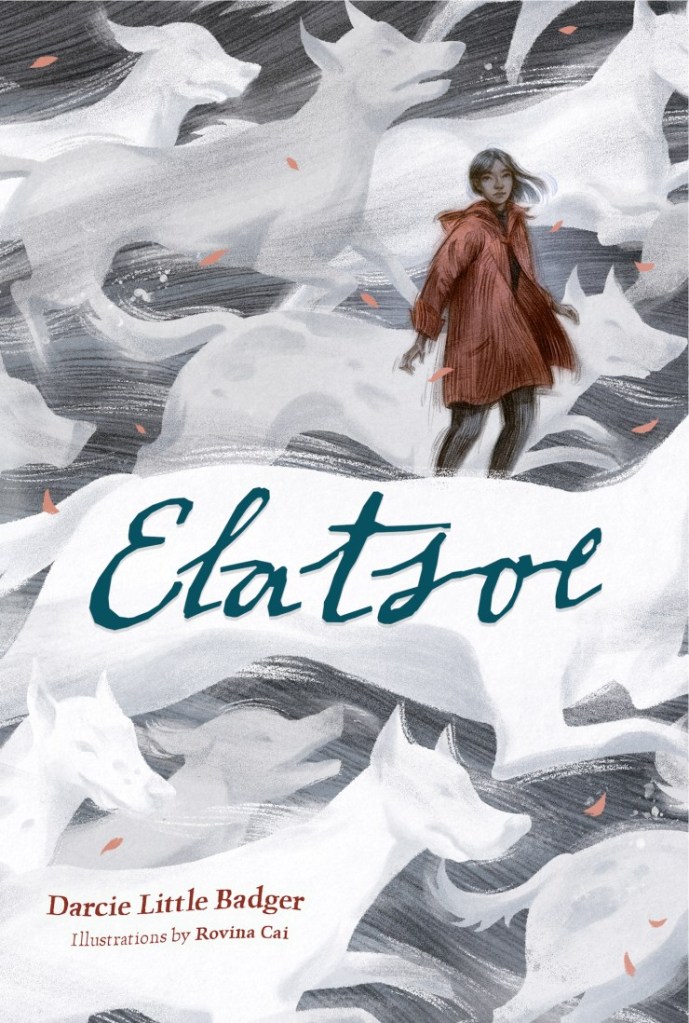
Rating: ⭐⭐⭐⭐.5 Author: Darcie Little Badger Genres: Young Adult, Fantasy Pub. Date: Aug. 2020 (read March 2021)
I’m not sure how I stumbled upon Elatsoe, it may have been on Booktube, but I was immediately intrigued by the plotline. Elatsoe is a young adult story about 17 year old, Lipan Apache member, Elatsoe. She is one of a long line of women who can raise the ghosts of dead animals and is inspired by her six-great grandmother for whom she is named.
When her cousin, Trevor passes after a car crash and his ghost visits her in a dream, warning her that he was actually murdered, Elatsoe is catapulted on a mission to bring her cousin’s murderer to justice. She travels to his hometown with her parents to comfort his widow and immediately starts searching for the truth of Trevor’s untimely passing. In the process, she encounters more ghosts and makes a worrisome journey that causes her to seek advice from her elders.
I loved this book. It is such a wholesome story – it deals with heavy themes, yet it always feels like a light and fun read. I thought it read a little more like middle grade than YA, but that is really what made this feel like such a wholesome read. Instead of the teenage angst you usually find within the pages of a YA novel, Elatsoe is an individual who is very much comfortable with who she is and maintains good relationships with her friends and family. In a way it’s a coming of age story, but one in which she is respectful of her family members and seeks guidance from them. It is mentioned in passing that she is asexual and I loved that it’s just accepted by all the characters and we move on from there. Her best friend is male, but there is no love story between them and their friendship is very much built on trust and respect. It’s refreshing to read a book with such well balanced and respectful characters.
The author, Darcie Little Badger, is also Lipan Apache and she brings a very interesting fantastical element to the story. Elatsoe lives in a similar world to us, but her world is filled with monsters both seen and unseen. Personally, I thought the monster idea could have been a bit better developed and overall could probably have done without it, but the inclusion of ghosts in the story is really what makes it shine. She integrates Lipan Apache culture into the story flawlessly and I loved how she wove the verbal storytelling of Elatsoe’s ancestors into the book. I found it very engaging and it added so much depth to the story.
This was really close to a 5 star read for me. I thought it got a little plot heavy towards the end, and while we do see character growth throughout, I would have liked to see a little more character development at the end instead of going heavy on a ghost showdown. But it’s really a minor comment and I would still absolutely recommend this book to everyone. The writing is lovely and it reads very quickly. I think it’s a story that can be enjoyed by all ages and am so happy to see more indigenous voices and indigenous stories being published. 4.5 stars!
I know Kristin Hannah has over 20 books, but she’s become really popular with her last few publications, and for good reason. My book club read and loved the Nightingale and then I became absolutely obsessed with her last book, The Great Alone. So I was very excited to read another historical novel, this time about the dust-bowl era and mass migration to California.
While I knew about the great depression, I’m a little embarrassed to say I knew very little about the dust-bowl era of the early 1930’s. As a Canadian I won’t be overly shamed about this, but one of my biggest takeaways is that I really should read the Grapes of Wrath, which sounds like it is more or less the same plot as The Four Winds. I don’t mean that as a slight, it just seems like most people cover this period of history in their learnings by reading John Steinbeck’s classic, so I’m definitely anxious to read that book as well now.
The Four Winds opens in Texas prior to the great depression. Our heroine Elsa has been cast out by her wealthy family and marries into an Italian farming family. Though she struggles to satisfy her husband, she finds great happiness on the farm and takes joy in a hard day’s work and in raising her two children, Loreda and Ant. However, when drought strikes Texas the family falls on tough times and Elsa must make the decision whether to head west with her family in search of work and better days.
The Dust-bowl era coincides with the Great Depression and is a period of history in which many southern states experienced severe drought and dust storms. Agriculture crashed and many developed dust pneumonia as a result of the storms. This resulted in mass migration to California where migrants faced even more hardship – cast out and vilified by the locals, aid was denied to many and the only work to be found was hard labour at a pitiful wage.
It is this hardship that Elsa and her children experience. I found the plot really interesting in that I knew very little about the dust-bowl era and didn’t realize there had been a mass migration in America in the 1930’s. What’s most striking is the way that history has a tendency to repeat itself and that no matter the individual, America does a great job at othering “outsiders” and vilifying the poor.
Before southerners migrated to California, Mexicans would cross the border to work in the cotton and fruit farms as pickers, earning minimal wages, then leaving at the end of each season to return to their families. Eventually the government cracked down on this immigration and suddenly the California growers found themselves with no cheap labour to pick their goods. Until farmers from the south started flooding across the border looking for any work to feed their families. The growers took advantage of this labour and the sheer number of people allowed them to pay even lower wages, maximizing their profit because there was always someone desperate enough to pick for any wage.
This echo’s the world we still live in. Capitalism is built on cheap labour and immigrants are often still forced to work for any wage to survive. I find it hard to understand how the American Dream is even still a thing because class difference in America is so divided and there are so many people living in poverty. People with privilege rise up on what they pretend are their own merits, while a multitude of people struggle to survive every single day – many of whom are taken advantage of by their employers. The only real difference in The Four Winds is that the workers are white American born citizens. While they are absolutely justified in wanting to be treated humanely and earn a living wage, I couldn’t help but notice their indignation at being treated, for lack of another word, like immigrants. They feel that as American citizens, Californians should empathize with their plight – but it just goes to show how ingrained feelings of nationalism and state pride go and how threatened people will always feel by “others”. Heaven forbid an “outsider” receive state aid or take advantage of state services paid for by “their” tax money.
In some ways though, the migrants were just as proud as many of the Californians in that they felt they should be able to provide for themselves and should not need to take relief or government assistance. They honestly just wanted to be paid a living wage so that they wouldn’t need the relief. I’m sure many would be happy to pay taxes and contribute to services, but their poverty and the lack of work made this impossible. It’s just scary that this is a mindset that still exists today. That somehow poor people aren’t worthy of basic access to services like welfare and healthcare. That giving someone a helping hand will make them reliant on support. No one wants to be on welfare. And the fact that we still have to debate, in a pandemic, that people deserve a living wage and that the government should step up and provide financial relief, is frankly embarrassing.
I’m sure it didn’t come as a surprise to those who are more well informed than me, but what I found most shocking about this book was the Welty Farm. The sheer brilliance and evil of allowing people to run themselves into debt on your farm, all to secure their labour throughout picking season. In some ways the families that found themselves with a cabin on Welty Farms were very lucky. It put an actual roof over their heads and allowed them some modicum of comfort over living in the shanties. But the model of forcing poor migrants to buy everything on credit from the company store at triple the price and never paying them in cash is really so evil. And not allowing them to seek work elsewhere in the off season to ensure that every cent they earn during cotton picking will go into paying off their debt, ensuring they’ll have to stay around another year and survive again on credit, is just plain evil. It’s hard to believe someone can look in the face of such poverty and deny someone a living wage. But this is the world we live in – where people like Jeff Bezos make billions in a pandemic yet refuse to pay their workers a living wage. Really, what has changed since 1930?
But I should probably spend less time ranting and actually talk about the book. You’re probably wondering why I gave this 3 stars when it sounds like I was really into it. As a history book, I did really like this. Hannah showcases every aspect of this era and I liked that we got to experience how awful the dust storms were, what it was like to migrate across the country, and how in many ways, California was worse than what they experienced in Texas. So I did really like the history covered in this book and felt it was fairly comprehensive. But as far as this goes as a novel, I did think it was a little lacking.
Hannah is definitely a good writer. I fell in love with her writing in The Great Alone and the way she wrote about Alaska and her characters. I felt they all had such heart despite the hardships they faced. I love that Hannah focuses on the mother-daughter relationship in her novels and it’s what compels me to pick up each of her books. But unlike The Great Alone, in The Four Winds the land and everything around it is dying. While Elsa is undeniably a strong and inspiring character, I couldn’t help but feel this book was lacking in heart.
First of all, I thought it was too long. A lot happens in this book, but we just got a bit too much of everything. I felt like we were suffering the same thing over and over again. I know this is the reality of this kind of a life, but oh my goodness, in the beginning the dust storms seem to go on and on! I don’t think the novel was exaggerated, but we easily could have dropped a hundred pages. I repeatedly got bored throughout this book and at times felt it hard to pick it up again because it was just more and more of the same.
But like I said, as much as I liked Elsa, I just didn’t connect with her in the same way that I have with some of Hannah’s other characters. I’ll admit Hannah is somewhat emotionally manipulative in all her books, including The Great Alone, as much as I love it. She creates these grand heartbreaking situations near the end of her books, but in this one, I felt like Hannah was smashing my face into the sidewalk trying to force me to feel something I didn’t. I loved the inclusion of the wage campaigners and “communists” and seeing the migrants stand up and fight for their rights, but I struggled to buy into the romance (didn’t see the draw of the characters or any chemistry between them). I didn’t see why Elsa’s story was any more inspiring than any other migrant. The climax just felt really forced to me and it took away from the story in my opinion.
From there I thought it just went downhill altogether. I don’t want to post any spoilers, but I didn’t like how easy everything became after the climax. This is a family that has struggled and will continue to struggle. Unfortunately there is never an easy way out of these kinds of struggles. Migrants will continue to be taken advantage of. When the drought ends, yes many will likely return to where they came from, but the sad reality is that this will not be an option for many of the migrants. One, because they will literally not gave the money to return, and second, because many of them have nothing to return to. The farms they abandoned were taken over by the bank, it’s not as simple as returning to your land because the rains have returned, in many cases families will have no land to return to. It’s a really sad way to end a book, but unfortunately sometimes the bad guys win.
I’ll have to do some research about what did happen at the end of the great depression and how people were able to raise themselves back up, but I didn’t like that it wasn’t covered in this book. I assume at some point things did improve, likely some of the migrants left, enabling those that stayed behind to demand better pay. Or that job access improved with the end of the depression, but we don’t really see any of that in this book. It’s just misery straight to the end. I read some reviews that complained that the book has very few high points and too much suffering. I see the point, but I actually disagree – a lot of times the there is truth in so much suffering, but I do still want there to be a purpose for me reading the book. Yes, I learned a lot about a historical period I knew little of, but otherwise I’m not sure what my takeaways were. Yes, I know that Elsa was good and strong and that she learned to be proud of herself, but what of her relationship with Loreda? In most cases their relationship felt forced to me and I felt it was resolved with “telling” rather than “showing”. I guess overall I felt the writing too manipulative towards the end and I struggled to enjoy it.
Anyways, this turned into a pretty lengthy review. The book definitely has its strong points, but other areas that could use some work. Don’t get me wrong, I did still like it, but not Hannah’s strongest work in my opinion. That said, I haven’t been able to stop thinking about this book since I finished and I am anxious to go out and read more material about this era, so I do thank Hannah for the intro. Still recommend her books and I know a lot of readers liked this more than I did, so don’t be deterred by my review!
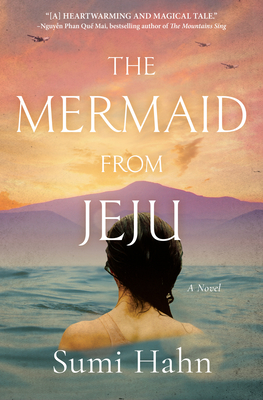
I don’t know how I stumbled across this book, I haven’t really seen any hype about it, but as soon as I saw the title and cover I immediately went and bought myself a copy. I read Lisa See’s latest book when it came out, The Island of Sea Women, and became totally enthralled in the history of Jeju Island. It’s an island off the south coast of South Korea that has a very turbulent and interesting history.
My knowledge of island culture is still very limited after reading both books, but it seems that inhabitants of the island have very much carved out their own unique culture and customs, connected, but still separate from the rest of South Korea. In a way it reminds me of Newfoundland in that it is part of Canada, but still maintains a very distinct sense of self.
A large part of Jeju is centered around a matriarchal society, with the Haenyeo (female divers) being seen as the primary family providers and earners. The Island of Sea Women was centered entirely on the Haenyeo, so when reading that book, I did see the Haenyeo as central to Jeju culture. However upon reading The Mermaid from Jeju, I learned that Mount Hallasan also plays a large role in Jeju culture. It’s a huge mountain that supports a whole different ecosystem and plays a large role in island religion.
I’m going to leave it there because I don’t have enough knowledge to expand further, but The Mermaid from Jeju also features a Haenyeo as the main character, so I was immediately drawn to it. Between the two books, I definitely preferred Lisa See’s book, but I did like that Sumi Hahn gives a more well rounded perspective of life all over the island. Both books cover a similar time period and highlight the impact on the people of Jeju from the transition between rule by the Japanese and then the Americans. The situation further deteriorates with the introduction of communism and America’s attempts to remove the threat.
The Mermaid from Jeju is about a young Haenyeo, Junja, and how she and her family are impacted by the arrival of the Americans. Junja has her entire life before her. She is a proud Haenyeo, diving with both her mother and grandmother, and meets a boy on the mountain, Suwol, with whom she becomes fast friends. But as violence spreads across the island, her family is torn apart and she must make difficult decisions.
While I did enjoy this book, I really struggled with the plot. I don’t need to have a well defined plot to enjoy a book – often some of the best books have meandering plots, but I felt like in this book I struggled with not having enough information. There’s a lot going on with Suwol and Junja’s grandmother and I found it really difficult to follow what was going on. I had some background from reading Lisa See’s book, but I think some readers may struggle with keeping track of the history of what is actually happening here. The plot jumps around a lot with little context.
Then in the second half of the book the structure makes a big shift. I understand why the author did this and I eventually did get into this new story, but I found the shift very jarring and it really disrupted the flow of the storytelling for me. It’s difficult to be at a high point in a book and then to have to very quickly shift gears to a low stakes storyline, before returning again to the original story. It just really didn’t work for me, nor did the ambiguous storytelling with the reader not being entirely sure who the new narrator is.
What I did find really interesting was the theme of ghosts. It features more heavily in the second half of the novel and I didn’t give it too much thought until I read the author’s note. The author is Korean, but grew up in America. I don’t think her family is from Jeju, but apparently she has been haunted by ghosts herself and it was these experiences that inspired the story. She visited Jeju and conducted several years of research before publishing this book.
So overall I was intrigued with the story, but it was also evident to me that this was a debut novel. I think the author had a lot of ideas, and good ones, but the story was lacking in focus and execution. I just felt the whole thing needed a little more direction, like the author had too many ideas and just didn’t know how to pull them all together, or cut ideas where they didn’t fit. I needed a bit more context than was provided and the first and second parts of the book just read like different novels. The time I spent investing in the characters and plot of the first half just ended up feeling wasted.
That said, I won’t be deterred from reading more from this author in the future, but I’d recommend picking up The Island Sea Women first over this one.



 The Paperback Princess