The Women

Rating: ⭐⭐⭐⭐.5
Author: Kristin Hannan
Genres: Historical Fiction
Pub. Date: Feb. 2024

4.5 stars, rounded up. I absolutely flew through this book! I was really excited to read it, but for some reason I was expecting it to be a slow read. I enjoyed The Nightingale, absolutely loved The Great Alone, and didn’t really care for The Four Winds. But Kristin Hannah is back on her game with The Women.

She said in the author’s note that this is a story she’s been wanting to write for a long time, but didn’t want to write it until she was a more mature author. I think now was the right time and that writing about Vietnam captures her at her best. While The Great Alone isn’t really about Vietnam, the fact that Ernt Albright is a POW from Vietnam is really critical to the story. I feel like the Vietnam War is something close to Hannah’s heart, and it shows in her writing.

I think “The Women” is a very uninspired title, but it does fit this book. Hannah explores a lot of themes, but above all, she asks the question, “what about the women?” Frankie McGrath is 21 years old and has just obtained her nursing license in California. Her family has a proud history of military service and her brother, Finlay, is quick to enlist to serve in Vietnam. At that time, America was portrayed as winning the war and the extent of casualties were either limited, or not communicated to the public. 

Frankie misses her brother and is frustrated by the limitations of being a junior nurse. In an effort to get on her Dad’s “hero wall”, which memorializes their family’s service, she decides to enlist as an Army Nurse. Shortly after, the family learns that Finlay’s helicopter has been shot down and he has been killed. But it’s too late for Frankie to back out and she proceeds to basic training and ships out to Saigon.

Once in Vietnam, Frankie quickly has to adapt to the chaotic nature of war. After her initial shock, she becomes a very adept surgical nurse and develops close friendships with the other women. But over time, Frankie becomes disillusioned with the American government and their portrayal of the war and its success. Her mother keeps her updated on the protests at home, but when she returns to America, she is surprised at the level of antipathy the public has towards veterans. As Frankie struggles with PTSD, she realizes that no one even considers nurses to be veterans, and she is refused the few scarce benefits and supports that are offered to the men who served. (it’s not stated, but I’m curious if the male doctors were able to access veteran benefits?)

I love the way this book is written. We spend the first half of the book in Vietnam, where Frankie is exposed to unfathomable terrors, which includes a steady stream of maimed, wounded, and dying soldiers, as well as severely burned Vietnamese civilians who are the accidental (I hope) target of America’s extensive use of Napalm. Frankie rises to the occasion, becoming steady, reliable, and knowledgeable as a combat nurse.

As the reader, you go through this journey with Frankie. Even though I was aware of many of these atrocities, Hannah does an excellent job of conveying the chaos and heartbreak of war through Frankie’s eyes. It’s a brilliant set-up for the rest of her book because she is showing the reader exactly why so many people suffered PTSD from the War. It’s hard to empathize with characters like Ernt Albright in The Great Alone, because I didn’t really know what he went through. But we go through the war with Frankie, so it’s so much easier to understand her struggles.

The entire novel is compelling, but the first half definitely sucks you in. It’s a high stress setting and I could not put the book down. The second half of the book is slightly more understated, but the aftermath of Frankie’s time in Vietnam is the real reason why Hannah is telling this story. To shine a light on the injustices faced after the war by the women who served their country, and in my opinion, this second half is still gripping.

When Frankie returns to America, the culture shock is immense. She is literally spit upon at the airport and her 2 years of service are dismissed by her parents. She has nightmares and trauma responses to stimuli around her. She initially lashes out (justifiably) at both her parents and friends, but she does try to seek help from a veteran’s clinic and is turned away. She’s repeatedly told that “there were no women in Vietnam”, that “she didn’t see combat”, and so as a result “she doesn’t understand what it’s really like”. Her only coping mechanism is to remain silent and try and forget about the war. I’m sure it was still very challenging for the male veterans, who were also experiencing PTSD and public opposition to their service, but I can’t imagine having to also deal with the mass societal gaslighting of being told your experience didn’t even happen.

There’s so much to unpack in this book. At its core, it is a book about women’s history. The late 60’s and early 70’s were a time of change in America, the era of free love. White women were gaining more rights, but women overall still faced a lot of injustice and erasure. The book focuses heavily on Frankie’s PTSD, as well some issues of equal and civil rights. Frankie becomes very close with Ethel and Barb, who were nurses with her in Vietnam, and she relies heavily on these women throughout the novel.

Barb is a black woman, and even though she’s only one character, I’m glad Hannah opted to include her perspective. This is still primarily a white woman’s book, but there is recognition that there were a lot of black men who served their country in Vietnam and that their grassroots organization in the civil rights movement was also largely applied in protesting the war in Vietnam. I don’t think we really get a deep look at how Barb would have been marginalized in the Army and as an activist, or how she might have struggled being friends with two privileged white women, but I was glad to see the inclusion of a strong black woman in the story.

Frankie is a mess in the second half of the book and despite some of her gains, her life continually goes from bad to worse. I could see how her trauma could get repetitive to some readers, but I’m glad that Hannah wrote it this way because PTSD is repetitive. At this time period, PTSD still wasn’t very well understood, especially in women. It is shocking to hear about the high rates of alcohol, drug abuse, and suicide among Vietnam veterans, which is further exacerbated when you learn that many of them also developed cancer or had miscarriages or birth defects as a result of the chemicals the American’s were spraying all over the countryside.

The Vietnam War was really unlike any other war the Americans had participated in at the time. First of all, they lost it, but second of all, because of the opinion of the public, there was no glory in it. The soldiers weren’t coming home to parades like WWI and WWII. I think my problem now is that I don’t really know who is to blame, although this may be a byproduct of a lack of knowledge on my part. America was committing atrocities in Vietnam. The book doesn’t outright address incidents like the My Lai massacre, but it is demonstrated through the number of Vietnamese civilians that Frankie treats in her OR and what she witnesses at the mobile clinics. The question this book doesn’t answer is, who is accountable? 

How aware was the average soldier about the injustices the US committed against Vietnamese citizens? Can you separate the war from the soldiers? Frankie asks the question, can’t the American public support the troops and protest the government? These men and women are still serving their country, the same as in WWI and WWII, but what if your government or your superiors are acting in bad faith? I honestly don’t know the answer. Many people who are tried for war crimes throughout history use the excuse that they were just following orders, at what point are you serving your country and at what point do you become the villain? 

As a set-up to examine the impacts of war and the struggles of a country divided, I think this book is brilliant. I think Hannah asks all the right questions and focuses on the right themes. Her execution is excellent. What you’ll notice I haven’t mentioned yet is any of the personal drama in the novel, of which there is no shortage. Frankie has varying relationships with 3 men throughout the book and while this narrative is compelling, it’s secondary. I liked Frankie’s interactions with Jamie and Rye and Henry. I think they all add something different to the story and are good tools for engaging the reader. Jamie and Rye are used to explore Frankie’s personal moral code and demonstrate the heartbreak of war, while Henry is a good man and friend who helps Frankie along her healing journey. What I didn’t think was needed was the soap opera plot.

This is probably my one criticism of the book. This is my 4th Kristin Hannah book, so I knew the final act soapbox was coming, but it disappoints me every time. Hannah always adds a surprising (or not so surprising) twist to her books and it irks me because I think it’s both unnecessary and manipulative. Some readers love it because it really reinforces the heartbreak and tragedy of the story, but while still compelling, I think that Frankie’s romantic relationships are the least interesting thing about her.

Yes, Frankie did need to hit rock bottom to finally seek the help she needed. Overall, I did like how her healing journey was handled, but I feel that certain elements of the story are included only to shock and manipulate the reader emotionally. You don’t need the intense personal drama Kristin! I adore Frankie of her own merits. I had the same criticism about The Great Alone and felt the dramatic ending marred an otherwise perfect story.

But I can get over it. These dramatic elements are a way to further engage your reader. It does make for compelling storytelling and I know a lot of readers love it. I just don’t want Frankie’s personal relationships to detract from the much more important themes of this book. I’d still highly highly recommend this book. It evoked so much critical thought for me and I’m holding it to such a high standard. I questioned whether I’d outgrown Kristin Hannah after I didn’t care for The Four Winds, but I will absolutely continue to read her books. A fantastic read!

The Women is my book club’s pick for May, so my rating may change after I meet with them next week, but for now, it’s 4.5 stars, rounded up.
Ties That Tether

Rating: ⭐⭐⭐
Author: Lauren E. Rico
Genres: Fiction
Pub. Date: Dec. 2023

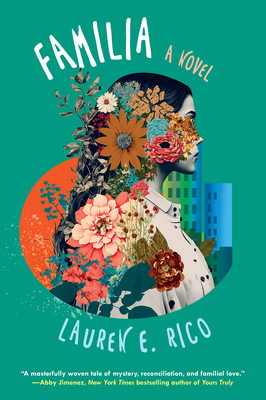
I have mixed feelings about this book. Overall, I liked it – I thought both the story and the writing were compelling and I’m impressed with it as a debut. It’s my book club pick for April and I’m really excited to talk about it because I think there are a lot of interesting themes to discuss. My main complaint is that I didn’t like the religious elements of the story and I didn’t like the ending.

I can’t discuss the parts I didn’t like without getting into spoilers, so let’s talk about what I did like first. Familia is the story of Gabby DiMarco and Isabella Ruiz, two women with very different backgrounds, connected by blood. Gabby is a well-to-do woman in New York City whose parents have recently passed away and is trying to get her big break as a journalist. Isabella is a Puerto Rican woman who lost her mother in childbirth and her father’s subsequent depression and alcohol abuse resulted in the kidnapping of her infant sister, Marianna, 7 months later. This tragic event traumatizes Isabella for the rest of her life and even 25 years later, she is determined to find her sister. When Isabella and Gabby get a 50% DNA match on a gene website, Gabby is sure there’s a mistake, but flies to Puerto Rico in hopes of breaking an interesting story.

It’s obvious where the plot is going, but I enjoyed the journey. It’s a compelling narrative and I was really interested in all the themes the author wanted to explore. Isabella feels a deep sense of resentment for her sister because her birth resulted in the death of her mother and the breakdown of her family, but she also feels guilt over having wished her sister never existed at the exact moment she disappears. When they are reunited, her guilt morphs into jealousy at the easy life her sister had growing up in America in contrast to her traumatic childhood and youth. Gabby refuses to believe that she and Isabella could possibly be sisters, because to accept that fact would be to accept that her entire life and family was a lie. Plus it raises the age-old question of what really makes a family – is it the blood you share or the relationships and trust you’ve built. 

I thought these were all fascinating questions, particularly for Isabella, who I found a more compelling character, and I thought the author did a good job at exploring the internal conflict of these two women. Their relationship was believable to me. They have an emotional connection, but not in an overly cheesy way, and the experience brings them closer together, while still being realistically challenging for them. 

Overall, I liked the format. The author opts to break the story up between the present and the past. Isabella and Gabby do their own detective work to try and figure out what actually happened to Marianna, while at the same time we have flashbacks to a wider cast of characters that were responsible for Marianna’s disappearance. It turns the book into more of a literary mystery novel and it serves to keep the reader interested in the storyline. I think this could have also worked as pure literary fiction and delved a lot deeper into the emotional impact this would have on Isabella and Gabby, as well as to question the ethics and morality of Gabby’s upbringing. I think I probably would have preferred the latter, but recognize that it would be a much more challenging novel to write and think this was still impressive for a debut.

What I didn’t like was that the author bypasses any exploration of the ethics of Marianna’s kidnapping (by Gabby’s parents). To be fair, she does explore the idea that there are almost always grey areas in the law in these types of situations. Kidnapping is obviously wrong, but if the baby grows up to live a much more comfortable and privileged life, does that justify the means? How does Gabby rationalize the fact that her parents are both loving and caring people, while also being kidnappers? As a fact checker, I thought she would want to really delve into that narrative. To me, this was the most interesting theme of the novel and I wanted to consider the dichotomy of these two conflicting facts about her parents. But the story is written to conveniently bypass these challenging ideas, which I did think was a bit of a cop-out. To be fair, I may be holding the book to an unreasonably high standard. It was well-written and I was hopeful that the author would commit to some very tough themes.

So let’s talk about what I didn’t like (spoilers ahead!). First off, I didn’t like the religious aspect of the story. There were some really interesting ethical questions here, and I think the author used spiritual intervention to avoid tackling questions of morality. This was a 7-month old baby. It’s one thing to knowingly kidnap a baby with the intention to traffic it – that is a deeply sick crime. I felt it was another thing to opportunistically kidnap a baby and then decide to kill it. I feel that most people would have deep ethical problems when presented with this scenario, even Santiago (what kind of sick person is willing to kill their widowed brother’s daughter?). Because it wasn’t a premeditated kidnapping, I couldn’t rationalize any other acceptable course of action other than to return the baby to her parent. 

I felt like the author used the whole ‘weeping Madonna’ spectacle and Lucy and Mack’s infertility to try and convince the reader that giving away someone else’s baby was an acceptable course of action. I was glad that Mack realized that the whole idea was ludicrous, but I felt the whole “you must take the baby or Santiago will kill it anyways” was a cop-out. Likewise, getting Alberto’s permission to take the baby was the ultimate way to absolve Lucy and Mack of any wrong-doing. It’s a clean way to structure your novel and it removes the conflict for Gabby that her parents were both good and immoral people. From her perspective, all they did was adopt her unknowingly from an orphanage, which conveniently absolves her from having to rationalize that people we love can make both good and bad choices. It’s a feel-good way to tie up your novel, and that’s fine, I guess I just wanted to get into gritty questions of morality. 

At the very least, if you’re going to absolve Lucy and Mack of any wrong-doing, I thought Rico would at least confront the impacts of Alberto’s decision on both him and Isabella. I struggled to believe that he would willingly hand over his baby to an American couple he knew nothing about. In fact, none of the characters knew anything about Lucy or Mack aside from the fact that Lucy was desperate for a baby. They could have been terrible people. Did Gabby have a better life in America? Most likely… she definitely had more money and opportunity. But we also will never know how things might have been different if Marianna had been returned to her family.

Maybe if Marianna had been returned to her family, it would have been the wake-up call Alberto needed to get clean and take care of his family. He proves at the end that he’s capable of it (which I also found highly unbelievable, why would he randomly get clean after 25 years?), so maybe he would have redeemed himself if he hadn’t given up his youngest daughter. But what really rubbed me the wrong way was that the sisters never found out the truth! Isabella would be devastated to learn that her father willingly gave away her sister and then lied to her about it for 25 years. I felt like this theme really should have been addressed and it did a bit of a disservice to both women to keep it a secret. 

The thing is, I don’t think Lauren Rico wanted to explore those themes. I think Rico was more interested (based on the author’s note) in exploring themes of familial bonds and heritage. I think she wanted to tell a story of sisterhood and family reunion, without doing the work to explore the deep emotional impact of this event on each family member. Which made me question why she structured her book as more of a mystery novel. To be honest, the “how” of Marianna’s kidnapping wasn’t as interesting to me as the emotional impact it had on the two women as adults. I think I would honestly have been fine not knowing how Marianna ended up in the US and just exploring the Ruiz family roots and healing of trauma. I was surprised there was no exploration of the fact that Gabby has just gone from being White to being Latina, and what it would feel like to suddenly be thrust into a completely new culture that you feel you have no right to claim. There’s so much to unpack with these concepts and I was just left feeling a little disappointed. There were great ideas, but I feel like we only scratched the surface.

Some reviews by Puerto Ricans also discuss the idea that Rico only portrays the dark side of Puerto Rico. That Puerto Rico is filled with drugs and criminals, rather than showcasing some of the more vibrant parts of the island (I think this is done primarily through Isabella’s art). I think this ties in with my general comments about why the author chooses to focus on the crime rather than the aftermath. It promotes a white saviour narrative, so I can see how that would be insulting to locals and I wanted the author to do more emotional labour in breaking this down for her readers. 

This is a more minor complaint, but I have to mention one other scene that bothered me. The scene where Mateo randomly decides to leave Isabella after she gets in the fight with Gabby. This conflict didn’t fit the story and came out of nowhere. Isabella is going through so much emotional turmoil during this time and then all of a sudden her supposedly perfect husband is like “I can’t take this, you need to figure out who you are or I’m outta here!” She is literally trying to figure it out at this exact moment Mateo! Why don’t you buckle down and be there for her for a hot minute while she works through an extreme amount of trauma! She’s just found her sister – she’s been searching for her for 25 years and she’s now realizing that the search was a way of avoiding trauma and now that she’s found Marianna, she has to acknowledge that it doesn’t heal all her old wounds. 

Anyways, take my criticisms with a grain of salt. I have so many because this book made me think a lot. It’s maybe unfair to hold a debut author to such a high standard. I would definitely read her next book because I think she has a lot of promise and it was an engaging read. Props to any novel that can inspire me to dig deep and write this long of a review. I’m excited to see what else we unearth about this book in our book club discussion and whether it changes any of my opinions! 

The Story of a New Name

Rating: ⭐⭐⭐
Author: Elena Ferrante
Genres: Historical Fiction
Pub. Date: Sep. 2012
Format: Audiobook

This series infuriates me.

I hate all the characters and the plot is outrageous. But I can’t deny that this is *literature*. I want to scream at all the characters, but they are 100% a product of their circumstances. Our protagonist is the most frustrating because she is one of the few people to become educated and get the opportunity to leave the neighbourhood, but is ignorant to understanding what drives the people around her. Elena will only ever see herself as poor and because of her formative childhood experiences with Lila, does not recognize how how much better off she is than her friends. She is the only person with the real ability to leave the neighbourhood of her own volition, but fails to recognize her self-worth.

This theme is further reinforced through Nino’s character, who despite also being educated, is an idiot. In contrast to Elena, Nino is well aware of his self-worth, but is incredibly selfish and heavily influenced by his own ego. He takes no ownership over any of his actions and is happy to discard his relationships when they no longer benefit him.

What is the most difficult for me to grasp is Elena and Lila’s friendship. There is obviously a strong connection between these two women, but I’m not 100% sure what makes them friends. It’s clear they are drawn to one another, but it’s a relationship heavily influenced by competition. I want to believe that these are two dear friends, for whom jealousy eats away at their bond over time. But I’ve never seen any strong roots between these two characters. There was a brief period of simplicity between them as children, when they had the common ground of both being victims of their upbringing, but that bond didn’t seem strong enough to me to withstand all the trials they’ve put their friendship through.

For me, Lila is an inflammatory character. I know this is intentional, but the jealousy and competition between these two characters is so prevalent that it’s hard to believe the two could still tolerate to be around one another. After Ischia, there is an extended period of distance between them. For me it begs the question of when the meaningful and moving part of their friendship will be showcased?

But damn, this series is well written. I love a good unlikeable character and you cannot deny that Ferrante is a genius at distilling relationships. This does read like classic literature to me in that, it’s at times boring, it can feel extraneous and overwritten, and yet, even the most mundane of interactions serves to provide depth and nuance to a complicated cast of characters. The characterization is central to the themes of the novel, and yet the plot is still engaging and critical to the story. It’s a blend of these two essential elements of literature. It makes me want to beat my head against the wall at the ignorance and stupidity of the characters, but they are so well crafted that you can’t help to step back and reflect on what makes these people react the way them do.

I kind of hate it, but I can’t stop thinking about it. I definitely need a break from this series, but of course that ending has me wondering what more chaos and heartache Nino is going to bring to the story in the next volume. Most of all, I hope to see some real threads of friendship and selflessness between Elena and Lila. And I hope that Elena will finally start to recognize her own self-worth.

Seven Days in June

Rating: ⭐⭐⭐⭐
Author: Tia Williams
Genres: Fiction, Romance
Pub. Date: Jun. 2021

Seven Days in June has been on TBR for several years now and I recently got a copy on sale from book outlet. I’ve only heard good things about it, so I was excited to pick it up. I did end up enjoying it, but it was so much different from what I was expecting!

Seven Days in June is about two characters, Eva and Shane. Eva is a best-selling erotic romantasy author and Shane is a best-selling literary fiction author. They had a wild love affair as teenagers and have been secretly writing each other into their books for the past 15 years. When they meet again at a literary panel, sparks fly and the past threatens to catch up with them.

I’m not totally sure why this book surprised me, the synopsis totally delivers on what the book is about, but I guess I wasn’t expecting how much trauma each of these characters has been through. Eva has chronic headaches and was largely ignored by her mother growing up and abused by the cycle of lovers that passed through her mother’s apartment. Now she’s a single mom doing her best to provide a different life for her own daughter. Shane grew up in foster care, with so many failed fosters that he ends up in a youth center with absolutely no support. They both experiment with drugs and Shane winds up in prison for 2 years after being in and out of juvie.

In present day, they’re both accomplished black authors, but in very different realms. They were incredibly important to one another for that brief period of time as teenagers, and Eva questions why Shane dropped out of her life and disappeared for 15 years. As a recovering alcoholic, Shane doesn’t feel he has the stability to be there for anyone and questions whether he can even be a successful writer without a drink in his hand. They’re both still a bit of a mess, but when they meet again in real life, it’s obvious that their chemistry is undeniable. Are these two broken people finally ready to be together, or will they forever be a victim of circumstance and self-sabotage?

I thought the book had a really slow start. I actually put it down after 6 chapters and read a whole other book. But I’m glad I picked it up again because it gets really good after the first 100 pages. It’s obvious from the synopsis that this book has a lot of depth. Both characters are flawed and those flaws very much get in the way of their happiness. But the writing is really impressive because everything that happens in this book felt so genuine and I had no trouble buying into any of it.

The author is a very good storyteller. I think it’s challenging to read at first because you are walking into a narrative that’s already fully formed and you have to catch up with knowing what these two characters have already realized about each other. It’s hard to believe they could have such a connection to one another after just 1 week together, 15 years ago, which is why I think the writing is so impressive. I absolutely believed in these characters because their chemistry was undeniable. I believed they could have such a profound impact on one another, because they found each other at such challenging points in each others lives, and truly did save one another, despite all the crap they still had to suffer after.

I read Meet me at the Lake by Carley Fortune last year (and absolutely hated it, it’s unfair to even compare it to this), but my main criticism of that book was that no one would believe 2 characters could fall in love after just 1 day together, 10 years ago. But I guess Fortune’s storytelling was just bad because it totally worked in this book. I felt like these characters were magnets and I both understood their attraction, and believed it!

Plus, there was just so much other great stuff going on in the book. It’s not solely about these two characters. Eva’s daughter Audre was a great addition to this book as well. She’s a very self aware 12 year old that wants to grow up and be a therapist, and I loved how she was integrated into the story. I kept waiting for a disaster scene to happen between Audre and Shane and I loved that it never happened! It would have been so easy to write one in for the sake of drama, but I’m glad that the author understood that if Eva’s daughter didn’t accept Shane, then it never would have worked between them. Eva and Audre are compatible and Eva and Shane are compatible, so it was incredibly sweet to see them all fit together. 

The more I write this review, the higher my opinion of this book (I love when that happens). But it wasn’t without flaws. They are smaller criticisms, but there were two things I didn’t like about the book. The first is the use of narration. There are multiple narrators, but I didn’t like how minor characters sometimes got their own POV and I really didn’t like how sometimes the author would switch between different character POV’s in the same chapter. This wasn’t an omniscient narration, and I think it would have read better with just one character per chapter, and if it was limited to just Eva and Shane’s POV, and maybe Audre. I didn’t need the other characters and it made the entire storytelling seem a bit chaotic.

The second thing I didn’t like was the ending. The epilogue was not an epilogue. It was like an extended final chapter and it didn’t work for me. I felt it was unnecessary to drag the conflict out for an additional few months. I was glad to see Eva go off and start following one of her dreams, but I could have just been told she was going to do it, I didn’t actually need to see her do it. It’s a small criticism; overall I thought this was an excellent book.

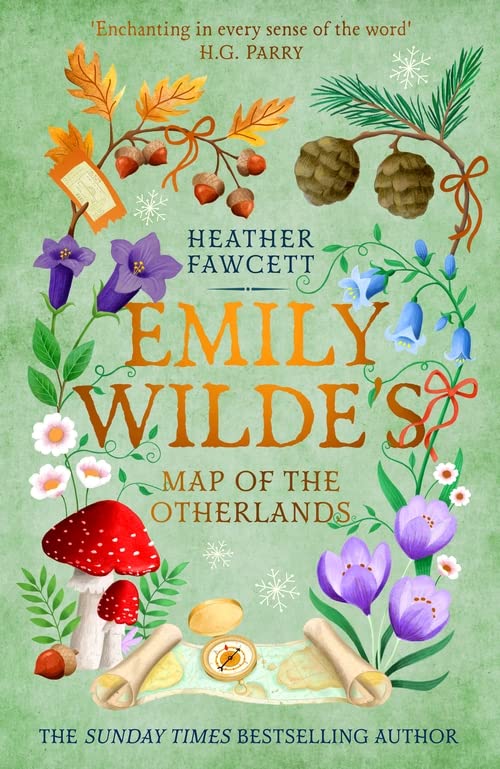
Emily Wilde’s Map of the Otherlands

Rating: ⭐⭐⭐⭐
Author: Heather Fawcett
Genres: Fantasy
Pub. Date: Jan. 2024

I sound like a broken record, but I cannot get enough of Heather Fawcett’s books! Emily Wilde is her first adult fantasy series and I am obsessed! I’m so glad to see it get such high reviews because I do think it’s the type of series that’s not for everyone. It’s a slow burn read and I don’t think it’s everyone’s type of storytelling because it leaves the reader to work out a lot of the intricacies of the world-building. But I think it’s also why it’s resonating with so many people. 

This fantasy world is a mix of the real world and the faerie world. It’s never quite explained to us, but rather it feels like you’re walking into this fully formed world to discover it for yourself. It’s always going to seem a bit mysterious to the reader, but the people in this world don’t really understand faerie either, so that’s exactly the way it should be!

If you’ve heard the term “cozy fantasy”, this is it. Despite always having the coldest settings in her books, this story is filled with warmth. Choosing to tell the story through Emily’s diary entries definitely isn’t the easiest way to build drama because by the time Emily gets around to writing about the drama, you can be lulled into security by knowing that she has at least escaped and is now safe enough to write about it. But this narration also works so well because Emily has the perfect voice to tell this story. Her logical and scientific mind is able to maintain a certain distance from what’s taking place around her, but her soft heart lends a sweet, emotional aftertaste to the story. 

This is the second book in the series and it picks up more or less where the first book leaves off. Emily, Wendell, and Shadow return in this book, but we are also joined by two new characters, Ariadne and Rose. Rose was a good foil to the story and it was fun to see Emily grapple with her academic pursuits while also trying to wrangle her young and enthusiastic niece, Ariadne. It’s another slow burn story, but somehow, it just works so well with this series.

No fantasy is complete without a romantic side plot and this one is so precious! Where most fantasy heroines these days are fiery and passionate, Emily is methodical and soft. She’s undeniably interested in Wendell, but given the complications of where they are both from, the logical part of her brain very much tries to win out over the romantic part. It’s such a different approach to romance than other popular fantasy series and that’s why I think it’s so refreshing. Emily has a different kind of strength and it’s nice to be reminded that women can be a hero in many different ways. She’s not the ‘chosen one’, she doesn’t have any magic, but she is quietly assured of her good reasoning and intellect and uses her smarts to outwit faeries rather than to fight them.

Anyways, this was a pleasure to read from start to finish. The setting and characters are impeccable. I’m so glad we get to spend one more book with Emily and Wendell and I can’t wait to see where the story will go!