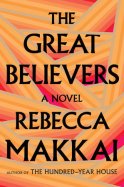
The Great Believers

Rating: .5
Author: Rebecca Makkai
Genres: Historical Fiction, Fiction
Pub. date: Jun. 2018 (read May 2019 on Audible)

I listened to The Great Believers as an audiobook and I feel like I’ve been working on it for a long time. It took me a while to get into it, but once I did, there were parts of the book that I really liked, and other parts that I found kind of boring.

First of all, I will say that the scope of this novel is impressive. Makkai tackles a lot in this book. The main plot of the story (for me anyways), centers on Yale Tishman, who is a gay man living in Chicago in the 1980’s and coming to grips with the HIV/aids crisis completely decimating his entire community. The novel opens with the death of Yale’s friend Nico, which in a round-about way initiates a conversation between Yale and Nico’s great Aunt, Nora, who would like to donate her personal art collection to the university art gallery that Yale works for, which would be a huge acquisition for Yale and the gallery.

At the same time, a second storyline is set in Paris in 2015 as Nico’s sister, Fiona, searches for her adult daughter who she hasn’t seen in 5 years since she disappeared into a cult in America called the Savannah Collective. I would never have thought to pair any of these plotlines together, so I was impressed with Makkai for her creativeness and scope of the book.

That said, I didn’t love all of the plots in this book. I thought some parts were a lot stronger than others and it’s what really drove the rating down for me. I’ve described 3 major things: the HIV/aids crisis in the 1980’s, an art acquisition, and a missing daughter. Yale’s storyline about the HIV/aids crisis was by far my favourite. I’ve been privileged to have not had to give this period in history a whole lot a thought, so it was both sobering and fascinating to read about.

I really liked Yale. I thought he was super relatable and I loved reading about his relationships with all his friends and his perspective on the HIV/aids crisis. I thought his story had a really good balance of history, politics, and emotion. I connected with him a lot and it was devastating to watch his friends die one by one and the government do nothing. Makkai weaves in a lot of social commentary without overpowering her novel with it. This was still very much a novel about characters and relationships, with just the right amount of history and politics.

I thought the art acquisition storyline was mildly interesting. I liked the parallels that Nora drew between the artists she knew in WWI and the war that Yale and his friends were fighting in Chicago. I have never really read anything about the art world, except maybe like, the Da Vinci Code or something (lol), so this was a whole new world for me that was intriguing to learn about.

But Fiona’s story set in 2015 didn’t do much for me and is what really dragged down my rating and enjoyment. I found myself tuning out for entire sections of Fiona’s story and I felt like very little happened in her timeline. It took forever for the story to advance and when I finally realized what the “so what” was of Fiona’s story at the end of the novel, it felt a little anti-climactic. Fiona had a tumultuous relationship with her daughter that was an indirect result of the trauma of losing all her friends in the 1980’s. She talks about how you can’t really describe what it feels like to survive a war that none of your friends make it out of and how that impacts the rest of your life without you even noticing. I thought this was a fascinating topic and I was eager to explore it, but I thought Fiona’s relationship with her daughter was a laboured way of doing it. I liked Fiona, but I just thought the modern day part dragged the book down. I also felt like I didn’t get enough context of Fiona’s relationship with Claire as a young girl and so I didn’t understand why Claire hated Fiona so much

Overall though, I did like the book and I would definitely place it firmly in the category of literary fiction. Makkai writes with depth and I loved the characterization of Yale and all the secondary characters in his timeline. It wasn’t as stand out a book as I was hoping, but I’m definitely glad I read it.

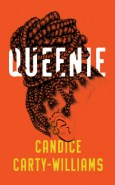
Queenie

Rating:
Author: Candice Carty-Williams
Genres: Fiction
Pub. date: Mar. 2019 (read Apr. 2019 on Audible)
Narrator: Shvorne Marks

I completely sped through this audiobook! Queenie wasn’t really on my radar at all and then suddenly, it was everywhere! It’s been compared to Bridget Jones and it featured a Jamaican-British, 25 year old, so I was definitely intrigued. Plus the audiobook narrator sounded great in the sample and had me laughing out loud in her 5 minute clip.

The reviews are a bit mixed on the book though and after reading it, I can definitely understand why. Queenie works for a newspaper and has just split up with her boyfriend of 3 years, Tom. They’ve been struggling as a couple, so they decide to go on a break for 3 months. but Queenie really struggles with the separation and turns to casual sex to fill the void in her life. She’s lonely and her break with Tom is really the start of a pretty brutal downward spiral and a ongoing fight with anxiety and depression.

The reason I say I can understand why some people would dislike this book is because Queenie is often a frustrating and sometimes unlikable character. She has very little self esteem or self respect and she struggles to stay motivated at work, making a lot of bad choices, both in her personal and professional life. She’s also black and struggles with institutionalized racism at work, casual racism in her relationship with Tom, and fetishism in her romantic life.

The book is hard to read at times because Queenie is so rough on herself and you just want her to come to terms with reality and start to make her life better. But I loved it because she felt like such a real character. Despite her bad choices, I really empathized with her and her friends. She knows she’s not okay and she just keeps pushing ahead toward the end of her “break” with Tom with the idea that if she can just return to her relationship, everything else will sort itself out. But she eventually has to come to terms with the fact that she is the only person who can sort out her problems and that getting back with Tom won’t fix the other things she’s struggling with.

This is ultimately a book about mental health and the additional struggles that black people and immigrants face in achieving success and finding support. Queenie is up against additional hurdles because she is black and even though her family loves her very much, there’s a real cultural disconnect in the way that they think about mental illness. Her family has suffered so much physical and emotional trauma in immigrating, that they are very dismissive of mental health and the value of therapy. I loved when Queenie was finally able to recognize that counselling might actually be able to help her and that she pursued it despite what her family thought. She is adverse to medicating for her panic attacks though, which I thought was a too bad because it probably would have helped her a lot.

Because of the depth of Queenie’s struggles, I’ve read a lot of reviews that the comparison to Bridget Jones isn’t accurate. I knew that going into the book and I was fine with it because I always prefer a little more depth to my characters, but I would actually agree with the assessment that this is like Bridget Jones. It’s definitely darker and not a fun rom-com like Bridget Jones, but I did notice a lot of parallels, which I thought made the book even more enjoyable.

Queenie has a similar sense of humour to Bridget, which I equate with British humour. She’s self deprecating and unflinchingly honest – to the point of oversharing. Like Bridget, she’s someone who is ready to settle down with a man, but continually finds herself making poor decisions. She works in publishing, makes the mistake of acting on an ill-informed work romance, and has a small group of friends that she turns to for support. Her group of friends consists of Darcy, Cassandra, and Cheska (sorry, I listened to audio so I genuinely have NO idea how to spell her name, so I’m going with the phonetic spelling). I loved that she called her friends “the corgis” and I loved all the interactions she had with them. I thought each of these women were fully realized as secondary characters and I found them all extremely relatable. Everyone has women like this in their lives, even snooty, annoying friends like Cassandra. Cheska was my favourite because her and Queenie understood each other better, both being black, but I also really liked Darcy, who supported Queenie in her own way as well.

Even though I couldn’t personally relate with most of Queenie’s problems, overall I still thought she was so relatable! Her character was so honest and I thought the author did a wonderful job in taking us on Queenie’s journey to self discovery. The book explores how everyone has baggage and that everyone deals with those issues in different ways. You don’t need to apologize for falling apart, and you don’t have to put yourself back together alone. I thought this book also did a great job at shining a light on all of the little microaggressions that black people have to put up with day after day and how people repeatedly dismiss their existence and see them as less than human in some circumstances. Men fetishized Queenie’s black skin and curves and they treated her with less respect than I think they would a white woman. In most cases, Queenie deserved the criticisms she received, but there were definitely other cases where she was discriminated against and treated unfairly as a black woman.

I also liked that this was ultimately a story about self-discovery and self-love and that Queenie never solved her problems by finding romantic love. Stories like this often follow the troupe where the woman has no luck with love but then eventually finds it in the least likely place and everything ends happily ever after. Queenie tries to fill the void in her life with sex, but ultimately realizes that her happiness in not contingent on a man and that her familial and friend relationships are ultimately the most important relationships in her life.

I also liked that when Queenie started looking after her mental health, she found more clarity in where she was at fault in her relationships and where other people were at fault. It’s clear from the beginning that Tom and Queenie had relationship issues. She initially blames Tom for all their issues, and while he is definitely still at fault for a lot of their problems (namely not sticking up for her against his family’s casual racism), Queenie realizes that she is also at fault for some of their problems. She is better able to recognize her own harmful habits and identify the habits others have that are harmful to her, but that she has let slide in the past.

There are some relationships where it is worth forgiving the person who has hurt you. It’s evident from the beginning that Queenie has a bad relationship with her mom, although it’s a while before we learn the extent of why. Her mother undeniably hurt her and some of the decisions she made were terrible, but sometimes it is worth acknowledging a person’s shortcomings, but still deciding to forgive them in the interest of safeguarding that relationship. Then there are other relationships where you really don’t owe the person who has hurt you anything. Just because they want your forgiveness, it doesn’t mean you have to grant it, and there are times when it is better to cut that harmful person out of your life, regardless of how they say they’ve been transformed.

Overall, a great read. Maybe not for everyone, especially if you struggle with frustrating or unlikable characters. Personally, I never disliked Queenie, I just lamented her bad choices. My favourite parts were the frank discussions around mental health and the examples of microaggressions that Black people face on a daily basis. I will miss reading about this character!

Daisy Jones & The Six

Rating:
Author: Taylor Jenkins Reid
Genres: Fiction, Historical fiction
Pub. date: Mar. 5, 2019 (read Mar. 2019 on Audible

I did everything I could to get my hands on an early copy of Daisy Jones & The Six, but friends, I’m so glad I was unsuccessful because that would have deprived me of the joy of listening to this as an audiobook! I usually prefer to read fiction that I think I’m going to love as a paperback because it’s almost never quite as good as an audiobook. But this is one case where I would absolutely recommend reading the audiobook! Audible sold me on this book with the 5 minute sample because it’s read with a full cast, meaning a different voice actor is cast for every single character! It adds so much life to the story when every character is read by a different person and I really felt like listening to this book was an experience in itself. It also works particularly well as an audiobook because the story is written as an “oral history”, meaning almost the entire book is dialogue from the characters as they recount the story. So absolutely read the audiobook, you will not regret it!

For a little background; Taylor Jenkins Reid is the author of The Seven Husbands of Evelyn Hugo, which was published in 2017 and took the book world by storm in 2018. I read it with my book club and LOVED it, so I was really excited to finally get my hands on this book. Daisy Jones & The Six is set in present day, but tells the story of the rise to fame of fictional rock band, Daisy Jones & The Six in the 1970’s, leading up to the break up of the band in 1979 at the height of their popularity. No one knows the true story of why the band broke-up, but for the first time, the members of the band have agreed to tell their story. So the whole thing reads like an MTV-type documentary, where an interviewer has compiled everyone’s accounts of the band’s rise to fame and break-up to finally give readers the full story.

What makes it so interesting is that because the story actually happened 40 years in the past, the band members are, of course, fuzzy on some of the details and many of their stories contradict one another. Because we don’t really know the truth or the motivations of each of each of the characters (some might be motivated to lie for example), it’s up to the reader to decide where the truth actually lies, which the interviewer postulates, is likely somewhere in the middle.

I can see how this book wouldn’t be for everyone – I personally don’t care about 1970’s rock and roll, although I can see how this topic would be an incentive to pick up this book for other readers – but I was captivated from start to finish! I thought the way Jenkins Reid crafted the story was brilliant, as was her writing. Any author that can tell a story this well written and crafted is definitely talented. Plus the voice actors should really be commended because they did a wonderful job capturing the angst and emotion of each character. This is one book I would recommend listening to at normal speed because the actors really are quite talented and absolutely bring this story to life.

One of the best parts of this book is just how real the characters feel. Dialogue can be tricky to write and some authors are just not good at it. But I genuinely felt like every single one of these characters was a real person and it’s hard to believe that Daisy Jones & The Six are not actually a real band. It’s hard to believe someone could bring music that doesn’t even exist to life in such a real way in a book. The most upsetting part is that none of the music in the book actually exists, because I wanted so badly to be able and go and listen to the album that Daisy and Billy wrote together. I kept thinking during the book that the band reminded me of Fleetwood Mac, even though I don’t even know very much about Fleetwood Mac, but I have heard that some of the story is loosely based on that band, although I’m not sure how much truth there is to that rumour.

The overall story is not that different from any other rock story. It has many of the same themes that we regularly see in stories about musicians. The book is filled with sex, drugs, and rock and roll, but the characters and their relationships are really what bring the story to life. However, while the general themes were pretty standard, I did not find the plot predictable. So many of these kinds of stories involve drug abuse and forbidden relationships that tear our artists apart – this book had those elements, yet it still felt fresh and surprising.

Daisy Jones was a solo artist and The Six was a 6-person rock band led by singer Billy Dunne. Both achieved some level of success on their own, but together they were magic. Daisy and Billy had a tumultuous relationship. They both had very strong personalities and opinions about the music they wanted to create, but when they were able to work together, what they created was magical. Likewise, a distinct personality emerged for each of the individual band members and the producers and family members that surrounded the band. I loved the dynamic between Daisy, Billy, and Camila, as well as the dynamics between other band members such as Karen and Graham, Eddie and Billy, and Teddy and Billy. Plus each character had a really well developed sense of self and struggled as much with their own personal demons as they did with the people around them.

I loved the evolution of each character. Everyone had great personality traits and everyone had flaws. You’d start off loving a character, then find them to be quite unlikable, before finally understanding what they’re going through and liking them again. I’ve heard reviews that some people loved Daisy Jones, while others hated her. I was firmly in the middle. She definitely had a spirit that was to be commended, especially for a woman in the 70’s, but she was also undeniably privileged and entitled and often made bad decisions.

Likewise, I loved and hated Billy. Billy had an obvious conflict with Daisy, but his character was really driven by his personal conflict and fight with addiction. Daisy and Billy definitely brought out each other’s flaws, but they also helped one another to grow in ways they never would have without each other.

I’ve heard some people call this a love story, but it was never really a love story for me. It was more a story about people and relationships. Relationships were central to the story, but it wasn’t always about love. It was also about the power of music as a method of expression and the different ways that we express ourselves and learn and grow from our mistakes. Although I will say, I always look for love triangles where you love everyone in the triangle because I think it brings so much more emotion to a story when you want all 3 characters to be happy, but you know only 2 of them will be together. Daisy Jones & The Six has that kind of love story and it will tear your heart out, but it’s so much more interesting to read about.

There’s more men than women in the story – we’re limited pretty much to Daisy, Karen, and Camila as our female characters – but I loved every single one of them. Daisy had a lot of faults, but I loved how unapologetic she was. She refused to be anyone but who she was and even though she was portrayed by the media as a sex icon, she was an icon on her own terms. She dressed for herself and made decisions for herself, she was always focused on her own gaze rather than those around her. But I loved that Jenkins Reid also drew attention to her privilege. She never really had to work for anything and I loved how her character was challenged throughout the book, both as a musician and as a person.

Karen was probably my favourite female character though and I loved how Judy Greer portrayed her in the audiobook. Karen was another character who knew what she wanted and what she didn’t want and she was never going to apologize for it. Her character was in contrast to what most people would expect from a woman in this era and I loved the way the author contrasted Karen and Camila. Karen wanted to be a successful musician, she was interested in love and sex, but never at the expense of her career, she was comfortable being alone, and she never wanted kids. In contrast, Camila was happy to sit back and support Billy as a musician. She wanted nothing more than to be a mother, and though it was hard, she was content in her life and trusted her husband.

They were both completely different people, who had very different thoughts on what they wanted to achieve in life, but they were best friends and neither was threatened by the other’s ambitions and how they differed. I think a lot of mothers are threatened by women who don’t want kids. I don’t really know why, it’s a personal decision and both are right. But Camila was never threatened by Karen’s differing values and never tried to convince her to feel otherwise. They both accepted and respected the others desires.

I don’t want to spoil what happened to break up the band, but I really liked that it was never really about one specific thing. It was a culmination of all the different relationships in the band. There were different catalysts for different people and I loved how this was a study of all of the band members rather than just Billy and Daisy.

I want to get into some spoilers now, so I’ll just say I absolutely loved this book from start to finish and would highly recommend the audiobook! If you haven’t read it yet, tap out now to avoid spoilers, if you have, let’s keep going!

SPOILERS BELOW

So first of all, because I was just talking about Karen and Camila, I want to say that I loved the abortion scene in this book. It was lovely to see a woman put in a tough situation, but confident enough in herself and her dreams to make the right decision for herself and to not regret it. Karen understood that she wouldn’t have the same luxury to continue her career as Billy and Graham would have if they all were parents. Graham clearly didn’t understand and as much as I liked the two of them as a couple, they weren’t meant to be. I also loved that Jenkins Reid took the typical gender dynamic and flipped it in Karen and Graham’s relationship. So often it’s the girl chasing after the guy, but I loved that Karen was one of the few women portrayed as actually being comfortable alone. I loved how she was contrasted to Camila in terms of their personal goals, and how she was also contrasted to Daisy, who hated being alone.

Finally, I want to talk about that killer spoiler at the end where we discover that the person interviewing the band is actually Julia, Billy’s daughter, and that Camila has passed on since being interviewed. The interviewer tells us at the beginning that some of the individuals have sadly passed on, so at first you’re kind of expecting the typical tragic “musician dies from drug abuse and overdoes” story, but because everyone is being interviewed, you understand that means they’re all still alive. It’s not until later that you realize Teddy was never interviewed because he passed away in the late 70’s. Then we’re thrown for a total loop when we discover Camila passed away mid-interview and that the interviewer is actually hers and Billy’s daughter.

To be honest, I didn’t think that much of it, I was just like, okay, that’s kind of weird, but whatever, doesn’t change that much, just makes it seem weird that everyone was talking about her and her parents in the third person. But I watched Hannah’s (A Clockwork Reader) review on Youtube and she brought up a great point about how that shines a different light on absolutely everything that precluded it. Keeping in mind that everyone is telling their story to Billy’s daughter would absolutely change how they would tell their story and should make us question even further what the actual truth is.

It explains why no one every really says anything bad about Camlia, because people don’t really talk bad of the dead and it makes you wonder what Daisy and Billy’s relationship actually was like since it was probably really difficult for them to discuss the topic with Billy’s daughter. Throughout the whole book, I thought that Billy and Daisy had great chemistry, but I was somewhat surprised with their love story. Billy seemed to genuinely love Camila and Billy and Daisy both hated each other on so many different occasions, that it made you wonder if the music was really enough for them to overcome that. But knowing they’re telling their story to Julia paints everything in a different light and kind of makes me want to go back and listen to the whole thing again.

It speaks volumes about Taylor Jenkins Reid’s talent. She really did bring these characters to life in the most impressive way, it’s genuinely a bit jarring to me that none of these people are real. There were no throw-away characters, even annoying characters like Eddie were still incredibly relatable. A lot of the characters made bad decisions, but they were so well developed, it was easy to understand why they made the decisions they did.

Phew, well that was the quite the review and I think it’s actually made me appreciate the book even more than I did when I finished. I love when writing a review helps you confirm how you actually felt about a book and this review definitely helped me. I also love when a book makes you feel so much you can write a review this long. So definitely check out this book and audiobook. I know some people haven’t been loving this book as much as they hoped, but I definitely did!
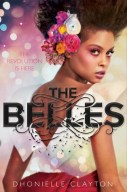
The Belles

Rating: 
Author: Dhonielle Clayton
Genres: Fantasy
Pub date: Feb. 2018 (read Jan. 2018 as audiobook)
Narrator: Rosie Jones
Series: The Belles #1

Where to start with The Belles? First of all, I listened to it as an audiobook and I really liked the narrator! She had a great tone for this book and she was really enjoyable to listen to. As for the content? I heard this book had teeth, but about halfway through I was wondering when it was going to start to bite. I wouldn’t call it a slow start because the story is still pretty engaging, but it’s a bit repetitive at the beginning and it wasn’t until the second half of the book that the story grew fangs. But boy does it ever get intense! Because of the start, I thought it was a 3 star read overall, but the author definitely steps up her game in the second half of the book and I’m really looking forward to reading the sequel.

The Belles is set in a beauty-centric fantasy world based on New Orleans, called Orleans (or-lee-on). People have become grey in Orleans and only a select few talented Belles can restore colour and make people beautiful again. The Belles power come from their personal arcana (unsure of spelling because I read as audiobook) and they can change anything about a person, from hair, eye, or skin colour, to height and weight, to bone structure, and even the well-being of internal organs. In this world, people are obsessed with beauty and must pay for beauty appointments. However, the changes don’t last forever and the grey will always start to creep back in, so the rich are always changing their looks based on the latest fashion.

Camellia Beauregard is one of 5 Belles coming of age this year. She has spent her whole life training to be a Belle and she will have one chance to present her powers to the Royal Family, who will pick one of the Belles to be their favourite. The Favourite will work for the royal family and their courtiers, while the rest of the Belles will be appointed to other beauty salons around the city. All of the Belles want to be named the favourite, especially Camellia and her sister Belle, Amber.

Once the Belles start working though, they discover that working as a Belle is not quite what they expected and start hearing about strange things happening in the salons. The Royal Family is also in a state of upheaval because the time is coming for the Queen to declare her heir. By rights it should be her older daughter, Charlotte, but she has been in a bewitched sleep for years and has never awoken. If Charlotte does not awaken, the heir will have to be her younger sister Sophia, and the more the Belles learn about Sophia, the more they fear the kind of queen she might be.

The Belles had a really interesting plotline in that it’s really not clear for a while where the story is going. There is a large mystery element to the story and because we don’t learn the full depth of the plot until later, there’s a lot of world building taking place in the first half of the book. Like I said, I didn’t dislike the first half of the book, I think that Clayton did some really good world-building and really delved in to some of the intricacies of the world she’s created. But the plot feels a bit nebulous after the favourite is announced and I thought there was a disproportionate amount of time spent on various beauty appointments and treatments. It was interesting, but I just wanted the author to get to the point.

But I can’t really fault her because the time spent on world building definitely paid off in the second half of the book. The second half is nasty! Things get really dark and pace of the plot picks up immensely. I liked the ending a lot because Clayton answers some of the more pressing questions and mysteries, but still leaves enough threads open to propel us into the next book.

Clayton addresses a lot of really interesting social themes in her book, which is what made it stand out for me. It’s obviously about beauty and how highly it is valued by society and how we assign value based on beauty. In many ways, beauty is a social construct and is very objective. In our own world, ideas of beauty differ greatly from country to country, but looking at North America, there are certain attributes we tend to value greater than others, thinness being the most obvious one that comes to mind. However, like Orleans, we are constantly changing our minds on other attributes. The one that comes to mind immediately for me is eyebrows. In the 2000’s thin eyebrows were all the rage, while now big eyebrows are definitely in.

I found it interesting that Clayton’s world features a monarchy, but women still tended to be de-valued. She draws attention to the different beauty standards that exist for men and women, but how men still want to look good too. However there is a sexual assault scene in the book and I found it really surprising that in a matriarchal society such as this, people still went out of their way to excuse men’s actions.

Finally, the villains in this book are top notch. There’s a lot of drama and several villains, with varying levels of, shall we say evil? Our number one villain is totally nuts and will get right up inside your head. She reminded me of Umbridge a little bit because it’s the perfect example of how smug and evil a bit of power can make some people. I really don’t know where Clayton plans to take this story in the next book, but colour me intrigued! I already have an ARC for the next book, which is being published in March, so I’m planning to start it very soon!

November Summary

November has been the BEST reading month! Last month I sent a new PB for most pages read in a month, but it didn’t last long because I beat it again this month. I always read a lot of books in November because I get really into the Goodreads Choice Awards and always try and read as many of the nominees as I can (I decided to make this my November monthly challenge). This month I read a whopping 17 books, granted 6 of them were graphic novels and short stories, but it was still a new personal record for most books read in one month. Here’s what I read:

Books read: 17
Pages read: 5,221
Main genres: Graphic Novels, Fantasy, Fiction
Favourite book: So many good books! So hard to choose, but probably Our Homesick Songs by Emma Hooper

So, like I said, a lot of the books I read this month were nominees in the Goodreads Choice Awards. I read a lot of books, so I won’t spend too long on each one. To start things off I read two books by V.E. Schwab, Vicious (⭐⭐⭐⭐) and it’s sequel, Vengeful (⭐⭐⭐⭐), which was nominated in the Sci-fi genre. Vicious was published 5 years ago, but it’s only just geting a sequel, so I decided to read them back to back and really liked them. I don’t think the second book was quite as good as the first, but they’re fast-paced novels that examine morality and the things that drive good people to do bad things.

I also read a few non-fiction books, which is a genre I don’t normally read. I decided to read Phoebe Robinson’s new book, Everything’s Trash, But It’s Okay (⭐⭐⭐⭐), which was nominated in the humour category, and absolutely loved it! I read Phoebe’s debut novel in 2016, which was pretty good, but I think she really upped her game in this book and I would totally recommend the audiobook. I also received a free copy of Abbi Jacobson’s new book, I Might Regret This (⭐⭐⭐), from Hachette, which I was thrilled to read, but ended up not loving quite as much as I’d hoped. Through I’m still a huge fan of Abbi and Broad City. Hatchette also sent me an early copy of Wundersmith (⭐⭐⭐⭐⭐), the sequel to Jessica Townsend’s debut novel, Nevermoor. I read Nevermoor a few months ago and was pretty much obsessed with it, so I immediately jumped right into the sequel and was delighted that it was just as wonderful as the first book! It’s a middle grade fantasy series full of whimsy that gives me huge Harry Potter vibes. A solid 5 stars – this series is incredible and I would recommend to everyone!

I read a few very short books, Sea Prayer by Khaled Hosseini (⭐⭐⭐), which is a short illustrated picture book that he wrote for charity (which I didn’t review), and For Every One by Jason Reynolds (⭐⭐.5), which was nominated in the Poetry category. Both books were nice, but honestly, I thought they were both a little too short to pack that much of a punch.

For graphic novels, I read the latest volume of Saga, by Brian K. Vaughan and Fiona Staples (⭐⭐⭐⭐). I absolutely love this graphic novel series, but the latest volume pretty much killed me, and it appears Vaughan and Staples may be going on a bit of a hiatus over the next little while, so that kills me even more. I also devoured the first 3 volumes of a new graphic novel series called Fence, by C.S. Pacat and Johanna the Mad (⭐⭐⭐⭐). Only the first volume is published at this time, but there are 12 issues available and I liked the first volume so much I actually had to seek out the individual issues instead of waiting for the next two volumes. It’s a series about a high school boys fencing team, which sounds kind of boring, but it actually excellent!

In addition to Phoebe Robinson’s new audiobook, I also listened to Kingdom of the Blazing Phoenix (⭐⭐), which is the second and final book in Julie C. Dao’s dualogy. I really liked the first book, Forest of a Thousand Lanterns, which I also read as an audiobook, but the second book was a huge disappointment. The narration changed characters and I found this one pretty boring compared to the delightful nastiness that was the first book. The first one was a retelling of the evil queen in snow white, where as this was one a more traditional snow white retelling, although they were both sent it an asian inspired fantasy world, which I liked. Speaking of asian- inspired fantasy worlds, I read R.F. Kuang’s debut novel, The Poppy War (⭐⭐⭐⭐), which was nominated in the fantasy category. It is a heavy book, but wow! Kuang’s story is rich is depth, setting and history. It examines the Sino-Japanese war and the atrocities people commit against one another in war and how we justify them. A heavy hitter, but very well written and plotted.

My book club’s November pick was You by Caroline Kepnes (⭐⭐⭐.5). I’ve been trying to get to this one for a while and with the TV series being released on Netflix in December, it was good timing. You is a mystery/thriller novel told from the point of view of a stalker and boy, is it creepy. I didn’t like it quite as much as I hoped, but it is still very well written and quite different than most other books out there. I finally finished reading Swing Time by Zadie Smith (⭐⭐⭐.5), which I started reading way back in July (shocking I know). I had put it aside around the 300 page mark, but I finally picked it up and read the last 150 pages. I quite liked this book, but it is not very compelling, and for that reason it was hard to pick up, despite liking the story.

Finally, two of my favourite books of the month, along with Wundersmith, were The Simple Wild by K.A. Tucker (⭐⭐⭐⭐⭐) and Our Homesick Songs by Emma Hooper (⭐⭐⭐⭐⭐). The Simple Wild was nominated in the romance genre and I was instantly motivated to read it when I found out it was about Alaska (I have a bit of an obsession with Alaska since reading The Great Alone earlier this year). It had a bit of a slow start and the main character was a little vapid at times, but I ended up loving this book! The main character was 26, which is refreshing since most of the books I read feature teenagers or families. I’m starting to really appreciate family dramas, and this one was a mix of family drama and romance that really worked for me.

Our Homesick Songs was my last read of the month and it was also a family drama, but this time historical, that completely captivated me. It’s about the disappearance of cod in Newfoundland in the early 1990’s and the impact it had on rural communities. It’s a simple story about a family living in a remote fishing town, but it is so beautiful written and evokes a strong feeling of homesickness and loneliness. Newfoundland is where I was born and raised, so it had particular meaning for me and I was incredibly impressed by Emma Hooper’s prose. I devoured this book and it is definitely going to be one of my top picks of the year.

So there you have it, all 17 of the books I read this month. There were some really great books. The fact that I rated three of them 5 stars is very rare since I sometimes go months without rating anything 5 stars. I feel like I’ve finally escaped the book slump that I was in over the summer and I’m feeling very inspired by all the great books I’ve been reading!

I’d love to know, what books did you read and love this month?