The Story of a New Name

Rating: ⭐⭐⭐
Author: Elena Ferrante
Genres: Historical Fiction
Pub. Date: Sep. 2012
Format: Audiobook

This series infuriates me.

I hate all the characters and the plot is outrageous. But I can’t deny that this is *literature*. I want to scream at all the characters, but they are 100% a product of their circumstances. Our protagonist is the most frustrating because she is one of the few people to become educated and get the opportunity to leave the neighbourhood, but is ignorant to understanding what drives the people around her. Elena will only ever see herself as poor and because of her formative childhood experiences with Lila, does not recognize how how much better off she is than her friends. She is the only person with the real ability to leave the neighbourhood of her own volition, but fails to recognize her self-worth.

This theme is further reinforced through Nino’s character, who despite also being educated, is an idiot. In contrast to Elena, Nino is well aware of his self-worth, but is incredibly selfish and heavily influenced by his own ego. He takes no ownership over any of his actions and is happy to discard his relationships when they no longer benefit him.

What is the most difficult for me to grasp is Elena and Lila’s friendship. There is obviously a strong connection between these two women, but I’m not 100% sure what makes them friends. It’s clear they are drawn to one another, but it’s a relationship heavily influenced by competition. I want to believe that these are two dear friends, for whom jealousy eats away at their bond over time. But I’ve never seen any strong roots between these two characters. There was a brief period of simplicity between them as children, when they had the common ground of both being victims of their upbringing, but that bond didn’t seem strong enough to me to withstand all the trials they’ve put their friendship through.

For me, Lila is an inflammatory character. I know this is intentional, but the jealousy and competition between these two characters is so prevalent that it’s hard to believe the two could still tolerate to be around one another. After Ischia, there is an extended period of distance between them. For me it begs the question of when the meaningful and moving part of their friendship will be showcased?

But damn, this series is well written. I love a good unlikeable character and you cannot deny that Ferrante is a genius at distilling relationships. This does read like classic literature to me in that, it’s at times boring, it can feel extraneous and overwritten, and yet, even the most mundane of interactions serves to provide depth and nuance to a complicated cast of characters. The characterization is central to the themes of the novel, and yet the plot is still engaging and critical to the story. It’s a blend of these two essential elements of literature. It makes me want to beat my head against the wall at the ignorance and stupidity of the characters, but they are so well crafted that you can’t help to step back and reflect on what makes these people react the way them do.

I kind of hate it, but I can’t stop thinking about it. I definitely need a break from this series, but of course that ending has me wondering what more chaos and heartache Nino is going to bring to the story in the next volume. Most of all, I hope to see some real threads of friendship and selflessness between Elena and Lila. And I hope that Elena will finally start to recognize her own self-worth.
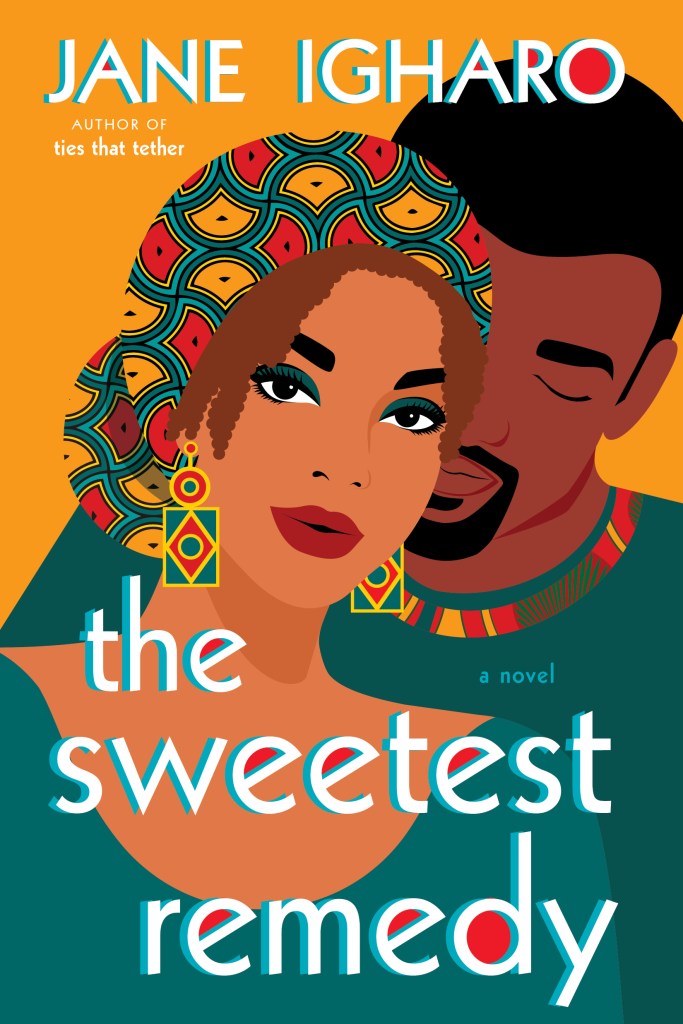
The Sweetest Remedy

Rating: ⭐⭐.5
Author: Jane Igharo
Genres: Fiction, Romance
Pub. Date: Sep. 2021

I picked this up right away after really enjoying Ties That Tether, but unfortunately, it didn’t have any of the same charm. Both books are a bit overwritten and don’t do a very good job at “show don’t tell”. But the characters in Ties That Tether had a lot of chemistry, which I felt was really lacking from this story. The romance was very instalove and it didn’t feel organic to the rest of the story.

The central story is really about Hannah meeting her estranged family for the first time and discovering her Nigerian heritage. Hannah grows up bi-racial, living with her white mother and never knowing her Nigerian father. When he passes away suddenly, she is invited to attend his funeral and get to know the rest of her family, meeting an interesting family friend, Lawrence, along the way, to whom she is attracted.

Overall, I thought the story had a very strong central idea, with lots of really great themes to explore around identity, class, family, heritage, and racism. Even though this is labeled as a romance, I actually found the romance detracted from the rest of the story. While it had a great premise, it was lacking in depth.

All of the characters felt really one dimensional and there wasn’t real tension between any of them, despite the author continuously setting up barriers between each of the characters. In my opinion, none of the conflicts had any real emotional depth, and the characters were basically wealthy Nigerian royalty, so it was really hard to relate to them or feel any empathy for them. I empathized with Hannah, but I don’t think the author committed to the entire spectrum of grief that Hannah likely would have experienced. Where was the rage at her father and his family for casting her out? Where was the deep sadness about never having the opportunity to know her father? Even the children who did know him hardly seemed to be mourning him, so the entire thing just read like a fantasy.

Which is really the problem I had with this book. I felt like the author had lived Ties That Tether. She understood Azere’s interpersonal conflict and feelings. Even though Azere and I have almost nothing in common, her emotions and longing were still incredibly relatable. I’m not convinced the author really understood the content of what she was trying to say in this book. Everything about this story read like a self-insert fantasy to me. If you grew up disconnected from your heritage, I could see the longing of gaining a family and a culture and finally feeling seen. But how easily the siblings accepted Hannah, and how they were so rich, and how she immediately meets a sensitive and nice Nigerian man to instruct her in the ways of Nigerian culture, seemed so transparently a fantasy to me. Like the author was dreaming about being adopted into a rich and affluent family.

There was no tension between Hannah and Lawrence, and there was no tension between the siblings – except for Tiya. Everyone was too easily accepted and forgiven. Sure, everyone wants a happy ending, but this was too convenient. Give me some grit! It’s a fluffy read, but neither of Igharo’s books are really fluffy stories. Ties That Tether had a good balance, but it was lost in The Sweetest Remedy and the plotline felt detached from reality.

Anyways, I like it less now that I’ve written the review. It was a disappointment. Read Ties That Tether and skip this one. 2.5 stars.

The Bandit Queen

Rating: ⭐⭐⭐
Author: Parini Shroff
Genres: Fiction, Mystery
Pub. Date: Jan. 2023

I don’t know what to make of this book.

I started listening to this as an audiobook a full month ago and it took me a long time to get into the story. It’s really slow at first and I found it to be pretty confusing. I felt like the author didn’t give quite enough context or background for the story and I was left scratching my head about what was happening and who all the characters were. 

Once things get going, I liked it a lot more. The Bandit Queens is named after real life Indian activist, Phoolan Devi. Phoolan was imprisoned for murdering the men who raped her and eventually went on to be a politician and activist once getting out of prison. Phoolan herself doesn’t feature in the story, but she’s a source of inspiration for the poor Indian village women in a microloan group, who dream of lives without their abusive husbands.

Our main protagonist, Geeta, was abandoned by her husband 5 years earlier and since no one knows what happened to him, many of the women assume Geeta killed him. Some of the women want to be rid of their own husbands and approach Geeta as a sort of hired killer to help murder them. It sounds dramatic, but the author infuses a lot of humour into the story, which changes the tone and makes it read more like Finlay Donovan than How to Get Away with Murder.

Once the plot picks up, I was pretty into it. I love how easy it is for the women to kill because everyone constantly underestimates them and no one expects a few poor little village women to actually be murderers. Either because they think women are incapable of killing, or just too stupid to pull it off. The author tackles a lot of heavy social issues, primarily around how women are still viewed as the property of their husbands in India and that domestic abuse is widespread and marital rape not recognized. There’s also a lot about caste politics in here, but it was a little bit over my head and I’ve read some reviews that it wasn’t that well done.

So I was actually pretty impressed with the second half of the novel until the big climactic scene at the end. I thought the juxtaposition of the author’s humour against social injustice was an effective way to make this book more readable. I know some readers prefer for these kinds of topics to be given the gravitas they deserve, but I don’t think the humour takes away from the impact of the domestic violence they experienced, if anything, centering your story around a cadre of murdering housewives only serves to highlight the ridiculousness of such a patriarchal system.

However, in the last 10% I think the author takes it too far. The climax of the novel veered into unbelievability for me and I felt it was sensationalized for the sake of drama. I hate when authors do this, but I do think it’s an easy mistake for a debut author to make. I think she took the outrageousness too far and it detracted from her initial premise. I believed the women as they stumbled along, trying to figure out how to be rid of their husbands, to protect themselves and their children. But they start to become villainous in their plotting and I couldn’t suspend my disbelief in the final confrontation. Plus, the author gets too heavy-handed with her social agenda around caste and I felt she was telling me about equality and representation rather than showing me. I know a lot of her readers won’t be Indian and that this system may not be familiar to us, but trust us to be able to figure out basic inequality.

Overall I thought the book had an excellent premise, but that the author tries to do a bit too much with it. In some ways it sinks under the weight of its aspirations and the author would have done better to focus her ideas. But overall, not bad, not great. solid 3 stars.

Black Cake

Rating: ⭐⭐⭐⭐
Author: Charmaine Wilkerson
Genres: Fiction
Pub. Date: Feb. 2022 (read Sep. 2022 on Audible)

I have been sitting on this book all year! I’ve heard so many good things about it and have been meaning to pick it up for months, so I finally got the audiobook version and flew through it in a few days. 

Black Cake tells the story of two siblings and the life of their mother, who has just passed away. The siblings have been estranged for several years, but their mother, Eleanor, leaves a recording for them to listen to together telling the real story of her life – all the things she never told them about herself. 

It has a bit of a slow start, focusing on the 2 siblings, Byron and Benny, but once they start listening to Eleanor’s recording, I was hooked. Eleanor grew up in one of the Caribbean Islands (exact location not named), which has left its mark on her entire family, despite her children never having been there. 

It’s a long book, and as with most long books, I do think it could have been shorter, but the author does cover a lot of ground. We are introduced to a lot of characters over the course of the novel and while it was sometimes overwhelming, every character was well placed and had a role to play. It’s a smartly written book, it could have been tightened up a bit, but it’s the kind of narrative where there are no thoughts out of place. The author is intentional about both the plot and the characters and I like a book that is plotted that way. That said, while everything has its place, the author does tackle a lot and I think she could have done more justice to her ideas had she focused more on a few central themes (primarily as they relate to Eleanor). 

While I liked it a lot (it’s an engaging story), where I think it fails is in adequately developing Byron and Benny’s stories. Eleanor’s story is incredibly well developed, but for such a long book, I still didn’t really feel like I knew Benny or Byron or understood their relationship with one another. Their stories are briefly developed and we examine Benny’s struggles with being queer and Byron’s struggles with unconscious bias and racism in his workplace, but I felt their stories were topical and not given enough depth to be really meaningful.

Maybe it’s just that they paled next to Eleanor, but I felt that this story could have been historical fiction solely about Eleanor and it would have been just as good, if not better. There were complex relationships between all of the characters, but I do think the narrative is partially strained by the fact that we never get to meet Eleanor alive. Everything is recounted, which creates a level of separation between the events, how the main characters feel about them, and how the reader perceives them.

Despite how this review is making it seem, these are just minor criticisms of how it could have been improved, I did still really enjoy the book. It’s a great story and I loved the centering of it around the black cake. Culture and food do play a big role in who we are or become and I loved how the black cake grounds the story. I would definitely recommend and I’m interested to see what else Charmaine Wilkerson writes!

Run Towards the Danger

Rating: ⭐⭐⭐⭐
Author: Sarah Polley
Genres: Non-Fiction, Essays
Pub. Date: Mar. 2022 (read Apr. 2022 on Audible)

Run Towards the Danger is a book I totally picked up because of the hype. It’s not the kind of book I normally read, but I’ve been seeing it get fantastic reviews everywhere, so I decided to get an audiobook copy and give it a listen. I’m not sure I would have finished it had I read a physical copy (just because I struggle with non fiction), but it works great as an audiobook and I loved that it was narrated by Sarah. The book only has 6 essays, but it’s undeniable that Polley is a very accomplished writer and her essays are quite compelling. I struggled a bit with the first one, but it’s very smartly structured in that, while each essay tackles a different topic, they are woven together to promote Polley’s overall ideas and theme. 

Sorry to Sarah’s ego, but I am one of those people who wouldn’t recognize her, nor had any idea who she was. This is a bit of a disservice to myself because I’ve always been a huge Anne fan, but to be honest, I didn’t even know Road to Avonlea was a thing. I think it was probably an age thing for me, but I’ve since done a bit of digging through the youtube archives.  

The core theme throughout this book is about the struggles and long term impacts of being a child actor, as well as the ethics of having children work at all. I really felt for Sarah because it seems like she really can never catch a break. She has had so many health issues thrown at her throughout life, on top of the emotional trauma of losing her mother as a young girl and essentially raising herself in a volatile film industry that didn’t care about her safety or well being. 

The first essay was probably my least favourite because it was significantly longer than the rest and I thought she expanded on a lot of areas that weren’t that compelling, but it did really set the scene for the rest of the book and I thought the essays got stronger and stronger throughout. My favourites were probably Mad Genius, High Risk. and the final essay, which the book is named for, Run Towards the Danger. 

Mad Genius calls out many of the prejudices that exist in the film industry and how the behaviour’s of so many men are excused, putting others at risk, and High Risk highlights the inherent sexism built into our health institutions. It’s harder to pinpoint what I liked so much about Run Towards the Danger, other than that I found it to be extremely compelling storytelling and I was fascinated to learn about concussions. 

So overall, this is a bit of an odd essay collection, but I would definitely recommend it. Sarah is a great writer and storyteller.