Born a Crime

Rating:
Author: Trevor Noah
Genres: Memoir, Non Fiction
Pub. date: Nov. 2016 (re-read Jul. 2019 on Audible)

I read Born a Crime several weeks ago as an Audiobook. I first read Born a Crime as an e-book with my Book Club in 2017 and absolutely loved it. But I was feeling like a re-read and decided to go with the audiobook this time since it’s narrator by Trevor Noah. Either way, you definitely can’t go wrong with this book, but I’d say the audiobook definitely has an edge over the e-book.

I wasn’t planning to write a review for this book because I thought I’d already written one, but when I went back and checked my goodreads, I’d only written a little blurb that was never posted to my blog, so I’ve decided to write a proper review since I love this book so much.

I recommend this book to people a lot. They always look at me kind of like “really? Trevor Noah? The comedian?”, but I totally stand by my recommendation because this book has so much going for it! It’s hilarious, interesting, and it damn matters. Sure there’s a lot of comedic memoirs out there, but Trevor Noah’s memoir is all about growing up ‘coloured’ in Apartheid and post-Apartheid South Africa.

South Africa’s have been broken down into factions for many years: white, black, and coloured, which is everyone in between. In Trevor’s case, he was considered coloured because he was mixed race – his mom was a black South African and his dad a white Swiss. Trevor was literally “born a crime” and had the interesting experience in his childhood of never really being allowed to be seen with either of his parents. Whites and blacks weren’t allowed to date or marry, but Trevor’s mom wanted to have a baby anyways and largely kept their relationship a secret.

In post-apartheid South Africa (when Trevor was around 10 I believe), they could finally be seen together, but Trevor struggled for years with his identity. He had a decent relationship with his Dad, but they eventually drifted apart, so everyone else in Trevor’s life was black. He is pushed to identify as coloured and for a while tries to access all the different sides of his identity, but eventually comes to the conclusion that while he looks coloured, he is black.

Trevor crams a lot of hilarious stories into this short memoir and it is definitely one of the few books that had me laughing out loud throughout. Even when he gets serious about South African politics and all the shit his mother went through, he still infuses a lot of humour into the story, which makes it a joy to read. His childhood was fascinating, as were his formative years growing up and trying to make it in Johannesburg. If you’re looking for an account of how he became a successful comedian, you won’t find it in this book, but you will find a lot of anecdotes about South African culture and oppression.

But the real hero of this story is Trevor’s mom. I talked about her briefly in my first review, but she is really what made this book for me. It’s hard to believe a poor, coloured boy who was literally born a crime could become so successful, but after learning about his mom, I know exactly how it happened. She is an independent and headstrong woman who is not afraid to go after what she wants, even when the deck is stacked against her. She acts as a wonderful foil to Trevor’s childhood antics, but you can tell everything she does is grounded in a deep love for her children and a deep love for God.

Say what you want about religion. But I absolutely believe in the God that Trevor’s Mom believe’s in. She is a zealous woman, but her faith is inspiring. The final chapter of this book is pretty much the most insane thing I’ve ever read, but it can’t help but make you believe that Patricia Noah knows something that the rest of us don’t about faith and religion.

Ultimately, this is a series of stories from Trevor’s childhood and young adult life. Every story offers a different insight into South African culture, but they all weave together a story of a remarkable mother and son.

On Earth We’re Briefly Gorgeous

Rating: ⭐⭐⭐.5
Author: Ocean Vuong
Genres: Poetry, LGBTQIA+
Pub date: Jun. 2019 (read July 2019 on Audible)
Narrator: Ocean Vuong

I was intrigued by this book, but it wasn’t super high up my TBR. However, I loved listening to the author’s voice in the audiobook sample, so I decided to read it. I’m so glad they got the author to narrate this one because I’m not sure anyone else could really have done it justice.

Initially I really liked it. The writing is poetic and it flowed really nicely. The author’s reading is emotional and I enjoyed listening to it, but I must admit, parts of the book were over my head and left me wondering how I should feel about it.

The book is crafted as a letter to the protagonist’s mother. It’s unclear to me whether this book is fiction or non-fiction, so I’d love some insight from other readers if you have it. It certainly read like non-fiction and I internalized it as such, but it could have been fiction.

Initially I liked that it was a letter from son to mother, Little Dog talks about the relationship he had with his mother and how it impacted him emotionally as he grew up. How their Vietnamese past influenced his childhood in America and shaped all of his relationships with his family members.

From there, Vuong moves on to the relationship Little Dog had with his friend Trevor and the struggle of being not only an immigrant, but a confused gay teenager. I found many parts of the story upsetting, but really appreciated their inclusion in the book and thought it brought a great depth to Vuong’s story. However, it did affect my reading of the book as a letter from son to mother. This format worked really well when confronting his childhood demons and the relationship with his family, but I thought the format had less meaning when it got into Little Dog’s exploration of coming to terms with his homosexuality. I don’t have the lived experience to really comment on its effectiveness, but personally I just found the ‘letter to mother’ format lost some of its potency in this part of the book. Just a comment on format, not content.

Mostly I’m left confused on how to rate the book though because parts of it were definitely over my head. I’ve been reading a lot more poetry lately (I used to never read it), but I definitely still struggle with the accessibility of poetry. I want to love it, but I think I just haven’t spent enough time reading poetry to really understand the nuance of it. I really enjoyed the writing, it was flowery, but not overwhelmingly so, but sometimes it’s just so overloaded with metaphors that I kind of missed out on the point. I really liked a lot of this book, but there were definitely some sections where I found myself tuning out.

Overall though, a very thoughtful book and debut for this young author, so well done! I would not be deterred from reading his stuff in the future.

Home Fire

Rating: ⭐⭐⭐⭐
Author: Kamila Shamsie
Genres: Fiction
Pub. date: Aug. 2017 (read July 2019)

While Home Fire was already on my TBR, it was a bit of an impulse purchase on Audible for me because I liked the narrator (so important!). I’m not sure what I was expecting from it, but I ended up being really impressed by this book.

Home Fire tells the story of an immigrant family that struggles to overcome the heartbreak of the past and be accepted as immigrants in the current political climate in the UK. After the death of her parents, Isma is forced to put her dreams on hold to take care of her younger siblings, twins Aneeka and Parvaiz. But now that the twins are grown, she decides to pursue greater education in America, where she meets Eamonn, son of Britain’s home secretary.

The narrative follows Isma, Eamonn, and each of the other family members in turn. Isma is detained at the airport on her way to America, thanks to the tight security standards of the home secretary and her status as the daughter of a known jihadi. She befriends Eamonn and is confused by her feelings for him knowing the impact of his father’s policies on her and her family. But when Eamonn returns to the UK and is introduced to the rest of Isma’s family, the lives of these two very different immigrant families becomes further entwined.

Home Fire was a lot more political than I was expecting and super relevant with what is happening under Donald Trump’s policies in America and in the UK, post Brexit. But it also had a lot of heart and despite it being a relatively short book, Shamsie writes some deep and nuanced characters. I liked that this examined both sides of immigration policies, looking at a really controversial topic like jihad and the far-reaching impacts. I definitely didn’t go into this expecting to feel empathy for someone who leaves the UK to join ISIS.

What made this such a strong read for me was the characters (I live for character driven stories, so no surprise there). Initially I was frustrated when the perspectives kept switching, because I wasn’t expecting it and wanted to return to earlier characters, but looking at this one family and their story from so many perspectives is what gave the book such depth. They had a richly imagined history and each character already felt like a fully formed individual by the time I first met them. They are all extremely flawed, but it’s really what made them so believable as individuals.

To add another level to the story, Home Fire is parroted as a “modern day Antigone”. Now I read Antigone in high school, but I’m pretty foggy on the details so I had to do a bit of googling to remind myself. It is pretty loosely related, but does raise some relevant points from this ancient play. To what level will our xenophobia and othering go so that we can’t even see those who are different as human anymore? Can we not grant someone their humanity even in death, having no empathy for the people the dead leave behind?

A thoughtful and cleverly written book. I sped through it as an audiobook.

Miracle Creek

Rating: ⭐
Author: Angie Kim
Genres: Mystery, Fiction
Pub. date: Apr. 2019 (read May 2019 on Audible)

I heard really good things about Miracle Creek, which is what inspired me to pick it up, but I was still totally blown away by this book! I like mystery/thrillers,but they don’t normally stand out in the way a good literary fiction or historical fiction book does. Miracle Creek was everything I didn’t know I was looking for in a mystery novel.

What makes this such a great read is that the author weaves so much nuance into the rest of her story. It’s primarily about solving a crime, but there’s so much else going on and the characters are incredibly well developed and have a huge amount of depth. Kim tackles everything from alternative medicine, to parenting less-abled children, to cultural diaspora, to the challenges of simply growing up.

Miracle Creek is primarily about the Yoo family. Pak, Young, and their daughter Mary, moved to the United States from Seoul, Korea. Each character faces their own challenges in moving to America and their new routines start to create a distance between each of the family members. Pak decides to start up a new business called Miracle Submarine, which is all about the healing powers of hyperbaric pressure chambers, or HBOT. HBOT is a pressurized chamber that allows the patients to breathe in pure oxygen, which is touted as having all kind of medical benefits. However, the benefits are not totally proven and it is a controversial practice.

Pak, Young, and Mary’s lives, as well as the lives of their friends, are totally torn apart when one evening, someone lights a cigarette outside the chamber and blows it up, killing two of the patients inside. The rest of the book is a courtroom drama, investigating who was responsible for the explosion and what exactly happened to lead up to that moment.

The courtroom drama is the focus of the novel, but everything else that happens outside the courtroom is really what makes this read so thrilling. We get to experience the trial from a number of different perspectives. We are never really sure who actually committed the crime, with new evidence continuously keeping you guessing. But the decision to tell this story through multiple perspectives is super effective. Kim humanizes every single one of her characters, making it easy to empathize with them, even when some of their actions shock you.

Outside of the courtroom, she explores so many different conflicts that each character is facing. I loved that I got to explore what it was like for Young living within the confines of a traditional Korean marriage and the impact that moving to America had on her family. I sympathized with Pak being a goose father and the perceived loss of his wisdom when he could no longer communicate himself eloquently. I was captivated by Elizabeth and the other autism moms – the level of responsibility that was thrust upon them and the continued heartbreak every day as they had to watch their children be only a fraction of who they knew they could be. The conflict they felt about HBOT and all the treatments they put their children through and whether it was really worth it and who they were doing it for? I felt bad for Janine as she struggled in her relationship with Matt and the fetishization of Asian women and her indignation that being attracted to Asian women could even be considered a “fetish”, like it was something dirty.

Every single character in this book is so nuanced. I constantly marveled at the author for how she played with so many different social issues and commentaries, all while maintaining an equally thrilling courtroom drama. I loved how she played with regret and “what if’s. How things could have been so dramatically different had one character taken a slightly different action. I wasn’t particularly surprised with the solving of the crime, but I was impressed with how Kim decided to end her novel. In the same way that the story was filled with moments of frustration, bitterness, and anger at the hand that had been dealt to each character, the ending carried on the same theme of cold, hard reality. It reminded me at times of a Greek tragedy in that you saw how easily things could have been different, but the characters, blind to their own shortcomings and missing information, barrel into the unknown, only increasing their mistakes. This book had a lot of irony and that’s what really sticks with you. It get’s under your skin and you get caught up in the what ifs.

I can’t believe this is a debut novel and I can’t wait to see what Angie Kim writes next. Highly recommend this thoughtful and thrilling book!

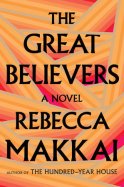
The Great Believers

Rating: .5
Author: Rebecca Makkai
Genres: Historical Fiction, Fiction
Pub. date: Jun. 2018 (read May 2019 on Audible)

I listened to The Great Believers as an audiobook and I feel like I’ve been working on it for a long time. It took me a while to get into it, but once I did, there were parts of the book that I really liked, and other parts that I found kind of boring.

First of all, I will say that the scope of this novel is impressive. Makkai tackles a lot in this book. The main plot of the story (for me anyways), centers on Yale Tishman, who is a gay man living in Chicago in the 1980’s and coming to grips with the HIV/aids crisis completely decimating his entire community. The novel opens with the death of Yale’s friend Nico, which in a round-about way initiates a conversation between Yale and Nico’s great Aunt, Nora, who would like to donate her personal art collection to the university art gallery that Yale works for, which would be a huge acquisition for Yale and the gallery.

At the same time, a second storyline is set in Paris in 2015 as Nico’s sister, Fiona, searches for her adult daughter who she hasn’t seen in 5 years since she disappeared into a cult in America called the Savannah Collective. I would never have thought to pair any of these plotlines together, so I was impressed with Makkai for her creativeness and scope of the book.

That said, I didn’t love all of the plots in this book. I thought some parts were a lot stronger than others and it’s what really drove the rating down for me. I’ve described 3 major things: the HIV/aids crisis in the 1980’s, an art acquisition, and a missing daughter. Yale’s storyline about the HIV/aids crisis was by far my favourite. I’ve been privileged to have not had to give this period in history a whole lot a thought, so it was both sobering and fascinating to read about.

I really liked Yale. I thought he was super relatable and I loved reading about his relationships with all his friends and his perspective on the HIV/aids crisis. I thought his story had a really good balance of history, politics, and emotion. I connected with him a lot and it was devastating to watch his friends die one by one and the government do nothing. Makkai weaves in a lot of social commentary without overpowering her novel with it. This was still very much a novel about characters and relationships, with just the right amount of history and politics.

I thought the art acquisition storyline was mildly interesting. I liked the parallels that Nora drew between the artists she knew in WWI and the war that Yale and his friends were fighting in Chicago. I have never really read anything about the art world, except maybe like, the Da Vinci Code or something (lol), so this was a whole new world for me that was intriguing to learn about.

But Fiona’s story set in 2015 didn’t do much for me and is what really dragged down my rating and enjoyment. I found myself tuning out for entire sections of Fiona’s story and I felt like very little happened in her timeline. It took forever for the story to advance and when I finally realized what the “so what” was of Fiona’s story at the end of the novel, it felt a little anti-climactic. Fiona had a tumultuous relationship with her daughter that was an indirect result of the trauma of losing all her friends in the 1980’s. She talks about how you can’t really describe what it feels like to survive a war that none of your friends make it out of and how that impacts the rest of your life without you even noticing. I thought this was a fascinating topic and I was eager to explore it, but I thought Fiona’s relationship with her daughter was a laboured way of doing it. I liked Fiona, but I just thought the modern day part dragged the book down. I also felt like I didn’t get enough context of Fiona’s relationship with Claire as a young girl and so I didn’t understand why Claire hated Fiona so much

Overall though, I did like the book and I would definitely place it firmly in the category of literary fiction. Makkai writes with depth and I loved the characterization of Yale and all the secondary characters in his timeline. It wasn’t as stand out a book as I was hoping, but I’m definitely glad I read it.