The Life She Was Given


Rating: 
Author: Ellen Marie Wiseman
Genres: Historical Fiction
Read: Jan. 2018


Oh my goodness, how much suffering can one person take?

The Life She Was Given follows the stories of two women and switches back and forth between their perspectives every other chapter. Lilly’s story takes place in the 1930’s and begins when she is 10 years old. For the first 10 years of her life, Lilly has only known the attic of her parents manor. She is an albino and is shunned by her religious mother who views her as an abomination. However, one night she sees the red and white stripes of the big top being set up in the farmland near their estate and her mother hurries her out of the house for the first time in her life. Lilly is overwhelmed and shocked to discover that her mother has conspired to sell Lilly to the circus and abandons her with a controlling and terrifying man named Merrick who runs the circus sideshow, also known as the freak show.

As Lilly adjusts to circus life, we follow the story of another young woman, Julia. It’s the 1950’s and Julia is 18 and has run away from home, leaving behind her controlling religious mother and their huge manor. When she hears her mother has passed and the estate has been left to her, she reluctantly returns home and begins exploring the manor, discovering several photos of a young circus performer and realizing that her parents may have been hiding some dark secrets in the manor.

This book is a hard read. It is dark and disturbing and filled with an intense amount of suffering. I’m not opposed to reading dark books and I actually really like gritty books that make you feel, but there was very little that I enjoyed about this book.

First of all, Julia’s story was sooo boring. Barely anything happens to her and I found her whole side story with the horses pretty pointless. I can see why Wiseman decided to include it since it goes with her whole anti-animal cruelty theme, but honestly, I thought Julia’s arc with the horses really added nothing of value to the book overall. The whole premise of Julia’s story is that she finds stuff in the house that leads her to investigate what her parents were hiding, but it took forever for her to make any significant discoveries and I was just super bored. Julia was also totally unbelievable to me as an 18 year old runaway. Once she returned to the manor and took up all the responsibilities of running the farm, she seemed more like a 30 year old woman to me than an 18 year old who’d been living on her own with an abusive boyfriend for the last 3 years. She also didn’t read like someone who grew up in the 1950’s and I would have had no trouble believing her story took place in modern day. Overall I thought her characterization and development was very poor.

Lilly definitely had the more interesting story of the two women, but I didn’t love her story either. She was super mistreated, which I can understand because it was the 1930’s and people were afraid of things that were different or that they didn’t understand, but her story was just so dark! I found the whole animal whisperer thing to be a stretch and I didn’t really buy into it. I’m glad I read this book for my book club so that I can talk to some other people about it because I honestly have no idea what the theme of this book was supposed to be. Sure, this educated me a little bit on circus life, but really, what was the point of Lilly’s whole story? She just suffered and suffered without really seeming to grow as a character. I know she was mistreated her whole life, so it is understandable that she would be withdrawn, but she never actively did anything for herself. Things just kept happening to her and she only eventually escapes Merrick and finds any happiness because of Cole.

The ending of the book was just blah. I won’t spoil it, but everything about Lilly and Julia’s stories at the end just felt dramatic and overdone. There was no closure for me with this story and the ending felt very forced and not at all organic. I found this book to have a lot of clichés and insufficient justification for why some of the characters acted the way they did. For example, the whole thing with the zealous, religious mother and why she mistreated Lilly. This woman had zero compassion and felt like a caricature. She just was not believable to me as a human being and the “insight” into her character that Wiseman provides at the end was totally insufficient in helping me understand her. Honestly, Merrick was the only character I really thought was believable because I had absolutely no trouble imagining an overbearing, entitled man being a shit to woman to exert his control over them.

The whole animal cruelty storyline felt really cliché and basic too. I was eye-rolling hard at Julia every time she was opposed to something Claude wanted to do with the horses. Yes it is really sad about the nurse mares, but you are running a business and you can’t just adopt every foal put up for auction. But apparently Julia lives in a fantasy world where you can just abandon all manners of money making, become a philanthropist, and still maintain your wealth. For someone who basically lived on the street for 3 years, I found it really hard to believe she wouldn’t care about protecting her income.

Overall, this was an unsatisfying book and I’m glad it’s over.

The Tea Girl of Hummingbird Lane

Rating: 
Author: Lisa See
Genres: Historical Fiction
Read: July 2017


Where do I start with The Tea Girl of Hummingbird Lane? There was so much going on in this book – the plot was so layered and there were so many interesting themes underlying the story, but somehow it all worked and was immensely compelling. (disclaimer: there may be a few spoilers in here, but I think most of what I talk about is covered in the synopsis, which is pretty detailed)

Goodreads has been selling this book to me hard all year with their advertising, but for some reason I wasn’t sure if I would enjoy it. I read Dragon Springs Road earlier this year, which I liked but didn’t love. It’s probably unfair to compare the two books, just because they happen in China, but I found the pacing slow in Dragon Springs Road and I expected The Tea Girl to have a similar pacing, but I found this one so much more compelling. I don’t know a whole lot about Chinese culture, so I appreciated both novels and learned a lot, but there was a lot more going on in See’s novel.

Starting with the narrator, I absolutely loved Li-yan. She had such ambition, despite the constant belittlement from her family and the refrain that she was unimportant because she was a girl. Li-yan was born into the Ahka culture, which like many cultures, values boys far beyond girls. The Akha are a very tight knit people and view the village more as a collective than group of individuals. They believe everything has a spirit and they have many customs to protect against bad spirits and encourage good spirits. They believe it is everyone’s job to bring more children into the community and everyone always hopes for the birth of healthy sons.

I appreciated See’s writing because in the beginning the Ahka seemed so backwards to me and some of their practices were extremely horrifying. But throughout the course of the novel See was able to make me really appreciate their way of life and they did progress to abandon some of their more troubling customs (namely the killing of “human rejects”).

But I loved Li-yan because despite being told she was worth nothing, she had such ambition to pursue a better life through education and a desire to be someone. She convinces the village and her father to allow her to pursue her education and becomes the first educated person in the village. She faces so many struggles, but she always persevered and made choices (some of which were very tough) on what she felt was best for herself. Some readers might condemn her for giving up her child, but I didn’t fault her. She really would have had no life if she had decided to keep Yan-yeh. In many cases she was forced into some of her decisions, but I especially loved her decision to leave San-pa. I fully expected her to stick things out no matter how toxic things became, but when she finally recognized what was going on, she made a decision for herself to leave, even though she risked being sold or killed if she was caught.

She made so many wrong choices and at times really disappointed me, but I could sympathize with her decisions and forgive her for them. I was sad when she got distracted from her studies and ignored the advice of her family about San-pa, but she was so young and blinded by love, which I think we’ve all been at the young age of 16. She punished herself for so long after her failed marriage though and I was glad to see her find the strength to love again. 

I thought her relationship with her mother was beautiful. In the beginning I didn’t like A-ma because she was so harsh with Li-Yan, but she really grew on me and it was wonderful to watch their relationship grow and to see the softness in A-ma after the birth of Yan-yeh. I really enjoyed all the mother/daughter relationships in this book and the relationships between all of the women.

I didn’t enjoy the format of Hayley’s story as much (I think I would have preferred 1st person POV), but I learned a lot from her experience as well. I’ve thought about the challenges immigrants face in moving to America/Canada, but I haven’t put much thought into what it must be like to have parents that don’t look like you and to have so many stereotypes forced upon you. You always expect that your parents would be people that you could relate to and take advice from, but when your lived experience is so different from theirs, it must be so difficult not to have that shared experience and reassurance from your parents.

It was also interesting to learn a little bit about the one-child policy. I can’t imagine what that must have been like for Chinese mothers and it’s upsetting to see girls so little valued in a culture. It was interesting to read about Li-yan’s experience giving up her daughter and I’d love to learn more from other perspectives of women who’ve had to make decisions to give up their daughters.

And of course there was the tea. I didn’t think I could find tea so fascinating! I had no idea there was so much history behind tea and I’d never heard of Pu’er tea, so it was interesting to learn about how tea production changed Yunnan province, world tea markets, and became such a phenomenon. What I really liked about this book is that it started in the 90’s. I couldn’t believe there were villages in China that were so remote and unconnected to the world within my lifetime. It was fascinating to see how they evolved and changed as the modern world came to them in search of tea. It gave me a whole new appreciation for tea!

There is so much going on in this novel, but it all worked and was immensely compelling. It was a beautiful novel about the struggles women face, the relationship between mothers and daughters, and the ways in which we change and adapt to the world around us. Would definitely recommend!

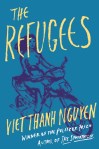
The Refugees


Rating: ⭐⭐⭐
Author: Viet Thanh Nyugen
Genres: Fiction, Short Stories, Historical Fiction
Read: April 2017


I have a lot of mixed feelings about this collection of short stories. It didn’t deliver what I was expecting and at times I found it slow moving and pretty boring. However, it did offer a different perspective on the experiences of refugees, that while different from my expectations, was still valuable.

The Refugees featured in Nguyen’s stories were all from Vietnam and had all eventually settled in America. I expected this collection to focus on refugees who were attempting to flee their homeland or trying to build new lives in America. However, most of the stories took place years after the refugees had settled in America and in some ways didn’t even feel like stories about refugees.

I thought that Nguyen’s stories about a wife whose husband is suffering Alzheimer’s, a man who meets his liver donor, and a father who travels to Vietnam to visit his daughter studying abroad weren’t stories that were unique to refugees – they easily could have happened to anyone. During a time when many Americans (and Canadians) are afraid of refugees, I thought Nguyen’s stories were an important reminder that refugees are normal people who build lives, put down roots, and contribute to society in the same way as everyone else. Unfortunately, they are just people who have been forced to flee their home country, often due to horrifying circumstances.

While I didn’t love all the stories, there were some that I enjoyed. I sympathized with Mrs. Khanh, whose husband was slowly forgetting their past together and her horror when he begins to call her by an unknown woman’s name. I felt Phuong’s frustration when her privileged half-sister returned to Vietnam and won her father’s affection but refused to help her create a better life. And I understood the mother who was conflicted at giving her hard earned money to what she believed to be a lost cause, but couldn’t say no to another mother mourning her husband and son.

Overall this was still a decent read, but I would recommend The Best We Could Do by Thi Bui over this one, which I loved! It’s also a refugee story about a family fleeing Vietnam for America, but I felt much more connected to the characters.