Red, White, and Royal Blue

Rating: ⭐⭐
Author: Casey McQuiston
Genres: Romance, Fiction
Pub. Date: May 2019

I’m a bit heartbroken about this book. I feel like the internet has lied to me. I’ve been seeing this everywhere for years, so I’m not sure why it took me so long to read it. It might be the case of a book not living up the hype, but this was really different from what I was expecting.

Red, White, and Royal Blue is a love story about the fictional first son of the first female president of the United States (Alex), and the fictional younger Prince of England (Henry). In this universe, Obama was succeeded by a female democrat from Texas and her bi-racial family, while the Royals were all just given slightly different (but all too common) names. Alex is more believable because anyone could hypothetically become president, but Henry basically just seemed like Harry to me, because there’s only one real British Monarchy, so it’s hard to picture anyone else.

Alex and Henry start off as enemies when they meet at random political functions, after a debacle at the royal wedding involving a very expensive cake, they pretend to be friends to avoid an international relations debacle. What this debacle would be, I’m not really sure since America is not part of the commonwealth and as far as I can tell, there’s no real consequence to insulting a royal, and if there were, America-land-of-the-free, wouldn’t care anyways.

Anyways, they obviously fall in love, which is more scandalous for Henry than it is for Alex, since one is the son of an heir-based system and the other the son of a progressive democrat. Parts of it are pretty cute and it is totally the celebration of queer love that it’s touted to be.  I really wanted to love it, but the more I think about it, the more I realize I kind of hated it. I do recognize that this book will mean a lot more to gay people than it does to me, so please take this review with a grain of salt. I’m so happy for you if you loved it, I wish I did too!

I don’t really think I can talk about my thoughts on this book without spoilers, so I’ll put a disclaimer that the rest of the review is going to contain spoilers. If you’re looking for some mindless fun, don’t be deterred from picking this up, but it’s no masterpiece.

Spoilers Below

.
.
.

My biggest issue with the book stems from the fact that it climaxes at like 45%. What kind of romance has the two main characters getting together before the halfway mark? There’s no sexual tension or will-they-won’t-they between these two. Henry makes a move, it’s immediately reciprocated, and then there’s virtually no conflict between the characters for the rest of the book. There’s a brief predictable break-up, but it’s so quickly resolved I questioned what I was possibly going to be reading about for the rest of the book.

The book was a lot spicier than I was anticipating as well. I like one good spicy scene at the height of the novel, but this just felt like two people with limited chemistry constantly smashing with no development of the plot. Instead of getting meaningful conversations about coming out and self exploration, we get a very boring and convoluted plot line about Alex’s mom’s re-election campaign. The author must be from Texas, because I’ve never seen Texas so romanticized. Maybe this is more compelling to Americans, but the politics described were presented as so black and white, with Democrats as saviours and Republicans as villains, it was completely lacking in nuance. I’m not going to argue that Republicans have made themselves into historical villains by rolling back reproductive rights, civil rights, and 2SLGBTQIA+ rights, but let’s not pretend the Democrats don’t also have their flaws. 

I liked the exploration of Henry’s character a bit more. Overall, I found Henry to be an extremely boring person, but somehow the wealthy prince and his conflicted sexual identity was way more relatable. I did like that Alex was able to have such a positive coming out experience and I think it’s really important to see queer joy in stories as well, but I felt that Henry’s coming out was likely more relatable to the average person. Everyone has a cranky old relative that’s totally unaccepting of any deviation from “the norm”, even if that relative is not the Queen of England. 

Personally, I think the biggest missed opportunity with this book was the decision to tell the entire story from Alex’s point of view. I think this book would really have benefitted from a dual perspective so that we could get Henry’s side of the story as well. I didn’t get why either character was attracted to the other, but I think I would have enjoyed this a lot more with a proper British narrator sharing Henry’s perspective. I read this as an audiobook and I thought the narrator’s portrayal of Henry was terrible. Henry did not read like a sexy, young prince and it’s possible this contributed to my lack of enjoyment of the book overall. I didn’t like any of the narrator’s accents.

Overall I just felt like this book didn’t know what it was trying to say. Henry especially has a lot of privilege and honestly, it did read that way. He acknowledges the racist and colonial history of the monarchy, but he’s still a part of it. In that way, I think it’s actually a lot like Prince Harry in that Harry clearly tries to set him apart from the rest of the monarchy, believing himself not to be like the rest of them, yet he’s so inherently privileged that he has no awareness of his own blind spots. I felt bad for how oppressed Henry’s sexuality was, but at the same time, it was hard to empathize with someone with so much privilege, wealth, and power. 

Anyways, I think I’ll stop this review there. Obviously I didn’t like it. Maybe I would have liked it better as a print book, but I won’t be finding out. Honestly, no judgement if you loved it, but I don’t get what the hype is about, this just wasn’t for me. 
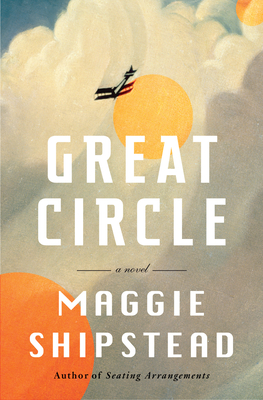
Great Cicle

Rating: ⭐⭐⭐.5
Author: Maggie Shipstead
Genres: Historical Fiction
Pub. Date: May 2021 (read Feb. 2022 on Audible)

I feel like I have a lot to say about Great Circle, so I will do my best to capture my thoughts on this giant book, keeping in mind that it took me more than a month to read, so some of the early details are already a little fuzzy.

If you’re looking for epic historical fiction, this is definitely it. This book has been calling my name for a while, but I was a little intimidated by it’s 600+ page length. Eventually I decided to buy it on Audible because I’d been flying through my credits faster than I could earn them and thought a 26 hour audiobook would slow me down (I was right).

Great Circle is the comprehensive story of fictional pilot Marian Graves, who grew up in the midwest in the 1920’s and 1930’s, with the dream of one day becoming a pilot. Her life spans prohibition and World War II and she eventually attempts to circumnavigate the globe from pole to pole. In the last leg of her journey she disappears and is never heard from again. In present day, her story inspires a movie and famous actress Hadley Baxter is cast to play Marian. The book is predominantly about Marian, but it does switch back and forth from Marian’s to Hadley’s timeline. 

When I say this is a comprehensive look at Marian’s life, I mean it. The book starts by introducing us to her parents before they meet and covers every aspect of her life. She loses her parents as infants and she and her twin brother Jamie grow up in Montana with their Uncle Wallace, who is an artist and an alcoholic. As her twin, Jamie also features heavily in the story and we get to watch the two of them grow up.

From the first time she sees a plane, Marian wants nothing more than to be a pilot. She quits school to save money for flying lessons and her aspirations end up taking her all over the world. I feel like I could expand so much on the plot because it’s so substantial and so much happens between her childhood and her epic journey around the world. but this is meant to be a review rather than a summary so let’s talk about what I did and didn’t like. 

Most importantly, I liked Marian. She is a fascinating character. She is driven by her ambitions, which are so different from many women of the day that I couldn’t help but admire her. She wants nothing more than to be free, but is consistently limited by the constraints of her circumstance and sex. She has a limited moral compass when it comes to the means that will enable her to achieve her desires and she’s prepared to run at life with both arms wide open.

Second, I liked how much history this book covers, from World War I to prohibition, to pioneer Alaska and World War II. It is incredibly ambitious in scope and I really felt like I was living someone’s whole life. Sometimes the plot got a little carried away with too much depth about side characters, but at the same time, it made me feel totally enmeshed in Marian’s world to also be surrounded by the stories of her family.

Finally, I liked a lot of the themes explored. As a female pilot, gender is a key constraint in Marian’s life. Whereas Jamie is free to go off and pursue art and women and build the life he wants, she hits roadblocks and compromises every step in the way. But I loved that while she gives a lot of herself, she was still able to recognize some parts of her life that she would refuse to allow to be transactional. Namely that she did not want children. It’s pretty radical for a woman in the 1930’s to be opposed to having children, but I liked that she was unwilling to compromise this key part of herself and that it’s ultimately what motivates her to pursue a better fortune.

It’s going to sound weird to say, but I loved Barclay McQueen. And by love, I mean I loved the brilliance of Maggie Shipstead in creating a character that I hated so much with every fiber of my being. Barclay was the perfect foil in this story. His wealth and desire and entitlement highlighted everything that was enraging about men and sex in this era (and many era’s thereafter). Because of the structure of the timelines, you ultimately know how the story is going to end from the beginning and you know Marian must eventually rid herself of Barclay, but the satisfaction of her finally taking back control of her life is so freaking cathartic. Yet at the same time, I lamented Barclay because I felt no other character was able to drive the tension and conflict in the story quite as successfully as he did. He’s a character you love to hate and his absence was mildly disappointing in that he is what inspired such strength in Marian’s character. 

Then there’s the journey around the world. There’s a lot that happens with the war in between that I didn’t find particularly compelling, but oh boy, Shipstead had me in Antarctica. Ruth was an interesting character, but I felt that she was more of a stepping stone to introduce Eddie Bloom and how I loved him! I thought Marian was going to break my heart at the end, but it was Eddie who decimated it. He was such a sweet soul and serves to highlight just how unfair the world can be, in more ways than one. We know how this is going to end from the beginning, and yet I’d never really thought to stop and consider the implications, to consider the heartbreak we are barreling towards throughout 600 pages. 

So what didn’t I like? A few things, but mostly the length. I feel this has been a common refrain for me this year. I’m getting to the point where I don’t want to read waffle anymore and I admire an author who is able to be concise. In the case of this book, it wasn’t so much about length as being compelling. In some ways, I think length works for this book. Because it’s so large in scope, length contributes to the feeling of really knowing this person by spending a lot of time with them. My complaint is more that frankly, some of this was really boring. I didn’t even mind that the story starts with a saga about Marian’s parents because it was interesting enough, but we spend a lot of time with Marian learning to fly, Jamie and his art, and a whole lot of nothing about world war II. I just wanted the writing in these sections to be a little tighter. I appreciated Shipstead writing about Marian’s traumas and triumphs because they gave so much depth to her character, but I felt like she needed more secondary characters like Barclay to really drive the story. I felt like the book lost a lot of its tension once Marian goes to Alaska and it didn’t really get it back until near the end of the war. 

The other part I didn’t really like was Hadley. I understand now that I’ve finished the book why Hadley was included, but I didn’t really think her necessary. Honestly, her entire story could have been cut from this book and it wouldn’t have substantially changed anything – I just would have been happier because then it would have been shorter. I wasn’t really interested in Hadley at all and her tie to Marian felt pretty irrelevant in the greater scheme of things. Her story doesn’t really even focus that much on the filming of the movie and I couldn’t bring myself to care about her personal drama – Marian was a more well realized character and I was only interested in spending time in her timeline. 

Overall, it’s all leaving me at a bit of a loss for how to rate the book. What I liked, I loved, and what I didn’t like, I really didn’t like. I’d kind of like to talk about the ending because it was so surprising, but at the same time, I don’t have a lot to say about it. I wanted to love Caleb, but struggled a lot with his character. Marian goes through some pretty traumatic sexual experiences and though I think in some ways, her and Caleb were both victims, I still found it difficult to overlook how he manipulated her when they were young. 

The other thing that was disappointing to me (though I only fault myself for this) was the realization that Marian Graves was not a real person. For some reason I thought this was based on a true story for 95% of the book. It made it easier for me to accept some of the plot decisions because I thought the author was just following the natural trajectory of Marian’s life. Knowing now that the whole thing was fictional – it explains a lot – but I wish the author had made some different choices in the storytelling.

Anyways, I think it’s a solid 3.5 star read. I’m going to rate it up because I thought there were moments where the characterization and writing really shone and I can see why it was shortlisted for the Booker. It wasn’t quite what I wanted it to be though and I think sometimes it did get lost in its “epic” scope, but otherwise, a very compelling read.

The Spanish Love Deception

Rating: ⭐⭐⭐
Author: Elena Armas
Genres: Fiction, Romance
Pub. Date: Feb. 2021 (read Feb. 2022)

I don’t know how long this phase will last, but I’m officially on the romance train. We’re coming up on Valentine’s Day, so I guess my timing is appropriate. I wasn’t sure what to follow up The Love Hypothesis with, but landed on The Spanish Love Deception because it also has a fake-dating trope and is super popular on Booktok. I didn’t like this as much as The Love Hypothesis, but I have to give it a shout-out because I learned after the fact that it was originally self-published! I think this is amazing and probably means the author had limited resources (like an editor?), so keep this in mind through my somewhat critical review.

First off, I did like it. I think it suffered from some pacing issues at the start, but once we arrived in Spain, I could not put this book down. I think that is the main reason I’ve been drawn to romance recently, because it makes for a very quick and enjoyable read. It’s not great literature, but it requires a bit less effort to commit to. I really liked Catalina’s family and thought the portion of the novel set in Spain was really fun. It’s a slow burn (which I love) and the love interest is pretty damn sexy. If you’re here for the smut, I thought it was better than The Love Hypothesis, but was a bit overdone towards the end. I’m more about the smoldering lead up than excessive sex scenes, but you do you!

So what’s this book about? 28-year old Catalina is an engineer (I don’t recall it being stated which kind of engineer, which was pretty annoying to me, a civil engineer) in America and is returning home to Spain for her sister’s wedding. The problem is her ex, who is newly engaged, is going to be there and she doesn’t want to show up still single after so many years of heartbreak. When her work nemesis, Aaron Blackford, offers to be her date for the wedding, despite her trepidation, she feels she doesn’t have any other options and asks him to accompany her.

If the plot sounds predictable, it’s because it is, but I mean we all expect that from a contemporary romance anyways don’t we? Sorry to repeatedly compare it to The Love Hypothesis, but it’s my only other frame of reference, so I’ll say, the only other thing I thought was a bit more well done in this book was the “fake dating”. I thought that the simple explanation of not wanting to attend a wedding alone was a lot more straightforward and believable than the convoluted shenanigans Olive and Adam got up to.

So overall, it was fun. It’s not meant to be high brow literature, so take the rest of my criticisms with a grain of salt, because there are many, but they’re a bit tangential. I knew what I was getting myself into with this book.

So what didn’t I like about it? Mostly Catalina. It’s not that I didn’t like her as a person, I found her relatable and I empathized with what she had been through. But oh my goodness, I couldn’t deal with her inner monologue sometimes. Catalina is stuck in her head, ALL THE TIME. This book is almost 500 pages (another criticism, it could have been shorter), and it’s mostly because Catalina stresses and overanalyzes absolutely everything. We’re told repeatedly that she’s very smart, but the author did absolutely nothing to show us that she’s smart. She comes off as vapid and a bit of an idiot to be honest. It was somewhat endearing the way she would accidentally blurt out the most inappropriate things at times, but I just wanted to yell at her to get a grip.

I don’t think she was helped by the author’s writing style. Some parts were confusing because the author gets so inside Catalina’s head that I felt she was getting ahead of the storyline and missed describing what was actually happening. Like I would lose sense of where we were and what Catalina was doing because she was so lost in her inner monologue.

One of the other issues I had was with the pacing. We spent a lot of time in New York – more than I think we needed. I thought the majority of this book was going to be in Spain and we don’t even fly there until 50%. I liked the inclusion of the side plot with sexism at Catalina’s workplace, especially the meeting where she asked to plan a big event. I was honestly gutted by this scene and think it brought more depth to the story. But the whole thing with Aaron’s fundraiser seemed completely tangential and unnecessary to the story. I felt like Armas needed something to fulfill Catalina’s “half of the deal” and I didn’t find that it really added much to the overall book. I would have been happier with Aaron offering to be her date and not asking for anything in return.

Which brings me to my last point: Aaron Blackford. I know, everyone loves Aaron, I did too… in the second half of the book; but hear me out, he read like 2 completely different characters! First of all, I thought it was kind of creepy how insistent he was about coming to Spain with Catalina, I wanted to be like, “dude you offered and she said no, back off already!”. But mostly, I found that in the start of the book he is so stern and angry, not giving anything away about himself (even at the fundraiser), and then all of a sudden it’s like he flips a switch and is all suave, pulling moves on Catalina left, right, and center! When he came on to her in the coffee shop in New York I pretty much choked on my tea, it took me so much by surprise! I liked sexy, suave Aaron, he was a fun character, I just couldn’t reconcile the sudden personality change.

I also have to question what makes this book “fake dating”. It’s clearly only Catalina who views the exchange as fake. I’d kind of like to go back and see if Aaron ever even uses the word “fake”, because I could easily see him being like “I’ll be your date” and Catalina being an idiot and just assuming he meant “fake date” because she couldn’t conceive of a world where he would want to actually date her. I mean I get it, the dynamic of it and why readers love it, but at no point did it ever seem like it was a two-sided arrangement.

Anyways, I think I’ve gone into enough detail about this. It’s a flawed book, but whatever, go ahead and read it anyways, it’s a sexy good romp and I wouldn’t be deterred from reading it again. I can’t help but think critically about books, but it’s just meant to be a good time! Please give me your other romance recs because I don’t think I’m done yet! I’m thinking maybe People We Meet on Vacation next because I suspect “friends to lovers” is going to be more my style than “enemies to lovers”.

Fiona and Jane

Rating: ⭐⭐⭐.5
Author: Jean Chen Ho
Genres: Fiction
Pub. Date: Jan. 2022 (read Feb. 2022)

I’m really sad to see this isn’t getting the best reviews on Goodreads. On the one hand, I kind of get it, but on the other, I actually really liked it. Fiona and Jane is a short book that spans more than 2 decades, observing the friendship of two Taiwanese-American girls as they flit in and out of one another’s lives. Fiona and Jane were best friends growing up and while they drift apart in their 20’s, they keep coming back to each other through the years. It’s described as being told through short stories, but I didn’t really think they read like short stories, more like a non-chronological retelling of their friendship.

Jane grew up in America and is devastated when her Dad leaves to teach in Taiwan when she’s in high school and never returns. In her anger and youth, Jane makes a decision that has long lasting emotional consequences on who she grows to be. Fiona lived her childhood in Taiwan with her mother and grandparents and eventually moved to LA with her mom, where she met Fiona. The two girls become fast friends, each secretly envying the relationship the other has with their family. The girls make adolescent mistakes and Fiona eventually moves to New York and struggles with the guilt of leaving a friend behind, while Jane struggles with the sadness of feeling abandoned.

It’s not so much a re-telling of their lives as snapshots of them. The plot feels aimless and the timeline can be confusing, so I see why people aren’t loving it. But I love a good character driven novel and I did find it interesting, so the format didn’t bother me and I liked getting to know the flaws of each of these characters. I did want just a little bit more from the narrative though. Props to the author for leaving so much interpretation up to the reader, I do think this can be challenging for debut novelists and I think she lets her readers draw their own conclusions. There is no large catharsis in the storytelling, so while I think it’s accurate to life, it did leave me questioning how the author decided what to include and where to end her story. It’s an interesting read, but I felt it could have used a little bit more depth.

There was just one part of the book that I had to comment on because I found it so weird. The story is told in first person, switching between Fiona and Jane, but for one chapter, it switches to the first person perspective of Fiona’s boyfriend. I found this a bit jarring and I’m not really sure why the author opted to include another viewpoint, for only ~10 pages. It seemed like an odd choice. But overall, I liked the writing style and would give 3.5 stars!

Of Women and Salt

Rating: ⭐⭐⭐⭐
Author: Gabriela Garcia
Genres: Fiction, Historical Fiction
Pub. Date: Mar. 2021 (read May 2021)

I have read some really good books this month and Of Women and Salt is definitely one of them. I’ve been seeing a lot of buzz about it over the past few months but I couldn’t quite pin down what the plot was. I gathered it was a multi-generational immigrant story and honestly, I didn’t need to hear any more, I was sold. 

We put this on our book club voting list and it lost to The Lost Apothecary, which is really too bad because I think my book club would have enjoyed this a lot more than they enjoyed The Lost Apothecary. This book is centered around women, primarily the relationships between mothers and daughters. It’s another story that is told non-linearly (seriously, I’ve read so many of these this year), but this is one of the books where I didn’t mind the non-linear telling. Overall the plot is pretty simple, so I didn’t find it difficult to jump around as the novel focuses more on the character relationships than anything else. 

The novel kicks off in 19th century Cuba and then jumps around from there. Though someone from almost every generation of this Cuban immigrant family are featured throughout the novel, most of our time is spent close to present day with the youngest woman in the family, Jeanette. When she witnesses her neighbour being taken away by ICE in the middle of the night, she inadvertently becomes guardian to her neighbour’s daughter for a short period of time. Though they only know each other for a few days, the experience has a profound impact on both Jeanette and the young girl, Ana. 

I’m glad the novel focused on these two individuals because I did find their stories to be some of the most memorable and meaningful of the book. Though I did love the development of both Jeanette’s relationship with her mom (Carmen), and her Mom’s relationship with Jeanette’s grandmother (Delores). Beyond Delores, I don’t think going further back in the family tree really added that much to the story. The inclusion of the family tree at the start was definitely a good idea, I could see this being really confusing otherwise.

Some might question how much Ana and her mother’s story really belonged in this book, but I loved the comparison of two different immigration stories and though they are only loosely linked to one another, I thought the inclusion of both really made this a more well rounded story. 

Honestly, my only complaint about this book is that it could have been longer. It’s only about 200 pages and I really would have loved to spend more time with each of the women in this family, particularly Carmen. I felt like I had good insight into Dolores’ perspective, but I would have loved to hear more about Carmen’s experience immigrating to America and what it was like growing up under the shadow of her childhood trauma. Abuse was passed down from generation to generation in this family and I think that Garcia could have really developed this theme more to make her narrative even more impactful. I just wanted a little bit more from each of the characters, but the writing was so beautiful I’m definitely excited to see what the author will write next. An excellent debut!