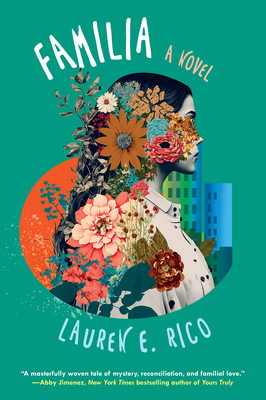
Ties That Tether

Rating: ⭐⭐⭐
Author: Lauren E. Rico
Genres: Fiction
Pub. Date: Dec. 2023

I have mixed feelings about this book. Overall, I liked it – I thought both the story and the writing were compelling and I’m impressed with it as a debut. It’s my book club pick for April and I’m really excited to talk about it because I think there are a lot of interesting themes to discuss. My main complaint is that I didn’t like the religious elements of the story and I didn’t like the ending.

I can’t discuss the parts I didn’t like without getting into spoilers, so let’s talk about what I did like first. Familia is the story of Gabby DiMarco and Isabella Ruiz, two women with very different backgrounds, connected by blood. Gabby is a well-to-do woman in New York City whose parents have recently passed away and is trying to get her big break as a journalist. Isabella is a Puerto Rican woman who lost her mother in childbirth and her father’s subsequent depression and alcohol abuse resulted in the kidnapping of her infant sister, Marianna, 7 months later. This tragic event traumatizes Isabella for the rest of her life and even 25 years later, she is determined to find her sister. When Isabella and Gabby get a 50% DNA match on a gene website, Gabby is sure there’s a mistake, but flies to Puerto Rico in hopes of breaking an interesting story.

It’s obvious where the plot is going, but I enjoyed the journey. It’s a compelling narrative and I was really interested in all the themes the author wanted to explore. Isabella feels a deep sense of resentment for her sister because her birth resulted in the death of her mother and the breakdown of her family, but she also feels guilt over having wished her sister never existed at the exact moment she disappears. When they are reunited, her guilt morphs into jealousy at the easy life her sister had growing up in America in contrast to her traumatic childhood and youth. Gabby refuses to believe that she and Isabella could possibly be sisters, because to accept that fact would be to accept that her entire life and family was a lie. Plus it raises the age-old question of what really makes a family – is it the blood you share or the relationships and trust you’ve built. 

I thought these were all fascinating questions, particularly for Isabella, who I found a more compelling character, and I thought the author did a good job at exploring the internal conflict of these two women. Their relationship was believable to me. They have an emotional connection, but not in an overly cheesy way, and the experience brings them closer together, while still being realistically challenging for them. 

Overall, I liked the format. The author opts to break the story up between the present and the past. Isabella and Gabby do their own detective work to try and figure out what actually happened to Marianna, while at the same time we have flashbacks to a wider cast of characters that were responsible for Marianna’s disappearance. It turns the book into more of a literary mystery novel and it serves to keep the reader interested in the storyline. I think this could have also worked as pure literary fiction and delved a lot deeper into the emotional impact this would have on Isabella and Gabby, as well as to question the ethics and morality of Gabby’s upbringing. I think I probably would have preferred the latter, but recognize that it would be a much more challenging novel to write and think this was still impressive for a debut.

What I didn’t like was that the author bypasses any exploration of the ethics of Marianna’s kidnapping (by Gabby’s parents). To be fair, she does explore the idea that there are almost always grey areas in the law in these types of situations. Kidnapping is obviously wrong, but if the baby grows up to live a much more comfortable and privileged life, does that justify the means? How does Gabby rationalize the fact that her parents are both loving and caring people, while also being kidnappers? As a fact checker, I thought she would want to really delve into that narrative. To me, this was the most interesting theme of the novel and I wanted to consider the dichotomy of these two conflicting facts about her parents. But the story is written to conveniently bypass these challenging ideas, which I did think was a bit of a cop-out. To be fair, I may be holding the book to an unreasonably high standard. It was well-written and I was hopeful that the author would commit to some very tough themes.

So let’s talk about what I didn’t like (spoilers ahead!). First off, I didn’t like the religious aspect of the story. There were some really interesting ethical questions here, and I think the author used spiritual intervention to avoid tackling questions of morality. This was a 7-month old baby. It’s one thing to knowingly kidnap a baby with the intention to traffic it – that is a deeply sick crime. I felt it was another thing to opportunistically kidnap a baby and then decide to kill it. I feel that most people would have deep ethical problems when presented with this scenario, even Santiago (what kind of sick person is willing to kill their widowed brother’s daughter?). Because it wasn’t a premeditated kidnapping, I couldn’t rationalize any other acceptable course of action other than to return the baby to her parent. 

I felt like the author used the whole ‘weeping Madonna’ spectacle and Lucy and Mack’s infertility to try and convince the reader that giving away someone else’s baby was an acceptable course of action. I was glad that Mack realized that the whole idea was ludicrous, but I felt the whole “you must take the baby or Santiago will kill it anyways” was a cop-out. Likewise, getting Alberto’s permission to take the baby was the ultimate way to absolve Lucy and Mack of any wrong-doing. It’s a clean way to structure your novel and it removes the conflict for Gabby that her parents were both good and immoral people. From her perspective, all they did was adopt her unknowingly from an orphanage, which conveniently absolves her from having to rationalize that people we love can make both good and bad choices. It’s a feel-good way to tie up your novel, and that’s fine, I guess I just wanted to get into gritty questions of morality. 

At the very least, if you’re going to absolve Lucy and Mack of any wrong-doing, I thought Rico would at least confront the impacts of Alberto’s decision on both him and Isabella. I struggled to believe that he would willingly hand over his baby to an American couple he knew nothing about. In fact, none of the characters knew anything about Lucy or Mack aside from the fact that Lucy was desperate for a baby. They could have been terrible people. Did Gabby have a better life in America? Most likely… she definitely had more money and opportunity. But we also will never know how things might have been different if Marianna had been returned to her family.

Maybe if Marianna had been returned to her family, it would have been the wake-up call Alberto needed to get clean and take care of his family. He proves at the end that he’s capable of it (which I also found highly unbelievable, why would he randomly get clean after 25 years?), so maybe he would have redeemed himself if he hadn’t given up his youngest daughter. But what really rubbed me the wrong way was that the sisters never found out the truth! Isabella would be devastated to learn that her father willingly gave away her sister and then lied to her about it for 25 years. I felt like this theme really should have been addressed and it did a bit of a disservice to both women to keep it a secret. 

The thing is, I don’t think Lauren Rico wanted to explore those themes. I think Rico was more interested (based on the author’s note) in exploring themes of familial bonds and heritage. I think she wanted to tell a story of sisterhood and family reunion, without doing the work to explore the deep emotional impact of this event on each family member. Which made me question why she structured her book as more of a mystery novel. To be honest, the “how” of Marianna’s kidnapping wasn’t as interesting to me as the emotional impact it had on the two women as adults. I think I would honestly have been fine not knowing how Marianna ended up in the US and just exploring the Ruiz family roots and healing of trauma. I was surprised there was no exploration of the fact that Gabby has just gone from being White to being Latina, and what it would feel like to suddenly be thrust into a completely new culture that you feel you have no right to claim. There’s so much to unpack with these concepts and I was just left feeling a little disappointed. There were great ideas, but I feel like we only scratched the surface.

Some reviews by Puerto Ricans also discuss the idea that Rico only portrays the dark side of Puerto Rico. That Puerto Rico is filled with drugs and criminals, rather than showcasing some of the more vibrant parts of the island (I think this is done primarily through Isabella’s art). I think this ties in with my general comments about why the author chooses to focus on the crime rather than the aftermath. It promotes a white saviour narrative, so I can see how that would be insulting to locals and I wanted the author to do more emotional labour in breaking this down for her readers. 

This is a more minor complaint, but I have to mention one other scene that bothered me. The scene where Mateo randomly decides to leave Isabella after she gets in the fight with Gabby. This conflict didn’t fit the story and came out of nowhere. Isabella is going through so much emotional turmoil during this time and then all of a sudden her supposedly perfect husband is like “I can’t take this, you need to figure out who you are or I’m outta here!” She is literally trying to figure it out at this exact moment Mateo! Why don’t you buckle down and be there for her for a hot minute while she works through an extreme amount of trauma! She’s just found her sister – she’s been searching for her for 25 years and she’s now realizing that the search was a way of avoiding trauma and now that she’s found Marianna, she has to acknowledge that it doesn’t heal all her old wounds. 

Anyways, take my criticisms with a grain of salt. I have so many because this book made me think a lot. It’s maybe unfair to hold a debut author to such a high standard. I would definitely read her next book because I think she has a lot of promise and it was an engaging read. Props to any novel that can inspire me to dig deep and write this long of a review. I’m excited to see what else we unearth about this book in our book club discussion and whether it changes any of my opinions! 
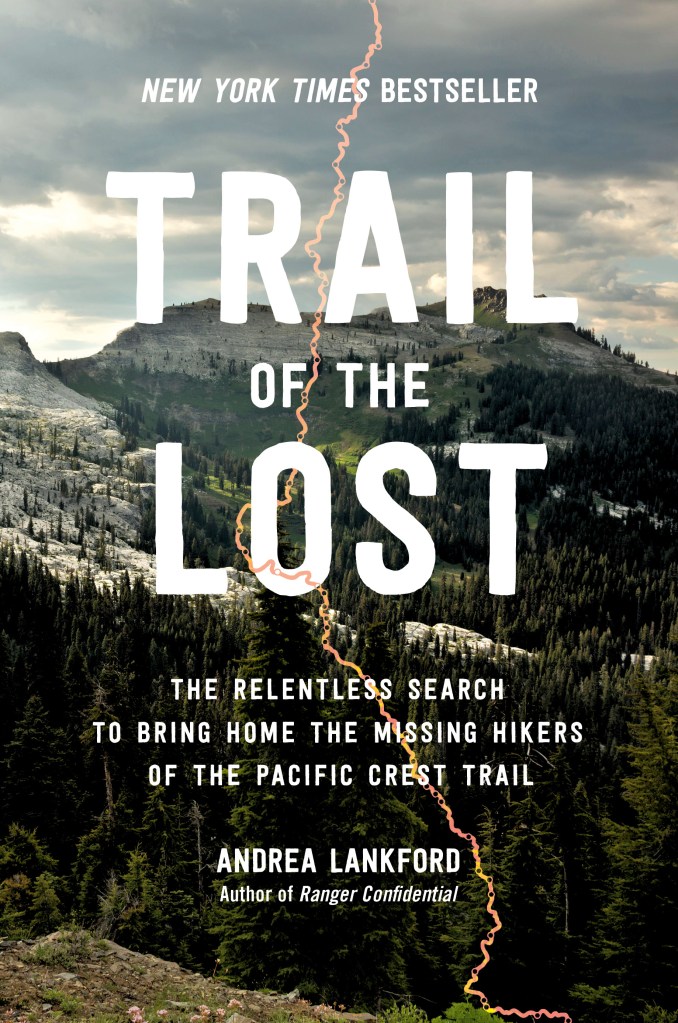
Trail of the Lost

Rating: ⭐⭐⭐
Author: Andrea Lankford
Genres: Non-fiction
Pub. Date: Aug. 2023

I’m not sure what to make of this. It’s a well researched and pretty well written book. Andrea Lankford has clearly been heavily involved in the missing cases of all 3 hikers featured in this book for quite some time. She covers each missing person in great detail, explains a lot of the quirks of thru hiking, and highlights different search techniques that are being used to try and find missing persons and the merits of each.

It’s an interesting enough read and it mostly worked as an audiobook. The only real complaint I had about the audiobook is that two of the missing persons are called Chris/Kris. It would be a lot easier to tell them apart reading it, but listening to it was a bit confusing and hard to know who she was talking about and I couldn’t keep straight what happened in each case.

Fundamentally, the problem I had with this book is that it’s become evident to me over the past few years that I don’t believe in extended searches for missing hikers. It’s a personal opinion. As someone who hikes a lot, I have given this a lot of consideration and I personally have told my husband to please search for me for 1-2 months if I go missing, but to then move on with his life. It’s morbid, and I understand the need for closure, especially for parents of the missing, but I feel that an extended search only extends the pain of family members and prevents people from moving on. There’s a very real possibility the missing will never be found. (for clarity, I’m only opposed to extended searches for missing hikers, not those who have potentially been abducted, kidnapped, or murdered – there are very different implications and risks between the two).

This is a very personal decision and I don’t fault parents for not being able to let go. But where I consistently get hung up on the idea of an extended search is when it puts volunteer searchers at risk. No missing person is ever truly abandoned by search and rescue. I do think their initial searches are often a bit on the short side, but they do regularly re-visit missing person cases, even years after the fact, and dedicate resources to searching. Which I’m totally in support of because they are professionals. But extended and self-organized searches can and do put the volunteer searchers at risk, which is why I personally oppose them. The only thing I can imagine that would be worse than getting lost and dying in the woods, would be other people trying to find my body and also becoming lost, injured, or dying.

I was extremely frustrated with the author when she went on a solo reconnaissance trip in dangerous terrain. Yes, she is a former SAR member, but she did become injured and it didn’t appear that she even carried at satellite device, just a phone. I thought if anyone would know better, it would be her. In addition, Pam got lost, Cathy continually put herself at risk, and who knows how many others got in sticky situations searching for lost hikers. This book just solidified for me that I’m opposed to this kind of initiative.

To be fair, Lankford does examine this train of thought in her book. She questions if all the work she and the other searchers have done has only extended the parents period of mourning and inability to move on. She questions whether putting herself and others at risk really justifies her work. She ultimately concludes that neither her or her core collaborators are able to just walk away from the grieving parents as they are, in many cases, the only individuals still searching for these missing hikers.

What I did like is the exploration of different means of searching, primarily, how technology can be used to support recovery missions. The group has had considerable success flying drones in remote locations and having “squinters” study the images to look for clues. It removes a lot of the danger of searching in person throughout extended areas, allowing on-the-ground searches to only investigate specific areas of interest. They have found several missing persons this way.

The book also highlights the many ways in which we’ve let down the missing. Most notable for me was the woman whose husband went missing in the snow and she couldn’t convince anyone to even search for him. A lot of missing people are ignored by the authorities who delay searching until it becomes too late to rescue someone alive. Most people can’t survive very long in the wilderness and postponing the start of their search only makes it much more likely that they will never be found alive.

Fortunately, we have more tools at our disposal these days, both as hikers and as searchers. I did find this to be a compelling read, though it was extremely disappointing that none of the 3 main cases were resolved. If you’re a hiker, it’s a good read, but I question how much our obsession with missing people (both related to hiking and from true crime) is really a productive or healthy use of time.

Lady Tan’s Circle of Women

Rating: ⭐⭐⭐
Author: Lisa See
Genres: Historical Fiction
Pub. Date: Jun. 2023

This is my 4th Lisa See book and I really love her as an author. I thought this had a slow start, but picked up a lot in the second half. It had the usual hallmarks of Lisa’s work in that it was really well written and filled with historical details and meaningful female relationships.

So I did like it, but it wasn’t quite as compelling as some of her other work. I felt she should have developed the front end of the book a little bit more because it was both boring, and didn’t have enough meat about Yunxian and Meiling’s relationship. It reminded me a lot of Snow Flower, even though it’s set several hundred years earlier. I found the character arcs and plot points similar, but Lady Tan isn’t set during any particular significant historical events, which is what I thought anchored both Snow Flower and the Island Of Sea Women.

The concept of female doctors for women is really intriguing and (I thought) quite revolutionary for the time period, so I liked that aspect. But a lot of the intrigue is fabricated, which is fine, just a bit less compelling. It took too long for the story to get going with not much happening. I felt like I was reading a history novel for the first half, before we finally got some drama in the second half.

Anyways, it wasn’t my favourite, but I still love Lisa See. I think The Island of Sea Women may be my favourite book she’s written, so if you’re new to her writing, I’d maybe suggest starting with that one! But I also enjoyed both The Tea Girl of Hummingbird Lane and Snow Flower and the Secret Fan better than this one, so check out my reviews for those too.

Zero Days

Rating: ⭐⭐⭐
Author: Ruth Ware
Genres: Mystery, Thriller
Pub. Date: Jun. 2023

Should I give up on Ruth Ware? She writes reliably good 3-star reads, but I can’t remember the last time she wrote something that I truly loved. I feel like maybe it’s time to part ways, but I kind of doubt I will. I’ve said this a million times, but her books are very readable. The only one I really struggled with was “The It Girl“, which I found super boring. You definitely could not say Zero Days was boring. The entire book is a high speed car wreck and it had me in a choke hold for 3 days (despite not loving it).

Zero Days is about a couple, Jack and Gabe, who do penetration testing for companies, which means that Jack attempts to physically break into the building to steal data, while Gabe attempts to hack the company. It’s all done in the name of helping companies to improve their security. Everything is good until Jack arrives home one night to find that Gabe has been killed and the police have their sights set on her as the culprit.

This evolves into an action packed police chase as Jack tries to evade the police long enough to get real answers about Gabe’s death. It’s hard to put down because Jack is constantly on the move, which I thought made it a bit more of a thriller than a mystery. The reason I didn’t like it is because the chase does get repetitive and I don’t think this book actually had a strong enough plot or mystery element to sustain it.

Jack is constantly on the run, which moves the story forward, but it doesn’t actually take her that long to develop a solid hypothesis on what happened to her husband. The problem is, she doesn’t have a shred of proof, so the book is more about her trying to get proof rather than actually solve the mystery. It created a lot of action, but it wasn’t overly compelling. Jack becomes injured early on and it’s hard to suspend disbelief that she’d be able to keep going with no bed, money, or healthcare for so long. There’s only so many ways to describe her pain and it got a bit derivative.

Add that to the fact that Jack is grieving. She has just lost her husband to a very violent death and while Ware does continuously remind us of that, it lacked any depth. I believed that Jack could keep going because she was pretty much running on pure adrenaline and avoidance from her grief, but I felt like it was a missed opportunity to look critically at grief and love. We’re constantly reminded of how much Jack loves Gabe and how shocked she is that he isn’t in her life anymore, but I feel like grief is a lot more nuanced than that I would have loved for Ware to show us.

I didn’t feel much connection to Gabe because we don’t really ever learn anything meaningful about him. Why did he go to prison? How did that impact him? How did Gabe and Jack fall in love? Has his past ever gotten in the way of that love? How did he help Jack heal from her previous abusive relationship and the loss of her parents? I feel like there was so much opportunity for meaningful flashbacks here instead of mindlessly running around avoiding the police (especially since the mystery element was so light). Show me more of their love story – make me fall in love with Jack and Gabe too because then every time the story returns to the present the reader would get this painful reminder that this man is no longer living.

I feel like all the bones were there for a really thoughtful story, but Ware only ever uses any of these elements for shock value. I felt like she was just asking, “how tragic can I make this character?” and I absolutely despise when authors use trauma for drama. Trauma and grief are relatable concepts for a lot of people and I wish authors would commit to the real lasting impact those things have on a character rather than just using it as stock filler to try and manipulate your audience into feeling bad for them.

The only thing I really liked about this book was Hel. I thought she was a great character and I liked that she’s never presented as a suspect. She’s the one reliable person in Jack’s life and I felt like this relationship was included to highlight the real importance of sisterhood rather than to try and confuse or trick the reader. I felt that Hel was a safe space and that she highlights the impact that having a reliable safe space can have on a personal’s mental health. You can’t trust anyone else, but you can trust your sister. I felt more love between these two than I did between Gabe and Jack.

Anyways, it’s a 3-star read from me. There’s no real depth here, but if you want a high paced thriller for a bit of escapism, look no further. The audiobook was pretty well done, but the repetitiveness of the writing definitely shines through in that format.

You, Again

Rating: ⭐⭐⭐
Author: Kate Goldbeck
Genres: Romance, Fiction
Pub. Date: Sep. 2023

I honestly don’t know whether I loved this or hated it…

Okay, I definitely didn’t hate it – I thought it was a super quick read and the characters had a lot of chemistry. They’re both a mess and I wanted them to sort out their personal issues, but I understood why they were incapable of doing so. This was truly enemies-to-friends-to-lovers and I loved that about it.

Mostly I just hated Josh. He endeared himself to me after awhile, but my god, this is the most entitled, dumbass, privileged, white man I’ve ever read about! It was a little unbelievable how tone deaf he was considering how progressive Ari was. Both characters are also super depressed and I don’t think the book dealt with their depression in a healthy way. Neither ever seeks professional help, which I thought they both should.

The author is apparently all about portraying “real” relationships that are reflective of the messy and complicated world we live it. But it’s 2023 and I would have loved if she had applied a more critical lens to her characters’ mental health and how they’re going to take care of themselves in the long term. It reminded me a lot of Adelaide, by Genevieve Wheeler, which I read earlier this year, except not as gritty or reflective. This is still a proper romance (which Adelaide definitely isn’t).

Anyways, apparently it’s based on When Harry Met Sally, which I haven’t actually seen, but am definitely going to go and watch now. The reviews mostly say that it’s not actually like the movie, but even from the synopsis, I could see the parallels, so I will have to go watch it and report back!

Is this worth reading? Honestly… maybe? I did read it in a bit of stupor-like fever dream over 3 days and I couldn’t put it down. The dialogue is quite good and like I said, the chemistry is great. It’s not your run-of-the-mill romance novel and I appreciated that the author tried to do something different. I’m just not 100% sure what her themes were and I don’t really think they landed. This is not a fantasy romance that one might dream about, and with a lack of meaningful themes, it leaves me kind of wondering what is the point? At the end of the day, all I can really conclude from this is that there really are no consequences for idiot white men. They can walk all over women of colour, never issue any meaningful apology for their dumb shit, sit at home in their giant apartments doing nothing for an entire year, and then still inherit a well-known restaurant, fail upwards, and get the girl. So inspirational.