Rating: ⭐⭐⭐⭐ Author: Rick Mercer Genres: Memoir, Non-Fiction, Humour Pub. Date: Nov. 2021 (read Nov. 2021 on Audible)
Last year I read Rick’s book Final Report and was a bit disappointed when I discovered it was just a collection of rants from throughout the years. Somehow it’s just not as interesting to listen to Rick rant about Stephen Harper 10 years later. But I was interested in Talking to Canadians when I learned it would be a proper memoir and decided to read on Audible.
Talking to Canadians definitely has a niche market, but I found it to be an interesting read. Rick goes pretty in depth about how he got his start in comedy and it covers everything up until he started doing the Mercer Report. There’s a lot about how he found comedy and acting in high school and his years on 22 minutes, which I did find pretty fascinating.
Of course, Rick makes for a great audiobook narrator and I would highly recommend doing the audio if you’re reading this book. I read it back to back with Mark Critch’s new book, which I also did with both comedians last year. Between Final Report and Son of a Critch, I’d give the edge to Critch, but overall I preferred Talking to Canadians to An Embarrassment of Critch’s, though they’re both great books. They actually make surprisingly complementary reads as well since both men have 22 minutes to thank for jumpstarting their careers. I read Critch’s book first, but if you’re going to read both, start with Talking to Canadians, it makes a bit more sense chronologically.
Overall a fun read if you like memoirs and funny Canadians!
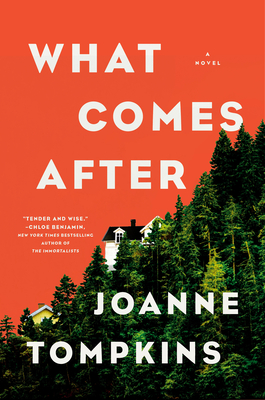
It’s been awhile since I read this one, but I wanted to review it anyways because it’s one of the stranger books I read in 2021. I’d seen it floating around on Goodreads and it was a bit of an impulsive buy as an audiobook.
What Comes After is set in the pacific northwest and is about what life is like after you experience a major tragedy. In this case, it’s about a teenage boy who goes missing, and then his best friend confesses to having killed him before taking his own life. Understandably, both boys families, who are next door neighbours, are traumatized by the loss of their sons, as is young Evangeline, who is a runaway girl that was connected to both boys.
Evangeline ends up forging relationships with both boys families and we get multiple perspectives from Evangeline and the parents. I wasn’t really sure what to make of this one. It was an interesting concept and the writing is fine, but everything about the book made me so uncomfortable that it was hard to really like it. I feel like being uncomfortable is kind of the point with a book like this, but I struggled to connect with some of the characters. I liked Laurie, who was the mother of the boy who killed himself and struggles with feelings of both grief and guilt, but I didn’t really like Isaac, the father of the boy who was murdered. Isaac is a mormon and while there’s nothing wrong with this, I didn’t find him a particularly relatable character. Nor did I really connect with Evangeline, which I wish I had because she’s one of the most interesting characters in the book and a real victim of circumstance. She’s a liar and reluctant to open up, neither of which I faulted her for, but it did make me feel detached from her character.
I liked some of the themes that the author explored around abuse and survivorship and I think it makes for a really interesting debut, but I had to admit that I just couldn’t really relate with the characters. The circumstance is so dark and while murder and intrigue make for a great mystery novel, as literary fiction it was just something that I had no reference point for. I couldn’t really move past my discomfort with the storyline and while it wasn’t a bad novel by any means, I just don’t think I’d want to return for more.
So overall, a solid 3 star read, not bad, not great, just not really a book that I enjoyed either.
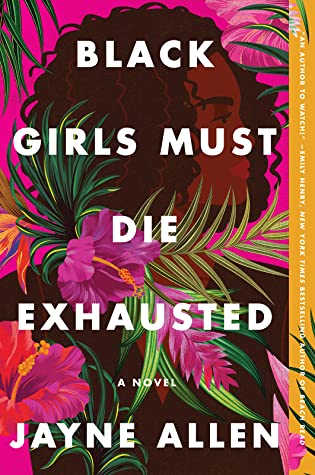
This book was an impulse buy for me when I saw it on sale at Chapters. I haven’t quite figured out what the deal is with the book – it’s listed as a 2018 release on Goodreads, but it’s definitely being promoted as a new release, with the second book being released Feb. 1, 2022 (again, despite being listed as a 2019 release on Goodreads).
Either way, I decided to purchase it and heard a positive review about it from GabbyReads and decided to jump right in, otherwise I haven’t seen any other hype about this. Which is a real shame because I ended up really liking it!
Black Girls Must Die Exhausted features 33 year old Tabitha Walker, a reporter with KVTV news in Los Angeles. She is up for a promotion at work, which she has worked insanely hard for, when she finds out that she has fertility complications that means she needs to have a baby within the next 6 months if she ever wants to get pregnant naturally. That, or she can freeze her eggs.
This was such an interesting premise to me as I’ve been starting to hear more and more about – young(ish) women deciding to freeze their eggs to give them more time to establish their careers – and it’s something I’ve never seen written about. I’m 31 and relate to feeling pressure about when you’re going to have kids, so I jumped at the chance to read about another young 30 year old. So many bestsellers focus either on proper young adults (17-20 year olds) or on women already married with children, I’ve always felt like there’s been a huge gap of meaningful books in the new adult genre and rarely see any books about 30 year olds that don’t already have established families. I feel firmly in this category of millennials that have not yet had children, so it was a real joy to read from Tabitha’s perspective.
It’s very much a character driven novel about what it means to be a working black woman and centers on familial relationships, friendship, and romantic love. I found it to be a little heavy handed at times – with the author falling into the “show don’t tell” trap that ensnares a lot of debut authors – but I felt that she was trying to cover over the gaps in perspective that some of her non-black readers might have, so I was able to look past it. She covers a lot of themes within 350 pages, but I liked that this was a thoroughly modern storyline and that she included some really tough choices, with honest depictions of their impacts. I feel like we’re so used to getting the happy ending in stories like this and I really liked that the author was committed to exploring the reality of Tabitha’s situation, rather than trying to write a happy ending for the reader.
The main complaint I have with this book is that it ended too soon. I know it’s a series and there are going to be more books, but I felt like the author tied up a lot of loose ends much too quickly and easily in the epilogue. She takes her time throughout the entirety of the novel, but once she hit 350 pages it was like she realized she had to finish and a lot of the book’s major plot points concluded in the span of a few pages. I would have preferred for her to either write a longer book, or to just leave these items as loose ends to be followed up in the next book. From the sound of the synopsis for the next book, it’s not going to be an immediate continuation of this book, which is a little frustrating. It just made the ending quite disappointing after having invested so much time in the story.
Anyways, I would still recommend this book and I am anxiously awaiting the second book, which is slated for (re)release just a few weeks!
I used to read so much fantasy. I loved getting lost in other worlds and getting to return to the same characters over and over again – it made for such an enjoyable reading experience for me. Unfortunately over the last few years, I feel like I’ve almost completely lost my ability to read fantasy. Learning about new worlds seems exhausting and the thought of having to follow a storyline over multiple books daunting. But every couple months I try a new fantasy book to see if I can overcome the slump.
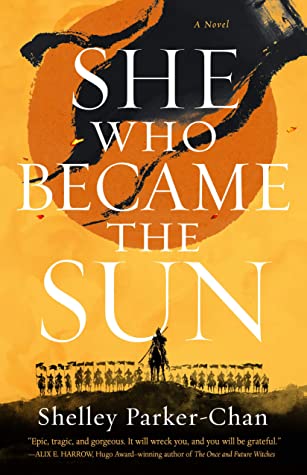
I’ve been hearing a lot about She Who Became the Sun and I wanted to try at least one book nominated in the Goodreads Choice Award fantasy category, so I decided to go with this one. It started off great and I was really invested in Zhu’s character and thought her growth while at the monastery was really interesting. Then something dramatic happens between 15-20% and I was catapulted into a completely different story – it was engaging, but something about the storytelling and pacing just seemed off throughout the rest of the novel.
She Who Became the Sun takes place during the Ming Dynasty in 1345 China and centers around a poor, starving, young girl who steals her older brother’s fate and seeks refuge in a monastery – hiding her true identity and gender. Parts of this book are excellent – primarily the author’s exploration of gender roles, identity, and dysphoria. Initially I got strong Mulan vibes, but Zhu definitely becomes her own character throughout the course of the book. The premise was great and I was invested in Zhu’s character and journey. I found it a bit confusing keeping track of who was who, but there’s some really interesting history in here and it’s a time period I don’t know a lot about, so I really enjoyed that aspect.
Where I struggled is that the author never builds any momentum in the story. She would pick up the pace and energy in the narrative in each chapter, only to have it completely ramp back down in the following chapter. For some reason she chooses to skip over major events, often focusing more on the political side of things than the action. I love a book that has both, so I found this an odd choice. It was just lacking balance and it caused me to keep losing interest in the book whenever I would put it down.
This is the first book in a series – I’d like to think I will continue on with it, but I honestly suspect I won’t. Given that the second book doesn’t have a name or release date yet, I’m sure I will have forgotten all the major plot points by the time it’s released. I get the hype, but unfortunately it just wasn’t enough to raise me out of my fantasy slump. 3.5 stars – good premise and nice writing, but suffers pacing issues.
I don’t often review poetry because I’m not always sure what to say about it after the fact, but I wanted to write a short review for this one since I enjoyed it so much. I read one of Gill’s other anthologies, Wild Embers, a few years ago, as well as the collection she edited called SLAM. Those were both great, but this was definitely my favourite.
Where Hope Comes From is a collection of poems about life during the pandemic. I knew the pandemic was soon going to start showing up in a lot of books and to be honest, I wasn’t really looking forward to it. We’ve all lived through it for almost 2 years now and in some ways I want the escapism of simpler times. I stumbled across this one in Chapters and bought it because I thought it might be nominated in the Goodreads Choice Awards.
I’m so glad I did buy it because I ended up enjoying it so much more than I thought I would! I feel like we’ve consumed so much media about the pandemic in the past 2 years, but until I picked this up I had no idea how much I needed to read thoughtful and reflective writing about the pandemic. Granted, this is mostly about the early pandemic and I would argue the second and third waves were emotionally much more challenging than the first one, but I feel like Gill does such a great job of evoking all the feelings I felt at that time and giving voice to the pain and sadness that we’ve all felt over the past 2 years.
Poetry is a medium unlike any other and it was such a good reminder of collectively what we’ve all been through. The poems are simple and I think that’s what makes them so powerful. They are very accessible to a wide audience. I oscillate with poetry because I really like it, but a lot of the time I feel like it’s just a bit over my head. Nikita Gill’s poetry is relatable and it’s just what I needed in a time when I think we’re all ready to move on, but burnt out over what we’ve collectively experienced. Definitely recommend if you’re feeling reflective.


 The Paperback Princess